Plot Explained Spoilers guaranteed!
Plot Explained

Browse by genre

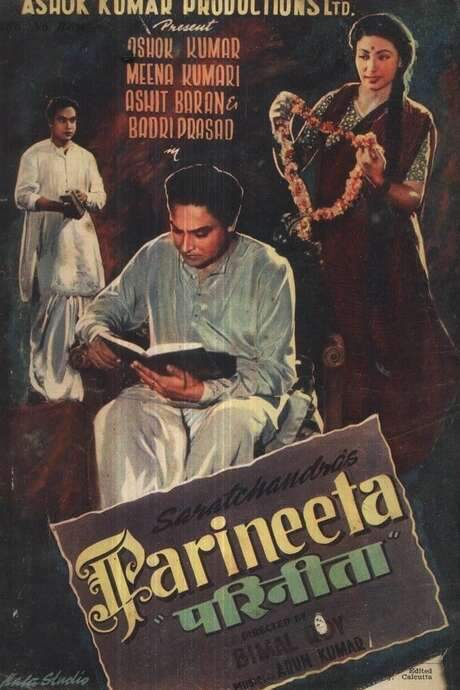
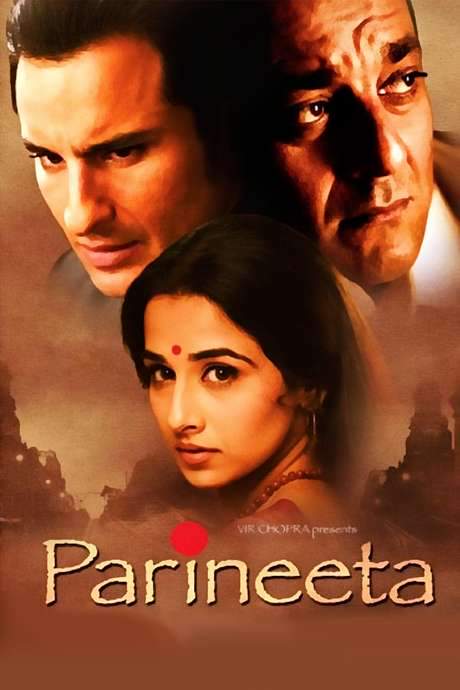
Parineeta (2005) movie poster

Plot Summary

Parineeta (2005) Plot Summary Explained

Release, runtime and language
2005 · 124 mins · Hindi
Directed by
Pradeep Sarkar
Starring
Sanjay Dutt, Amitabh Bachchan, Saif Ali Khan, George Baker, Rajesh Sharma, Vidya Balan

Lalita and Shekhar, childhood sweethearts, dream of marriage, but Shekhar's growing suspicion of Lalita and his father's manipulative schemes drive a wedge between them, threatening their future. Their love faces mistrust and family interference, creating a poignant struggle to preserve their bond.

On this page (6)
  1. 1 Where to watch
  2. 2 What happens: full plot
  3. 3 Plot questions answered
  4. 4 Movie threads
  5. 5 Movies like Parineeta
  6. 6 Every angle

Where to watch

Where to Watch Parineeta (2005)

Where can you watch Parineeta? Stream, rent or buy it in the US, including on Google Play Movies and YouTube: current JustWatch availability with up-to-date prices.

Streaming availability powered by JustWatch

Full plot summary · contains spoilers

What Happens in Parineeta: Full Plot Summary

The whole story of Parineeta (2005) explained, from the opening scene to the final frame: every key event, every twist and what it all adds up to. Read it as a quick recap before the sequel, to check a scene you missed, or to finally understand what really happened.

Set in 1962 Kolkata, the film unfolds against a city that feels like a living memory, where grand old streets, bustling markets, and a changing social scene set the stage for love, duty, and deception. The story opens with the credits over vintage Calcutta images, and the voice of Amitabh Bachchan as narrator gently grounds us in the era’s mood. On the night of an arranged marriage to Gayetri Tatya, the daughter of a well-connected industrialist, Shekhar N. Roy finds his mind wandering back to a childhood friend, Lalita, whose name lingers in his thoughts like a soft, unfinished melody.

Downstairs, a family drama hums to life as Vasundhara, a widow near Shekhar’s neighborhood, hosts a celebration and expresses gratitude to her son-in-law, Girish Sanjay Dutt for supporting their kin after her husband’s death. Lalita Vidya Balan is present, and she playfully challenges Shekhar, teasing his apparent indifference and revealing how their paths have always been intertwined. Mistaken assumptions color their banter, and Shekhar, quick to defend his pride, scolds Lalita even as a deeper connection quietly takes root.

A vivid flashback sweeps us to a younger, musically rebellious Shekhar, who wanders between Rabindranath Tagore’s legacies and Elvis Presley’s rock-and-roll, while Lalita, who has faced the loss of her own parents, Koel Raima Sen by her side, and her neighbor Charu, shape a close, inseparable bond with him. This is a world where music becomes a language of longing and where two friends discover that their shared dreams may be dampened by stern family expectations and the lure of money. As they grow, Shekhar’s defiant spirit leans toward the arts rather than the family business, and Lalita’s warmth anchors his heart while their friendship gradually hints at something more.

Meanwhile, a commercial crisis accelerates the tension. Lalita uncovers a plan to refurbish and sell Gurcharan’s ancestral haveli as a hotel, a gambit tied to a debt Gurcharan once owed to Navinchandra Roy. Lalita asks Shekhar for help, but circumstances foreclose that path, and Girish steps in to rescue the situation by aligning Gurcharan with his own business interests. The debt is settled, and Shekhar’s sense of neglect gives way to introspection as he wonders why Lalita chose to seek assistance from Girish rather than from him. Their on-and-off chemistry turns to a moment of closeness when Lalita and Shekhar exchange garlands and consummate their bond, a secret that will test loyalties and challenge appearances.

As Shekhar travels to Darjeeling on a business trip, a harsh scene unfolds. Navinchandra Roy violently humiliates Lalita over the hotel project’s fate, even constructing a wall between his own house and Gurcharan’s as a symbol of the severed ties between the families. Gurcharan suffers a heart attack, and Shekhar’s mother, Rajeshwari, falls ill as well. When Shekhar returns, Roy feeds him a carefully crafted venom about Lalita, suggesting she married Girish for money. Enraged, Shekhar strikes Lalita and publicly humiliates her, a scene that echoes the mistreatment Lalita endured in the past and twists Shekhar’s heart away from his own ideals.

Girish responds with quiet steadfastness, aiding Gurcharan’s family and even taking them to London for better care. Gurcharan ultimately dies, and upon their return, Shekhar misreads the situation and assumes Girish and Lalita are wed. In the wake of this misunderstanding, he agrees to marry Gayetri, hoping to honor a different set of duties. The film then returns to the night of Shekhar’s planned marriage, where Girish reveals a surprising truth: he married Koel because Lalita had rejected his proposal. The revelation forces Shekhar to confront the manipulation he has endured—how Roy’s insinuations have poisoned his view of Lalita’s intentions.

In a climactic reversal, Shekhar bares the truth, acknowledging his own bond with Lalita. He confronts Roy about the lies that have clouded his judgment and, in a decisive gesture, symbolically breaks down the wall that divided the two families. The story ultimately culminates with Lalita returning to Shekhar as his bride, their union celebrated as a reconciliation that reweaves the threads of love, loyalty, and legacy in the shadows of a city still wrestling with tradition and change.

The film blends intimate, musical moments with broader family and societal pressures, portraying how memories and choices from the past push characters toward truth or tragedy. Across its spans of reminiscence, conflict, and tender connection, the human stakes remain clear: the longing to merge heart and home, even when the walls that separate people threaten to close in.

Last updated: October 09, 2025 at 15:13

Was this helpful?

Plot questions answered

Parineeta Plot Explained: Your Questions Answered

The questions people ask most about Parineeta (2005): what happens in the confusing scenes, why the characters do what they do, the twists, hidden details and what the ending means. Each answer contains spoilers.

Q1

Why did Shekhar believe Navinchandra Roy's lies about Lalita?

Shekhar believed Roy's lies because Roy deliberately poisoned his mind during his business trip to Darjeeling. When Shekhar returned, Roy told him that Lalita had married Girish for money, preying on Shekhar's existing insecurities about not being able to help Lalita with the haveli debt. Shekhar's pride and wounded ego made him vulnerable to this manipulation, causing him to publicly humiliate Lalita without verifying the truth.

Foreshadowing: Earlier in the film, Shekhar had already shown jealousy when Lalita turned to Girish for help with the haveli, planting the seed of mistrust that Roy exploited.

  • shekhar
  • lalita
  • navinchandra roy
  • manipulation
  • trust
  • betrayal
Q2

Why did Lalita ask Girish for help with the haveli instead of Shekhar?

Lalita approached Girish because she believed he had the financial means and business connections to save Gurcharan's ancestral haveli from being seized. Shekhar, despite his feelings for her, was not in a position to help, he was not involved in the family business and lacked the resources to resolve the debt issue. Girish, as a successful steel tycoon, was able to step in and resolve the situation by partnering with Gurcharan.

Foreshadowing: The film establishes early on that Shekhar rejected his father's business path in favor of pursuing music and art, leaving him without the financial power to help.

  • lalita
  • girish
  • haveli
  • debt
  • shekhar
  • help
Q3

What did the wall that Navinchandra Roy built symbolize?

The wall that Roy built between his house and Gurcharan's house symbolized the complete severance of ties between the two families. Physically constructed during Shekhar's absence in Darjeeling, it represented Roy's refusal to allow any association with Lalita's family after the hotel project controversy. This act was Roy's way of cutting Lalita off completely and signaling his determination to force Shekhar into marrying Gayatri instead.

Foreshadowing: Roy's hostility toward Lalita and her family was established early through his dismissive attitude and refusal to acknowledge Shekhar's connection to her.

  • wall
  • navinchandra roy
  • separation
  • family
  • symbolism
Q4

Did Girish actually marry Lalita?

No, Girish did not marry Lalita. The truth, revealed at Shekhar's wedding, was that Girish had actually married Koel (Lalita's cousin) because Lalita had rejected his marriage proposal. Shekhar's belief that Lalita and Girish were married was a tragic misunderstanding caused by Roy's lies and the circumstances of Gurcharan's illness and travel to London.

Foreshadowing: Koel was shown to have feelings for Girish throughout the film, and Girish's attentions toward Lalita were often redirected toward Koel.

  • girish
  • lalita
  • koel
  • marriage
  • misunderstanding
Q5

Why did Shekhar strike Lalita and publicly humiliate her?

Shekhar struck Lalita because he was consumed by rage upon believing Roy's false claim that she had married Girish for money. This betrayal, combined with his existing jealousy over her closeness with Girish and his wounded pride at not being able to help her, caused him to react violently. His public humiliation of her was an expression of his own pain and anger, though it directly contradicted his own ideals and the gentle nature he had shown earlier in their relationship.

Foreshadowing: Shekhar's jealousy had been building since Girish entered their lives, and his inability to protect Lalita from Roy's cruelty created mounting frustration.

  • shekhar
  • lalita
  • violence
  • humiliation
  • anger
  • jealousy
Q6

What was the haveli hotel project and why did it matter?

The haveli project was a scheme to refurbish Gurcharan's ancestral mansion and convert it into a hotel. This plan was tied to an old debt that Gurcharan owed to Navinchandra Roy. If the debt wasn't settled, Roy had the legal right to seize the property. Lalita discovered this scheme and sought help, ultimately leading Girish to become a business partner with Gurcharan, which resolved the debt but also intensified the family's financial entanglement and Roy's hostility.

Foreshadowing: The haveli represents both the family's legacy and their vulnerability to Roy's financial power throughout the film.

  • haveli
  • hotel
  • debt
  • roy
  • gurcharan
  • business
Q7

Did Shekhar and Lalita have a secret wedding?

Yes, before Shekhar's arranged marriage to Gayatri, Shekhar and Lalita exchanged garlands in a private ceremony and consummated their marriage. This secret union was their way of committing to each other despite the formal arrangements being made for Shekhar. However, because it was not publicly acknowledged, Shekhar was able to be duped into believing he was free to marry Gayatri, and the secret became a source of both their bond and their tragedy.

Foreshadowing: The auspicious garland exchange scene explicitly showed their mutual commitment and love, making Shekhar's later betrayal of Lalita more devastating.

  • shekhar
  • lalita
  • marriage
  • secret
  • wedding
  • garlands
Q8

Why did Navinchandra Roy want to separate Shekhar and Lalita?

Navinchandra Roy wanted Shekhar to marry Gayatri, the daughter of a well-connected industrialist, because it would strengthen the family's social and business connections. Roy saw Lalita, coming from a less wealthy background with a complicated family situation, as unsuitable for his son and a threat to his plans. His manipulation and the physical wall he built were deliberate efforts to destroy the relationship and ensure Shekhar followed his prescribed path.

Foreshadowing: Roy's control over Shekhar's life was established from the beginning, with Shekhar even rejecting his father's business path in favor of art as a form of rebellion.

  • navinchandra roy
  • shekhar
  • lalita
  • separation
  • family pressure
  • marriage
Q9

What triggered the final revelation at Shekhar's wedding?

The final revelation was triggered when Girish, during Shekhar's wedding night, revealed the truth: he had married Koel, not Lalita, because Lalita had rejected him. He also handed over the ownership papers of Gurcharan's haveli to prove his intentions were honorable. This truth, combined with Shekhar's realization that he was already married to Lalita, caused him to confront Roy and break down the wall separating the families.

Foreshadowing: Girish had consistently shown support for the family throughout their troubles, hinting at honorable intentions rather than selfish motives.

  • wedding
  • revelation
  • truth
  • girish
  • koel
  • wall
Q10

Why did Lalita reject Girish's marriage proposal?

Lalita rejected Girish's proposal because her heart belonged to Shekhar. Despite Girish being a successful and supportive man who genuinely cared for her, Lalita's childhood bond and deep emotional connection with Shekhar made it impossible for her to accept anyone else. This rejection led Girish to propose to Koel instead, though he remained a protector of Lalita's family.

Foreshadowing: The flashback sequences established the depth of Lalita and Shekhar's childhood friendship, which evolved into romantic love.

  • lalita
  • girish
  • proposal
  • rejection
  • love
  • shekhar

Movie threads

More Movies Like Parineeta, by Mood & Story

Curated lists built around what makes Parineeta tick: the same mood, the same kind of story or the same emotional payoff. Each list explains why these movies belong together.

Bittersweet Period Romances with Redemption like in Parineeta

Classic love stories tested by pride and misunderstanding, culminating in a heartfelt reunion. If you enjoyed Parineeta's journey from childhood love to painful estrangement and back, you'll find more movies like it here. These stories feature sweeping period settings, intense emotional conflicts driven by family or societal pressure, and a focus on love's power to overcome misunderstanding and betrayal for a happy ending.

  • nostalgic
  • romantic
  • melancholic
  • dramatic
  • passionate
  • poignant
  • Tone: bittersweet, passionate, nostalgic
  • Pacing: steady, character driven
Why these movies?

The story pattern: The narrative typically follows a couple whose seemingly destined love is threatened by a significant breach of trust, often fueled by family interference or societal expectations. After a period of painful separation and personal growth, a crucial revelation or act of sacrifice paves the way for a heartfelt reconciliation, restoring the bond stronger than before.

Why they belong together: Movies in this thread are grouped by their shared emotional arc: they blend the poignant ache of lost love with the triumphant joy of redemption. They share a steady, character-driven pacing, a medium emotional weight, and a core belief in the enduring nature of true love, even when tested by bitter circumstances.

Musical Love Sagas with High Drama like in Parineeta

Emotionally rich stories where love and drama are amplified through powerful song and performance. Fans of Parineeta's passionate musical numbers and dramatic emotional conflicts will enjoy this collection of movies like it. These films are defined by their integration of music into the plot, high-stakes romance, familial drama, and a balance of bittersweet moments with an ultimately hopeful or happy resolution.

  • dramatic
  • passionate
  • melodramatic
  • musical
  • emotional
  • romantic
  • Tone: dramatic, passionate, poignant
  • Pacing: steady, with musical peaks
Why these movies?

The story pattern: These stories unfold through a blend of dramatic dialogue and key musical sequences that advance the plot and reveal character emotions. The central romantic conflict is often amplified to a operatic scale, involving grand gestures, public confrontations, and intense personal sacrifices, all punctuated by the emotional release of song.

Why they belong together: These movies share a specific vibe: the fusion of a dramatic, emotionally charged romance with the expressive power of music. The pacing is steady, allowing for both narrative development and musical interludes, while the tone balances passionate intensity with moments of poignant reflection, creating a uniquely affecting experience.

If you liked this

Movies Like Parineeta

Similar movies to Parineeta: the same genre, themes or kind of story. Each one comes with its own plot summary, timeline and ending explained.

Browse all movie summaries

Every angle

Parineeta (2005) Explained: Plot, Timeline & Characters

Everything about Parineeta in one place: what happens in the plot summary, the timeline in chronological order, the characters and meaning and a spoiler-free summary. What's After the Movie adds the cast, box office and post-credit scenes.

Coming soon on iOS and Android

The Plot Explained Movie Summary App

Plot summaries, endings explained and timelines on your phone. Catch up on any movie in minutes, save your favorites and never miss a twist again.

Be the first to know when we launch. Your email stays private, always.

Learn more about the app