Plot Explained Spoilers guaranteed!
Plot Explained

Browse by genre

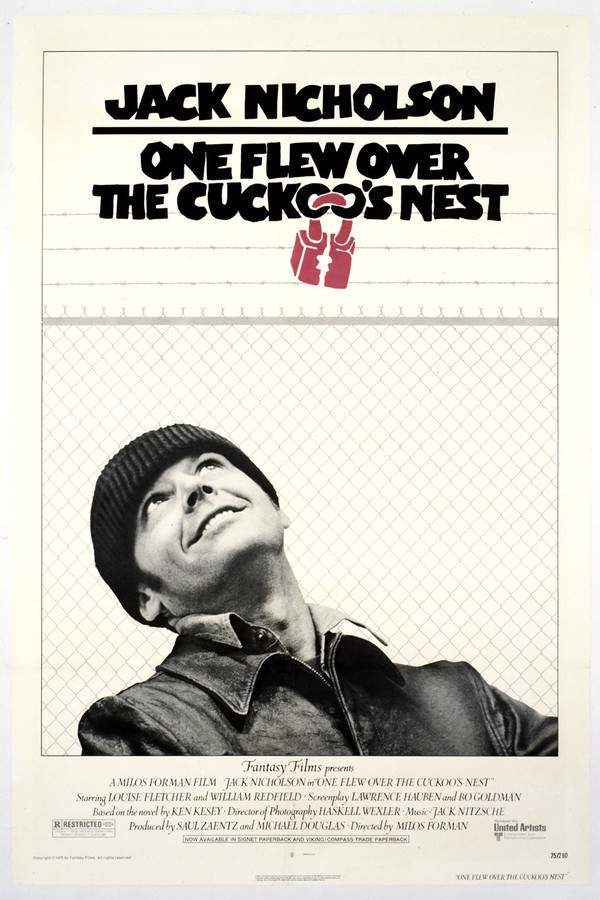
One Flew Over the Cuckoo's Nest (1975) movie poster

Plot Summary

One Flew Over the Cuckoo's Nest (1975) Plot Summary Explained

Release, runtime and language
1975 · 133 min · English
Loading streaming availability…
Directed by
Milos Forman
Starring
Louise Fletcher
Budget
$3M

To avoid prison labor, the rebellious Randle McMurphy feigns insanity and is transferred to a mental institution. There, he clashes with the cold and controlling Nurse Ratched, disrupting the ward's rigid routine and inspiring the other patients to question their circumstances. McMurphy's arrival sparks a power struggle that challenges the hospital’s oppressive atmosphere and exposes the vulnerability of those under Nurse Ratched’s care, ultimately leading to a tense and dramatic confrontation.

On this page (7)
  1. 1 Where to watch
  2. 2 What happens: full plot
  3. 3 Plot questions answered
  4. 4 The book behind the movie
  5. 5 Movie threads
  6. 6 Movies like One Flew Over the Cuckoo's Nest
  7. 7 Every angle
Loading streaming availability…

Full plot summary · contains spoilers

What Happens in One Flew Over the Cuckoo's Nest: Full Plot Summary

The whole story of One Flew Over the Cuckoo's Nest (1975) explained, from the opening scene to the final frame: every key event, every twist and what it all adds up to. Read it as a quick recap before the sequel, to check a scene you missed, or to finally understand what really happened.

In 1963 Oregon, Randle McMurphy, a man with a troubling history of legal issues, including statutory rape, feigns mental illness to evade hard labor and ends up in a mental institution. Here, he confronts the cold and manipulative Nurse Ratched, who wields her authority with an iron fist, instilling fear among her patients to maintain control.

Among the patients are a colorful array of characters: young, stuttering Billy Bibbit, fiery Charlie Cheswick, delusional Martini, the articulate yet repressed Dale Harding, and the rebellious Max Taber, along with several others, including the silent but observant Chief Bromden. Their interactions reveal not just their struggles but also the oppressive environment created by Ratched.

McMurphy's vibrant spirit becomes a direct challenge to Ratched's dominance, prompting her to retaliate by confiscating cigarettes and restricting card-playing, which escalates the tension between them. Eager to break free from his confines, McMurphy makes a bold bet with his fellow inmates that he can escape the institution, even attempting to uproot a hydrotherapy fountain—an ambitious yet futile endeavor.

Seizing an opportunity, he manages to steal a charter bus and takes several patients, including his girlfriend Candy, on a fishing trip. This adventure introduces them to the outside world, helping them rediscover their self-worth and potential.

Faced with the harsh reality that his stay could become indefinite, McMurphy rallies his fellow patients. After a confrontation with the orderlies, he, Chief, and Cheswick find themselves in the disturbed ward, where Chief reveals he has been pretending to be deaf and mute to avoid interaction. United in their desire to escape, they concoct a plan.

After enduring electroconvulsive therapy, McMurphy adopts a facade of being brain-damaged while secretly plotting against Ratched. They decide to host a Christmas party after hours, inviting Candy and her friend Rose, both smuggling in alcohol. As chaos ensues during the party, McMurphy attempts to help Billy navigate a date with Candy, only for events to spiral out of control.

One morning, Ratched discovers the aftermath of the wild party and seeks to humiliate Billy by leveraging his panic. When he momentarily stands up to her, he ultimately folds under the pressure, leading to a tragic outcome. Moved by this tragedy, McMurphy reacts violently, igniting a fierce struggle with the orderlies.

As the narrative unfolds, Ratched is left shaken, while whispers of McMurphy's fate circulate. Chief, caught in a whirlwind of admiration and despair, ultimately finds McMurphy returned, but tragically lobotomized. In a heart-wrenching moment, Chief decides to end McMurphy's suffering and escapes, fulfilling the promise of freedom they once shared. With a defiant act reminiscent of McMurphy's earlier attempts, he tears away the hydrotherapy fountain, symbolizing both the escape from oppression and the complex bond formed in an unforgiving environment.

Last updated: November 16, 2024 at 18:32

Was this helpful?

Plot questions answered

One Flew Over the Cuckoo's Nest Plot Explained: Your Questions Answered

The questions people ask most about One Flew Over the Cuckoo's Nest (1975): what happens in the confusing scenes, why the characters do what they do, the twists, hidden details and what the ending means. Each answer contains spoilers.

Q1

Why did Randle McMurphy pretend to be insane?

McMurphy faked mental illness to avoid hard labor in prison. He had a history of legal troubles including statutory rape, and chose the mental institution as what he thought would be an easier alternative. He quickly discovers, however, that escaping the institution proves far more difficult than he anticipated.

Foreshadowing: Earlier in the film, McMurphy boasts about winning bets and manipulating situations, establishing his tendency to think he can outsmart any system.

  • mcmurphy
  • fake insanity
  • motivation
  • prison
  • hard labor
Q2

Why does Nurse Ratched have so much control over the patients?

Nurse Ratched maintains power through psychological manipulation rather than physical force. She creates a climate of fear, uses privilege withdrawal as punishment, and systematically breaks down any sense of self-worth in her patients. Her methods include public humiliation, dividing patients against each other, and exploiting their vulnerabilities. This leaves the patients feeling powerless and dependent on the system.

Foreshadowing: The opening scenes show Ratched calmly observing a patient having a breakdown, demonstrating her emotional detachment and control over the ward atmosphere.

  • nurse ratched
  • control
  • power
  • manipulation
  • patients
  • abuse
Q3

Why is the fishing trip significant in the story?

The fishing trip represents the first time the patients experience genuine freedom and self-worth outside the institutional walls. McMurphy steals a charter bus and takes several patients, including his girlfriend Candy, to fish. This adventure restores their sense of capability and humanity, proving to them they can function in the outside world. The experience strengthens their bonds and fuels their desire for real freedom.

Foreshadowing: McMurphy's earlier bet about escaping and his attempt to uproot the hydrotherapy fountain demonstrate his persistent drive to break free from confinement.

  • fishing trip
  • freedom
  • patients
  • candy
  • self worth
  • escape
Q4

Why does McMurphy receive electroconvulsive therapy?

McMurphy undergoes electroconvulsive therapy as punishment for his continued rebellion against the ward's rules. After his failed escape attempts and challenges to Ratched's authority, the hospital administers the treatment to break his spirit. McMurphy pretends to be brain-damaged afterward, playing along with Ratched's expectations while secretly continuing to plot against her.

Foreshadowing: Ratched's earlier confiscation of cigarettes and restriction of card games establish her pattern of using institutional tools to suppress resistance.

  • electroconvulsive therapy
  • punishment
  • rebellion
  • ratched
  • brain damage
Q5

What happens to Billy Bibbit after the Christmas party?

After the chaotic Christmas party, Nurse Ratched deliberately humiliates Billy by exposing his night with Candy to the other patients and the staff. Unable to handle the shame and pressure, Billy has a breakdown and tragically takes his own life. This event is a turning point that shatters the fragile hope the patients had developed, showing the devastating consequences of Ratched's psychological cruelty.

Foreshadowing: Billy's stuttering and lack of confidence throughout the film establish his vulnerability and inability to stand up to authority.

  • billy bibbit
  • suicide
  • christmas party
  • humiliation
  • ratched
  • death
Q6

Why is McMurphy lobotomized at the end?

McMurphy is lobotomized as punishment for his violent attack on the orderlies after Billy's suicide. His violent outburst, attacking the orderlies in a desperate attempt to protect his friends, leads the hospital to deem him too uncontrollable. The lobotomy destroys his vibrant personality, reducing him to a shell of his former self, effectively extinguishing his rebellious spirit.

Foreshadowing: The buildup of tension between McMurphy and Ratched, especially after the Christmas party chaos, makes his violent retaliation feel inevitable.

  • mcmurphy
  • lobotomy
  • punishment
  • violence
  • orderlies
  • destruction
Q7

Why does Chief Bromden kill McMurphy?

Chief kills McMurphy out of compassion and mercy. After seeing his friend returned as a lobotomized shell, unable to speak, move, or function, Chief chooses to end McMurphy's suffering. He smothering him with a pillow, viewing this act as the final gift of freedom he can offer. This choice reflects Chief's transformation from a silent, fearful man into someone willing to act decisively.

Foreshadowing: Chief's earlier revelation that he has been pretending to be deaf and mute, combined with his growing connection with McMurphy, sets up his eventual act of courage.

  • chief bromden
  • kill
  • mcmurphy
  • mercy
  • lobotomy
  • freedom
  • compassion
Q8

What does Chief's escape at the end represent?

Chief's escape represents both tragic loss and fragile hope. By fleeing the institution after killing McMurphy, Chief finally breaks free from his self-imposed silence and passivity, something McMurphy spent the entire film trying to help him achieve. However, the victory is bittersweet: McMurphy's transformation into a lobotomized patient and subsequent death means his freedom came at the ultimate cost. The torn-out hydrotherapy fountain symbolizes the destruction of institutional control.

Foreshadowing: Earlier conversations between McMurphy and Chief about freedom and escape establish this as McMurphy's ultimate goal for his friend.

  • chief escape
  • freedom
  • ending
  • symbolism
  • hydrotherapy fountain
  • victory
Q9

How does McMurphy influence the other patients?

McMurphy inspires the patients to question their circumstances and reclaim their sense of self-worth. Through his defiance of Ratched and his insistence that they are capable men, he helps them see they have power over their own lives. He gives them permission to think of themselves as free individuals rather than patients. This transformation is most visible in Chief, who goes from feigning deafness and muteness to becoming the agent of his own escape.

Foreshadowing: McMurphy's persistent challenges to Ratched's rules, even when they result in punishment, model for the patients that resistance is possible.

  • mcmurphy
  • patients
  • influence
  • change
  • inspiration
  • freedom
Q10

Why does Chief tear out the hydrotherapy fountain at the end?

Chief tears out the hydrotherapy fountain as his final act of rebellion and a tribute to McMurphy. Earlier in the film, McMurphy attempted to uproot the same fountain, shouting that he was big enough to rip it out but failed. By succeeding where McMurphy failed, Chief proves that McMurphy's spirit lives on through him. The destruction also symbolizes the shattering of the institution's control.

Foreshadowing: McMurphy's failed attempt to rip out the fountain earlier demonstrates his initial struggle against institutional oppression.

  • hydrotherapy fountain
  • destruction
  • rebellion
  • symbolism
  • chief
  • mcmurphy
Q11

Why don't the patients fight back against Nurse Ratched earlier?

The patients accept Ratched's abuse because the institution has systematically stripped away their confidence and sense of agency. Years of psychological manipulation have convinced many that they are genuinely sick and incapable of functioning outside the hospital. Some, like Chief, have learned that silence is survival. Others, like Dale Harding, have rationalized their submission. McMurphy's arrival challenges these learned behaviors and shows them alternatives to passivity.

Foreshadowing: The initial scene establishing each patient's specific fears and weaknesses demonstrates how thoroughly Ratched has conditioned them.

  • patients
  • abuse
  • resistance
  • psychological manipulation
  • submission
  • ratched

Movie threads

More Movies Like One Flew Over the Cuckoo's Nest, by Mood & Story

Curated lists built around what makes One Flew Over the Cuckoo's Nest tick: the same mood, the same kind of story or the same emotional payoff. Each list explains why these movies belong together.

Rebellion Against Oppressive Systems like in One Flew Over the Cuckoo's Nest

A defiant individual sparks a revolution against a cold, controlling institution. For viewers looking for movies like One Flew Over the Cuckoo's Nest, this thread features intense dramas about rebels confronting institutional control. These stories share a similar feel of defiance, high emotional stakes, and a clash between individuality and unyielding authority in a closed-off world.

  • defiant
  • oppressive
  • claustrophobic
  • rebellious
  • tense
  • institutional
  • Tone: dark, defiant, tense
  • Pacing: steady, escalating conflict
Why these movies?

The story pattern: These narratives follow a central conflict where an outsider or rebel enters a tightly controlled system. Through a series of escalating confrontations, they challenge the status quo, rally the oppressed, and force a climactic, often costly, confrontation with the powers that be.

Why they belong together: Movies are grouped here for their shared focus on the theme of individual versus institutional authority, a claustrophobic setting, a dark and intense tone, and a central character arc of rebellion that carries heavy emotional consequences.

Bittersweet Liberation Tragedies like in One Flew Over the Cuckoo's Nest

Stories where freedom is achieved, but at a profound and tragic personal cost. If you liked the ending of One Flew Over the Cuckoo's Nest, this thread collects movies with similar bittersweet conclusions. These films feature heavy emotional weight and stories where liberation or hope emerges from profound tragedy and sacrifice.

  • bittersweet
  • tragic
  • hopeful
  • liberating
  • sacrifice
  • heavy
  • Tone: bittersweet, tragic, hopeful
  • Pacing: steady, dramatic build
Why these movies?

The story pattern: The narrative pattern involves a struggle for freedom that culminates in a resolution where hope is inextricably linked with loss. The victory for the collective or an idea is paid for with a major personal tragedy, leaving the audience with a complex mix of sadness and hope.

Why they belong together: This thread connects movies through their powerful, bittersweet endings and heavy emotional weight. They share a specific emotional mix where feelings of liberation and tragedy coexist, creating a profoundly resonant and thoughtful viewing experience.

If you liked this

Movies Like One Flew Over the Cuckoo's Nest

Similar movies to One Flew Over the Cuckoo's Nest: the same genre, themes or kind of story. Each one comes with its own plot summary, timeline and ending explained.

Browse all movie summaries

Every angle

One Flew Over the Cuckoo's Nest (1975) Explained: Plot, Timeline & Characters

Everything about One Flew Over the Cuckoo's Nest in one place: what happens in the plot summary, the timeline in chronological order, the characters and meaning and a spoiler-free summary. What's After the Movie adds the cast, box office and post-credit scenes.

Coming soon on iOS and Android

The Plot Explained Movie Summary App

Plot summaries, endings explained and timelines on your phone. Catch up on any movie in minutes, save your favorites and never miss a twist again.

Be the first to know when we launch. Your email stays private, always.

Learn more about the app