Plot Explained Spoilers guaranteed!
Plot Explained

Browse by genre

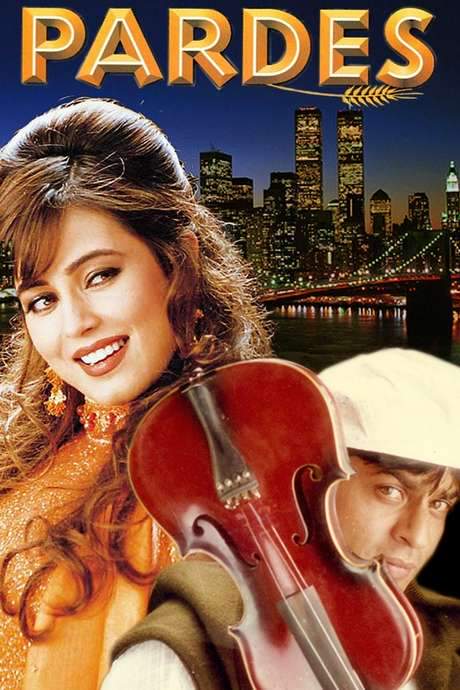
Pardes (1997) movie poster

Plot Summary

Pardes (1997) Plot Summary Explained

Release, runtime and language
1997 · 191 mins · Hindi
Loading streaming availability…
Directed by
Subhash Ghai
Starring
Padmavati Rao, Pavan Malhotra, Alok Nath, Shah Rukh Khan, Mahima Chaudhry, Aditya Narayan

Kishorilal, a traditional Indian patriarch living in the United States, arranges an Indian bride, Ganga—his friend’s daughter—for his western‑educated son. After bringing Ganga to America, she forms an unexpected, deep connection with Arjun, Kishorilal’s loyal foster son, creating tension between duty and desire.

On this page (6)
  1. 1 Where to watch
  2. 2 What happens: full plot
  3. 3 Plot questions answered
  4. 4 Movie threads
  5. 5 Movies like Pardes
  6. 6 Every angle
Loading streaming availability…

Full plot summary · contains spoilers

What Happens in Pardes: Full Plot Summary

The whole story of Pardes (1997) explained, from the opening scene to the final frame: every key event, every twist and what it all adds up to. Read it as a quick recap before the sequel, to check a scene you missed, or to finally understand what really happened.

Suraj Dev [Alok Nath] extends a warm greeting to his childhood friend Kishorilal [Amrish Puri], an NRI visiting India after many years. During the visit, Kishorilal is captivated by Suraj’s daughter Kusum Ganga [Mahima Chaudhry], and he envisions a future alliance by marrying her to his son Rajiv. To steer the arrangement, Kishorilal sends his adopted son Arjun [Shah Rukh Khan] to India to oversee the matchmaking and family dynamics.

Arjun enters Kusum Ganga’s household with a plan to “westernize” the way things run, a prospect Kusum [Mahima Chaudhry] resists with quiet resolve. The initial friction is real and sharp, yet the two gradually form a genuine friendship as they navigate household chores, values, and the expectations of two very different lives. The arrival of Rajiv intensifies the tension, as he is initially surprised by Indian customs but appears respectful of Kusum’s charm and character. Kusum turns to Arjun for insight into Rajiv, yet Arjun crafts a carefully curated, flattering picture of Rajiv that glosses over his flaws, sowing the seeds of a future heartbreak.

With a sense of obligation and affection, Kusum accepts the match and prepares to depart for the United States with Rajiv’s family after their engagement. In the US, Kusum finds the extended family cool and distant, treating her as an outsider within a much more modern, westernized home. She begins leaning on Arjun for emotional support, and their bond deepens as he becomes her confidant. As time passes, Rajiv’s true nature comes to light: he drinks heavily and pursues women, showing a lifestyle that clashes with Kusum’s ideals and the promises of the engagement. Feeling betrayed, Kusum blames Arjun for the deception, and Kishorilal urges her to try to understand Rajiv and to work on the marriage, arguing that she’s the central pillar who can steady the household.

A turning point arrives on a trip to Las Vegas, where Rajiv presses Kusum to sleep with him before marriage. Kusum makes a clear stand to remain faithful until marriage, clashing with Rajiv’s arrogance and his disregard for Indian traditions. The confrontation escalates; Kusum slaps Rajiv, rejects the engagement by discarding her ring, and, in a fit of intoxicated aggression, Rajiv assaults Kusum. She fights back, sustaining injuries, and escapes. Arjun finds Kusum crying at a train station and safely escorts her back to India.

Back in the village, Kishorilal—believing that Arjun and Kusum have eloped—confronts them with hostility, even threatening violence. The situation intensifies as Rajiv and Kishorilal arrive in India, and Arjun and Rajiv clash in a fierce confrontation that leaves Arjun bleeding. Kishorilal intervenes and demands the truth. Arjun explains that his actions were meant to protect Kusum from Rajiv, not to elope with her, and he confesses his enduring love for Kusum. Kusum confirms his account by revealing the marks of Rajiv’s assault, leaving Kishorilal stunned. He rebukes Rajiv with a slap and cancels the engagement, declaring that Kusum will marry Arjun instead. The story closes with the couple returning to the United States to begin a new, married life together, their bond strengthened by the trials they have endured.

Throughout, the film threads themes of tradition versus modernity, trust and deception, and the resilience of love when tested by cultural and personal conflict. The emotional arc follows Kusum Ganga and Arjun’s evolving relationship as they navigate family expectations, moral boundaries, and the consequences of choices made under pressure, ultimately choosing to build a life together in a world that spans two continents.
Last updated: October 09, 2025 at 10:44

Was this helpful?

Plot questions answered

Pardes Plot Explained: Your Questions Answered

The questions people ask most about Pardes (1997): what happens in the confusing scenes, why the characters do what they do, the twists, hidden details and what the ending means. Each answer contains spoilers.

Q1

Why did Arjun lie to Ganga about Rajiv's character?

Arjun lied about Rajiv's character because he had already begun developing genuine feelings for Ganga. By painting an idealized picture of Rajiv, he hoped to make the engagement seem more acceptable to Ganga, which would indirectly benefit him by keeping her in his life longer. This deception ultimately backfired when Ganga discovered Rajiv's true nature in America.

Foreshadowing: Earlier, when Arjun first arrives and tries to westernize the household, his attention toward Ganga goes beyond professional interest, hinting at his personal feelings.

  • arjun
  • ganga
  • rajiv
  • deception
  • love triangle
  • motivation
Q2

Why did Kishorilal think Arjun and Ganga eloped?

Kishorilal believed they eloped because Ganga suddenly returned to India with Arjun after the assault, without any prior warning. Given the deep emotional bond that had formed between them during Ganga's time in America, Kishorilal assumed the worst, that his adopted son had betrayed him by running away with the woman he had brought for his biological son.

Foreshadowing: Throughout Ganga's difficult time in America, Arjun consistently prioritized her emotional well-being over his loyalty to Kishorilal and Rajiv, signaling his deeper commitment.

  • kishorilal
  • arjun
  • ganga
  • elopement
  • misunderstanding
  • village
Q3

What triggered Rajiv's assault on Ganga in Las Vegas?

Rajiv's assault was triggered by Ganga's rejection of his sexual advances and her public refusal to comply with his demands. When she slapped him, discarded her engagement ring, and stood firm on her values until marriage, Rajiv's intoxication and arrogance combined into violence. He attacked her when she resisted his advances, proving his true character beneath the civilized facade he had maintained during the courtship.

Foreshadowing: Earlier hints of Rajiv's drinking and womanizing in America foreshadowed his inability to control his impulses when challenged.

  • rajiv
  • ganga
  • assault
  • las vegas
  • violence
  • rejection
Q4

Why did Kishorilal approve of Arjun marrying Ganga after opposing them?

Kishorilal changed his mind when he witnessed Ganga's injuries from Rajiv's assault and heard Arjun's confession of true love for her. The physical evidence of Rajiv's violence and Arjun's sincere admission that he had protected Ganga out of love, not elopement, converted Kishorilal. He realized Arjun's loyalty and genuine care for Ganga made him a better choice than his biological son, leading him to cancel Rajiv's engagement and bless the union.

Foreshadowing: Kishorilal's earlier pride in Arjun as his loyal foster son who followed instructions set the foundation for his ultimate trust in Arjun's word.

  • kishorilal
  • arjun
  • ganga
  • approval
  • marriage
  • forgiveness
Q5

Why did Ganga blame Arjun for Rajiv's true nature being hidden?

Ganga blamed Arjun because he had been her primary source of information about Rajiv during their courtship. When she discovered Rajiv was an alcoholic and womanizer, she felt betrayed by the false picture Arjun had painted. She didn't yet realize Arjun had lied out of personal affection for her, assuming instead that he had failed in his duty to vet the groom honestly.

Foreshadowing: When Ganga asked Arjun to tell her about Rajiv, his hesitation before responding hinted at the discomfort his fabricated answers would later cause.

  • ganga
  • arjun
  • rajiv
  • blame
  • deception
  • betrayal
Q6

How did Arjun and Ganga's relationship develop from conflict to love?

Their relationship evolved through constant interaction and shared experiences. Initially clashing over Arjun's attempts to westernize the household, they gradually respected each other's values while navigating cultural differences. In America, as Ganga faced isolation and Rajiv's true colors, Arjun became her emotional anchor, and their bond deepened into genuine love, built on trust rather than the superficial engagement arrangement.

Foreshadowing: Their earlyarguments masked mutual curiosity and admiration that grew more apparent as they spent time together.

  • arjun
  • ganga
  • relationship
  • evolution
  • love
  • culture clash
Q7

Why did Ganga agree to marry Rajiv despite barely knowing him?

Ganga accepted the arranged marriage because of family obligation and cultural tradition. As the daughter of Surajdev, Kishorilal's childhood friend, she trusted the arrangement based on familial connections. Additionally, Arjun's fabricated positive description of Rajiv made the match seem promising, and she believed she could build a life with him despite the short courtship period typical of arranged marriages.

Foreshadowing: Ganga's initial resistance to Arjun's westernizing efforts showed her commitment to traditional values, including acceptance of arranged marriage.

  • ganga
  • rajiv
  • arranged marriage
  • tradition
  • acceptance
  • village
Q8

How does the film explore tradition versus modernity?

The film contrasts traditional Indian values with Western modernization through the characters' clashes. Ganga represents traditional values, modesty, fidelity, and family honor, while Rajiv's American lifestyle embodies modernity corrupted into excess. Arjun bridges both worlds, understanding traditional roots while adapting to Western realities. This tension drives the conflict when Rajiv's modern lifestyle betrays traditional expectations, ultimately validating Ganga's and Arjun's values.

Foreshadowing: Arjun's initial mission to westernize Ganga's household sets up the thematic battle between progressive change and cultural preservation.

  • tradition
  • modernity
  • culture clash
  • indian values
  • westernization
  • conflict
Q9

Why did Kishorilal send Arjun instead of going himself to arrange the marriage?

Kishorilal sent Arjun because he trusted his adopted son to handle delicate family matters discreetly. As an NRI unfamiliar with current Indian customs after years abroad, Arjun could navigate the village dynamics more effectively. Kishorilal also wanted someone to assess the family and report back honestly, making Arjun the ideal intermediary between his Westernized life and his Indian roots.

Foreshadowing: Kishorilal's complete trust in Arjun made his later suspicion of betrayal more devastating.

  • kishorilal
  • arjun
  • india
  • arranged marriage
  • trust
  • intermediary
Q10

What happened during the final confrontation between Rajiv and Arjun?

The confrontation turned violent when Arjun and Rajiv fought in the village after Kishorilal arrived. Rajiv, exposed as an abuser, attacked Arjun, leaving him bleeding. This physical fight forced Kishorilal to finally witness his biological son's true nature firsthand. The violence broke through all pretense, leading Kishorilal to demand answers and ultimately side with Arjun and Ganga against his own son.

Foreshadowing: Tensions had been building since Las Vegas, and Rajiv's aggressive tendencies had already surfaced during the assault.

  • rajiv
  • arjun
  • confrontation
  • village
  • fight
  • kishorilal

Movie threads

More Movies Like Pardes, by Mood & Story

Curated lists built around what makes Pardes tick: the same mood, the same kind of story or the same emotional payoff. Each list explains why these movies belong together.

Duty versus Desire Dramas like Pardes

Stories where personal passion clashes with rigid family honor and cultural expectations. If you liked the conflict between love and obligation in Pardes, explore more movies like it. These similar films feature traditional societies, arranged marriages, and the heavy emotional weight of choosing between family honor and personal happiness.

  • traditional
  • conflicted
  • dramatic
  • emotional
  • tense
  • heartbreaking
  • Tone: tense, dramatic, emotional
  • Pacing: steady, building pressure
Why these movies?

The story pattern: The narrative pattern typically involves a protagonist bound by duty who develops a forbidden attraction. The story builds tension as their secret desires threaten to disrupt family harmony, culminating in a crisis that forces a choice between personal fulfillment and societal conformity, often with a bittersweet or hard-won resolution.

Why they belong together: These films are grouped by their central theme of cultural conflict and the heavy emotional burden of choice. They share a tense tone, steady pacing that builds pressure, and a focus on the emotional fallout of challenging deeply ingrained traditions.

Cathartic Family Melodramas like Pardes

Emotionally draining journeys through family betrayal and sacrifice that find hopeful resolution. Discover more emotionally heavy family stories similar to Pardes. These movies like Pardes feature heartbreaking betrayals, dramatic confrontations, and a steady pacing that leads to a hopeful, satisfying ending after a journey of intense emotional weight.

  • melodramatic
  • heartbreaking
  • resilient
  • emotional
  • dramatic
  • cathartic
  • Tone: heartbreaking, melodramatic, resilient
  • Pacing: steady, dramatic progression
Why these movies?

The story pattern: The emotional journey begins with a seemingly ideal situation that is gradually fractured by deception, cultural pressure, or betrayal. The middle acts are characterized by escalating drama and heartbreak, often involving a physical or emotional crisis, before culminating in a transformative climax that allows for forgiveness, redemption, or the triumph of true love, providing a powerful emotional release.

Why they belong together: They are united by their specific emotional arc: starting with high hopes, descending into heavy drama and conflict, and ultimately achieving a happy or hopeful ending. This creates a unique mix of high sadness and high romance scores, resulting in a deeply cathartic viewer experience.

If you liked this

Movies Like Pardes

Similar movies to Pardes: the same genre, themes or kind of story. Each one comes with its own plot summary, timeline and ending explained.

Browse all movie summaries

Every angle

Pardes (1997) Explained: Plot, Timeline & Characters

Everything about Pardes in one place: what happens in the plot summary, the timeline in chronological order, the characters and meaning and a spoiler-free summary. What's After the Movie adds the cast, box office and post-credit scenes.

Coming soon on iOS and Android

The Plot Explained Movie Summary App

Plot summaries, endings explained and timelines on your phone. Catch up on any movie in minutes, save your favorites and never miss a twist again.

Be the first to know when we launch. Your email stays private, always.

Learn more about the app