

Plot Explained Spoilers guaranteed!
Plot Explained

Browse by genre

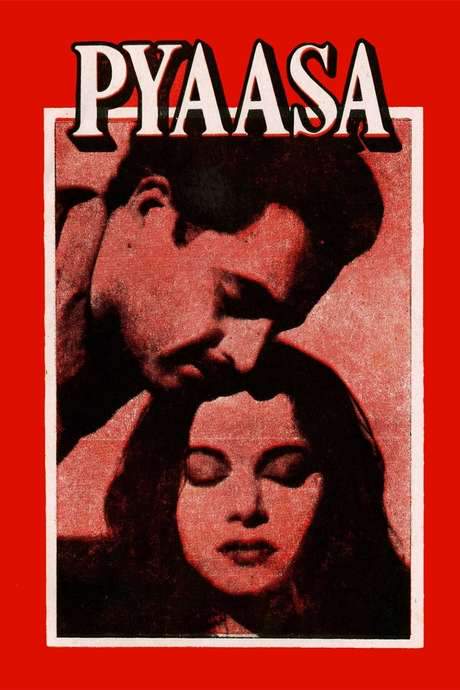
Pyaasa (1957) movie poster

Plot Summary

Pyaasa (1957) Plot Summary Explained

Release, runtime and language
1957 · 146 mins · Hindi
Starring
Waheeda Rehman, Ashita, Johnny Walker, Tun Tun, Mehmood, Leela Mishra

Vijay, a struggling poet, longs for true love while fighting to have his verses published. With the support of two women who become his confidantes, his literary aspirations are finally realized, but the success forces him to confront harsh truths and reassess his worldview.

On this page (6)
  1. 1 Where to watch
  2. 2 What happens: full plot
  3. 3 Plot questions answered
  4. 4 Movie threads
  5. 5 Movies like Pyaasa
  6. 6 Every angle

Where to watch

Where to Watch Pyaasa (1957)

Where can you watch Pyaasa? Stream, rent or buy it in the US, including on Amazon Video: current JustWatch availability with up-to-date prices.

Streaming availability powered by JustWatch

Full plot summary · contains spoilers

What Happens in Pyaasa: Full Plot Summary

The whole story of Pyaasa (1957) explained, from the opening scene to the final frame: every key event, every twist and what it all adds up to. Read it as a quick recap before the sequel, to check a scene you missed, or to finally understand what really happened.

Vijay Guru Dutt is a principled but struggling Urdu poet in Calcutta. His works tackle unemployment, poverty, and social issues, which publishers dismiss as unmarketable compared to conventional romantic fare. His brothers mock him and even try to sell his poems as waste paper. Unable to endure their derision, Vijay leaves home and discovers, to his shock, that his brothers have sold his poems.

During this period, Vijay meets Gulabo, Waheeda Rehman, a prostitute who admires his poetry and falls in love with him. The encounter introduces a complex tension between art, survival, and affection in a world that treats him more as a curiosity than a creator.

Meanwhile, Vijay's former girlfriend, Meena Mala Sinha, has married a wealthy publisher named Ghosh. Ghosh, Rehman, hires Vijay as a servant to spy on him and Meena, turning the poet’s vulnerability into a tool for his own financial and social gain. As secrets collide, a beggar to whom Vijay had given his coat is mistaken for Vijay after the beggar dies in a train accident. Believing Vijay to be dead, Gulabo approaches Ghosh and convinces him to publish Vijay's poems, seeing a profitable opportunity in the posthumous fame.

The poems become a massive success, but Vijay is actually alive, recovering in a hospital after the train incident. When Vijay returns, Ghosh and Shyam Kapoor, Vijay's close friend, refuse to acknowledge him, deepening the sense of betrayal and mistrust that threads through the lives of everyone involved. Vijay is soon committed to a mental asylum after insisting that he is the real Vijay and being labeled insane. His brothers are bribed by Ghosh to disown him, and a memorial service is held for the “deceased” poet, a ceremony that underscored the cruel incentives of fame and the hypocrisy of those around him.

With the help of his friend Abdul Sattar, Johnny Walker, Vijay escapes from the asylum and arrives at the memorial service, where he condemns the corrupt and materialistic world that profited from his supposed death. Upon realizing that Vijay is alive, his friends and brothers side with a rival publisher for financial gain and declare him to be the real Vijay. At a ceremony held in his honor, Vijay grows disillusioned by the choreography of praise and the hollow rituals surrounding him, renouncing his own identity and declaring that he is not Vijay. He walks away with Gulabo to start a new life, choosing authenticity over applause and seeking a future where art and love can coexist free from exploitation.

Last updated: October 09, 2025 at 09:28

Was this helpful?

Plot questions answered

Pyaasa Plot Explained: Your Questions Answered

The questions people ask most about Pyaasa (1957): what happens in the confusing scenes, why the characters do what they do, the twists, hidden details and what the ending means. Each answer contains spoilers.

Q1

Why do publishers reject Vijay's poetry?

Publishers dismiss Vijay's poems because they focus on social issues like unemployment and poverty, which they consider unmarketable. They prefer conventional romantic fare that sells better. Vijay's brother also mocks him and tries to sell his poems as waste paper, showing how his principled art is undervalued in a materialistic society.

Foreshadowing: Earlier, Vijay's brothers scorn his vocation, hinting at the commercial pressures he will face.

  • publishers
  • poetry
  • rejection
  • social issues
  • urdu poet
Q2

How does the beggar get mistaken for Vijay after the train accident?

Vijay once gave his coat to a beggar. When the beggar dies in a train accident, he is wearing that coat and is mistakenly identified as Vijay. This misunderstanding triggers the chain of events where everyone believes the poet is dead, allowing his work to be published posthumously.

Foreshadowing: Vijay's act of giving his coat establishes the crucial detail that enables the mistaken identity.

  • beggar
  • coat
  • train accident
  • mistaken identity
  • death
Q3

Why does Ghosh agree to publish Vijay's poems after his supposed death?

Ghosh sees a profitable opportunity in publishing the work of a deceased poet. Gulabo approaches him believing Vijay is dead and convinces him to publish the poems. Ghosh recognizes that posthumous fame and the tragedy of a dead poet will generate more revenue than publishing a living, struggling writer.

Foreshadowing: Ghosh's earlier exploitation of Vijay as a servant to spy on Meena establishes his mercenary nature.

  • ghosh
  • publishing
  • posthumous fame
  • poems
  • money
Q4

Why is Vijay committed to a mental asylum after returning?

When Vijay returns alive, he insists he is the real Vijay, but Ghosh and Shyam deny his identity. Unable to prove who he is in a world that has profited from his death, Vijay is labeled insane and sent to an asylum. This represents how society traps those who speak truth against constructed narratives.

Foreshadowing: Ghosh's refusal to acknowledge Vijay foreshadows his complete control over the poet's identity.

  • asylum
  • insanity
  • identity
  • imprisonment
  • vijay's return
Q5

Why does Vijay renounce his identity at the ceremony?

At the ceremony honoring him, Vijay realizes that everyone around him, his friends, brothers, and publishers, are motivated by money and status. They declare him real only when it benefits a rival publisher. Disillusioned by the hypocrisy and exploitation surrounding his fame, Vijay rejects the false identity they created and declares he is not Vijay, choosing authenticity over hollow applause.

Foreshadowing: The entire narrative builds toward this moment where Vijay rejects the corrupt world that commodified him.

  • renounce identity
  • ceremony
  • hypocrisy
  • fame
  • rejection
Q6

Why does Gulabo convince Ghosh to publish Vijay's poems after believing he is dead?

Gulabo genuinely loves Vijay and his poetry. Believing he is dead, she sees an opportunity to give his work the recognition it deserved while he was alive. She also likely understands that posthumous publication will ensure his legacy survives, even if she cannot be with him.

Foreshadowing: Gulabo's earlier admiration for Vijay's poetry establishes her deep emotional investment in his work.

  • gulabo
  • love
  • publishing
  • posthumous
  • poetry
Q7

Why do Vijay's brothers side with others against him?

Vijay's brothers are bribed by Ghosh to disown him, proving they value money over family. Earlier, they mocked his poetry and tried to sell his work as waste paper. Their betrayal illustrates the film's theme that materialistic values corrupt even blood relationships.

Foreshadowing: Their initial mockery and attempt to profit from his poems foreshadow their later complete betrayal.

  • brothers
  • bribery
  • betrayal
  • money
  • family
Q8

Why does Ghosh refuse to acknowledge Vijay when he returns alive?

Ghosh has built a lucrative publishing empire on the dead Vijay's fame. Acknowledging Vijay is alive would expose his exploitation and destroy his profits. It is far more profitable for him to maintain the fiction of the deceased poet than to accept the real, living Vijay who could challenge his business.

Foreshadowing: Ghosh's earlier hiring of Vijay as a servant to spy on Meena establishes his willingness to use people for gain.

  • ghosh
  • denial
  • return
  • money
  • fame
Q9

Why does Meena marry Ghosh instead of waiting for Vijay?

Meena marries the wealthy publisher Ghosh for financial security, choosing material comfort over true love. The film critiques how society pressures women to marry for stability rather than passion. This choice haunts her later when she must navigate the三角关系 with Vijay working in her household.

Foreshadowing: Vijay's struggle with poverty and unemployment sets the context for why Meena might seek security elsewhere.

  • meena
  • marriage
  • ghosh
  • money
  • security
Q10

Why does Vijay leave his brothers' home?

Vijay cannot endure the constant mockery from his brothers, who scorn his poetry as worthless and even try to sell his poems as waste paper. Their ridicule combined with the publishers' rejection breaks his spirit, forcing him to leave home to pursue his literary aspirations independently.

Foreshadowing: The brothers' contempt for his poetry early on establishes the familial rejection that drives his departure.

  • vijay
  • brothers
  • leaving home
  • poverty
  • mockery
Q11

Why does Abdul Sattar help Vijay escape from the asylum?

Abdul Sattar is Vijay's genuine friend who remains loyal despite the chaos surrounding the poet's identity. Unlike others who profit from Vijay's supposed death, Sattar helps the man he knows to be the real Vijay, representing the rare authentic relationship in Vijay's life.

Foreshadowing: Sattar appears as a supportive figure throughout Vijay's struggles, establishing his role as a true friend.

  • abdul sattar
  • escape
  • asylum
  • friend
  • loyalty
Q12

What causes Vijay's poems to become successful after his supposed death?

The mistaken belief that Vijay is dead transforms him into a tragic figure whose work gains emotional weight. Publishers market the tragedy of a deceased poet, and the public's sympathy for his sad story drives massive sales. This success is entirely based on a lie, highlighting how the literary world values tragedy over living talent.

Foreshadowing: The train accident creates the false narrative that enables this posthumous fame.

  • posthumous success
  • poems
  • fame
  • tragedy
  • publishing

Movie threads

More Movies Like Pyaasa, by Mood & Story

Curated lists built around what makes Pyaasa tick: the same mood, the same kind of story or the same emotional payoff. Each list explains why these movies belong together.

Movies about disillusioned artists like Pyaasa

Stories of creators who find that success comes at the cost of their artistic soul. Explore movies like Pyaasa, where the protagonist's artistic triumph leads to a painful disillusionment. If you were moved by Vijay's rejection of hollow fame, you'll appreciate these powerful stories of creators grappling with the cost of success and searching for authentic meaning beyond the spotlight.

  • introspective
  • poignant
  • disillusioned
  • melancholic
  • searching
  • bittersweet
  • Tone: melancholic, bittersweet, introspective
  • Pacing: steady, character-driven
Why these movies?

The story pattern: The narrative typically begins with an artist's passionate but unrecognized work, leading to a period of intense poverty and struggle. A pivotal event—often involving exploitation or a misunderstanding—propels them to fame. The climax revolves around the artist's realization of the hypocrisy and materialism of the world celebrating them, culminating in a conscious choice to renounce the trappings of success for a more authentic, if simpler, existence.

Why they belong together: Movies in this thread are united by a profound exploration of artistic integrity versus societal validation. They share a heavy emotional weight, a melancholic tone, and a focus on the internal crisis that arises when external goals are achieved but prove spiritually empty. The pacing is often steady, allowing for deep introspection.


Gritty social realism dramas like Pyaasa

Raw, emotional journeys through poverty and societal injustice. Discover movies similar to Pyaasa that blend intense personal drama with sharp social commentary. If you appreciated the film's gritty portrayal of poverty and the emotional toll of societal hypocrisy, these powerful stories of heartbreak and social inequality will resonate with you.

  • gritty
  • poignant
  • oppressive
  • melancholic
  • social commentary
  • heartbreaking
  • Tone: melancholic, poignant, gritty
  • Pacing: steady, immersive
Why these movies?

The story pattern: The narrative is centered on a sympathetic protagonist enduring hardship within an oppressive or indifferent society. The plot is less about grand events and more about a series of accumulating injustices and emotional blows that highlight systemic failures. The journey is one of survival and moral endurance, often leading to a conclusion that is more about a change in perspective or a small personal victory than a solution to the larger societal problems.

Why they belong together: These films are grouped by their shared commitment to a melancholic, realistic tone and their focus on the heavy emotional impact of social structures on the individual. They combine a steady, immersive pacing with high emotional intensity to create a powerfully moving and thought-provoking viewing experience.

If you liked this

Movies Like Pyaasa

Similar movies to Pyaasa: the same genre, themes or kind of story. Each one comes with its own plot summary, timeline and ending explained.

Browse all movie summaries

Every angle

Pyaasa (1957) Explained: Plot, Timeline & Characters

Everything about Pyaasa in one place: what happens in the plot summary, the timeline in chronological order, the characters and meaning and a spoiler-free summary. What's After the Movie adds the cast, box office and post-credit scenes.

Coming soon on iOS and Android

The Plot Explained Movie Summary App

Plot summaries, endings explained and timelines on your phone. Catch up on any movie in minutes, save your favorites and never miss a twist again.

Be the first to know when we launch. Your email stays private, always.

Learn more about the app