Plot Explained Spoilers guaranteed!
Plot Explained

Browse by genre

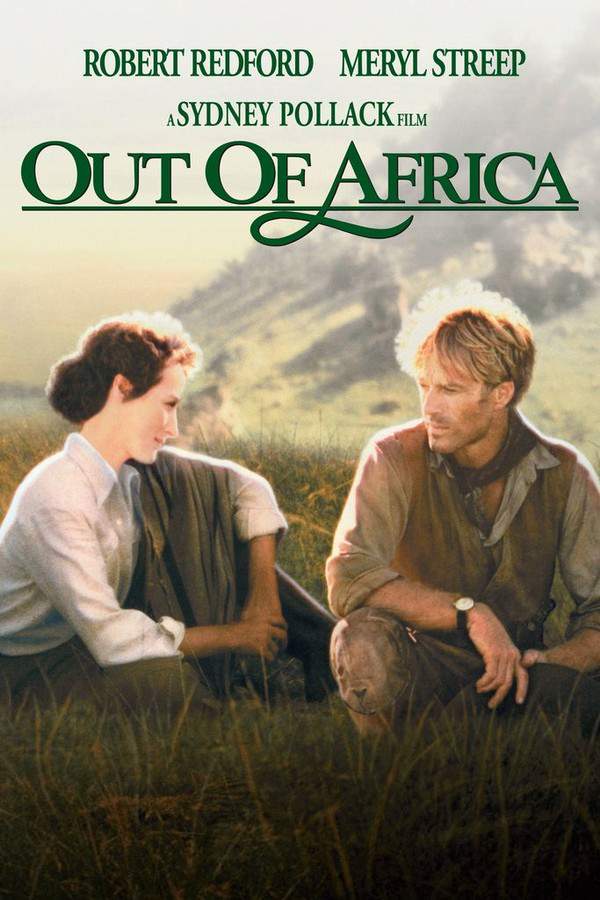
Out of Africa (1985) movie poster

Plot Summary

Out of Africa (1985) Plot Summary Explained

Release, runtime and language
1985 · 161 min · English
Loading streaming availability…
Directed by
Sydney Pollack
Starring
Robert Redford, Meryl Streep, Michael Kitchen, Klaus Maria Brandauer, Suzanna Hamilton, Joseph Thiaka

A captivating story follows Karen Blixen as she leaves her life in Denmark to establish a coffee plantation in colonial Kenya. There, she experiences the beauty and challenges of the African landscape and finds herself drawn into a complex relationship with hunter Denys. Torn between her marriage and a passionate but unattainable love, Karen grapples with questions of identity, independence, and the allure of a life far removed from her privileged past.

On this page (7)
  1. 1 Where to watch
  2. 2 What happens: full plot
  3. 3 Plot questions answered
  4. 4 The book behind the movie
  5. 5 Movie threads
  6. 6 Movies like Out of Africa
  7. 7 Every angle
Loading streaming availability…

Full plot summary · contains spoilers

What Happens in Out of Africa: Full Plot Summary

The whole story of Out of Africa (1985) explained, from the opening scene to the final frame: every key event, every twist and what it all adds up to. Read it as a quick recap before the sequel, to check a scene you missed, or to finally understand what really happened.

As Karen Blixen (Meryl Streep) reflects on her life in Africa, she remembers arriving there in 1913 as a wealthy Dane, just on the brink of marrying a prominent Swedish noble. However, an unexpected twist of fate leads to heartbreak when her initial fiancé abandons her. In a bid to find companionship, she proposes to his brother, Baron Bror Blixen (Klaus Maria Brandauer), entering into a marriage of convenience that aims to establish a dairy ranch in Nairobi, British East Africa, with Karen providing the necessary financial support. Their plan is to formalize the union once she joins him a few months later.

Upon her journey to Nairobi, Karen's train is interrupted by a big-game hunter, Denys Finch Hatton (Robert Redford), who hands her a significant ivory haul and shares his connection to Bror. After reaching her destination, Karen is met by Farah (Malick Bowens), the Somali headman. Attempting to familiarize herself with her new life, she visits the elite Muthaiga Club but faces resistance while seeking her husband in the men-only area. Nevertheless, she and Bror soon marry, raising her status to that of Baroness Blixen.

The optimism of her new life quickly dissipates when Karen learns that Bror has disregarded their initial plan for a dairy farm in favor of less promising coffee crops. Frustrated by Bror’s lack of involvement in their business venture, she shoulders the burden of managing their farm alone. Over time, she becomes immersed in the local culture, helping the Kikuyu squatters, establishing schools, tending to their needs, and mediating conflicts. At the same time, she strives to create a typical European household that stands out among the other colonial elites.

As Karen grows closer to Africa and its people, her affection for the land intensifies. She forges a deep friendship with Felicity (Suzanna Hamilton), whose character draws inspiration from the life of Beryl Markham. Their companionship flourishes, and Karen's relationship with Bror reaches a boiling point, leading to an intimate encounter. However, Bror's persistent infidelity drives Karen to find solace in storytelling during lonely evenings.

The advent of World War I brings the colonists together as they form a militia led by Lord Delamere (Michael Kitchen), which includes Denys and Bror. As part of this collective effort, Karen intelligently sets off on a crucial expedition to gather supplies for the soldier group, fulfilling her duty with resilience.

When Karen unexpectedly contracts syphilis from Bror, she is thrust back to Denmark for treatment, leaving Bror to manage the farm alone. After her recovery, Bror continues his safaris, allowing their marriage to dissolve into indifference. During a New Year’s celebration, Karen shares a poignant moment with Denys, signaling the beginning of her emotional drift from Bror.

As their relationship evolves, Denys enhances Karen’s life with adventure by introducing her to the thrill of flight in his Gipsy Moth biplane. However, their romance is strained as Bror prepares to remarry, prompting Karen to seek a divorce. When Denys considers a private safari with Felicity, the tension escalates, leading to a painful confrontation that ultimately fractures their bond. Denys, unable to align his wandering spirit with Karen's desires for commitment, decides to leave.

After their split, the farm—which once flourished—now lies in ruins as fire consumes their land and possessions, compelling Karen to prepare for her return to Denmark. She pleads with the newly appointed governor to ensure land for her Kikuyu workers while holding a heartfelt rummage sale to part with her belongings. In a meaningful farewell, Denys visits their empty home, revealing a shift in his feelings, expressing a desire to accompany her back to Mombasa, only for fate to intervene tragically.

Denys embarks on a scouting trip in his biplane but never returns, his crash in Tsavo delivering devastating news to Karen from Bror. Heartbroken, she attends his funeral, reciting a poignant line from A.E. Housman’s poem, which encapsulates the untimely end of lives too vivid to be forgotten.

In the wake of Denys' death, Karen is invited to the men's salon at the Muthaiga Club, where she is honored by her peers amidst her grief. As she plans to leave behind the land that shaped her, she entrusts Farah with Denys' compass, requesting him to utter her name one last time, hoping to cherish the memory of his voice. Ultimately, Karen departs Africa, but not before becoming a celebrated author under the pseudonym Isak Dinesen, known for her memoir, Out of Africa, chronicling her extraordinary experiences in this beautiful yet harsh land.
Last updated: November 22, 2024 at 14:47

Was this helpful?

Plot questions answered

Out of Africa Plot Explained: Your Questions Answered

The questions people ask most about Out of Africa (1985): what happens in the confusing scenes, why the characters do what they do, the twists, hidden details and what the ending means. Each answer contains spoilers.

Q1

Why did Karen propose to Bror after her fiancé abandoned her?

After her fiancé abruptly abandoned her, Karen found herself in a difficult position as a woman in colonial Kenya with limited prospects. Rather than return to Denmark in shame, she proposed to Bror, her ex-fiancé's brother, as a practical solution, a marriage of convenience that would give her companionship and a chance to establish a meaningful life in Africa with a dairy ranch venture.

Foreshadowing: Karen's pragmatic decision to marry for security rather than love sets the emotional foundation for her throughout the film, as she never experiences true partnership in either of her marriages.

  • karen blixen
  • baron bror blixen
  • marriage of convenience
  • proposal
  • colonialism
Q2

Why did Karen's coffee plantation fail?

Bror diverted their original plan for a dairy farm to coffee crops, which proved less viable in the Kenyan climate and soil. Karen was left to manage the farm entirely on her own while Bror neglected their business in favor of his own interests. The combination of poor agricultural decisions, lack of proper management, and eventual fire destroyed what remained of the failing enterprise.

Foreshadowing: Early signs of Bror's unreliability appear when he changes their business plan without Karen's input, foreshadowing the collapse of both their marriage and farm.

  • coffee plantation
  • farm failure
  • bror blixen
  • kenya
  • fire
Q3

Why did Denys leave Karen despite their deep connection?

Denys was a free-spirited hunter who could not commit to a stationary life or a traditional relationship. When Karen confronted him about considering a private safari with Felicity, Denys chose to leave rather than give up his wandering lifestyle. His nature as a man who needed to roam was fundamentally incompatible with Karen's desire for stability and commitment.

Foreshadowing: Denys consistently maintained his independence throughout the film, refusing to attend social functions at the Muthaiga Club and choosing safaris over domestic life, making his departure inevitable.

  • denys finch hatton
  • breakup
  • safari
  • commitment
  • free spirit
Q4

How did Karen contract syphilis and what impact did it have?

Karen contracted syphilis from her husband Bror, who was unfaithful throughout their marriage. The infection forced her to return to Denmark for medical treatment, separating her from Africa for an extended period. This health crisis further deteriorated her already crumbling marriage and marked a turning point in her life, simbolically breaking her ties to the romantic and physical aspects of her marriage.

Foreshadowing: Bror's infidelity is established early in the film, with Karen finding solace in storytelling during lonely evenings, hinting at the depth of his betrayals.

  • syphilis
  • infection
  • bror blixen
  • health
  • denmark
Q5

How did Denys die and how did it affect Karen?

Denys died when his Gipsy Moth biplane crashed during a scouting trip in Tsavo. The tragic accident occurred shortly after he visited Karen to express his desire to accompany her to Mombasa, suggesting he had finally been ready to commit. Karen was devastated by the news, delivered by Bror, and attended his funeral where she recited a poignant line from A.E. Housman's poem about brilliant lives cut short.

Foreshadowing: Earlier in the film, Denys introduces Karen to the thrill of flight, making his death by plane crash emotionally devastating and ironically tying his greatest passion to his fate.

  • denys finch hatton
  • plane crash
  • tsavo
  • death
  • funeral
Q6

Why did Karen become a writer after leaving Africa?

After losing both her farm and the man she loved, Karen returned to Denmark with nothing but her memories of Africa. The experiences she gained, building relationships with the Kikuyu people, managing a plantation, and finding love and loss, became the foundation for her memoir. Under the pseudonym Isak Dinesen, she wrote 'Out of Africa' to preserve and share the extraordinary life she had lived, transforming her personal tragedy into literary legacy.

Foreshadowing: Throughout the film, Karen tells stories during lonely evenings, demonstrating her narrative talent long before she becomes a published author.

  • isak dinesen
  • author
  • memoir
  • writing
  • legacy
  • out of africa
Q7

What was the significance of Karen giving Denys' compass to Farah?

When preparing to leave Africa, Karen entrusted Denys' compass to her trusted headman Farah. She asked him to say her name one last time, hoping to preserve the sound of his voice in her memory. This gesture represented Karen's final act of connection to both Denys and the African land she had devoted herself to, turning a practical navigation tool into a profound symbol of love and loss.

Foreshadowing: Farah has been Karen's faithful companion and translator throughout her time in Kenya, making him the natural keeper of this meaningful memorial.

  • compass
  • farah
  • denys
  • farewell
  • memory
  • symbol
Q8

Why was Karen finally honored at the Muthaiga Club's men's salon?

After Denys' death, Karen was invited into the men's salon at the Muthaiga Club, a significant departure from the gender barriers she had faced upon arrival. This honor recognized her resilience, her contributions to the community during World War I, and her dignified conduct throughout her hardships. It represented her ultimate acceptance into colonial society, though it came at the cost of her greatest personal loss.

Foreshadowing: Early in the film, Karen is explicitly denied access to the men's-only areas of the club, establishing this as a meaningful arc of social recognition.

  • muthaiga club
  • mens salon
  • honor
  • colonial society
  • recognition
Q9

What was the nature of Karen's friendship with Felicity?

Karen formed a deep friendship with Felicity, a character inspired by the real-life aviator Beryl Markham. Their bond grew as two women navigating the complexities of colonial life, providing each other with companionship and understanding that their marriages could not offer. The friendship became strained when Karen suspected Denys might have romantic interests in Felicity, leading to tensions that contributed to her breakup with Denys.

Foreshadowing: Felicity appears as a free-spirited woman who shares Karen's love for Africa, making her both a natural ally and potential rival for the same unconventional life.

  • felicity
  • beryl markham
  • friendship
  • rivalry
  • colonial women
Q10

What role did World War I play in Karen's African experience?

World War I brought the colonists together in a collective effort, with Karen joining others to form a militia led by Lord Delamere. She demonstrated remarkable courage and resourcefulness by undertaking a crucial expedition to gather supplies for the soldiers. This wartime period deepened Karen's integration into the colonial community and reinforced her commitment to Africa and its people.

Foreshadowing: The militia includes both Denys and Bror, temporarily uniting the men in Karen's life during a time of shared purpose and danger.

  • world war i
  • militia
  • lord delamere
  • supplies
  • community
Q11

Why did Karen dedicate herself to helping the Kikuyu squatters?

As Karen spent more time in Africa, she became deeply connected to the land and its people. She helped Kikuyu squatters by establishing schools, tending to their medical needs, and mediating conflicts. This work represented her effort to create meaningful change beyond the colonial enterprise, forming genuine relationships that transcended the typical planter-settler dynamic.

Foreshadowing: From her arrival, Karen demonstrates curiosity and respect for local culture, visiting the Muthaiga Club and engaging with the Somali headman Farah.

  • kikuyu
  • squatters
  • schools
  • community
  • colonial
  • farah

Movie threads

More Movies Like Out of Africa, by Mood & Story

Curated lists built around what makes Out of Africa tick: the same mood, the same kind of story or the same emotional payoff. Each list explains why these movies belong together.

Epic Melancholic Romances like Out of Africa

Grand love stories set against breathtaking foreign landscapes that end with a bittersweet ache. Explore movies like Out of Africa that feature sweeping, passionate love stories set against the backdrop of majestic but unforgiving foreign landscapes. If you enjoyed the epic scale and bittersweet romance of Karen and Denys's story, you'll find similar emotionally heavy journeys here.

  • epic
  • romantic
  • melancholic
  • nostalgic
  • passionate
  • wistful
  • Tone: melancholic, passionate, nostalgic
  • Pacing: slow, deliberate, sweeping
Why these movies?

The story pattern: Stories in this thread typically follow characters who find profound love in a foreign or colonial setting. The romance is deeply intertwined with the location's beauty and hardships, leading to a climax defined by loss, separation, or sacrifice, leaving the characters changed and nostalgic.

Why they belong together: They are grouped by their shared combination of a central, high-stakes romance, a majestic and integral setting, a melancholic tone, and a heavy emotional weight that culminates in a bittersweet resolution, creating a specific and powerful viewing experience.

Journeys of Self-Discovery like Out of Africa

Character-driven stories about finding strength and identity through profound loss and change. Find movies similar to Out of Africa that chart a character's slow-burn journey toward resilience and self-knowledge. If you were moved by Karen Blixen's story of losing her farm and love but finding her voice, these films offer powerful narratives of personal transformation after hardship.

  • resilient
  • introspective
  • somber
  • lonely
  • wistful
  • character study
  • Tone: somber, reflective, bittersweet
  • Pacing: slow, character-driven, reflective
Why these movies?

The story pattern: The narrative pattern involves a protagonist entering a new world or facing a crisis that disrupts their identity. The story unfolds at a reflective pace, focusing on their internal struggles and gradual adaptation. The ending is not purely happy, but carries a sense of hard-won wisdom and newfound independence.

Why they belong together: These movies share a slow, character-focused pacing, a heavy emotional weight centered on grief and change, and a central theme of personal resilience. The tone is often somber or bittersweet, prioritizing the depth of the character's emotional journey over fast-paced plot.

If you liked this

Movies Like Out of Africa

Similar movies to Out of Africa: the same genre, themes or kind of story. Each one comes with its own plot summary, timeline and ending explained.

Browse all movie summaries

Every angle

Out of Africa (1985) Explained: Plot, Timeline & Characters

Everything about Out of Africa in one place: what happens in the plot summary, the timeline in chronological order, the characters and meaning and a spoiler-free summary. What's After the Movie adds the cast, box office and post-credit scenes.

Coming soon on iOS and Android

The Plot Explained Movie Summary App

Plot summaries, endings explained and timelines on your phone. Catch up on any movie in minutes, save your favorites and never miss a twist again.

Be the first to know when we launch. Your email stays private, always.

Learn more about the app