Plot Explained Spoilers guaranteed!
Plot Explained

Browse by genre

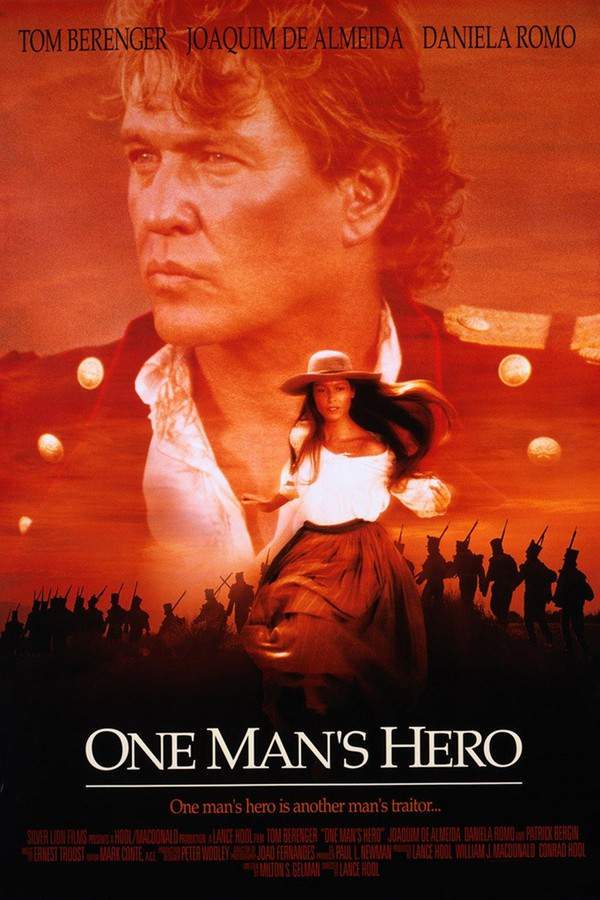
One Man's Hero (1999) movie poster

Plot Summary

One Man's Hero (1999) Plot Summary Explained

Release, runtime and language
1999 · 121 min · English
JustWatch #14,172 7
Directed by
Lance Hool

In 1848, Jon Riley commands a unit of Irish Catholic soldiers within the U.S. Army, enduring harsh discrimination from their Protestant counterparts. Seeking refuge at a Catholic church, they are subjected to severe punishment. Driven to defy their circumstances, Riley and his men desert and join the Mexican Army, unexpectedly aligning with guerrilla leader Cortina. This journey explores themes of war, faith, and loyalty as these men fight for survival and belonging.

On this page (6)
  1. 1 Where to watch
  2. 2 What happens: full plot
  3. 3 Plot questions answered
  4. 4 Movie threads
  5. 5 Movies like One Man's Hero
  6. 6 Every angle

Where to watch

Where to Watch One Man's Hero (1999)

Where can you watch One Man's Hero? Stream, rent or buy it in the US, including on ScreenPix Amazon Channel , Tubi TV and Amazon Video: current JustWatch availability with up-to-date prices.

Streaming availability powered by JustWatch

Full plot summary · contains spoilers

What Happens in One Man's Hero: Full Plot Summary

The whole story of One Man's Hero (1999) explained, from the opening scene to the final frame: every key event, every twist and what it all adds up to. Read it as a quick recap before the sequel, to check a scene you missed, or to finally understand what really happened.

As the tale progresses, we delve into the life of Sgt. John Riley (played by [actor name]) — a steadfast leader of a U.S. Army battalion, accompanied by his band of 16 loyal men who boldly challenge military orders. Their unwavering faith leads them to cross the Mexican border without official clearance, seeking solace in attending Mass, an act scorned by their Protestant commanders who interpret their actions as allegiance to Papist ideals. Driven by compassion for his men, Sgt. Riley is compelled to liberate them from punishment at gunpoint, ensuring their safe passage across the border in pursuit of a vessel bound for Ireland. However, their journey takes a dire shift when they fall into the clutches of revolutionary Juan Cortina, who views them as adversaries of Mexico.

In his moment of vulnerability, Riley finds himself wounded in the thigh. During his recovery, he is cared for by Marta, Cortina’s mysterious partner. Meanwhile, Cortina contemplates the fate of Riley and his men, unaware that conflict between the U.S. and Mexico is already unfolding. Once news of the war reaches their captors, they face a pivotal decision: to enlist in the Mexican Army and fight under Riley's leadership, forming their own battalion.

Promoted to the rank of captain, Riley now leads a growing group of Irish immigrant soldiers who have defected to the Mexican side. General Zachary Taylor openly admits that this influx is fueled by a combination of "sex, saints, and sadism." To uplift their morale, they are honored with a unique green flag, proudly displaying the insignia of the Saint Patrick's Battalion.

As battles rage on through specific dates, a temporary cease-fire offers a momentary reprieve; however, this tranquility is short-lived as hostilities reignite. General Taylor, unlike his counterpart General Winfield Scott, expresses his reservations about the war yet maintains loyalty to his superiors. As the grim realities of the war come to light, Riley’s men grapple with the looming threats of desertion and treason. The consequences are dire: deserters before the conflict face harsh lashing and branding, while those who abandon their posts after the war's commencement risk execution as traitors. In a courageous act of unity, they resolve to confront death with honor, vowing to fight for their freedom until their last breath.

Ultimately, as the Mexican forces face defeat, Cortina manages to evade capture, leaving Riley’s battalion to contend with prison at the hands of the Irish. Although many among them are technically still British citizens, they have yet to receive their promised U.S. citizenship for their service. In a shocking turn of events, General Winfield Scott refuses to classify Riley’s men as Mexican prisoners of war, opting to impose a brutal punishment that starkly contradicts the values of the American Revolution.

The climactic day arrives, and as Riley stands on the scaffold’s wooden platform, he endures a cruel flogging with a cat-o'-nine-tails, the lashes sounding with a stomach-churning crack 50 times. Following this, the branding process begins, as a searing red-hot iron is applied to his right cheek, marking him with a large letter “D”—not in the precise manner intended, but rather upside down and backward due to the soldier's overwhelming distress. Although his superiors are furious, the damage is irreversible, and Riley now bears the scar of shame.

As the executions, swiftly ordered by Scott, unfold before him, Riley's torment is visible. He calls out words of encouragement to those about to face their fate, their anguished responses creating a haunting chorus of despair as they take their final breaths.

After enduring his grueling time at the stone quarry, where he toiled alongside fellow detainees, a fortuitous visit from his former commanding officer brings him news of his released shackles. Unfazed by the prospect of freedom, Riley asserts, "I have always been free." With a renewed sense of purpose, he makes his way back to Mexico, locating Cortina and discovering that Marta remains alive. The tender glance exchanged between them captures the essence of her unwavering affection for Riley, prompting him to part ways and venture into the unknown with Marta by his side. Meanwhile, the political waters shift as General Winfield Scott’s presidential ambitions crumble, making way for the more tempered leadership of General Zachary Taylor, whose dedication to peace and unity ultimately triumphs.
Last updated: November 22, 2024 at 14:13

Was this helpful?

Plot questions answered

One Man's Hero Plot Explained: Your Questions Answered

The questions people ask most about One Man's Hero (1999): what happens in the confusing scenes, why the characters do what they do, the twists, hidden details and what the ending means. Each answer contains spoilers.

Q1

Why did John Riley and his men join the Mexican Army?

After being captured by Cortina, Riley and his men were given a choice when the US-Mexico war began. Since they had already deserted the US Army and were considered traitors, joining the Mexican side offered them protection and a cause to fight for. Cortina allowed them to enlist under Riley's leadership, forming their own battalion.

  • desertion
  • mexican army
  • cortina
  • war
  • loyalty
Q2

Why was John Riley branded with a D on his cheek?

After being captured by the US Army, Riley was sentenced to brutal punishment as a traitor. He was floggED 50 times with a cat-o'-nine-tails, then branded on the right cheek with a hot iron marking him with a large letter D for deserter. The branding was done incorrectly, upside down and backward, because the soldier performing it was distressed by the act.

Foreshadowing: Earlier in the film, Riley's men face harsh consequences for desertion, establishing the severity of the punishment they ultimately receive.

  • branding
  • deserter
  • punishment
  • flogging
  • scar
Q3

What was the Saint Patrick's Battalion?

The Saint Patrick's Battalion was a unit of Irish immigrant soldiers who defected from the US Army to fight for Mexico. Riley was promoted to captain and given command of this battalion, which was symbolized by a green flag displaying their insignia. General Zachary Taylor noted the unit grew through a combination of sex, saints, and sadism.

  • saint patricks battalion
  • irish soldiers
  • mexican army
  • flag
Q4

Why did General Winfield Scott refuse to treat Riley's men as prisoners of war?

General Scott refused to classify Riley's men as Mexican prisoners of war because doing so would have obligated better treatment under the laws of war. Instead, he ordered brutal punishments that contradicted American Revolutionary values, treating them as traitors rather than enemy combatants. This decision reflected his personal political ambitions, which were ultimately undermined by the outcome.

  • general scott
  • prisoner of war
  • traitor
  • punishment
Q5

Why did Marta care for John Riley while he was wounded?

Marta was Cortina's partner, and when Riley was wounded in the thigh during capture, she took it upon herself to nurse him back to health. This act of compassion developed into a deeper connection between them. Despite being on opposite sides initially, Marta saw humanity in Riley and chose to help him recover.

Foreshadowing: The film establishes Marta as Cortina's mysterious partner early in their capture, setting up her eventual role in Riley's recovery.

  • marta
  • cortina
  • injury
  • capture
  • romance
Q6

Why did Irish Catholic soldiers face discrimination in the US Army?

In 1848, Irish Catholic soldiers within the US Army endured harsh discrimination from their Protestant commanders. Their decision to seek refuge at a Catholic church and attend Mass was interpreted by Protestant officers as allegiance to Papist ideals, leading to punishment. This religious discrimination was the catalyst for Riley's decision to defy his commanders and liberate his men.

  • discrimination
  • catholic
  • protestant
  • irish
  • army
Q7

What happened to Riley's men at the end of the movie?

As the Mexican forces faced defeat, many of Riley's men were executed. Riley witnessed the executions and called out words of encouragement to those about to face their fate. While some survived, the battalion was largely decimated by the war's end.

Foreshadowing: Earlier, the film establishes that deserters after the war began would be executed as traitors, setting up this tragic outcome.

  • executions
  • mexican defeat
  • battalion
  • death
Q8

Why did Cortina let Riley lead the Mexican soldiers?

When the US-Mexico war began, Cortina faced a decision about the captured Irish soldiers. Rather than executing them or keeping them prisoner, he allowed them to enlist in the Mexican Army under Riley's command. Riley's leadership abilities and the soldiers' military experience made them valuable assets to Cortina's forces.

  • cortina
  • leadership
  • mexican army
  • defection
Q9

Why did Riley return to Mexico after being freed?

After enduring brutal punishment and hard labor in the stone quarry, Riley was visited by his former commanding officer who informed him he was being released. Rather than seeking safety in the US, Riley chose to return to Mexico to find Cortina. There, he discovered that Marta had survived and the two finally reunited, choosing to venture into the unknown together.

  • return
  • mexico
  • marta
  • freedom
  • reunion
Q10

How did Zachary Taylor become president at the end of the movie?

General Winfield Scott had presidential ambitions that were undermined during the course of the war. His harsh treatment of Riley's men and his role in the brutal punishments contributed to his political downfall. Meanwhile, General Zachary Taylor, who had expressed reservations about the war despite his loyalty, emerged as a more temperate leader whose dedication to peace and unity ultimately triumphed, leading to his presidency.

  • zachary taylor
  • winfield scott
  • president
  • politics
Q11

Why did Riley defy his commanders at gunpoint?

Riley was compelled to act when his Protestant commanders threatened his men with severe punishment for attending Catholic Mass across the border. Driven by compassion for his loyal soldiers and unwilling to see them suffer, Riley pointed his gun at his own commanders to ensure their safe passage. This act of defiance turned him and his men into deserters.

  • defy
  • commanders
  • punishment
  • mass
  • catholic

Movie threads

More Movies Like One Man's Hero, by Mood & Story

Curated lists built around what makes One Man's Hero tick: the same mood, the same kind of story or the same emotional payoff. Each list explains why these movies belong together.

Stories of Moral Desperation in Wartime like One Man's Hero

Soldiers or outlaws facing impossible choices for survival and identity. If you were gripped by the impossible choices in One Man's Hero, this thread features movies about soldiers and warriors confronting similar moral crises. Explore films where loyalty is tested, survival demands betrayal, and the fog of war obscures the line between right and wrong.

  • grim
  • defiant
  • somber
  • tense
  • morally complex
  • war-torn
  • Tone: dark, somber, defiant
  • Pacing: steady, deliberate
Why these movies?

The story pattern: The narrative pattern follows a protagonist, typically a soldier, whose ideals are shattered by the harsh realities of their situation—be it discrimination, unethical orders, or sheer survival instinct. This leads to a pivotal act of defiance, such as desertion, which propels them into a new, morally ambiguous alliance. The journey explores the psychological toll of this decision, culminating in a resolution that is often bittersweet, acknowledging survival at a great personal cost.

Why they belong together: Movies in this thread share a core focus on the internal conflict of soldiers grappling with identity and loyalty. They are united by a dark, somber tone, high emotional weight stemming from weighty moral decisions, and a steady pacing that allows the gravity of each choice to resonate. The collective vibe is one of grim defiance against overwhelming oppression.

Grim Historical Defiance Stories like One Man's Hero

Oppressed groups fighting back against systemic cruelty in a bleak historical setting. For viewers who appreciated the grim historical setting and themes of defiance in One Man's Hero, this collection features similar movies about oppressed groups fighting back. Discover films that combine intense historical drama with heavy themes of discrimination, survival, and the high cost of rebellion.

  • oppressive
  • grim
  • tense
  • melancholic
  • defiant
  • somber
  • Tone: dark, bleak, oppressive
  • Pacing: steady, tense build
Why these movies?

The story pattern: Stories in this thread are set against a well-defined, oppressive historical backdrop. The plot is driven by a group's reaction to systemic injustice, leading to a defiant, often violent, struggle. The narrative does not shy away from the brutal consequences of this defiance, exploring themes of faith, identity, and loyalty under extreme duress. The ending typically reflects the high cost of the conflict, offering a somber reflection rather than a clean victory.

Why they belong together: These films are grouped by their shared bleak historical atmosphere, high intensity, and focus on themes of discrimination and survival. They create a cohesive feel through a consistently dark tone, steady pacing that builds tension, and a narrative that prioritizes emotional gravity over escapism. The common element is a palpable sense of fighting against crushing odds.

If you liked this

Movies Like One Man's Hero

Similar movies to One Man's Hero: the same genre, themes or kind of story. Each one comes with its own plot summary, timeline and ending explained.

Browse all movie summaries

Every angle

One Man's Hero (1999) Explained: Plot, Timeline & Characters

Everything about One Man's Hero in one place: what happens in the plot summary, the timeline in chronological order, the characters and meaning and a spoiler-free summary. What's After the Movie adds the cast, box office and post-credit scenes.

Coming soon on iOS and Android

The Plot Explained Movie Summary App

Plot summaries, endings explained and timelines on your phone. Catch up on any movie in minutes, save your favorites and never miss a twist again.

Be the first to know when we launch. Your email stays private, always.

Learn more about the app