Plot Explained Spoilers guaranteed!
Plot Explained

Browse by genre

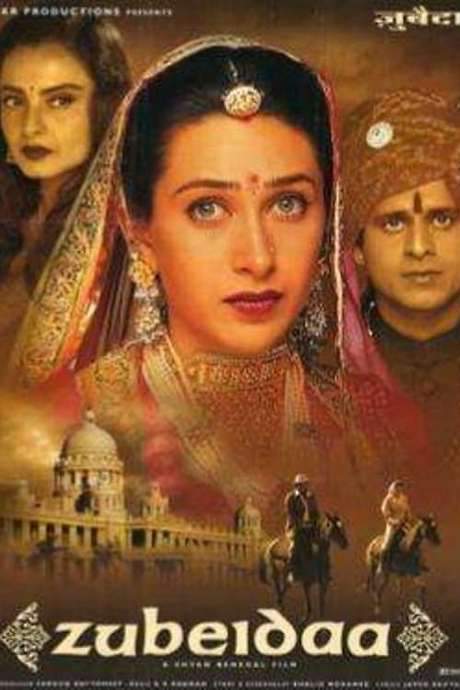
Zubeidaa (2001) movie poster

Plot Summary

Zubeidaa (2001) Plot Summary Explained

Release, runtime and language
2001 · 150 mins · Hindi
Directed by
Shyam Benegal
Starring
Surekha Sikri, Lillete Dubey, Rajit Kapoor, Harish Patel, Seema Bhargava, Shakti Kapoor

Zubeidaa, a determined Muslim actress, agrees to become the second wife of a Hindu prince, hoping to secure her future. The marriage thrusts her into a realm of royal expectations and cultural tension, and her strained relationship with the prince, combined with her inner turmoil, drives her toward a desperate decision that ends in tragedy for everyone involved.

On this page (6)
  1. 1 Where to watch
  2. 2 What happens: full plot
  3. 3 Plot questions answered
  4. 4 Movie threads
  5. 5 Movies like Zubeidaa
  6. 6 Every angle

Where to watch

Where to Watch Zubeidaa (2001)

Where can you watch Zubeidaa? Stream, rent or buy it in the US, including on Brew, Plex and Tubi TV: current JustWatch availability with up-to-date prices.

Streaming availability powered by JustWatch

Full plot summary · contains spoilers

What Happens in Zubeidaa: Full Plot Summary

The whole story of Zubeidaa (2001) explained, from the opening scene to the final frame: every key event, every twist and what it all adds up to. Read it as a quick recap before the sequel, to check a scene you missed, or to finally understand what really happened.

Riyaz Masud grows up under the care of his maternal grandmother, and as he reaches adulthood he sets out on a patient, sometimes painful quest to understand the mother he never truly knew. The search becomes a journey through memory, family secrets, and the tangled web of love, duty, and ambition that shaped his mother’s life.

Riyaz’s mother, Zubeidaa, was the daughter of a filmmaker, Suleiman Seth. She kept her film work a secret for years, weaving art into a life that his father attempted to control. When Suleiman Seth learns of her hidden talents, he forbids her to continue and swiftly arranges her marriage to his friend’s son, Mehboob Alam, who becomes a gharjamai in a household bound by tradition and propriety. The marriage bears fruit in the form of a son, Riyaz, but the union is fragile from the start, strained by opposing desires, social expectations, and the weight of a family history that refuses to stay quiet.

A rupture soon emerges between Suleiman and Mehboob’s father, and the pressure intensifies until Mehboob divorces [Zubeidaa] at a moment when she most needs support. Heartbroken, she wanders through doubts about her choices, longing for a life where she might reconcile her passion for acting with the duties of marriage and motherhood. In the midst of this ache, she encounters the young Maharaja of Fatehpur, Vijendra Singh, a ruler entangled in the politics of his court and his own complicated marriage to Mandira Devi. Their encounter deepens into a romance that challenges the palace’s rigid codes and the expectations placed on a royal wife.

What unfolds next is a meditation on love and constraint. Riyaz discovers in Zubeidaa’s journal that she loved [Vijendra Singh] deeply, yet could not endure the palace’s stifling conventions. The pages also reveal the shadowing presence of Uday Singh, the brother-in-law who pushes for his own desires and tests the limits of what Zubeidaa could tolerate. The tension between private longing and public duty becomes a central thread, casting light on the sacrifices she made and the loneliness she endured behind closed doors.

Driven by a need to uncover the truth, Riyaz travels to Fatehpur, speaking with many who were connected to his mother. The responses vary wildly: some deny that she ever existed, others condemn her as a seducer who led a king astray or caused misfortune. Yet one voice remains steadfast and protective—Mandira Devi, who, in her own way, holds the line of memory against the erasures of time. The more Riyaz learns, the more the mystery tightens around the fate of a woman who refused to surrender her spirit.

As the story slowly unfolds, it becomes clear that the tragedy was not merely personal but emblematic of a clash between love and power. The royal plane crash that claims both [Vijendra Singh] and Zubeidaa echoes their longing for a life that could be lived without fear of public judgment. In a poignant, introspective moment, Zubeidaa seems to fear losing Vijayendra and, despite the consequences, imagines a shared eternity that defies the boundaries of this world.

The ending circles back to the present when Riyaz finally obtains the missing tape of his mother’s solitary film—from Mandira Devi. Watching this forgotten work with his grandmother, who weeps with tears of happiness, Riyaz witnesses Zubeidaa dancing with the unbridled joy that defined her true essence. The film’s quiet celebration of a woman’s artistic voice and stubborn dignity leaves a lasting impression: Zubeidaa’s spirit endures beyond the curtain of history, a luminous reminder of a life lived on her own terms.

In the final moments, the audience is invited to reflect on the resilience of memory and the power of cinema to preserve a person’s truth. Riyaz’s long, sometimes painful, but ultimately hopeful pursuit to know his mother culminates in a cinematic revelation that honors Zubeidaa’s courage, her struggles, and the enduring bond between mother and son. The film closes not with a grand verdict, but with a tender recognition of a life that mattered deeply, and a grandmother’s tearful smile that says more than words ever could.

Last updated: October 09, 2025 at 16:55

Was this helpful?

Plot questions answered

Zubeidaa Plot Explained: Your Questions Answered

The questions people ask most about Zubeidaa (2001): what happens in the confusing scenes, why the characters do what they do, the twists, hidden details and what the ending means. Each answer contains spoilers.

Q1

Why did Suleiman Seth forbid Zubeidaa from acting?

Suleiman Seth, a filmmaker and Zubeidaa's father, discovered she had been secretly pursuing acting behind his back. In that era, acting was considered shameful for a woman from a respectable family, so he immediately forbade her to continue and arranged a hasty marriage to his friend's son Mehboob Alam to control her future.

Foreshadowing: Earlier scenes show Zubeidaa secretly honing her craft, hinting at the passion she would later be forced to abandon.

  • suleiman seth
  • acting forbidden
  • arranged marriage
  • zubeidaa father
Q2

Why did Mehboob divorce Zubeidaa?

Mehboob divorced Zubeidaa during a period of intense pressure from a rift that emerged between his father and Suleiman Seth. The family tension became unbearable, and at the moment Zubeidaa needed his support most, Mehboob abandoned her, leaving her to face loneliness and doubt about her choices.

Foreshadowing: The marriage was described as fragile from the start, strained by opposing desires and social expectations.

  • mehboob
  • divorce
  • zubeidaa
  • family tension
  • abandonment
Q3

How did Zubeidaa meet Vijendra Singh?

After her divorce, Zubeidaa encountered Vijendra Singh, the young Maharaja of Fatehpur, while she was still grieving and searching for purpose. Their meeting occurred at the palace in Fatehpur, where his position as ruler and his complicated marriage to Mandira Devi set the stage for a forbidden romance.

Foreshadowing: The timeline shows her divorce preceded her journey to Fatehpur, where destiny would bring her to the Maharaja.

  • vijendra singh
  • fatehpur
  • maharaja
  • romance
  • meeting
Q4

What happened in the plane crash that killed Zubeidaa and Vijendra Singh?

Zubeidaa and Vijendra Singh both died in a royal plane crash that shocked the kingdom. The tragedy was emblematic of the clash between their love and the power structures that forbade it. Both perished together, their death symbolizing their desperate longing for a life free from public judgment and palace constraints.

Foreshadowing: Earlier in the film, Zubeidaa fears losing Vijendra and imagines a shared eternity that defies worldly boundaries, hinting at their tragic fate.

  • plane crash
  • vijendra singh
  • death
  • tragedy
  • royal plane
Q5

Who was Uday Singh and what was his role in the story?

Uday Singh was Vijendra Singh's brother-in-law who resided in the palace. According to Zubeidaa's journal, he harbored his own desires and tested the limits of what Zubeidaa could tolerate within the palace walls. His presence added another layer of pressure and complication to her already constrained life.

Foreshadowing: Zubeidaa's journal hints at Uday Singh's shadowing presence, suggesting his actions contributed to her discomfort in the palace.

  • uday singh
  • brother-in-law
  • palace
  • zubeidaa journal
  • desires
Q6

Why did Mandira Devi protect Zubeidaa's memory?

Despite being Vijendra Singh's wife and technically Zubeidaa's rival for his affection, Mandira Devi chose to preserve Zubeidaa's memory against erasures and rumors. She held onto the tape of Zubeidaa's only film and ultimately gave it to Riyaz, suggesting she recognized Zubeidaa's genuine spirit and artistic dignity despite the complicated love triangle.

Foreshadowing: Earlier accounts mention varied responses to Zubeidaa, but Mandira Devi remained the steadfast voice protecting her legacy.

  • mandira devi
  • memory
  • protection
  • tape
  • legacy
Q7

Why did Riyaz's grandmother cry while watching Zubeidaa's film?

Riyaz's grandmother wept with tears of happiness while watching Zubeidaa's forgotten film because she finally witnessed the unbridled joy and artistic essence that defined her daughter's true spirit. The moment represented vindication of Zubeidaa's dignity and a reunion with the vibrant woman she had raised, albeit one who had been forced to hide her true self.

Foreshadowing: The timeline reveals the grandmother had kept the secret of Zubeidaa's talents, making this viewing a deeply emotional release.

  • grandmother
  • tears
  • film
  • zubeidaa dance
  • happiness
Q8

What did Zubeidaa's journal reveal about her time in Fatehpur?

Zubeidaa's journal, discovered by Riyaz, revealed her deep love for Vijendra Singh and her inability to endure the palace's stifling conventions. The pages exposed her inner turmoil, her longing to reconcile her passion for acting with the duties of marriage, and the shadow of Uday Singh's unwanted advances. It also showed her profound loneliness despite her royal position.

Foreshadowing: Riyaz uncovers the journal during his investigation, serving as the key to understanding his mother's emotional truth.

  • journal
  • love
  • vijendra singh
  • palace
  • secrets
  • diary
Q9

Why did some people in Fatehpur deny that Zubeidaa ever existed?

Some people in Fatehpur denied Zubeidaa's existence or condemned her as a seducer who led a king astray, largely because the palace and royal court sought to erase a scandalous chapter from history. Their denial represented an attempt to protect the royal family's reputation and erase the memory of a forbidden romance that challenged palace conventions.

Foreshadowing: The varied responses Riyaz receives during his journey reflect the political motivation to erase controversial memories.

  • denial
  • existence
  • fatehpur
  • rumors
  • palace erasure
Q10

What was the significance of the missing film tape that Riyaz recovered?

The missing tape contained Zubeidaa's only film appearance, a recording of her dancing with the unbridled joy that defined her true artistic essence. Mandira Devi had preserved this tape as the last beacon of Zubeidaa's self-determined artistry. For Riyaz, obtaining it meant finally witnessing his mother as she truly was, not just as history had tried to define her.

Foreshadowing: The search for this tape drove the final leg of Riyaz's quest, representing the cinematic truth that outlives political erasure.

  • tape
  • film
  • missing
  • artistic voice
  • discovery
  • zubeidaa performance

Movie threads

More Movies Like Zubeidaa, by Mood & Story

Curated lists built around what makes Zubeidaa tick: the same mood, the same kind of story or the same emotional payoff. Each list explains why these movies belong together.

Melancholic tragic romance movies like Zubeidaa

Stories of love overshadowed by societal pressure and inevitable sorrow. Explore movies like Zubeidaa that delve into tragic love stories constrained by societal norms. If you were moved by the poignant and bittersweet romance in Zubeidaa, you'll find similar films about doomed relationships and the heavy cost of love against tradition.

  • melancholic
  • tragic
  • poignant
  • oppressive
  • nostalgic
  • lonely
  • Tone: melancholic, tragic, poignant
  • Pacing: slow, contemplative
Why these movies?

The story pattern: The narrative typically follows a passionate but ill-fated love affair, where external forces—like royal customs, patriarchy, or family honor—create an oppressive atmosphere. The story builds slowly towards a tragic climax, often involving death or profound loss, leaving a lingering sense of melancholy and what could have been.

Why they belong together: These films are grouped by their shared tone of deep melancholy, heavy emotional weight, and bittersweet endings. They prioritize mood and emotional resonance over plot twists, creating a contemplative and deeply moving experience centered on love, sacrifice, and memory.

Movies about memory and identity search like Zubeidaa

Characters piecing together a fractured past to understand themselves. Discover films similar to Zubeidaa that feature a character's quest to uncover the truth about a mysterious past. If you enjoyed the reflective journey and piecing together Zubeidaa's story through her son's investigation, you'll appreciate these narratives about memory, truth, and searching for identity.

  • reflective
  • introspective
  • nostalgic
  • search for truth
  • emotional discovery
  • fractured memory
  • Tone: reflective, introspective, bittersweet
  • Pacing: slow, deliberate
Why these movies?

The story pattern: These stories often employ a dual timeline, alternating between a present-day investigation and flashbacks to the past. The protagonist, usually a relative or someone connected to the central figure, acts as a detective of emotions, sifting through subjective memories and artifacts to reconstruct a life and find closure.

Why they belong together: The unifying element is the narrative structure and thematic focus. They share a slow, deliberate pacing that matches the thoughtful nature of the quest, a moderate complexity from weaving two timelines, and a deeply reflective, introspective mood that prioritizes emotional truth over action.

If you liked this

Movies Like Zubeidaa

Similar movies to Zubeidaa: the same genre, themes or kind of story. Each one comes with its own plot summary, timeline and ending explained.

Browse all movie summaries

Every angle

Zubeidaa (2001) Explained: Plot, Timeline & Characters

Everything about Zubeidaa in one place: what happens in the plot summary, the timeline in chronological order, the characters and meaning and a spoiler-free summary. What's After the Movie adds the cast, box office and post-credit scenes.

Coming soon on iOS and Android

The Plot Explained Movie Summary App

Plot summaries, endings explained and timelines on your phone. Catch up on any movie in minutes, save your favorites and never miss a twist again.

Be the first to know when we launch. Your email stays private, always.

Learn more about the app