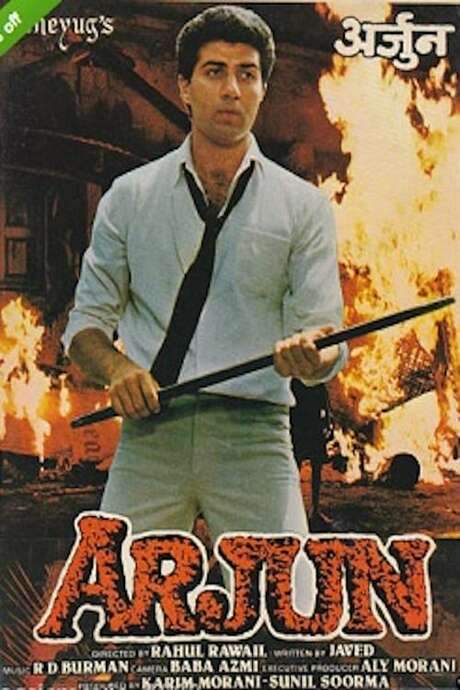
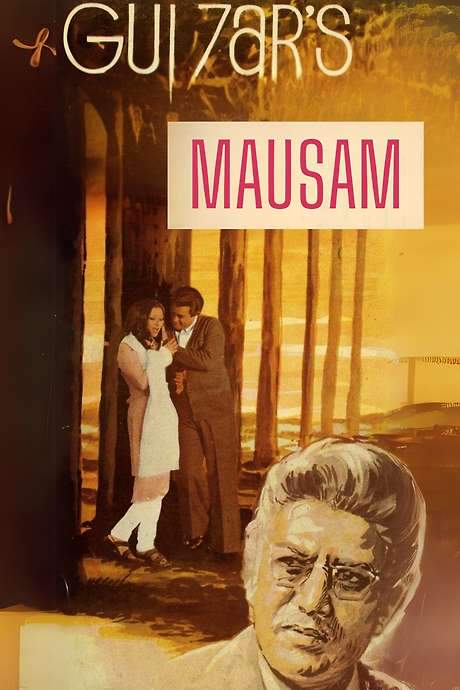
The story centers on a tight-knit, lower-middle-class family led by Arun Verma, a bright and ambitious child who, along with his sister Komal Verma, their devoted mother Aarti Verma, and their father Deepak Verma, navigates a life filled with warmth and small joys in a world that will soon test them in unimaginable ways. The family clings to a hopeful creed sung in their home, a refrain that—along with its direct meaning—reminds them that life is a continual fight worth fighting together: > Zindagi Har Kadam Ek Nayi Jung Hai, Jeet Jayenge Hum, Jeet Jayenge Hum Tu Agar Sang Hai. (Life presents new battles at every step, but we will win if we stand united.)
Tragedy strikes when Deepak Verma is ensnared in a murder case. The formidable criminal lawyer G. D. Thakral prosecutes him, and the courtroom verdict seals a grim fate: Deepak Verma is found guilty and hanged. Arun and his family are crushed as their home and possessions are auctioned off, and their world collapses. In the courtroom, Thakral’s ruthless certainty clashes with the raw grief and pleas of Arun’s mother, who attempts to speak truth but is unheard. The shattering moment imprints a lasting memory on Arun, especially when he hears his mother lament, “Jiske paas koi sabut, koi gavanh nahi hote kya we begunah nahin hote,” underscoring a stark reckoning about innocence and the legal system.
The collapse of the father’s life reveals a darker truth: Thakral knew the truth of Deepak Verma’s innocence but exploited the system to achieve a victory. Advocate Gupta, the seasoned lawyer who defended Deepak when he was alive, discovers this cruel manipulation and sheds light on the corrupt use of law—a revelation that fuels Arun’s lifelong vow to oppose Thakral.
As Arun grows up, he channels his pain into becoming a skilled defence lawyer, driven by a single-minded aim: someday stand in the courtroom against the undefeated [G. D. Thakral], and prove him wrong. The personal mission reshapes him, and he moves through life with a calm intensity, quietly collecting knowledge and sharpening his instinct for justice.
The path to vengeance takes a turning point when Geeta Srivatsav, played by Geeta Mathur in the tale, seeks Arun’s help to defend her sister, Dr. Asha Mathur, who is accused of a fatal medical error. Arun initially resists, insisting that there must be concrete evidence of innocence; Geeta echoes the same indictment of the system that haunted his childhood, saying that the truth depends on solid proof. Her words propel Arun to take the case, and he meets Dr. Dinesh Mathur to uncover the details surrounding the poison and its quick-acting lethality. Dr. Mathur’s wife’s life hangs in the balance, and Arun’s commitment to truth deepens as he learns how the alleged crime unfolded.
In the courtroom drama that follows, Arun challenges the prosecution’s narrative and, in a bold move, tests the very medicine in question to demonstrate that the timing and effect of the poison could be misinterpreted. The verdict finally clears Dr. Asha Mathur of guilt, but the revelation that the poison did exist—happening in a way that could be misconstrued—carries a heavy emotional toll. Dr. Mathur, grateful for Arun’s courage, invites him to a gathering at his mansion, where he offers a blank cheque as compensation. Arun modestly declines, explaining that his work is not about payment but about reclaiming trust in justice.
A poignant thread from this period concerns the family’s cherished piano, its stickers of sacred symbols from the Bhagwat Geeta long ago auctioned away. When Dr. Mathur unexpectedly returns the piano after hearing Arun’s story, the gesture becomes emblematic: a symbol of reconciliation, memory, and the healing of a broken past. The moment rekindles Arun’s memories of his mother and the life they lost, and he reveals to the Mathur family that his own mother may still be alive and in need of care.
Love blossoms between Arun and Geeta as they forge a bond built on shared pain and a mutual desire for truth. Their relationship is tested when Vikram Thakral, Vikram Thakral, Thakral’s son, teases Geeta and provokes Arun in public. The couple’s conflict escalates when Arun restrains Vikram in a moment of anger, underscoring the rising tension between the families and the personal costs of a life spent chasing justice.
The Thakral family’s sinister plans come to a head when Vikram schemes to trap Komal, Arun’s sister, in a bid to publicly disgrace Arun. Vikram’s manipulative charm draws Komal away to a distant college, but a confrontation with Vikram’s former girlfriend, Indu Gupta, reveals his true intent and leads to Indu’s death as a witness to his crimes. This act crystallizes Arun’s resolve: he will step into the role of prosecutor against Thakral, now defending his own son in the courtroom battle that will decide the Thakral dynasty’s fate.
In a riveting courtroom duel, Arun’s legal prowess and unwavering resolve put pressure on Thakral, who resorts to desperate measures. Thakral kidnaps Arun’s mother, aiming to blackmail him into dropping the case. Arun refuses to yield and fights through the peril, resisting the criminal’s intimidation and protecting his family. The confrontation escalates until Thakral’s schemes unravel: he shoots his own ally’s son in a moment of panic and ultimately pays a heavy price as he is jailed and his mental state deteriorates, leaving him a shadow of his former power.
With the danger behind them, Arun and his family find renewed happiness. The drama closes as they reclaim their sense of community and sing the persistent refrain of their creed—the same song that opened their journey—“Zindagi Har Kadam Ek Nayi Jung Hai,” a testament to resilience, memory, and the endurance of love under pressure. The film ends with a sense of closure, healing, and a quiet faith in justice that endures beyond the courtroom.
- Note: Throughout this summary, character appearances are linked to their respective actors on the site where first mentioned: Arun Verma, Komal Verma, Aarti Verma, Deepak Verma, G. D. Thakral, Dr. Dinesh Mathur, Geeta Mathur, Dr. Asha Mathur, Vikram Thakral, Advocate Gupta.