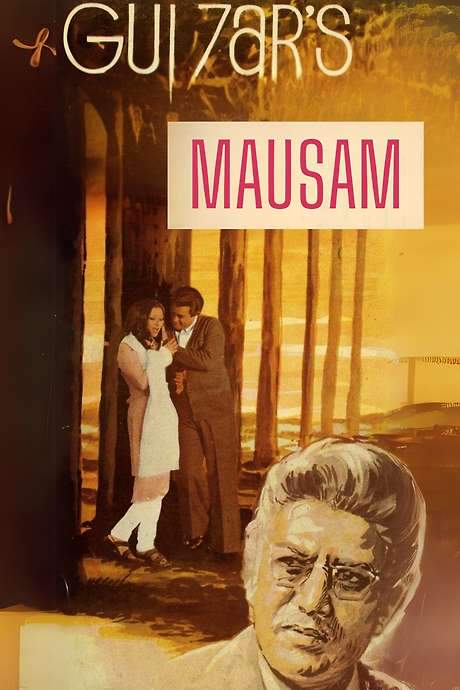
Mausam unfolds as a dramatic, memory-laden love tale that threads desire, duty, and the haunting pull of the past. Dr. Amarnath Gill, Sanjeev Kumar, visits Darjeeling to prepare for his medical exams and there he meets Chanda, Sharmila Tagore, the daughter of a local healer Harihar Thapa, Om Shivpuri. What begins as a spark of attraction soon becomes a promise: Amarnath vows to return to Calcutta for his final exams, but the miles of life and circumstance pull him away, and that promise remains unkept, leaving the romance suspended in time.
Twenty-five years roll by, and Amarnath returns as a wealthy man, driven by a mission to reunite with Chanda and understand the fate of Harihar Thapa. He learns that Harihar Thapa has died, and that Chanda had married a crippled old man, bore a daughter, and slipped into madness before she died. In this quiet, painful wake, Amarnath discovers Chanda’s daughter Kajli, who bears a striking resemblance to her mother. Kajli’s life has been hardened by hard truths: she was molested by her mother’s brother-in-law and spent time in a brothel. Moved by a sense of responsibility, Amarnath buys Kajli from the brothel and brings her home, determined to redeem her and, in a way, atone for what happened to Chanda.
Kajli, Sharmila Tagore is not merely a surrogate for Chanda; she grows to love Amarnath, even as she wrestles with the memory of her mother and the world she has inhabited. Yet a stark reminder of her origins returns: Kajli is dressed in her old, revealing clothes, and the past seeks to pull her back to the life she once knew. The brothel’s madam plants a hopeful whisper in her ear—that Amarnath loves her and could give her a chance at a respectable life — and Kajli returns to him, temporarily anchored by a longing that feels both protective and dangerous. Amarnath, meanwhile, still sees Kajli as a daughter figure and a living echo of Chanda.
In a tense, intimate moment, Amarnath finally reveals a truth that unsettles Kajli: he is the man for whom her mother waited all those years, and he asks for forgiveness, even as he wonders if it is too late for Chanda. Kajli, overwhelmed and hurt, runs away. The next morning, Amarnath, packed to leave, encounters Kajli in the woods—she clutches a photograph of him from his younger days, tucked behind her back. She voices the crushing blame: it was his leaving that drove her mother into madness and her own descent into the cycle of abuse. He answers with a quiet reckoning of his own: he came back seeking forgiveness for Chanda, and perhaps there is a chance to build something new—if she will forgive him, if she can accept him as her father. In a final, unhurried decision, they choose to go home together, turning toward a fragile, uncertain future built on forgiveness, responsibility, and a shared sense of family.