





Plot Explained Spoilers guaranteed!
Plot Explained

Browse by genre

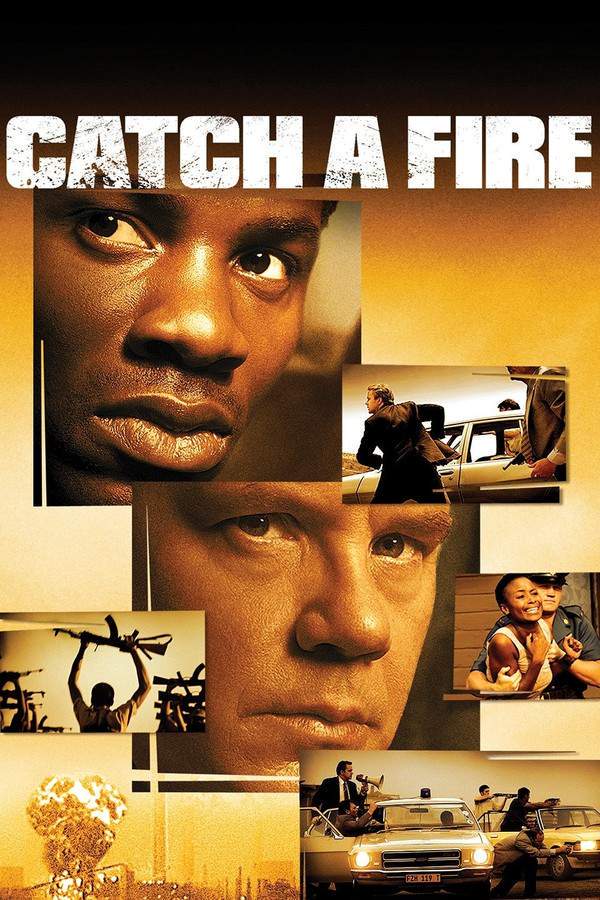
Catch a Fire (2006) movie poster

Characters & Themes

Catch a Fire (2006) Characters, Setting & Themes Explained

Release, runtime and language
2006 · 101 min · English
Directed by
Phillip Noyce
Starring
Derek Luke, Tim Robbins, Bonnie Henna

A seemingly ordinary refinery worker, Patrick Chamusso, becomes involved in acts of sabotage against the apartheid regime after a personal encounter with its oppressive forces. Driven by a desire for justice, he undertakes increasingly risky solo attacks, drawing the attention of a determined police officer. The policeman begins a calculated infiltration of Patrick's life, aiming to expose him and dismantle his growing movement, placing everything Patrick values in grave danger.

On this page (8)
  1. 1 Where to watch
  2. 2 Characters explained (3)
  3. 3 Where & when it takes place
  4. 4 Themes & meaning (2)
  5. 5 Character & meaning questions
  6. 6 Movie threads
  7. 7 Movies like Catch a Fire
  8. 8 Every angle

Where to watch

Where to Watch Catch a Fire (2006)

Where can you watch Catch a Fire? Stream, rent or buy it in the US, including on Amazon Video, Apple TV Store and Fandango At Home: current JustWatch availability with up-to-date prices.

Streaming availability powered by JustWatch

3 main characters · contains spoilers

Catch a Fire Characters Explained: Who Is Who

The main characters of Catch a Fire (2006), heroes and villains: what drives them, how they change over the course of the story and what each of them reveals about the film's bigger ideas.

  • Patrick Chamusso

    played by Derek Luke

    Patrick is depicted as a deeply conflicted character, initially apolitical but driven to join the fight against apartheid after enduring personal and familial injustices. His experiences propel him from being a victim to an active resistor. Patrick's transformation reflects his resilience and desire for a better future for his people.

    • 👨‍👩‍👦 Family
    • ✊ Activism
    • 🥊 Injustice
  • Nic Vos

    played by Tim Robbins

    Nic Vos represents the oppressive authority of the apartheid regime, embodying the moral ambiguities of law enforcement during this era. As the antagonist, his actions directly lead to Patrick's incarceration and suffering. Vos's complex motivations reveal the psychological conflicts within those who uphold an unjust system.

    • 🔍 Authority
    • ⚖️ Morality
    • 😈 Antagonist
  • Precious Chamusso

    played by Bonnie Henna

    Precious is a pivotal character whose jealousy and decisions have profound implications for her family's dynamics. Her internal conflict symbolizes the struggles many faced during the apartheid era, torn between personal emotions and the societal pressures surrounding them. Despite her flaws, her eventual apology shows a path toward reconciliation.

    • ❤️ Love
    • 😔 Regret
    • 👩‍👧‍👦 Family

Last updated: October 01, 2026 at 14:47

Was this helpful?

Setting

Where and When Does Catch a Fire Take Place?

The setting of Catch a Fire (2006): the year and time period, the places and locations, and how they shape the characters, the mood and the tension of the story.

Time period

1980s

The 1980s in South Africa were characterized by intensified resistance against apartheid, a system of institutionalized racial segregation. It was a time when many citizens began to take a stand against oppression, leading to civil disobedience and armed struggle. The backdrop of this decade profoundly influences the film’s narrative of injustice and personal awakening.

Location

South Africa

South Africa during the apartheid era was marked by systemic racial segregation and civil unrest. The Secunda CTL synthetic fuel refinery, the largest coal liquefaction plant in the world, serves as a critical backdrop for the film's exploration of conflict and resistance. This setting is integral to the protagonist's transformation amidst political turmoil.

  • 🇿🇦 South Africa
  • ⛏️ Secunda
  • 🔥 Oil Refinery

Last updated: October 01, 2026 at 14:47

Was this helpful?

2 major themes

Catch a Fire Meaning: Themes & Message Explained

What is Catch a Fire (2006) really about? The emotional, social and philosophical themes the film keeps returning to, its symbolism and the message beneath the surface.

  • Resistance

    The theme of resistance emerges prominently as Patrick Chamusso transforms from an apolitical individual into a determined freedom fighter. His journey highlights the struggle against systemic injustice and personal betrayal, reflecting the broader anti-apartheid movement. This theme encapsulates the fight for dignity and the sacrifices made for the sake of family and country.

  • Betrayal

    Betrayal is central to the story, particularly illustrated through Patrick's relationship with his wife, Precious. Her disloyalty, driven by jealousy and manipulation, leads to grave consequences for Patrick. The emotional weight of betrayal serves as a catalyst for Patrick's radicalization and quest for justice.

Last updated: October 01, 2026 at 14:47

Was this helpful?

Character & theme questions

Catch a Fire Characters & Meaning: Your Questions Answered

The questions people ask about Catch a Fire (2006): who the characters really are, their relationships, what the symbols mean, where it takes place and what the movie is really about. Each answer contains spoilers.

Q1

Where is the movie set?

Catch a Fire is set in South Africa during the apartheid era, with much of the story revolving around the Secunda CTL synthetic fuel refinery, the largest coal liquefaction plant in the world at the time. The refinery serves as a critical backdrop where the protagonist works and where early acts of sabotage take place. The broader South African setting frames the systemic racial segregation and civil unrest that drive the story.

  • south africa
  • secunda refinery
  • apartheid setting
  • film location
Q2

When does the story take place?

The story is set in the 1980s, a decade marked by intensified resistance against apartheid in South Africa. This was a period when civil disobedience and armed struggle became more common as citizens pushed back against institutionalized racial segregation. The 1980s backdrop gives the film its political urgency and explains the heightened state of surveillance and repression depicted throughout.

  • 1980s
  • apartheid era
  • time period
  • historical setting
Q3

Is the story based on real events?

Catch a Fire is a biographical drama inspired by the real life of Patrick Chamusso, a South African refinery worker who was involved in anti-apartheid resistance and was sentenced to prison in 1988. The film draws on real historical events, including the sabotage campaign at the Secunda refinery and the broader struggle against apartheid. While certain details are dramatized, the core story reflects documented history.

  • true story
  • patrick chamusso
  • real events
  • biopic
  • based on history
Q4

What is apartheid and how does it shape the story?

Apartheid was a system of institutionalized racial segregation enforced in South Africa from 1948 until the early 1990s, which stripped non-white citizens of basic rights and freedoms. In Catch a Fire, apartheid is not just a backdrop but the central force that shapes every character's choices, from the security forces enforcing it to the ordinary citizens who must decide whether to comply or resist. The system's brutality is what transforms the protagonist from an apolitical worker into an active fighter.

  • apartheid
  • racial segregation
  • south africa
  • political oppression
Q5

Who is Patrick Chamusso?

Patrick Chamusso is the protagonist, a refinery worker at the Secunda plant who begins the story as an apolitical man focused on his family. After experiencing personal and familial injustices under the apartheid system, he is radicalized and joins the fight against the regime. His arc takes him from ordinary worker to committed freedom fighter willing to risk everything for justice.

  • patrick chamusso
  • protagonist
  • refinery worker
  • anti-apartheid fighter
Q6

Who is Nic Vos?

Nic Vos is the film's primary antagonist, a South African security police officer tasked with hunting down those responsible for sabotage at the Secunda refinery. He represents the oppressive machinery of the apartheid state, but the film also portrays him as a man with his own psychological conflicts and moral ambiguities. His pursuit of Patrick drives the film's central cat-and-mouse tension.

  • nic vos
  • antagonist
  • security police
  • apartheid officer
Q7

Who is Precious Chamusso?

Precious Chamusso is Patrick's wife, whose personal choices become a driving force in the story. Torn between her own emotions, jealousy, and the intense societal pressures of apartheid-era South Africa, her decisions have devastating consequences for her family. The film uses her arc to explore the personal costs of the political struggle and the possibility of reconciliation afterward.

  • precious chamusso
  • patrick's wife
  • family
  • betrayal
Q8

What role does the Secunda refinery play in the story?

The Secunda CTL synthetic fuel refinery is more than a workplace for the protagonist; it symbolizes the economic engine of the apartheid state. As the largest coal liquefaction plant in the world, it represents industrial power and the system that Patrick eventually comes to oppose. The refinery is where the sabotage begins and where the political conflict first enters Patrick's personal life.

  • secunda refinery
  • coal liquefaction
  • industrial setting
  • sabotage
Q9

What is the main theme of resistance?

Resistance lies at the heart of Catch a Fire, embodied in Patrick Chamusso's transformation from a passive, apolitical worker into an active freedom fighter. The film shows that resistance is not born from ideology alone but from direct personal experience with injustice. It also explores the heavy costs of resistance, including imprisonment, family separation, and lasting trauma.

  • resistance
  • anti-apartheid
  • freedom fighter
  • political struggle
Q10

How does betrayal shape the story?

Betrayal is a central emotional force in Catch a Fire, most notably through the actions of Patrick's wife, Precious. Her disloyalty, driven by jealousy and outside manipulation, exposes Patrick to the authorities and accelerates his radicalization. The theme of betrayal extends beyond the personal, reflecting the broader sense of mistrust and danger that defined life under apartheid surveillance.

  • betrayal
  • precious
  • trust
  • family conflict
  • manipulation
Q11

What is the overall tone of the film?

Catch a Fire carries a dark, politically charged tone with sustained tension throughout. The pacing is methodical, alternating between the police investigation and Patrick's radicalization, which keeps suspense high without becoming chaotic. The film rarely offers levity, instead leaning into the emotional weight of torture, wrongful accusation, and decades of imprisonment.

  • tone
  • dark
  • political thriller
  • tension
  • atmosphere
Q12

What kind of conflict is at the center of the story?

The central conflict operates on two levels: a political struggle between apartheid authorities and anti-apartheid resistors, and a personal struggle within Patrick as he is forced to choose between safety and justice. On top of this, the cat-and-mouse dynamic between Patrick and Nic Vos adds a layer of suspense that runs through the entire film. Together, these layers make the conflict both intimate and historically significant.

  • central conflict
  • political struggle
  • cat and mouse
  • personal vs political

Movie threads

More Movies Like Catch a Fire, by Mood & Story

Curated lists built around what makes Catch a Fire tick: the same mood, the same kind of story or the same emotional payoff. Each list explains why these movies belong together.

Political surveillance thrillers like Catch a Fire

Investigators and rebels circle each other under the weight of an oppressive state. Looking for movies like Catch a Fire? These tense political thrillers feature cat-and-mouse games between investigators and resisters, with surveillance, infiltration, and heavy moral conflict at their core. If you liked the calculated tension and real-world stakes of Catch a Fire, you will find similar films here.

  • surveillance
  • cat-and-mouse
  • political
  • tense
  • infiltration
  • moral conflict
  • Tone: tense, dark, suspenseful
  • Pacing: steady, methodical
Why these movies?

The story pattern: A determined state agent zeroes in on a suspect whose political awakening has made them dangerous. The narrative oscillates between the investigator's methodical infiltration and the target's escalating acts of defiance, building toward an inevitable confrontation. Relationships, loyalties, and ideologies are tested under surveillance, betrayal, and the looming threat of state violence. The story refuses easy villains, leaving both hunter and hunted morally compromised.

Why they belong together: These films share a grinding investigative tension, a focus on real political stakes, and an intimate scale that makes systemic oppression feel personal. The pacing tends to be steady and methodical rather than action-driven, with violence that is sudden, disturbing, and emotionally scarring. They reward viewers who enjoy watching ideology clash with human vulnerability on both sides of the law.

Bittersweet political dramas like Catch a Fire

Personal lives shattered by ideology, then slowly rebuilt in the ruins. If you liked Catch a Fire, you will love these heavy political dramas that follow ordinary people through systemic oppression, wrongful accusation, and years of separation. Each story carries moral weight and ends with a bittersweet mix of redemption, reconciliation, and lasting scars. Movies like Catch a Fire for viewers who want history with a human heart.

  • bittersweet
  • political
  • redemptive
  • heavy
  • family separation
  • moral conflict
  • Tone: heavy, bittersweet, somber, redemptive
  • Pacing: steady, reflective
Why these movies?

The story pattern: A seemingly ordinary person is radicalized by a personal encounter with state brutality, drawn into dangerous resistance at great cost to family and freedom. Years are lost to prison, exile, or trauma. The final act often leaps forward to show how survivors reckon with what was taken, choosing between bitterness and forgiveness, isolation and rebuilding community. The arc from innocence through devastating loss to quiet, imperfect redemption defines these stories.

Why they belong together: These films balance historical reckoning with intimate family and moral drama, refusing to reduce political violence to spectacle. They share heavy emotional weight, moderate narrative complexity, and endings that resist both happy closure and pure despair. Viewers who appreciate stories of civil rights, anti-colonial struggle, or any tale where personal love survives political catastrophe will feel at home.

If you liked this

Movies Like Catch a Fire

Similar movies to Catch a Fire: the same genre, themes or kind of story. Each one comes with its own plot summary, timeline and ending explained.

Browse all movie summaries

Every angle

Catch a Fire (2006) Explained: Plot, Timeline & Characters

Everything about Catch a Fire in one place: what happens in the plot summary, the timeline in chronological order, the characters and meaning and a spoiler-free summary. What's After the Movie adds the cast, box office and post-credit scenes.

Coming soon on iOS and Android

The Plot Explained Movie Summary App

Plot summaries, endings explained and timelines on your phone. Catch up on any movie in minutes, save your favorites and never miss a twist again.

Be the first to know when we launch. Your email stays private, always.

Learn more about the app