




Plot Explained Spoilers guaranteed!
Plot Explained

Browse by genre

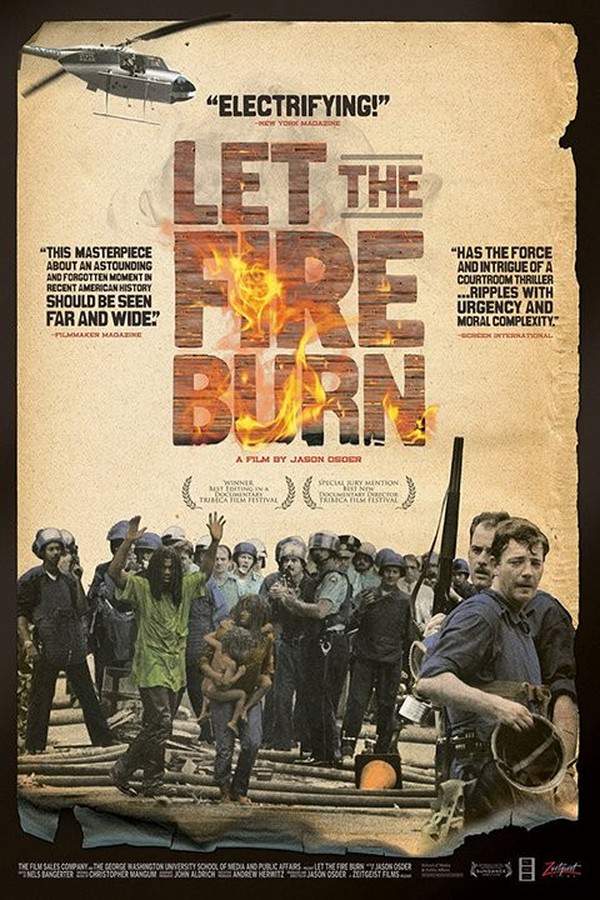
Let the Fire Burn (2013) movie poster

Plot Summary

Let the Fire Burn (2013) Plot Summary Explained

Release, runtime and language
2013 · 88 min · English
JustWatch #20,698 7
Directed by
Jason Osder

This documentary-drama explores the tragic events stemming from deep-seated prejudice and the breakdown of community tolerance. It examines the circumstances leading up to a pivotal moment, revealing the devastating impact of unchecked hatred and its consequences for those involved. The film offers a powerful look at a community fractured by intolerance and the lasting effects of such division.

On this page (6)
  1. 1 Where to watch
  2. 2 What happens: full plot
  3. 3 Plot questions answered
  4. 4 Movie threads
  5. 5 Movies like Let the Fire Burn
  6. 6 Every angle

Where to watch

Where to Watch Let the Fire Burn (2013)

Where can you watch Let the Fire Burn? Stream, rent or buy it in the US, including on OVID, Hoopla and Kanopy: current JustWatch availability with up-to-date prices.

Streaming availability powered by JustWatch

Full plot summary · contains spoilers

What Happens in Let the Fire Burn: Full Plot Summary

The whole story of Let the Fire Burn (2013) explained, from the opening scene to the final frame: every key event, every twist and what it all adds up to. Read it as a quick recap before the sequel, to check a scene you missed, or to finally understand what really happened.

The MOVE organization was first founded as a movement focused on a "back to nature" lifestyle, adhering to environmentally friendly practices. However, as the group's methods grew increasingly radical—characterized by abrasive bullhorn speeches, unsanitary living conditions, and questionable child-rearing practices—they began to attract significant scrutiny from both the Philadelphia community and law enforcement. The situation escalated dramatically when nine of its members were convicted of third-degree murder following a deadly shoot-out with police in 1978. This incident only solidified the group's belief in systemic corruption within the police force, which they felt was intent on dismantling their community.

In 1985, after repeated complaints from neighbors regarding offensive broadcasts and serious health concerns, the police decided it was time to take action to evict the MOVE members from their home on Osage Avenue. As tension mounted, gunfire erupted, and the police's use of tear gas proved inadequate to force the MOVE members out. In a shocking turn of events, the police resorted to dropping explosives onto the house. This decision ignited a fire that quickly spread, putting the lives of several children trapped inside at grave risk.

In a highly controversial choice, the authorities opted to "let the fire burn", leading to the devastation of over 60 homes and tragically resulting in the deaths of five children and six adults. The subsequent investigation revealed that city officials and law enforcement had acted with gross negligence, yet no criminal charges were ever brought against them. This harrowing event not only highlighted the extreme measures taken by law enforcement but also the dire consequences of their actions, leaving a lasting impact on the community and raising critical questions about accountability.

Last updated: November 16, 2024 at 12:15

Was this helpful?

Plot questions answered

Let the Fire Burn Plot Explained: Your Questions Answered

The questions people ask most about Let the Fire Burn (2013): what happens in the confusing scenes, why the characters do what they do, the twists, hidden details and what the ending means. Each answer contains spoilers.

Q1

Why did police drop explosives on the MOVE house?

Police dropped explosives on the MOVE house in 1985 after a standoff escalated. When tear gas failed to force the MOVE members out of their home on Osage Avenue, authorities made the drastic decision to use explosives to remove the defiant residents. This decision came after years of escalating tension, including the 1978 shoot-out that resulted in convictions for nine MOVE members.

Foreshadowing: The earlier 1978 shoot-out had already created deep mistrust between MOVE and police, setting the stage for the later confrontation.

  • police explosives
  • move house
  • osage avenue
  • 1985
  • standoff
Q2

Why did authorities let the fire burn instead of putting it out?

In a highly controversial decision, authorities chose to 'let the fire burn' rather than attempt to extinguish it. Despite the fire spreading rapidly and threatening nearby homes, officials ordered firefighters to stand back. This decision resulted in the destruction of over 60 homes and the deaths of 11 people, including five children trapped inside the burning house.

Foreshadowing: Earlier in the confrontation, police had already escalated from tear gas to explosives, indicating a willingness to use extreme force.

  • let the fire burn
  • firefighters
  • police decision
  • osage avenue fire
Q3

What was the MOVE organization?

MOVE was a radical group founded on a 'back to nature' philosophy, promoting environmentally friendly practices and alternative living. However, over time, their methods became increasingly aggressive, characterized by abrasive bullhorn speeches, unsanitary living conditions, and controversial child-rearing practices that attracted both community concern and police attention.

Foreshadowing: The group's initial positive environmental mission would be overshadowed by their increasingly confrontational approach.

  • move organization
  • back to nature
  • radioactive
  • philadelphia
  • radical group
Q4

Why were neighbors complaining about MOVE before the 1985 raid?

By 1985, neighbors had lodged numerous complaints about MOVE members living on Osage Avenue. These complaints centered on offensive broadcasts from the group's bullhorn speeches and serious health hazards created by their unsanitary living conditions. The mounting community pressure ultimately prompted police to take action to evict MOVE from the neighborhood.

Foreshadowing: The neighborhood tensions had been building for years, creating the conditions for the tragic confrontation.

  • neighbors complaints
  • health hazards
  • offensive broadcasts
  • osage avenue
Q5

What happened during the 1978 MOVE shoot-out with police?

In 1978, a violent shoot-out occurred between MOVE members and Philadelphia police. This confrontation resulted in nine MOVE members being convicted of third-degree murder. The incident deepened MOVE's belief in systemic police corruption and their determination to resist law enforcement, creating lasting animosity that would contribute to the 1985 tragedy.

Foreshadowing: The 1978 convictions and the group's resulting hostility toward police directly foreshadowed the later catastrophic confrontation.

  • 1978 shootout
  • move convictions
  • third degree murder
  • police
Q6

Why were children still inside the MOVE house during the police raid?

Despite the obvious danger of the standoff, children remained inside the MOVE house when police dropped explosives. The exact reason is not fully detailed in the documentary, but MOVE's defiant stance and refusal to leave their home, combined with the chaotic escalation of police tactics, resulted in five children being trapped inside when the fire broke out.

Foreshadowing: The tragedy was compounded by the fact that MOVE members had chosen to stay despite knowing a police operation was imminent.

  • children deaths
  • move children
  • osage avenue
  • fire victims
Q7

Who made the decision to bomb the MOVE house?

The decision to drop explosives on the MOVE house was made by law enforcement and city officials during the 1985 confrontation. While the specific individuals are not detailed in the summary, the subsequent investigation revealed that city officials and police acted with gross negligence. Despite this finding, no criminal charges were ever filed against those responsible for the decision.

Foreshadowing: The decision-makers operated within a system that would ultimately shield them from accountability.

  • decision makers
  • city officials
  • police chief
  • accountability
Q8

Why were no criminal charges filed against the police?

Despite an investigation revealing that city officials and law enforcement acted with gross negligence in the handling of the MOVE confrontation, no criminal charges were ever brought against any police officers or city officials. This lack of accountability became one of the most infuriating aspects of the tragedy, raising serious questions about justice and police oversight.

Foreshadowing: The absence of charges highlighted the systemic failures that the documentary ultimately critiques.

  • no charges
  • accountability
  • investigation
  • gross negligence
  • justice
Q9

How many people died in the Osage Avenue fire?

The fire that erupted from the police explosives killed eleven people, five children and six adults, all trapped inside the MOVE house. The victims included members of the MOVE organization, and the deaths represented a devastating loss of life that shocked the nation and highlighted the catastrophic failure of police tactics.

Foreshadowing: The death toll reflected the ultimate consequence of the authorities' extreme escalation.

  • death toll
  • 11 dead
  • children killed
  • fire victims
  • move members
Q10

What was the lasting impact of the MOVE bombing on Philadelphia?

The MOVE bombing left a profound and enduring impact on Philadelphia, raising critical questions about police accountability, community trust, and the ethics of law enforcement conduct. The destruction of over 60 homes and the deaths of 11 people created deep scars in the community. The fact that no criminal charges were filed despite clear negligence further fractured trust between law enforcement and the public.

Foreshadowing: The documentary frames this as a story about systemic failure and the long-term consequences of unchecked power.

  • community impact
  • police accountability
  • philadelphia
  • lasting effects
  • justice system

Movie threads

More Movies Like Let the Fire Burn, by Mood & Story

Curated lists built around what makes Let the Fire Burn tick: the same mood, the same kind of story or the same emotional payoff. Each list explains why these movies belong together.

Movies about institutional failure like Let the Fire Burn

Documentaries and dramas that expose systemic breakdowns with devastating consequences. If you were gripped by the systemic breakdown in Let the Fire Burn, explore these movies like it. This list features similar documentaries and dramas that expose real-world tragedies, government negligence, and stories of devastating public injustice that will leave a lasting impact.

  • infuriating
  • somber
  • tragic
  • oppressive
  • devastating
  • gripping
  • Tone: tense, bleak, infuriating
  • Pacing: steady, methodical
Why these movies?

The story pattern: Stories in this thread typically follow a methodical, chronological build-up of events leading to an inevitable, large-scale tragedy. They focus on the chain of decisions, ignored warnings, and systemic biases that culminate in a devastating failure, often highlighting the pursuit of accountability and the lasting impact on a community.

Why they belong together: These films are grouped by their shared focus on exposing real-world systemic failures, their tense and somber mood, and their heavy emotional weight derived from depicting preventable tragedies. They share a steady, documentary-like pacing that builds to a bleak conclusion.

Slow burn tragic dramas like Let the Fire Burn

Dramas where tension builds steadily toward a foreshadowed, devastating conclusion. Seeking more movies with the deliberate, devastating build-up of Let the Fire Burn? This collection features similar slow burn dramas and thrillers where tension mounts steadily toward an inevitable, tragic ending, creating a somber and heavy viewing experience for fans of poignant, tense stories.

  • slow burn
  • tense
  • somber
  • melancholic
  • devastating
  • tragic
  • Tone: tense, melancholic, dark
  • Pacing: steady, slow burn
Why these movies?

The story pattern: The narrative pattern involves a clear, often chronological, escalation of conflict where the audience senses the tragic outcome long before the characters. There is a focus on the 'how' and 'why' of the downfall rather than suspense about 'if' it will happen, creating a unique form of dramatic tension.

Why they belong together: These movies are united by their specific pacing and emotional journey: a steady, methodical build-up of tension that creates a palpable sense of inevitability, leading to a deeply sad or bleak ending. The shared mood is one of somber dread and melancholic resignation.

If you liked this

Movies Like Let the Fire Burn

Similar movies to Let the Fire Burn: the same genre, themes or kind of story. Each one comes with its own plot summary, timeline and ending explained.

Browse all movie summaries

Every angle

Let the Fire Burn (2013) Explained: Plot, Timeline & Characters

Everything about Let the Fire Burn in one place: what happens in the plot summary, the timeline in chronological order, the characters and meaning and a spoiler-free summary. What's After the Movie adds the cast, box office and post-credit scenes.

Coming soon on iOS and Android

The Plot Explained Movie Summary App

Plot summaries, endings explained and timelines on your phone. Catch up on any movie in minutes, save your favorites and never miss a twist again.

Be the first to know when we launch. Your email stays private, always.

Learn more about the app