





Plot Explained Spoilers guaranteed!
Plot Explained

Browse by genre

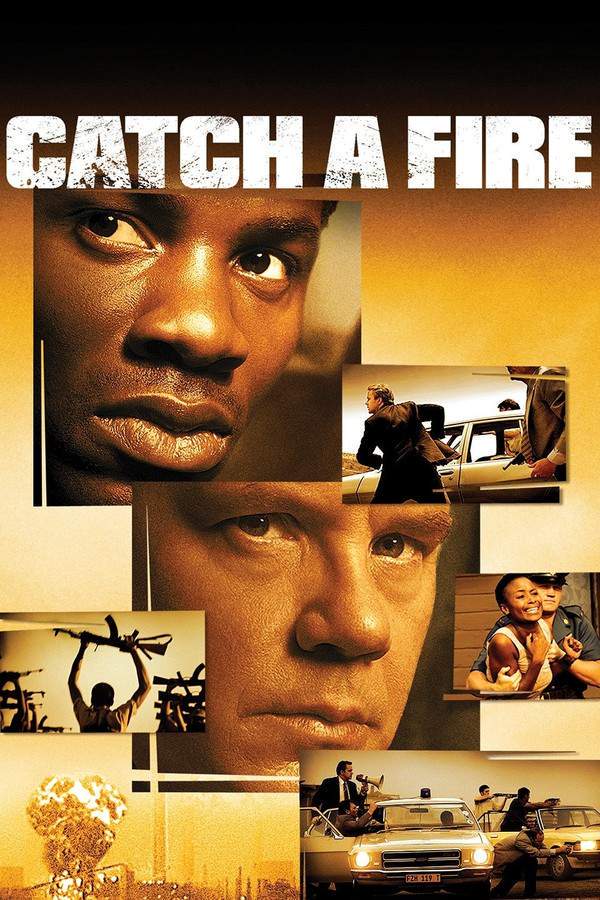
Catch a Fire (2006) movie poster

Plot Summary

Catch a Fire (2006) Plot Summary Explained

Release, runtime and language
2006 · 101 min · English
Directed by
Phillip Noyce
Starring
Derek Luke, Tim Robbins, Bonnie Henna

A seemingly ordinary refinery worker, Patrick Chamusso, becomes involved in acts of sabotage against the apartheid regime after a personal encounter with its oppressive forces. Driven by a desire for justice, he undertakes increasingly risky solo attacks, drawing the attention of a determined police officer. The policeman begins a calculated infiltration of Patrick's life, aiming to expose him and dismantle his growing movement, placing everything Patrick values in grave danger.

On this page (6)
  1. 1 Where to watch
  2. 2 What happens: full plot
  3. 3 Plot questions answered
  4. 4 Movie threads
  5. 5 Movies like Catch a Fire
  6. 6 Every angle

Where to watch

Where to Watch Catch a Fire (2006)

Where can you watch Catch a Fire? Stream, rent or buy it in the US, including on Amazon Video, Apple TV Store and Fandango At Home: current JustWatch availability with up-to-date prices.

Streaming availability powered by JustWatch

Full plot summary · contains spoilers

What Happens in Catch a Fire: Full Plot Summary

The whole story of Catch a Fire (2006) explained, from the opening scene to the final frame: every key event, every twist and what it all adds up to. Read it as a quick recap before the sequel, to check a scene you missed, or to finally understand what really happened.

In 1980 South Africa, the story follows Patrick Chamusso, a young man with no political affiliations, who finds himself wrongfully accused of a terrorist bombing. The investigation is led by Afrikaner police officer Nic Vos, whose primary mission is to apprehend those responsible for an attack on the Secunda CTL synthetic fuel refinery, the world’s largest coal liquefaction plant.

Caught in a web of circumstance, Patrick's life spirals out of control when he cannot convincingly explain his whereabouts during the bombing—he was engaged in an extramarital affair at the time. This leads to severe repercussions, as he, along with his wife Precious, endures brutal torture at the hands of Vos and his men. In a desperate bid to protect his family, Patrick falsely agrees to confess to a crime he did not commit. However, Vos, fearing he has let an innocent man suffer, ultimately decides to release Patrick.

Consumed by the injustice inflicted upon him and his loved ones, Patrick aligns himself with Umkhonto we Sizwe, the military wing of the ANC (African National Congress), a key player in the anti-apartheid movement. Paradoxically, he becomes exactly what Vos believed him to be—a possible terrorist. He devises a plan to attack the Secunda refinery by initially targeting its water supply facilities before executing the main bombing, hoping to give the refinery's workers a chance to escape between the two explosions. Although the first phase of his plan is successful, Vos manages to thwart the detonation of the second bomb.

As a result of his actions, Patrick is sentenced to 24 years in prison, aided by a betrayal from his wife Precious, who was misled by Vos into revealing Patrick's location due to a trick involving staged photographs. Consumed by jealousy, she inadvertently sells him out. Following his imprisonment, Patrick is granted early release due to the end of apartheid.

Upon his return, he discovers that Precious has since remarried. In a poignant encounter, she offers an apology for her past actions, and Patrick, filled with grace and understanding, forgives her in turn. In a significant turn of events, he later spots Vos near a quiet body of water. A part of him wrestles with the urge for retribution, yet he ultimately chooses peace over violence, allowing Vos to remain unharmed. Embracing a new chapter in his life, Patrick remarries and dedicates himself to caring for over 80 orphaned children impacted by the upheavals of the anti-apartheid struggle, thus turning his personal trials into a mission of hope and redemption for others.

Last updated: October 02, 2026 at 03:21

Was this helpful?

Plot questions answered

Catch a Fire Plot Explained: Your Questions Answered

The questions people ask most about Catch a Fire (2006): what happens in the confusing scenes, why the characters do what they do, the twists, hidden details and what the ending means. Each answer contains spoilers.

Q1

Why couldn't Patrick Chamusso prove where he was during the Secunda bombing?

Patrick could not provide a valid alibi because he was committing adultery at the time of the attack. Telling the police he was with his mistress would have destroyed his marriage and his standing in the community, so he chose silence, which made him the prime suspect in the Secunda refinery bombing investigation.

Foreshadowing: Early in the story, Patrick's secret affair is shown as a private escape from the pressures of his work and family, foreshadowing that this very secrecy would later make him vulnerable to police suspicion.

  • patrick chamusso
  • alibi
  • secunda bombing
  • affair
  • precious
Q2

Why did Patrick agree to confess to a bombing he didn't commit?

Patrick falsely confessed because the torture inflicted on him and his family by Nic Vos became unbearable. He believed a confession was the only way to stop the violence against Precious and his children, even though it meant accepting guilt for an act he had no part in.

Foreshadowing: The arrest scene shows Precious being dragged away separately, hinting that Patrick's resolve would eventually break not for himself, but to spare her.

  • patrick
  • false confession
  • torture
  • vos
  • precious
Q3

Why did Nic Vos release Patrick if he suspected him of terrorism?

Vos released Patrick because he came to believe the man was innocent of the Secunda attack. After watching Patrick break under pressure and confess, Vos realized the confession was coerced and that the real bomber was still at large, so he chose to let Patrick go rather than imprison a harmless man.

Foreshadowing: Vos is shown quietly observing Patrick's body language during interrogations, foreshadowing his growing doubt that he is holding the right man.

  • nic vos
  • release
  • innocence
  • interrogation
  • apartheid police
Q4

How did Patrick go from an ordinary refinery worker to an ANC militant?

Patrick's transformation was driven by the personal trauma inflicted on him and his family. After being tortured, separated from Precious, and publicly humiliated by the apartheid security forces, he joined Umkhonto we Sizwe, the armed wing of the ANC, channeling his rage into organized resistance against the regime.

Foreshadowing: Patrick's quiet pride in his work at the refinery is established early, making his later sabotage of the very same plant a deliberate inversion of his former identity.

  • patrick
  • umkhonto we sizwe
  • anc
  • radicalization
  • apartheid
Q5

What was Patrick's two-phase plan for attacking the Secunda refinery?

Patrick's plan involved detonating a first bomb at the refinery's water supply facilities, then following it with a larger explosion at the main plant. The first blast was meant to create chaos and disable critical infrastructure, while the gap between the two explosions was designed to give workers enough time to flee before the second, more destructive device went off.

Foreshadowing: During his training with Umkhonto we Sizwe, Patrick is shown studying the refinery's layout in detail, foreshadowing the precision of his two-stage attack plan.

  • secunda refinery
  • bombing plan
  • water supply
  • sabotage
  • patrick chamusso
Q6

Why did Patrick target the water supply before bombing the refinery itself?

Patrick targeted the water supply first because it was a non-lethal opening strike. Disabling the water system created confusion and forced an evacuation, giving the predominantly Black workforce a window to escape the refinery before the much larger second bomb detonated, reflecting Patrick's refusal to kill his former colleagues.

Foreshadowing: Patrick is shown hesitating to harm fellow Black workers during his early MK training exercises, foreshadowing his decision to design a plan that prioritized their evacuation.

  • water supply
  • refinery workers
  • evacuation
  • humanitarian
  • secunda
Q7

How did Nic Vos discover and stop the second bomb at Secunda?

Vos uncovered the second bomb through a calculated infiltration of Patrick's life, using staged photographs and manipulated relationships to track his movements. Once he traced Patrick back to the refinery, his team located and defused the main explosive before it could detonate, foiling the attack and leading to Patrick's immediate arrest.

Foreshadowing: Vos is seen photographing Patrick's acquaintances and mapping his routines well before the second bombing, foreshadowing the surveillance operation that would eventually expose him.

  • nic vos
  • second bomb
  • infiltration
  • surveillance
  • arrest
Q8

How did Precious betray Patrick to the police?

Vos tricked Precious into revealing Patrick's hiding place by showing her staged photographs that suggested Patrick was romantically involved with another woman. Blinded by jealousy, she led the security forces to his location without realizing she was being manipulated, directly enabling his capture.

Foreshadowing: Early scenes establish Precious's deep insecurity about Patrick's infidelity, foreshadowing that this emotional wound could be exploited against him.

  • precious
  • betrayal
  • staged photographs
  • vos
  • manipulation
Q9

Why did Precious betray Patrick even though she loved him?

Precious betrayed Patrick because Vos exploited her unresolved pain over his affair. The staged photographs of Patrick with another woman reopened that wound, and her jealousy overrode her loyalty, allowing the police to use her as the key to locating him.

Foreshadowing: Precious is shown earlier asking Patrick pointed questions about his fidelity, foreshadowing how vulnerable she remained to that particular betrayal.

  • precious
  • jealousy
  • affair
  • betrayal
  • motivation
Q10

Why was Patrick sentenced to 24 years in prison?

Patrick received a 24-year sentence because the apartheid state treated his sabotage of the Secunda CTL refinery as a major act of terrorism against strategic national infrastructure. The scale of the attack, combined with his confirmed links to Umkhonto we Sizwe, led the regime to impose a punishment meant to serve as a deterrent to other Black South Africans considering armed resistance.

Foreshadowing: The film's opening titles note the Secunda refinery's importance to the apartheid economy, foreshadowing the severity of the punishment for attacking it.

  • 24 years
  • prison sentence
  • apartheid
  • terrorism
  • secunda refinery
Q11

Why was Patrick released from prison before completing his 24-year sentence?

Patrick was released early because the formal abolition of apartheid in the early 1990s led to political reforms that freed many anti-apartheid activists, including ANC and Umkhonto we Sizwe members. His imprisonment, which had been justified under apartheid-era security laws, was no longer sustainable under the new democratic government.

Foreshadowing: News reports of political unrest and releases of activists appear briefly in the background during his imprisonment, foreshadowing the coming political change.

  • apartheid
  • early release
  • political reform
  • anc
  • prison
Q12

Why did Patrick choose not to take revenge when he found Vos?

Patrick chose to spare Vos because years of imprisonment and reflection had transformed his understanding of justice. Rather than becoming the cycle of violence that had already cost him decades of his life, he decided that genuine freedom meant rejecting revenge, even when his torturer was standing unarmed before him.

Foreshadowing: During his final confrontation with Precious, Patrick demonstrates unusual calm and forgiveness, foreshadowing his capacity to extend that grace to Vos as well.

  • patrick
  • vos
  • revenge
  • forgiveness
  • redemption
Q13

Why did Patrick dedicate his life to caring for over 80 orphaned children?

Patrick turned to caring for orphaned children because he wanted his suffering to become something constructive. Having lost his own prime years to apartheid's violence, he channeled his experience into providing stability and love to children who had been similarly destroyed by the struggle, transforming his personal trauma into a mission of hope.

Foreshadowing: Throughout the film, Patrick is shown instinctively protective of children in his community, foreshadowing his eventual role as a caretaker for dozens of orphans.

  • orphans
  • patrick chamusso
  • redemption
  • post-apartheid
  • hope
Q14

What was the staged photographs trick Vos used against Patrick's family?

Vos manufactured photographs designed to show Patrick in a compromising romantic situation with another woman, then leaked them to Precious. The images were a fabrication meant to exploit her existing jealousy from his earlier affair, weaponizing her emotions to force her to give up his location.

Foreshadowing: Vos is earlier seen working closely with a darkroom technician, foreshadowing his willingness to use forged images as a tool of psychological warfare.

  • staged photographs
  • vos
  • precious
  • manipulation
  • forgery

Movie threads

More Movies Like Catch a Fire, by Mood & Story

Curated lists built around what makes Catch a Fire tick: the same mood, the same kind of story or the same emotional payoff. Each list explains why these movies belong together.

Political surveillance thrillers like Catch a Fire

Investigators and rebels circle each other under the weight of an oppressive state. Looking for movies like Catch a Fire? These tense political thrillers feature cat-and-mouse games between investigators and resisters, with surveillance, infiltration, and heavy moral conflict at their core. If you liked the calculated tension and real-world stakes of Catch a Fire, you will find similar films here.

  • surveillance
  • cat-and-mouse
  • political
  • tense
  • infiltration
  • moral conflict
  • Tone: tense, dark, suspenseful
  • Pacing: steady, methodical
Why these movies?

The story pattern: A determined state agent zeroes in on a suspect whose political awakening has made them dangerous. The narrative oscillates between the investigator's methodical infiltration and the target's escalating acts of defiance, building toward an inevitable confrontation. Relationships, loyalties, and ideologies are tested under surveillance, betrayal, and the looming threat of state violence. The story refuses easy villains, leaving both hunter and hunted morally compromised.

Why they belong together: These films share a grinding investigative tension, a focus on real political stakes, and an intimate scale that makes systemic oppression feel personal. The pacing tends to be steady and methodical rather than action-driven, with violence that is sudden, disturbing, and emotionally scarring. They reward viewers who enjoy watching ideology clash with human vulnerability on both sides of the law.


Bittersweet political dramas like Catch a Fire

Personal lives shattered by ideology, then slowly rebuilt in the ruins. If you liked Catch a Fire, you will love these heavy political dramas that follow ordinary people through systemic oppression, wrongful accusation, and years of separation. Each story carries moral weight and ends with a bittersweet mix of redemption, reconciliation, and lasting scars. Movies like Catch a Fire for viewers who want history with a human heart.

  • bittersweet
  • political
  • redemptive
  • heavy
  • family separation
  • moral conflict
  • Tone: heavy, bittersweet, somber, redemptive
  • Pacing: steady, reflective
Why these movies?

The story pattern: A seemingly ordinary person is radicalized by a personal encounter with state brutality, drawn into dangerous resistance at great cost to family and freedom. Years are lost to prison, exile, or trauma. The final act often leaps forward to show how survivors reckon with what was taken, choosing between bitterness and forgiveness, isolation and rebuilding community. The arc from innocence through devastating loss to quiet, imperfect redemption defines these stories.

Why they belong together: These films balance historical reckoning with intimate family and moral drama, refusing to reduce political violence to spectacle. They share heavy emotional weight, moderate narrative complexity, and endings that resist both happy closure and pure despair. Viewers who appreciate stories of civil rights, anti-colonial struggle, or any tale where personal love survives political catastrophe will feel at home.

If you liked this

Movies Like Catch a Fire

Similar movies to Catch a Fire: the same genre, themes or kind of story. Each one comes with its own plot summary, timeline and ending explained.

Browse all movie summaries

Every angle

Catch a Fire (2006) Explained: Plot, Timeline & Characters

Everything about Catch a Fire in one place: what happens in the plot summary, the timeline in chronological order, the characters and meaning and a spoiler-free summary. What's After the Movie adds the cast, box office and post-credit scenes.

Coming soon on iOS and Android

The Plot Explained Movie Summary App

Plot summaries, endings explained and timelines on your phone. Catch up on any movie in minutes, save your favorites and never miss a twist again.

Be the first to know when we launch. Your email stays private, always.

Learn more about the app