Plot Explained Spoilers guaranteed!
Plot Explained

Browse by genre

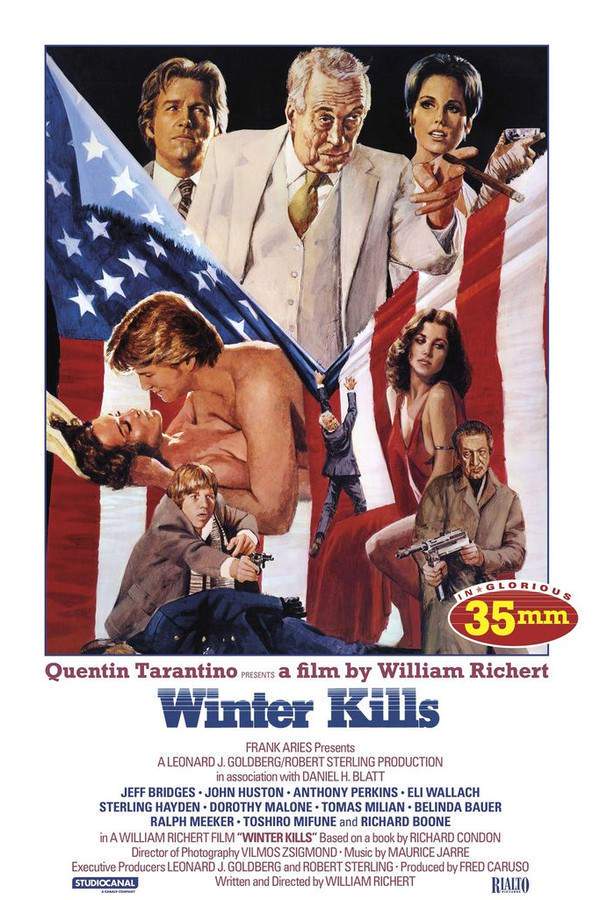
Winter Kills (1979) movie poster

Plot Summary

Winter Kills (1979) Plot Summary Explained

Release, runtime and language
1979 · 97 min · English
JustWatch #5,431 2
Directed by
William Richert
Starring
Jeff Bridges, John Huston, Eli Wallach, Toshirô Mifune, Ralph Meeker, Sterling Hayden
Budget
$6.5M

A darkly comedic thriller follows Nick Kegan, the younger brother of a charismatic president assassinated under mysterious circumstances. Driven to uncover the truth, Nick investigates his brother’s death and discovers a web of secrets, surprising revelations, and complex family dynamics. His pursuit of answers threatens to expose painful truths and shatter the remnants of his family’s legacy, forcing him to confront a conspiracy that reaches the highest levels of power.

On this page (6)
  1. 1 Where to watch
  2. 2 What happens: full plot
  3. 3 Plot questions answered
  4. 4 Movie threads
  5. 5 Movies like Winter Kills
  6. 6 Every angle

Where to watch

Where to Watch Winter Kills (1979)

Where can you watch Winter Kills? Stream, rent or buy it in the US, including on Fawesome, Kanopy and Shout! Factory TV: current JustWatch availability with up-to-date prices.

Streaming availability powered by JustWatch

Full plot summary · contains spoilers

What Happens in Winter Kills: Full Plot Summary

The whole story of Winter Kills (1979) explained, from the opening scene to the final frame: every key event, every twist and what it all adds up to. Read it as a quick recap before the sequel, to check a scene you missed, or to finally understand what really happened.

On board his wealthy father's tanker ship, Nick Kegan (Jeff Bridges) leaves a message for his lover, Yvette Malone (Belinda Bauer), on her answering machine. Suddenly, a family associate named Keifetz (Richard Boone) makes a dramatic entrance via helicopter, bringing along a bandaged man, Arthur Fletcher (Joe Spinell). Inside the ship's medical office, Fletcher, while being attended to, confesses a chilling secret: he assassinated Nick's half-brother, the President of the United States, nearly two decades ago on February 22, 1960, in Philadelphia. He recounts how he was hired by a man named Casper, Jr., alongside another gunman, and hid the murder weapon in Room 903 of the Engleson Building. Fletcher seeks to reveal the truth about the assassination to clear his name before passing away, leaving Nick desperate for answers.

Intrigued and seeking justice, Nick travels to Philadelphia, where he discovers the rifle. Just as Nick and his companions plan their next steps, tragedy strikes: a young woman on a bicycle with a child inadvertently witnesses the chaos, leading to the untimely deaths of Nick's friends at the hands of an unseen sniper. Frantically, Nick attempts to alert his father, Pa Kegan (John Huston), but instead reaches John Cerruti (Anthony Perkins), who claims to send assistance. However, their plans are thwarted when the vehicle containing the rifle goes missing.

Eventually, Nick finds himself at his father's lavish estate, where he reconnects with family members, including his troubled mother, Emma (Dorothy Malone). Despite the familial affection, there's conflict as Pa rebukes Nick for abandoning his duties. The tension escalates when Pa concocts a scheme to dismantle the assassination conspiracy.

A turning point emerges when Nick meets Z.K. Dawson (Sterling Hayden), a powerful former political rival who attempts to distance himself from the crime, laying blame on the Philadelphia Police Department, particularly Captain Heller (Brad Dexter) and his ally, Ray Doty (Michael Thomas). Subsequently, Nick learns that he has lost all witnesses to Fletcher's confession, as they either die or disappear under mysterious circumstances.

Later on, Nick's investigation leads him to Joe Diamond (Eli Wallach), a nightclub owner with connections to the assassination. Doty's flashbacks reveal that the crime was orchestrated by the mafia, with Diamond facilitating the grisly details. As Nick's pursuit deepens, he rekindles his relationship with Yvette, but their intimacy is marred by suspicions and emotional turmoil.

As the saga unfolds, Nick discovers Yvette's untruths regarding her employment and learns that deception runs rampant in his family’s dealings. Amid shocking revelations and murderous plots, Nick confronts the realities that his father, Pa, may be behind the assassination. In a dramatic climax, a confrontation leads to chaos, forcing Nick to grapple with shocking family betrayals and the weight of legacy.

Ultimately, forced to make painful decisions, Nick witnesses the tragic demise of his father, who, in a final act of defiance, tumbles to his death, leaving a haunting message as he falls: "put my money in South America!". The emotional weight of familial connections remains heavy, even as Nick struggles to escape the shadows of his family. The story culminates with him calling Yvette's answering machine one last time, clinging to the remnants of their love amid the darkness.
Last updated: October 25, 2024 at 09:54

Was this helpful?

Plot questions answered

Winter Kills Plot Explained: Your Questions Answered

The questions people ask most about Winter Kills (1979): what happens in the confusing scenes, why the characters do what they do, the twists, hidden details and what the ending means. Each answer contains spoilers.

Q1

Who actually killed President Kegan in the movie?

Arthur Fletcher confesses to being the actual assassin, revealing he was hired by a man named Casper, Jr. alongside another gunman. Fletcher shot the President on February 22, 1960, in Philadelphia, but the conspiracy went much deeper than just the triggerman, as the mafia was ultimately revealed to have orchestrated the crime.

Foreshadowing: Fletcher's dramatic arrival on the tanker ship via helicopter signals the weight of his confession.

  • assassination
  • fletcher
  • president
  • conspiracy
  • murder
Q2

Was Pa Kegan behind his son's assassination?

The film suggests Pa Kegan may have been involved in orchestrating his own son's assassination. During the confrontation, Nick suspects his father of being behind the conspiracy, and the evidence points to Pa's involvement in the dark dealings that ultimately led to the President's death.

Foreshadowing: Pa's rebuke of Nick for abandoning family duties hints at his deeper involvement in the family's criminal enterprises.

  • pa kegan
  • father
  • conspiracy
  • assassination
  • family
Q3

What happened to the rifle hidden in Room 903?

Nick discovers the murder weapon hidden in Room 903 of the Engleson Building in Philadelphia, but the vehicle containing the rifle goes missing, thwarting his plans to use it as evidence. This disappearance is part of the ongoing efforts to suppress the truth about the assassination.

Foreshadowing: Nick's urgent attempt to alert his father about the chaos foreshadows the rifle's theft.

  • rifle
  • weapon
  • room 903
  • engleson building
  • evidence
Q4

Why do all the witnesses die or disappear in Winter Kills?

All witnesses to Fletcher's confession either die or disappear under mysterious circumstances. This is part of the larger conspiracy to silence anyone who knows the truth about the assassination, with the perpetrators systematically eliminating anyone who could expose the truth.

Foreshadowing: The tragic deaths of Nick's friends by an unseen sniper in Philadelphia demonstrates the conspiracy's willingness to kill.

  • witnesses
  • deaths
  • conspiracy
  • silenced
  • elimination
Q5

What was Yvette lying about regarding her employment?

Nick discovers that Yvette has been untruthful about her employment, though the specific details of her deception remain murky. This revelation adds to the atmosphere of betrayal and mistrust that surrounds Nick throughout his investigation.

Foreshadowing: The tension and suspicions between Nick and Yvette during their rekindled relationship hint at underlying deception.

  • yvette
  • lying
  • employment
  • deception
  • relationship
Q6

How was Joe Diamond connected to the assassination conspiracy?

Joe Diamond, a nightclub owner with connections to the assassination, reveals how the mafia orchestrated the crime. Diamond facilitated the grisly details of the President's murder, acting as a key intermediary between the conspirators and the actual assassins.

Foreshadowing: Nick's investigation leading him to a nightclub owner points to organized crime involvement.

  • joe diamond
  • mafia
  • nightclub
  • conspiracy
  • organized crime
Q7

What was the meaning of Pa Kegan's final words?

As Pa Kegan falls to his death during the chaotic confrontation, he cries out "put my money in South America!" This final message suggests his thoughts were still on protecting his wealth and assets even in his final moments, underscoring his character obsession with money and legacy.

Foreshadowing: Pa's earlier schemes to dismantle the conspiracy and his focus on family legacy foreshadow his final words.

  • pa kegan
  • final words
  • money
  • south america
  • death
Q8

What was Z.K. Dawson's role in the assassination?

Z.K. Dawson, a powerful former political rival, attempts to distance himself from the crime during his meeting with Nick. He shifts blame onto the Philadelphia Police Department, particularly Captain Heller and his ally Ray Doty, though his true level of involvement remains ambiguous.

Foreshadowing: Dawson as a former political rival suggests he had motive and opportunity to be involved.

  • z.k. dawson
  • police
  • blame
  • conspiracy
  • political rival
Q9

Why does Nick Kegan investigate his brother's death?

Nick is driven to uncover the truth about his half-brother's assassination after learning about it from Fletcher's dying confession. His pursuit of justice threatens to expose painful truths and shatter his family's legacy, forcing him to confront a conspiracy that reaches the highest levels of power.

Foreshadowing: Nick leaving a message for Yvette at the beginning foreshadows his descent into the conspiracy's web.

  • nick kegan
  • investigation
  • motivation
  • truth
  • justice
Q10

Why does Arthur Fletcher confess to the assassination?

Arthur Fletcher confesses to Nick while being attended to in the ship's medical office, seeking to reveal the truth about the assassination to clear his name before passing away. His dying confession sets the entire investigation in motion.

Foreshadowing: Fletcher's bandaged arrival via helicopter signals his critical importance to the story.

  • arthur fletcher
  • confession
  • dying
  • motive
  • clearing name
Q11

What was Ray Doty's connection to the conspiracy?

Ray Doty is revealed to be an ally of Captain Heller within the Philadelphia Police Department. Flashbacks show he was part of the apparatus that enabled the assassination, working within the police force to facilitate the crime.

Foreshadowing: Dawson's blame-shifting toward the police department hints at Doty's involvement.

  • ray doty
  • police
  • conspiracy
  • captain heller
  • facilitator
Q12

What was John Cerruti's role in the conspiracy?

When Nick tries to alert his father about the unfolding chaos, he reaches John Cerruti instead, who claims to send assistance. However, Cerruti either cannot or does not help, and their plans are thwarted, suggesting he may be part of the network working against Nick.

Foreshadowing: The failed assistance from Cerruti contributes to the missing rifle and lost evidence.

  • john cerruti
  • betrayal
  • assistance
  • conspiracy

Movie threads

More Movies Like Winter Kills, by Mood & Story

Curated lists built around what makes Winter Kills tick: the same mood, the same kind of story or the same emotional payoff. Each list explains why these movies belong together.

Movies about family conspiracies like Winter Kills

Uncovering dark secrets that shatter family legacies and personal innocence. If you enjoyed the unraveling family secrets in Winter Kills, you'll find similar tension in these movies. This thread gathers thrillers and dramas where investigations expose deep corruption and betrayal within powerful dynasties, leading to heavy emotional consequences.

  • sinister
  • paranoid
  • melancholic
  • oppressive
  • cynical
  • investigative
  • Tone: dark, cynical, melancholic
  • Pacing: steady, investigative
Why these movies?

The story pattern: These narratives typically follow a methodical, escalating investigation that challenges the protagonist's core beliefs. The central conflict is internal as much as external, pitting the search for truth against loyalty. The climax often reveals a betrayal so profound it permanently alters the protagonist's world, resulting in a melancholic or bittersweet resolution where truth comes at a great personal cost.

Why they belong together: They are grouped by their shared focus on the corrosion of legacy, the moral ambiguity of power, and the emotionally heavy journey of a protagonist uncovering painful truths close to home. The tone is consistently dark and cynical, with a steady pacing that builds paranoia.

Darkly comedic conspiracy movies like Winter Kills

Thrillers that use bleak humor to expose the absurdity of corruption and power. For viewers who liked the satirical edge in Winter Kills, this thread features similar movies that mix political thrillers with dark comedy. These films maintain high tension and complex plots while using humor to critique power, corruption, and systemic absurdity.

  • darkly comedic
  • cynical
  • anxious
  • sinister
  • satirical
  • paranoid
  • Tone: dark, satirical, tense
  • Pacing: steady, building
Why these movies?

The story pattern: The plot unfolds in a world where conspiracy and bureaucracy are so labyrinthine they become darkly farcical. The protagonist navigates this world with a growing sense of futility, and the humor often stems from the grotesque gap between official narratives and chaotic reality. The journey is emotionally heavy, but the comedic elements provide a critical, satirical lens on the events.

Why they belong together: They share a unique tone that balances genuine thriller tension and paranoia with a cynical, satirical wit. This creates a specific vibe where the viewer is both on the edge of their seat and laughing at the ridiculousness of the power structures being depicted. The pacing is steady, building a complex web of intrigue.

If you liked this

Movies Like Winter Kills

Similar movies to Winter Kills: the same genre, themes or kind of story. Each one comes with its own plot summary, timeline and ending explained.

Browse all movie summaries

Every angle

Winter Kills (1979) Explained: Plot, Timeline & Characters

Everything about Winter Kills in one place: what happens in the plot summary, the timeline in chronological order, the characters and meaning and a spoiler-free summary. What's After the Movie adds the cast, box office and post-credit scenes.

Coming soon on iOS and Android

The Plot Explained Movie Summary App

Plot summaries, endings explained and timelines on your phone. Catch up on any movie in minutes, save your favorites and never miss a twist again.

Be the first to know when we launch. Your email stays private, always.

Learn more about the app