Plot Explained Spoilers guaranteed!
Plot Explained

Browse by genre

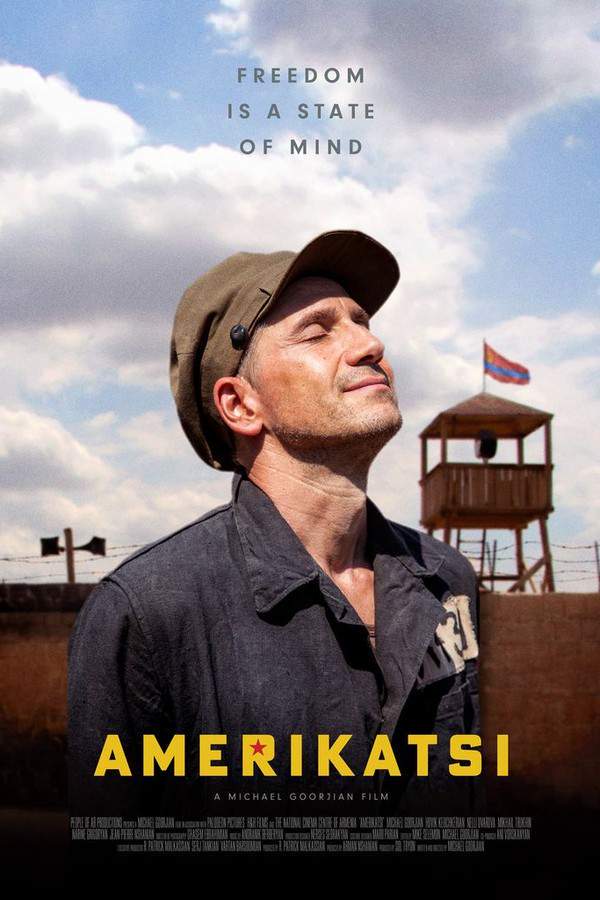
Amerikatsi (2023) movie poster

Plot Summary

Amerikatsi (2023) Plot Summary Explained

Release, runtime and language
2023 · 1 h 55 m · Armenian
Echo score 84
Loading streaming availability…
Starring
Michael A. Goorjian, Hovik Keuchkerian, Nelli Uvarova, Mikhail Trukhin, Jean-Pierre Nshanian, Narine Grigoryan

In 1948, an Armenian man returns to his homeland after years of living abroad, hoping to reconnect with his heritage and find a sense of belonging. However, he discovers a nation struggling under Soviet rule. Wrongfully imprisoned, Charlie endures hardship and despair until a surprising opportunity arises—a view of the outside world from his prison window—sparking a renewed hope for freedom and a chance at redemption.

On this page (6)
  1. 1 Where to watch
  2. 2 What happens: full plot
  3. 3 Plot questions answered
  4. 4 Movie threads
  5. 5 Movies like Amerikatsi
  6. 6 Every angle
Loading streaming availability…

Full plot summary · contains spoilers

What Happens in Amerikatsi: Full Plot Summary

The whole story of Amerikatsi (2023) explained, from the opening scene to the final frame: every key event, every twist and what it all adds up to. Read it as a quick recap before the sequel, to check a scene you missed, or to finally understand what really happened.

As a young boy, Charlie Bakhchinyan fled the horrors of the Armenian Genocide by hiding in a trunk destined for the United States. Unfortunately, his family did not share the same fortune. Despite this heartbreaking beginning, Charlie grows into adulthood while maintaining a child-like sense of wonder about the world. Yet, like many refugees and orphans, he carries an emptiness within his generous heart.

Our narrative unfolds in 1947, as Charlie decides to return to Armenia, only to be met with the brutal reality of Soviet Communism. The essence of Armenia lies buried beneath the oppressive force of the iron curtain. Before long, Charlie finds himself arrested and imprisoned for the ludicrous reason of simply wearing a tie. In a bid to prevent him from influencing other inmates with his so-called "cosmopolitan" behavior, he is confined to solitary confinement.

As he struggles against despair, a sudden revelation strikes – Charlie notices that the prison wall outside his window is damaged from a recent earthquake. Through a small hole, he gains a glimpse into a nearby apartment building. Here, he discovers an Armenian couple, Tigran and Ruzan, who become Charlie's only link to the outside world. With every opportunity, he watches them, living indirectly through the intricacies of their lives, sharing their meals, laughter, tears, music, and dance. This experience also allows him to uncover the rich Armenian culture that he has been missing.

Charlie develops a profound connection with Tigran, feeling empathy for this Soviet Armenian who is forced to suppress his love for music, food, and the vibrant art of living. However, an unexpected twist occurs when Tigran realizes that Charlie has been observing him. To Charlie’s astonishment, Tigran chooses compassion over indignation and opens the door for Charlie to step further into his world.

Through the journey of these two individuals, both prisoners of their own circumstances, hope and belief in love are rekindled. In the end, despite the unexpected turns of his quest, Charlie ultimately discovers the sense of belonging he sought in Armenia — a true homeland.

Last updated: June 11, 2025 at 15:03

Was this helpful?

Plot questions answered

Amerikatsi Plot Explained: Your Questions Answered

The questions people ask most about Amerikatsi (2023): what happens in the confusing scenes, why the characters do what they do, the twists, hidden details and what the ending means. Each answer contains spoilers.

Q1

Why was Charlie arrested for wearing a tie?

Charlie was arrested for wearing a tie because Soviet authorities viewed it as a sign of cosmopolitanism and Western influence. During the height of Soviet Communism in 1947 Armenia, wearing Western-style clothing was considered suspicious and counter-revolutionary. The charge was deliberately absurd, reflecting the arbitrary and oppressive nature of the Soviet regime that imprisoned Charlie for simply expressing his connection to the outside world.

  • soviet armenia
  • arrest
  • oppression
  • costume
Q2

How did Charlie discover the hole in the prison wall?

Charlie discovered the hole in the prison wall when he noticed that a recent earthquake had damaged the wall outside his solitary confinement cell. The earthquake created a small opening that provided a glimpse into a nearby apartment building. This moment becomes pivotal because it transforms his imprisonment from complete isolation into a window of connection to the outside world.

  • earthquake
  • prison
  • hole
  • observation
Q3

Why does Tigran let Charlie continue watching after discovering him?

Tigran chooses compassion over indignation when he realizes Charlie has been observing him. Rather than reporting Charlie to authorities, Tigran opens his door to let Charlie see more of their lives. This decision reflects the shared humanity between both men, Tigran recognizes that Charlie is also a prisoner, trapped by Soviet oppression, and their mutual isolation creates a bond that transcends the invasion of privacy.

  • tigran
  • compassion
  • connection
  • understanding
Q4

What does Charlie learn about Armenian culture while watching Tigran and Ruzan?

Through watching Tigran and Ruzan, Charlie learns about the rich Armenian culture that has been suppressed under Soviet rule. He observes their meals, laughter, tears, music, and dance, elements of everyday life that represent the vibrant cultural identity the Soviet regime attempts to eradicate. This indirect connection rekindles a part of Charlie's heritage that he thought was lost after being displaced during the Armenian Genocide.

  • armenian culture
  • tradition
  • music
  • dance
  • heritage
Q5

Why is Tigran forced to hide his love for music and art?

Tigran is forced to hide his love for music, food, and vibrant living because Soviet authorities suppress artistic expression and personal passion. The regime considers such expressions counter to communist ideology, which values collective conformity over individual creativity. As a Soviet Armenian, Tigran must suppress his true self to survive, making his private moments with Ruzan all the more precious and tragic.

  • soviet oppression
  • music
  • art
  • censorship
Q6

What is the significance of Charlie's childhood escape from the Armenian Genocide?

Charlie escaped the Armenian Genocide as a young boy by hiding in a trunk bound for the United States, while his family remained behind and became victims of the horrific events. This traumatic beginning explains Charlie's deep sense of loss and his lifelong search for belonging. Returning to Armenia represents his attempt to reconnect with the homeland and heritage that was stolen from him, making his eventual discovery of belonging profoundly meaningful.

  • armenian genocide
  • refugee
  • childhood trauma
  • family loss
Q7

How does watching Tigran and Ruzan's life help Charlie find belonging?

Watching Tigran and Ruzan helps Charlie find belonging by giving him a living connection to Armenian culture and community that he never had. Despite being physically imprisoned, he experiences the warmth of shared meals, laughter, and daily life through their apartment. This indirect relationship fulfills his deep need to be part of something, to belong to a place and a people, finally giving him the homeland he sought.

  • belonging
  • homeland
  • connection
  • community
Q8

Why does the movie focus on Charlie watching through the hole?

The movie focuses on Charlie's observation because it serves as both literal and metaphorical escape. The hole represents a threshold between confinement and freedom, between despair and hope. Through watching, Charlie experiences life without physical freedom, demonstrating that human connection and cultural identity can transcend physical imprisonment. This voyeuristic lens also reflects how refugees often experience their homeland, from the outside, longing to participate fully.

  • observation
  • freedom
  • escape
  • metaphor
Q9

What does the ending imply about Charlie's sense of homeland?

The ending implies that Charlie finally finds his sense of homeland not through physical freedom, but through cultural and emotional connection. Despite remaining imprisoned, he discovers that belonging comes from within, from his renewed connection to Armenian culture, his bond with Tigran, and his acceptance of his own identity. The bittersweet conclusion shows that homeland is where you feel connected, not just where you are physically located.

  • ending
  • homeland
  • belonging
  • identity
  • redemption
Q10

How are Charlie and Tigran both prisoners despite their different circumstances?

Charlie and Tigran are both prisoners in different ways, Charlie is literally imprisoned in a Soviet jail cell, while Tigran is imprisoned by the Soviet system that forces him to suppress his true self. Both men are confined by circumstances beyond their control: Charlie by physical bars and Tigran by ideological constraints. Their shared recognition of this mutual confinement creates a powerful bond that helps both men find hope and meaning.

  • prison
  • oppression
  • freedom
  • confinement
  • soviet rule

Movie threads

More Movies Like Amerikatsi, by Mood & Story

Curated lists built around what makes Amerikatsi tick: the same mood, the same kind of story or the same emotional payoff. Each list explains why these movies belong together.

Movies about finding hope in prison like Amerikatsi

Stories of hope and humanity found in the bleakest of circumstances. If you enjoyed the touching, human connection at the heart of Amerikatsi, explore more movies like it. This collection features hopeful prison dramas and films about wrongful imprisonment where a glimpse of the outside world or an act of compassion ignites a journey toward redemption.

  • hopeful
  • redemptive
  • lonely
  • claustrophobic
  • observed life
  • found connection
  • Tone: bittersweet, hopeful
  • Pacing: slow, deliberate
Why these movies?

The story pattern: The narrative often follows a character, often wrongfully imprisoned, who finds a sliver of hope or a unique connection that becomes their psychological lifeline. This focus on a small, observed world or a silent friendship provides an emotional anchor, turning a story of suffering into one of quiet perseverance and moral victory.

Why they belong together: These films are grouped together because they share a specific emotional blueprint: they balance the oppressive weight of confinement with a radiant, hopeful core. The central theme is not just surviving injustice, but finding a reason to live and a path to personal redemption within it.

Slow-paced dramas about cultural identity like Amerikatsi

Meditative journeys of displacement and the quiet ache for a place to call home. For viewers who appreciated the slow, reflective pace and themes of heritage in Amerikatsi, this list features similar character-driven dramas. Discover movies about the search for belonging, cultural identity, and the bittersweet experience of returning to a homeland that has changed.

  • melancholic
  • lonely
  • reflective
  • oppressive
  • search for belonging
  • cultural identity
  • Tone: melancholic, reflective, bittersweet
  • Pacing: slow, contemplative
Why these movies?

The story pattern: The narrative arc is typically an internal one, focusing on a character's poignant and often lonely journey to reconcile their past with their present. The conflict is less about external action and more about the psychological and emotional struggle to connect with a community, a culture, or a memory of home, often against a backdrop of political or social oppression.

Why they belong together: This thread connects films that share a specific mood and pacing: a slow, contemplative rhythm paired with a deeply melancholic yet hopeful atmosphere. They are united by the central theme of the search for belonging, making them feel cohesive in their emotional resonance and thematic depth.

If you liked this

Movies Like Amerikatsi

Similar movies to Amerikatsi: the same genre, themes or kind of story. Each one comes with its own plot summary, timeline and ending explained.

Browse all movie summaries

Every angle

Amerikatsi (2023) Explained: Plot, Timeline & Characters

Everything about Amerikatsi in one place: what happens in the plot summary, the timeline in chronological order, the characters and meaning and a spoiler-free summary. What's After the Movie adds the cast, box office and post-credit scenes.

Coming soon on iOS and Android

The Plot Explained Movie Summary App

Plot summaries, endings explained and timelines on your phone. Catch up on any movie in minutes, save your favorites and never miss a twist again.

Be the first to know when we launch. Your email stays private, always.

Learn more about the app