Plot Explained Spoilers guaranteed!
Plot Explained

Browse by genre

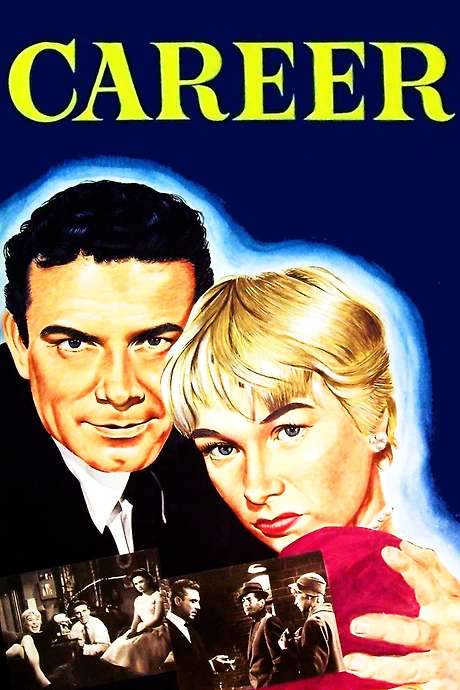
Career (1959) movie poster

Timeline

Career (1959) Timeline Explained – Every Event in Order

Release, runtime and language
1959 · 105 mins · English
Loading streaming availability…
Directed by
Joseph Anthony
Starring
Dean Martin, Shirley MacLaine, Marjorie Bennett, Frank McHugh, Anthony Franciosa, Carolyn Jones

James Lee adapts his off‑Broadway play for film, directed by Joseph Anthony. Aspiring actor Sam (Anthony Franciosa) will sacrifice family and take any job to become a Broadway star. Director Maury (Dean Martin) refuses to cast him, prompting Sam to marry Maury's girlfriend (Shirley MacLaine). After a failed deal, Maury backs out again, and Sam is drafted into the army.

On this page (7)
  1. 1 Where to watch
  2. 2 Events in order (13)
  3. 3 Timeline questions answered
  4. 4 Movie threads
  5. 5 Movies like Career
  6. 6 Categories
  7. 7 Every angle
Loading streaming availability…

13 events in order · contains spoilers

Career Timeline: Events in Chronological Order

Every key event of Career (1959) in order, scene by scene, with when and where it takes place. Use it to untangle flashbacks, time jumps and parallel storylines, to refresh your memory before the sequel or to find the exact scene you are thinking of.

  1. Sam Lawson leaves Lansing for New York to pursue acting

    Fresh from World War II, Sam Lawson departs his hometown of Lansing, Michigan, chasing a dream of acting in New York. He endures a long journey and a string of auditions as he aims to break into the professional stage. The move sets him on a path through theatre and the grittier corners of the city's arts scene.

    When
    late 1940s
    Where
    Lansing, Michigan; New York City
  2. Joins the Actors' Rostrum in Greenwich Village

    Lawson joins an off-Broadway grassroots theatre group called the Actors' Rostrum, run from a seaman's mission in Greenwich Village. He invests himself in the members' camaraderie and creative struggle despite limited resources. The group becomes his first major training ground and a doorway to professional opportunities.

    When
    late 1940s
    Where
    Greenwich Village, New York
  3. Rostrum finances fail; Novak redefines his career

    When the Rostrum runs out of money, Maury Novak pivots away from the theatre to a path into Hollywood directing, and the group's fortunes wane. Sam remains focused on acting while the dynamics among the founders shift. This moment foreshadows the complicated relationship between Sam and Novak.

    When
    late 1940s–early 1950s
    Where
    Greenwich Village / off-Broadway theatre network
  4. Sharon Kensington enters Sam's orbit

    Sam becomes entangled with Sharon Kensington, the alcoholic daughter of powerful Broadway producer Robert Kensington. Their connection adds pressure and opportunity to Sam's career and personal life, intertwining two powerful families of the New York theatre world. The dynamic foreshadows loyalties tested by ambition.

    When
    early 1950s
    Where
    New York City
  5. Marriage to Sharon Kensington and rising star

    With backing from Sharon's father, Sam marries Sharon and begins to see his star slowly rise in the theatre scene. The marriage cements his standing in certain circles, even as personal tensions simmer. The combination of talent and connections pushes him toward higher-profile work.

    When
    early 1950s
    Where
    New York City
  6. Novak confesses past communism and wants to work together

    Novak re-enters Sam's life and proposes a fresh off-Broadway collaboration. He admits he was briefly a communist in the past, motivated by opportunistic career reasons. This reunion rekindles hope for a new project in a challenging industry.

    When
    mid-1950s
    Where
    New York City / off-Broadway scene
  7. Deal to divorce Sharon for lead in Novak's production

    Sam negotiates a deal to divorce Sharon in exchange for a lead role in Novak's new production. The offer promises a breakthrough, but Novak unexpectedly reneges on the arrangement. The emotional toll deepens as personal and professional lines blur.

    When
    mid-1950s
    Where
    New York City theatre district
  8. Drake secures a job, then Korea pulls Sam away

    Sam's long-suffering agent Shirley Drake manages to find him work, but his reserve status leads to another interruption when he is drafted and sent to serve in the Korean War. The war interrupts his rising career and forces him to balance duty with his artistic ambitions. He experiences the harsh realities of military life away from the spotlight.

    When
    early 1950s
    Where
    Korea
  9. Return from Korea and blacklisting shocks Sam

    Upon returning to New York, Sam pursues auditions for a long-term TV announcing job, only to discover he has been blacklist due to his association with Novak and 'subversive' theatre work. The harsh verdict from the industry mirrors real-world Hollywood blacklists. The revelation marks a turning point in Sam's career and self-perception.

    When
    late 1950s
    Where
    New York City
  10. Sam becomes a waiter while the blacklist lingers

    With his professional prospects severely limited, Sam takes work as a waiter to make ends meet. He endures humiliation and daily rejection, clinging to a stubborn resolve to keep acting in some form. The period represents one of the darkest stretches of his career.

    When
    late 1950s
    Where
    New York City
  11. Novak re-enters with a new off-Broadway plan

    Novak surfaces again, intent on restarting with a fresh off-Broadway endeavor and inviting Sam into the project. He also reveals his past communist exposure, adding ideological complexity to their collaboration. The rekindled partnership promises a second chance at artistic legitimacy.

    When
    late 1950s
    Where
    New York City / off-Broadway
  12. New play succeeds and Broadway beckons

    After a pivotal reunion with Novak, the new play gains traction and eventually makes its way to Broadway. Sam finally emerges as a major actor, achieving the ambition that started his journey. The success brings validation and public recognition after years of struggle.

    When
    late 1950s–early 1960s
    Where
    Off-Broadway to Broadway, New York
  13. Drake asks if it was worth it; Sam says yes

    In the final reflection, Drake, who has fallen in love with Sam, asks whether the long, humiliating journey was worth it. Sam's simple and resolute answer—'Yes'—confirms that the sacrifices and perseverance paid off. The moment caps his long arc from rejection to recognition.

    When
    final scene
    Where
    New York City

Last updated: October 09, 2025 at 11:02

Was this helpful?

Timeline questions answered

Career Timeline Explained: Your Questions Answered

When does it happen, and why in that order? The questions people ask about the chronology of Career (1959): time jumps, flashbacks, cause and effect between scenes and the correct order of events, each answered with spoilers.

Q1

Why did Sam marry Sharon Kensington even though she was in love with Maury Novak?

Sam married Sharon Kensington primarily to advance his struggling acting career. Sharon was the daughter of powerful Broadway producer Robert Kensington, and the marriage gave Sam access to influential theater circles and financial backing. Although Sam likely knew about Sharon's feelings for Novak, he chose the strategic marriage over romantic fulfillment, believing it would propel his career forward despite the personal cost.

Foreshadowing: Sharon's entanglement with Sam while secretly carrying Novak's child creates the foundation for the complicated love triangle that defines much of the film's emotional conflict.

  • sam lawson
  • sharon kensington
  • maury novak
  • marriage
  • broadway
  • career advancement
Q2

Why did Maury Novak go back on his promise to give Sam the lead role?

Novak reneged on the deal likely because he wanted to preserve his own professional reputation and avoid the scandal of publicly casting a man who was divorcing his own former lover to work with him. Additionally, as a rising Hollywood director, Novak may have calculated that casting Sam would create too much controversy in the conservative Broadway environment of the 1950s, potentially damaging his own career prospects.

Foreshadowing: This betrayal mirrors Novak's earlier abandonment of the Actors' Rostrum, establishing a pattern of prioritizing his own career over loyalty to others.

  • maury novak
  • sam lawson
  • deal
  • betrayal
  • broadway
  • lead role
Q3

What caused Sam Lawson to be blacklisted in the 1950s?

Sam was blacklisted due to his association with Maury Novak and the Actors' Rostrum, a grassroots theater group that was later deemed "subversive" during the anti-communist fervor of the era. The Rostrum's progressive political leanings and Novak's admitted past flirtation with communism made Sam a target. His connection to these elements, combined with the fear surrounding the Hollywood blacklist era, resulted in industry blacklisting that prevented him from getting professional acting work.

Foreshadowing: The Rostrum's early progressive politics and Novak's later confession about his communist past plant the seeds for this devastating professional consequences.

  • blacklist
  • 1950s
  • actors rostrum
  • maury novak
  • mccarthyism
  • political persecution
Q4

Why did Maury Novak abandon the Actors' Rostrum to become a Hollywood director?

When the Actors' Rostrum ran out of funds and could no longer sustain itself, Novak pivoted to Hollywood, leveraging his directing skills to build a successful career in film. This move represented a practical choice over artistic idealism, Novak recognized that commercial filmmaking offered more stable employment and greater financial rewards than the struggling off-Broadway theater scene.

Foreshadowing: Novak's departure foreshadows his pattern of choosing personal advancement over collaborative loyalty, which will later repeat with his betrayal of Sam.

  • maury novak
  • actors rostrum
  • hollywood
  • film director
  • theater
  • ambition
Q5

Why did Sam agree to work with Maury Novak again after being betrayed twice?

Sam decided to collaborate with Novak again because he had run out of other options during the blacklist period. With his career destroyed and forced to work as a waiter, Sam recognized that Novak's new off-Broadway project represented his best, or perhaps only, path back to legitimate theater work. Additionally, the blacklist era was ending, and Sam's renewed partnership with Novak symbolized a united front against the political persecution they had both endured.

Foreshadowing: Sam's earlier meeting with his first wife Barbara Helmsley sparked emotional clarity that helped him recognize this opportunity as a path toward authentic artistic fulfillment rather than mere career climbing.

  • sam lawson
  • maury novak
  • collaboration
  • blacklist
  • redemption
  • theater
Q6

What was Sam's relationship with his agent Shirley Drake?

Shirley Drake was Sam's long-suffering agent who tirelessly supported him through endless auditions and rejections throughout his career. Despite her frustration with his repeated setbacks, she remained loyal and helped him find work even during his darkest periods. The film implies Drake had romantic feelings for Sam, as she asks him in the final scene whether all the struggle was worth it, suggesting a deeper emotional investment beyond professional obligation.

Foreshadowing: Drake's steadfast loyalty across years of rejection builds toward the emotional climax of the film, where her quiet question reveals her unspoken love.

  • shirley drake
  • agent
  • sam lawson
  • loyalty
  • support
  • romantic interest
Q7

Why was Sam forced to work as a waiter after returning from Korea?

Sam became a waiter because the blacklist had destroyed his ability to find acting work. Despite his talent and experience, industry fear of communist associations made him unhirable. The waiter job represented a humiliating comedown for someone who had sacrificed his marriage and personal relationships to pursue acting, but Sam accepted it as a means of survival while clinging to hope that his career would eventually recover.

Foreshadowing: This humbling moment represents the film's lowest point, setting up the eventual redemption arc that follows.

  • waiter
  • blacklist
  • sam lawson
  • humiliation
  • survival
  • career collapse
Q8

How did Sam eventually achieve success on Broadway?

Sam achieved Broadway success through his renewed collaboration with Novak on a new off-Broadway play that eventually transferred to Broadway. With the blacklist period ending and their joint project gaining traction, Sam finally earned the recognition he had pursued for over a decade. The play's success validated his years of struggle, rejection, sacrifice, and perseverance through the Korean War and professional blacklisting.

Foreshadowing: This triumphant conclusion fulfills Sam's original dream from the moment he left Lansing, completing his character arc.

  • broadway
  • success
  • sam lawson
  • maury novak
  • play
  • recognition
  • breakthrough
Q9

What was the Actors' Rostrum and why did it matter to Sam?

The Actors' Rostrum was an off-Broadway grassroots theater group based in a Greenwich Village seamen's mission, run by Maury Novak. It served as Sam's first major training ground in professional theater after arriving in New York. The group represented the idealistic, collaborative side of the theater world that Sam initially embraced, and its eventual collapse due to funding problems pushed both Novak and Sam toward more commercial paths.

Foreshadowing: The Rostrum's progressive politics and Novak's involvement with it directly led to Sam's later blacklisting, connecting the early idealism to later persecution.

  • actors rostrum
  • off-broadway
  • maury novak
  • theater group
  • training
  • greenwich village

Movie threads

More Movies Like Career, by Mood & Story

Curated lists built around what makes Career tick: the same mood, the same kind of story or the same emotional payoff. Each list explains why these movies belong together.

Movies about relentless artistic ambition like Career

Characters who sacrifice everything for their creative passion. If you enjoyed Career's portrayal of an actor's obsession, you'll find similar stories here. This list features movies about the driven, often difficult journey of creative professionals who stop at nothing to achieve their dreams.

  • driven
  • persevering
  • grinding
  • obsessive
  • hopeful
  • anxious
  • Tone: bittersweet, determined
  • Pacing: steady, character-driven
Why these movies?

The story pattern: These narratives follow a protagonist on a single-minded quest for creative validation. The central conflict arises from the tension between their ambition and the real-world demands of relationships, financial stability, and personal well-being, often leading to significant sacrifices.

Why they belong together: They are grouped by their shared focus on the psychology of the dedicated artist, a steady pacing that builds the pressure of ambition, and a tone that balances the bitterness of struggle with the hope of potential success.
Movies with hard-won success like Career

Where victory feels satisfying because the struggle was real. Fans of Career's satisfying conclusion will appreciate these films. They feature protagonists who overcome significant obstacles, making their final triumph feel genuinely earned and emotionally resonant.

  • struggling
  • resilient
  • hopeful
  • triumphant
  • grinding
  • persevering
  • Tone: bittersweet, hopeful
  • Pacing: steady, grinding
Why these movies?

The story pattern: The narrative arc is defined by a prolonged and challenging struggle against external forces like industry rejection, political persecution, or systemic barriers. The resolution is a clear, positive outcome that directly results from the protagonist's unwavering resilience.

Why they belong together: They share a specific emotional recipe: a medium-to-high level of sustained tension and sadness throughout the journey, culminating in a genuinely happy ending that provides a powerful, cathartic release after the emotional grind.

If you liked this

Movies Like Career

Similar movies to Career: the same genre, themes or kind of story. Each one comes with its own plot summary, timeline and ending explained.

Browse all movie summaries

Categories

Movie Lists Featuring Career

Career appears in these hand-built movie categories. Each one groups movies by a specific mood, theme or story type, with their plot summaries and endings explained.

View all movie categories

Every angle

Career (1959) Explained: Plot, Timeline & Characters

Everything about Career in one place: what happens in the plot summary, the timeline in chronological order, the characters and meaning and a spoiler-free summary. What's After the Movie adds the cast, box office and post-credit scenes.

Coming soon on iOS and Android

The Plot Explained Movie Summary App

Plot summaries, endings explained and timelines on your phone. Catch up on any movie in minutes, save your favorites and never miss a twist again.

Be the first to know when we launch. Your email stays private, always.

Learn more about the app