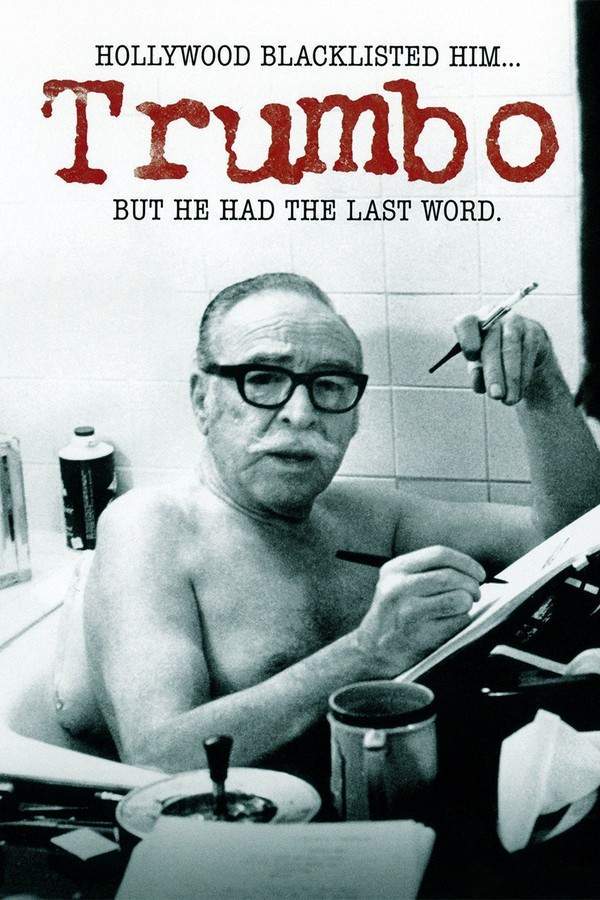
Year: 2015
Runtime: 124 min
Language: English
Director: Jay Roach
In 1947, during the height of the Red Scare, screenwriter Dalton Trumbo is blacklisted for his political beliefs. Stripped of his career and facing financial ruin, he must find ways to continue writing while battling the consequences of the accusations against him and the impact on his family. The ordeal tests his resilience and challenges the principles of artistic freedom and due process in a climate of fear and suspicion.
Warning: spoilers below!
Haven’t seen Trumbo yet? This summary contains major spoilers. Bookmark the page, watch the movie, and come back for the full breakdown. If you're ready, scroll on and relive the story!
Read the complete plot breakdown of Trumbo (2015), including all key story events, major twists, and the ending explained in detail. Discover what really happened—and what it all means.
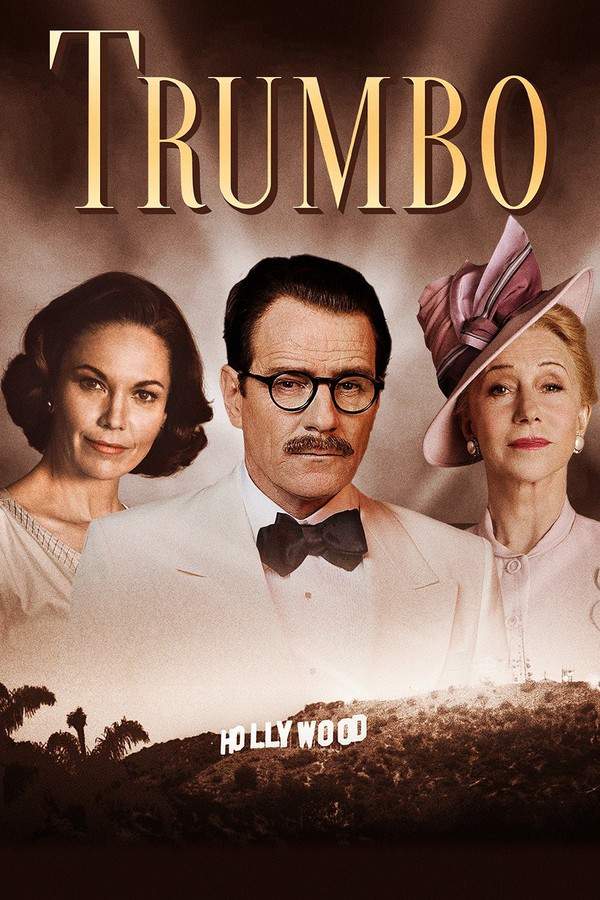
The film opens in 1947, featuring Dalton Trumbo (Bryan Cranston) comfortably writing a script in his bathtub, an image that serves as a juxtaposition to the turbulent times ahead. An acclaimed screenwriter in Hollywood, Trumbo soon finds himself on set for a film adaptation of his work. At a subsequent party, he mingles with fellow actor Edward G. Robinson (Michael Stuhlbarg). The plot thickens as Trumbo visits a cinema and watches a reel where gossip columnist Hedda Hopper (Helen Mirren) publicly labels him and others in the industry as Communists, alluding to the formation of the House Un-American Activities Committee (HUAC) to investigate such claims. Following the screening, a patron recognizes Trumbo and angrily throws soda at him, marking the beginning of his troubles.
Later, at his ranch, his young daughter Niki inquires if her father is a Communist. Trumbo reassures her that wanting a better government is not criminal, using a poignant analogy about sharing lunch to illustrate his values. He convenes with Arlen Hird (Louis C.K.) and Robinson to discuss the rising paranoia being fueled by Congress. At a Motion Picture Alliance meeting, John Wayne delivers a harshly critical speech against Communism, and a confrontation ensues when Trumbo counters Wayne’s condescending remarks, pointing out that while he served in the military, Wayne only played soldier onscreen. Hedda Hopper observes this heated exchange, promising to report on it.
Visiting MGM Studios, Trumbo meets with the illustrious Louis B. Mayer, who advises him that his contract is making him the highest-paid writer in Hollywood, yet warns him against further negative press from Hopper. Trumbo is soon surrounded by friends and family celebrating his lucrative contract when an unexpected guest delivers a subpoena, branding him and his peers as threats to democracy. Amid a flurry of emotional exchanges, the Hollywood Ten decide to answer questions in the hearings vaguely, fearing potential contempt charges but established in their belief of eventual vindication from the Supreme Court.
The hearings take their toll, with Trumbo facing intense scrutiny as he stands against the Committee’s questioning, maintaining his innocence despite the tumult. The reality sets in when Trumbo confronts the fact that the Hollywood Ten are found guilty of contempt, leaving him on the brink of financial ruin after the annulment of his lucrative contract. Undeterred, Trumbo continues writing, disguising his work under pseudonyms—like Ian McLellan Hunter—to keep his craft alive. Soon enough, he finds success with the screenplay for Roman Holiday, a significant commercial hit, only to learn that the shifting tides in the Supreme Court could jeopardize his appeal efforts against the contempt charges.
As Trumbo begins serving his sentence, he encounters fellow prisoners, including J. Parnell Thomas, a senator implicated in his harsh treatment, fueling his sense of irony at the situation. Back in Hollywood, Edward G. Robinson finds himself obliged to name names, including Trumbo’s, in a desperate bid for self-preservation. Despite the internal struggles, Trumbo keeps producing scripts and his family hatches a plan to continue his work covertly.
As time passes and Trumbo completes his year-long sentence, the changes around him are palpable. He strives to reconnect with his family, grappling with the emotional disconnection that developed during his incarceration. With the political climate still oppressing dissent, Trumbo’s family helps him navigate the complexities of the blacklisting, working tirelessly to establish a new normal until tragedy strikes with the death of Arlen.
However, as Spartacus takes shape with Trumbo’s undeniable signature behind the script, the shadows of the blacklist loom larger than ever. In the end, when his identity as Robert Rich is revealed at the Oscars, the public narrative begins to shift against the blacklisting, lending strength to Trumbo’s voice as he stands resolute.
By the film’s conclusion, we witness a powerful reflection on the broader impact of the blacklist era. Dalton Trumbo receives recognition in his twilight years, expressing a deep awareness that the tumultuous time affected not only individual careers but the humanity of all involved, ultimately serving as a call for compassion and understanding in the face of oppression.
Last Updated: November 03, 2024 at 14:43
Discover curated groups of movies connected by mood, themes, and story style. Browse collections built around emotion, atmosphere, and narrative focus to easily find films that match what you feel like watching right now.
Individual courage tested by systemic oppression and historical injustice.If you liked the true story of Dalton Trumbo's fight against the Hollywood blacklist, explore more movies like it. This thread gathers biographical dramas and historical films about individuals who risk everything for their beliefs, offering similar stories of resilience against political persecution.
These narratives typically follow a linear, biographical structure, charting a protagonist's downfall and subsequent struggle after challenging a powerful institution. The central conflict is the individual versus the system, with the story methodically building tension through personal and professional losses, culminating in a vindication that is often bittersweet and hard-won.
Movies in this thread share a high-stakes, tense atmosphere grounded in real historical events. They feature protagonists defined by their moral integrity, facing intense external pressure that tests their resolve and impacts their families. The combination of steady pacing, heavy emotional weight, and a tone of defiant anxiety creates a cohesive, gripping experience.
The psychological toll on a family trapped by external forces.For viewers who appreciated the family dynamics in Trumbo, this section finds similar movies where a family's bonds are tested by external threats. Discover dramas that explore the heavy emotional cost of survival, focusing on the quiet, tense moments of strain and solidarity within a household under siege.
The narrative pattern revolves around a domestic sphere becoming a pressure cooker. External conflicts—investigations, financial ruin, social shame—intrude upon the home, forcing family members to make difficult choices that pit loyalty against safety. The story unfolds with a steady, often somber pace, highlighting small acts of defiance and the heavy emotional burden carried by all involved.
These films are grouped by their shared mood of claustrophobic anxiety and their focus on the intimate, psychological impact of large-scale conflicts. They blend high-intensity external threats with the medium-intensity, slow-burn drama of family dynamics, creating a uniquely tense and melancholic viewing experience centered on resilience and survival.
Don't stop at just watching — explore Trumbo in full detail. From the complete plot summary and scene-by-scene timeline to character breakdowns, thematic analysis, and a deep dive into the ending — every page helps you truly understand what Trumbo is all about. Plus, discover what's next after the movie.
Track the full timeline of Trumbo with every major event arranged chronologically. Perfect for decoding non-linear storytelling, flashbacks, or parallel narratives with a clear scene-by-scene breakdown.
Discover the characters, locations, and core themes that shape Trumbo. Get insights into symbolic elements, setting significance, and deeper narrative meaning — ideal for thematic analysis and movie breakdowns.
Get a quick, spoiler-free overview of Trumbo that covers the main plot points and key details without revealing any major twists or spoilers. Perfect for those who want to know what to expect before diving in.
Visit What's After the Movie to explore more about Trumbo: box office results, cast and crew info, production details, post-credit scenes, and external links — all in one place for movie fans and researchers.
Discover movies like Trumbo that share similar genres, themes, and storytelling elements. Whether you’re drawn to the atmosphere, character arcs, or plot structure, these curated recommendations will help you explore more films you’ll love.
Trumbo (2015) Scene-by-Scene Movie Timeline
Trumbo (2015) Movie Characters, Themes & Settings
Trumbo (2015) Spoiler-Free Summary & Key Flow
Movies Like Trumbo – Similar Titles You’ll Enjoy
Good Night, and Good Luck. (2005) Movie Recap & Themes
Trumbo (2008) Story Summary & Characters
Guilty by Suspicion (1991) Story Summary & Characters
One of the Hollywood Ten (2002) Ending Explained & Film Insights
Arthur Miller, Elia Kazan and the Blacklist: None Without Sin (2003) Ending Explained & Film Insights
Fellow Traveller (1989) Story Summary & Characters
The Front (1976) Movie Recap & Themes
Man on a Tightrope (1953) Plot Summary & Ending Explained
Hollywood on Trial (1976) Movie Recap & Themes
Blacklist: Hollywood on Trial (1996) Spoiler-Packed Plot Recap
Three Brave Men (1956) Movie Recap & Themes
Career (1959) Full Movie Breakdown
The Hollywood Ten (1950) Ending Explained & Film Insights
Red Hollywood (1996) Ending Explained & Film Insights
Scandalize My Name: Stories from the Blacklist (1998) Full Movie Breakdown