







Plot Explained Spoilers guaranteed!
Plot Explained

Browse by genre

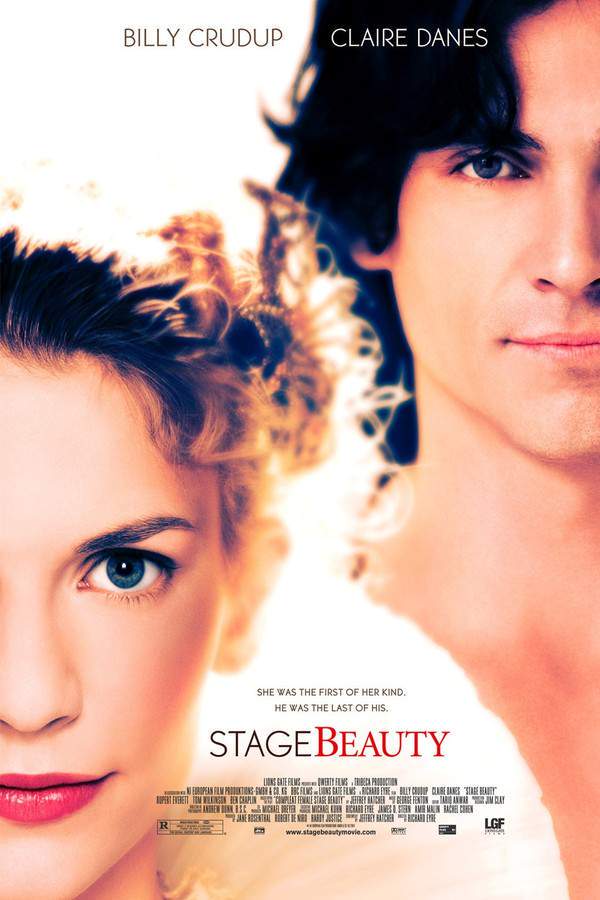
Stage Beauty (2004) movie poster

Plot Summary

Stage Beauty (2004) Plot Summary Explained

Release, runtime and language
2004 · 106 min · English
Directed by
Richard Eyre
Starring
Billy Crudup, Claire Danes

During the 17th century in London, Ned Kynaston achieves stardom thanks to Maria's exceptional ability to craft convincing female characters, though she remains hidden and constrained by the conventions of the time. When royal patronage alters the landscape of the theatre, Maria resolves to step out of the shadows and claim her place on stage, seeking help from the rising star she mentored as they both confront a changing world of theatrical possibilities.

On this page (7)
  1. 1 Where to watch
  2. 2 What happens: full plot
  3. 3 Plot questions answered
  4. 4 Movie threads
  5. 5 Movies like Stage Beauty
  6. 6 Categories
  7. 7 Every angle

Where to watch

Where to Watch Stage Beauty (2004)

Where can you watch Stage Beauty? Stream, rent or buy it in the US, including on Plex, Tubi TV and Apple TV Store: current JustWatch availability with up-to-date prices.

Streaming availability powered by JustWatch

Full plot summary · contains spoilers

What Happens in Stage Beauty: Full Plot Summary

The whole story of Stage Beauty (2004) explained, from the opening scene to the final frame: every key event, every twist and what it all adds up to. Read it as a quick recap before the sequel, to check a scene you missed, or to finally understand what really happened.

As the celebrated actor Ned Kynaston (played by Billy Crudup), renowned for his mesmerizing portrayals of female roles, including the legendary Desdemona in Othello, grapples with fading fame, his devoted dresser Maria (portrayed by Claire Danes) secretly harbors a burning passion for the stage. Regrettably, her ambitions are curtailed by an oppressive law that forbids women from acting in theatrical performances. Undeterred by the societal constraints, Maria adopts the persona of Margaret Hughes, capturing the hearts of audiences at a local tavern, where her unique presence as a female performer breaks the mold.

Maria's talent soon draws the attention of Sir Charles Sedley (Richard Griffiths), who becomes her patron and introduces her to King Charles II (Rupert Everett), further solidifying her ascent in the theatrical realm. Meanwhile, Nell Gwynn (Zoë Tapper), a budding actress and the King’s mistress, orchestrates a scandalous plot to ban men from portraying female characters on stage. The fallout from this decree leaves Kynaston reeling, stripping him of his ability to embody the very roles that once brought him acclaim.

In the midst of his plummeting status, Kynaston faces a harsh revelation when his lover George Villiers (Ben Chaplin), the Duke of Buckingham, expresses a lack of interest in maintaining a same-sex relationship, leading to whispers that damage Kynaston’s reputation. While he is relegated to performing risqué numbers in drag at music halls, Maria’s star is on the rise as she continues to shatter boundaries, although she feels the gap between her own talent and Kynaston’s, whom she perceives as not having fought with the same tenacity as a woman would.

When the moment arises for Maria to perform before the King, nerves take hold, prompting her friends to seek Kynaston's mentorship. In an unexpected twist, he agrees to mentor her in hopes of reigniting his stagnant career, provided that he can step in for Thomas Betterton as Othello. As Maria’s brilliance stands out increasingly on the stage, Kynaston embarks on a quest to reclaim his once-coveted position in the theatre world, setting off a chain of events that intertwines their fates in ways neither could have anticipated.

Last updated: November 22, 2024 at 15:41

Was this helpful?

Plot questions answered

Stage Beauty Plot Explained: Your Questions Answered

The questions people ask most about Stage Beauty (2004): what happens in the confusing scenes, why the characters do what they do, the twists, hidden details and what the ending means. Each answer contains spoilers.

Q1

Why does Nell Gwynn succeed in getting men banned from playing female characters?

Nell Gwynn, who is both a rising actress and King Charles II's mistress, uses her influence at court to push for the ban. Her position as the King's mistress gives her the political leverage to convince the King to issue the decree that forbids men from portraying women on stage, directly targeting performers like Ned Kynaston whose career depended on female roles.

  • nell gwynn
  • king charles ii
  • theatre ban
  • gender roles
  • Restoration theatre
Q2

Why does Ned Kynaston agree to mentor Maria despite her taking his roles?

Ned agrees to mentor Maria because he sees it as an opportunity to revive his own stagnant career. He conditions his help on getting a chance to play Othello, stepping in for Thomas Betterton. This mentorship represents his desperate attempt to re-enter legitimate theater through a backdoor, using Maria's rising star as his pathway back to prominence.

Foreshadowing: Earlier, Ned is shown struggling in music halls, desperate for any opportunity to return to serious acting.

  • ned kynaston
  • mentorship
  • career revival
  • Othello
  • Thomas Betterton
Q3

Why are women forbidden from performing on stage in the movie?

During the late 17th century in England, a law prohibited women from appearing on the theatrical stage. This was a societal constraint rooted in prevailing attitudes about gender and appropriate female behavior. The law effectively forced theaters to use male actors for all female roles, which is what made Ned Kynaston famous, he excelled at portraying women like Desdemona.

  • women acting ban
  • 17th century theatre
  • gender restrictions
  • historical context
Q4

What is the nature of Ned Kynaston's relationship with George Villiers?

George Villiers, the Duke of Buckingham, is Ned Kynaston's lover. Their relationship is a same-sex romance that was scandalous for the time. When Villiers publicly expresses disinterest in maintaining their relationship, the resulting whispers severely damage Kynaston's already fragile reputation in the aristocratic circles that once supported him.

  • george villiers
  • buckingham
  • same-sex relationship
  • Ned Kynaston lover
Q5

Why does Maria perform under the name Margaret Hughes?

Maria adopts the stage persona Margaret Hughes to pursue her acting career while concealing her true identity. This alias allows her to perform publicly as a female actor despite the legal restrictions on women in theater. Using a different name also provides a layer of protection from the social and legal consequences she might face for defying the ban on female performers.

  • margaret hughes
  • alias
  • female performer
  • stage name
  • disguise
Q6

How does King Charles II's patronage affect the theater landscape?

King Charles II's royal support fundamentally transforms the theatrical world by lifting some restrictions and introducing new ones based on court preferences. His favor can make or break careers, as evidenced by Nell Gwynn's influence and Maria's introduction to the King through Sir Charles Sedley. The King's preference for female performers ultimately leads to the decree that ends men's dominance over female roles.

  • king charles ii
  • royal patronage
  • theatre politics
  • Restoration era
  • court influence
Q7

Why is Ned Kynaston reduced to performing in music halls?

After the ban on men playing female roles strips him of his ability to perform his signature parts, Ned Kynaston loses his status in legitimate theater. Desperate for work, he is reduced to performing risqué drag numbers in music halls, a far cry from his former acclaim as a serious actor. This dramatic fall from prestige highlights the harsh reality of his new circumstances.

Foreshadowing: The timeline shows his decline from leading theater roles to desperate performances.

  • music hall
  • drag performances
  • career decline
  • Ned Kynaston downfall
Q8

Why does Maria feel nervous about performing before King Charles II?

Maria experiences nerves before her performance for the King because it represents the pinnacle of her aspirations and a significant personal risk. Performing before the monarch could establish her permanently or destroy her entirely. Additionally, she must navigate the pressure of representing women's potential on stage after years of being hidden as merely a dresser.

  • nervous performance
  • king charles ii
  • Maria audition
  • royal performance
Q9

Why is Ned Kynaston desperate to play Othello?

Ned views playing Othello as his opportunity to reclaim legitimacy as a serious actor. Unlike his previous fame playing female roles, Othello would demonstrate his range as a male performer in a prestigious tragic lead. The role represents a chance to prove his worth beyond the gender performance that made him famous, and to restore his damaged reputation in the theater world.

  • Othello role
  • Ned Kynaston ambition
  • Thomas Betterton
  • tragic lead
  • career redemption
Q10

How does Maria's rise in fame affect Ned Kynaston's career?

As Maria's performances gain recognition and she becomes the prominent female performer in London, Ned's situation becomes more precarious. His only path back into theater involves aligning himself with her success through mentorship. Their fates become intertwined, Maria rising precisely as Ned falls, creating a complex dynamic where he must help his potential replacement succeed.

  • Maria rise
  • Ned downfall
  • theatre competition
  • changing theatre landscape
Q11

Why does Sir Charles Sedley become Maria's patron?

Sir Charles Sedley becomes Maria's patron after witnessing her performances at the local tavern. Impressed by her exceptional talent as a female performer, he takes her under his wing and uses his connections to introduce her to King Charles II. This patronage represents the crucial support system that allows Maria to transition from illegal tavern performances to legitimate theater.

  • sir charles sedley
  • patron
  • Maria support
  • theatre connections

Movie threads

More Movies Like Stage Beauty, by Mood & Story

Curated lists built around what makes Stage Beauty tick: the same mood, the same kind of story or the same emotional payoff. Each list explains why these movies belong together.

Movies about artistic rivalry and reinvention like Stage Beauty

Characters compete and collaborate in a changing world of art and performance. If you enjoyed the competitive yet collaborative dynamic between Ned and Maria in Stage Beauty, you'll appreciate these films. They feature similar stories of artists and performers navigating rivalry, mentorship, and personal change in their creative worlds, capturing a bittersweet tone of loss and new beginnings.

  • theatrical
  • dramatic
  • introspective
  • tension
  • hopeful
  • melancholic
  • Tone: bittersweet, dramatic
  • Pacing: steady, character-driven
Why these movies?

The story pattern: Stories in this thread typically follow two figures—a seasoned master and a rising newcomer—whose fates collide. The established artist faces obsolescence due to shifting tastes or new talent, leading to a crisis of identity. The narrative arc involves a fall from grace, a period of struggle, and a potential reconciliation or collaboration that forges a new, more complex form of artistic expression for both parties.

Why they belong together: These films are grouped together because they share a focus on the intensely personal nature of artistic creation and competition. They balance professional jealousy with mutual respect, set against a backdrop of societal or industry change, and deliver an emotionally resonant, character-driven experience that is often bittersweet.

Bittersweet period dramas of social change like Stage Beauty

Historical stories where personal journeys mirror a society in transition. For viewers who liked the historical setting and thematic depth of Stage Beauty, this list features similar movies. These dramas explore characters navigating forbidden love, changing gender roles, and artistic freedom in past eras, all with a steady pace and a thoughtfully bittersweet emotional tone.

  • melancholic
  • hopeful
  • dramatic
  • romantic tension
  • introspective
  • theatrical
  • Tone: bittersweet, melancholic, hopeful
  • Pacing: steady, deliberate
Why these movies?

The story pattern: The narrative pattern involves a protagonist whose personal desires clash with the rigid social order of their time. The story unfolds as external forces—a new law, a cultural shift, or a change in power—create an opening for change. The protagonist seizes this opportunity, but their victory is tempered by loss, sacrifice, or the complicated reality of their new position, resulting in an ending that acknowledges both progress and cost.

Why they belong together: These movies share a specific mood and setting: they are character-driven historical pieces with a medium emotional weight. They are united by a bittersweet tone, a steady narrative pace that allows for reflection, and a central theme of individuals challenging conventions during a time of significant social change.

If you liked this

Movies Like Stage Beauty

Similar movies to Stage Beauty: the same genre, themes or kind of story. Each one comes with its own plot summary, timeline and ending explained.

Browse all movie summaries

Categories

Movie Lists Featuring Stage Beauty

Stage Beauty appears in these hand-built movie categories. Each one groups movies by a specific mood, theme or story type, with their plot summaries and endings explained.

View all movie categories

Every angle

Stage Beauty (2004) Explained: Plot, Timeline & Characters

Everything about Stage Beauty in one place: what happens in the plot summary, the timeline in chronological order, the characters and meaning and a spoiler-free summary. What's After the Movie adds the cast, box office and post-credit scenes.

Coming soon on iOS and Android

The Plot Explained Movie Summary App

Plot summaries, endings explained and timelines on your phone. Catch up on any movie in minutes, save your favorites and never miss a twist again.

Be the first to know when we launch. Your email stays private, always.

Learn more about the app