Plot Explained Spoilers guaranteed!
Plot Explained

Browse by genre

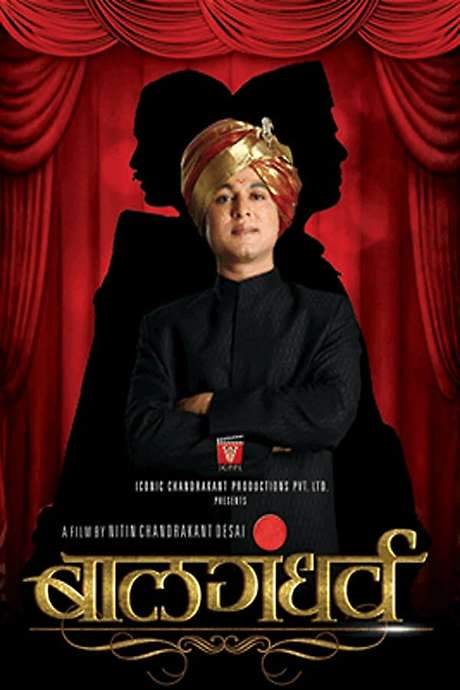
Balgandharva (2011) movie poster

Plot Summary

Balgandharva (2011) Plot Summary Explained

Release, runtime and language
2011 · 124 mins · Marathi
Loading streaming availability…
Directed by
Ravi Jadhav
Starring
Kishore Kadam, Subodh Bhave, Nitin Chandrakant Desai, Abhijit Kelkar, Vibhawari Deshpande, Prachiti Mhatre

The film portrays the life of Narayan Shripad Rajhans, celebrated as Balgandharva, a towering vocalist and stage star of Marathi sangeet natak’s golden age. It follows his rise, the workings of drama troupes, his artistic influence, and the personal tragedies he endured, highlighting his steadfast values and lasting charisma for a new generation.

On this page (5)
  1. 1 Where to watch
  2. 2 What happens: full plot
  3. 3 Plot questions answered
  4. 4 Movie threads
  5. 5 Every angle
Loading streaming availability…

Full plot summary · contains spoilers

What Happens in Balgandharva: Full Plot Summary

The whole story of Balgandharva (2011) explained, from the opening scene to the final frame: every key event, every twist and what it all adds up to. Read it as a quick recap before the sequel, to check a scene you missed, or to finally understand what really happened.

This biopic follows Narayan Rajhans, a gifted singer who rises from poverty to fame and is welcomed by the stage with the name and persona of Balgandharva after a poignant public performance in Pune. Guided by the encouragement of Shahu Maharaj, he begins formal training and joins Kirloskar Natak Mandali, where his voice and presence win the cheers of audiences and establish him as a central figure in all Sangeet Nataks. To please his mother, he marries Laxmi, a union that underscores his personal devotion even as his professional life accelerates.

On the opening day of his play Sangeet Manapamaan—12 March 1911—the family tragedy strikes when his infant daughter dies, but Narayan chooses to press on, delivering a performance that enthralls spectators and cements his status as a leading artist. However, internal disputes within the company push him toward a decisive pivot: he founds his own troupe, Gandharva Natak Mandali, and dedicates himself wholly to drama and singing, often at the expense of family life. His relentless focus on audience satisfaction leads him to spend freely, discard friendships, and wrestle with the harsh realities of ambition.

In this volatile arc, Narayan places his trust in Balasaheb Pandit Balasaheb Pandit who handles the company’s accounts, a bond that later contributes to his financial unraveling. The financial strain deepens and bankruptcy becomes a looming shadow, even as he encounters Gohar Bai, a devoted fan, with whom he falls in love and gradually leaves his wife and children behind. As time wears on, old age brings a waning charm, and the theatrical world grows uneasy with the advent of cinema, which threatens theatre’s grip on audiences.

To cope with mounting debts, Narayan signs a contract with V. Shantaram’s Prabhat Film Company to act in films, hoping that moving images would ease the burden. Yet he remains wary of the film industry’s methods and ultimately steps away after a single lead role as Sant Eknath. In the face of poverty, royalties and honorary payments arrive from various quarters, but he redirects that money to charitable causes, choosing generosity over self-preservation even as the spotlight dims.

Throughout this life marked by triumph and turbulence, the film preserves a compassionate lens on a man whose devotion to performance never fully cured the personal costs of fame.

Last updated: November 22, 2025 at 15:59

Was this helpful?

Plot questions answered

Balgandharva Plot Explained: Your Questions Answered

The questions people ask most about Balgandharva (2011): what happens in the confusing scenes, why the characters do what they do, the twists, hidden details and what the ending means. Each answer contains spoilers.

Q1

Why did Balgandharva leave his wife and children for Gohar Bai?

Narayan met Gohar Bai, a devoted fan, and fell deeply in love with her. This relationship led him to leave his wife Laxmi and their children behind. The departure strained his personal relationships significantly, as he chose to pursue this new passion at the cost of his family life.

Foreshadowing: His earlier relentless focus on art over family had already shown a pattern of prioritizing career over personal duties.

  • Gohar Bai
  • Laxmi
  • wife
  • children
  • love affair
  • abandonment
Q2

Why did Narayan Rajhans leave Kirloskar Natak Mandali to start his own troupe?

Internal disputes within the Kirloskar Natak Mandali drove him to leave. Seeking creative control and independence, he founded the Gandharva Natak Mandali. This marked a significant turning point where he risked the stability of an established company to pursue self-produced work.

Foreshadowing: His commanding presence and central role in Sangeet Nataks had already established him as a star who likely chafed under others' control.

  • Gandharva Natak Mandali
  • Kirloskar Natak Mandali
  • theatre troupe
  • disputes
  • creative control
Q3

Why did Balgandharva perform on the day his infant daughter died?

On 12 March 1911, the opening day of his play Sangeet Manapamaan, his infant daughter passed away. Despite this devastating loss, Narayan chose to continue with the performance. His determination to fulfill his professional commitment enthralled the audience and further cemented his reputation as a dedicated artist.

Foreshadowing: His earlier rise to fame was built on a public performance in Pune that earned him the Balgandharva name, showing his deep connection to stage duty.

  • infant daughter death
  • Sangeet Manapamaan
  • 12 March 1911
  • performance
  • tragedy
Q4

How did Balgandharva become bankrupt despite his fame?

Narayan placed his trust in Balasaheb Pandit to manage the company's accounts, but this led to severe financial mismanagement. His lavish spending on audience satisfaction, combined with questionable financial decisions and naivety in business matters, accelerated his descent into bankruptcy and debt.

Foreshadowing: His free-spending nature and focus on pleasing audiences had already caused him to discard friendships and prioritize performance over financial stability.

  • bankruptcy
  • debt
  • Balasaheb Pandit
  • accounts
  • financial ruin
  • money
Q5

Why did Balgandharva leave the film industry after only one movie?

To cope with mounting debts, Narayan signed a contract with V. Shantaram's Prabhat Film Company, starring as Sant Eknath in his only film role. However, he remained wary of the film industry's methods and ultimately stepped away after this single lead role, preferring theatre over cinema.

Foreshadowing: The timeline notes cinema's rise threatening theatre's grip on audiences, showing the broader industry tension he faced.

  • Prabhat Film Company
  • Sant Eknath
  • V. Shantaram
  • film career
  • quit acting
  • cinema
Q6

Why did Balgandharva donate his royalties to charity instead of paying his debts?

Despite falling into poverty and being burdened with debts, Narayan received royalties and honorary payments from various patrons. Rather than using this money for his own needs, he chose to redirect it to charitable causes, demonstrating his lifelong generosity and prioritizing legacy over personal financial recovery.

Foreshadowing: His character's compassionate nature and devotion to others had been established throughout the narrative.

  • royalties
  • charity
  • poverty
  • debts
  • generosity
  • donation
  • legacy
Q7

What was Balasaheb Pandit's role in Balgandharva's life and career?

Balasaheb Pandit was trusted to handle the accounts of Gandharva Natak Mandali. This financial trust proved disastrous, as poor management contributed significantly to Narayan's bankruptcy. The relationship highlights Narayan's naivety in business matters despite his artistic genius.

Foreshadowing: The timeline entry specifically notes this trust led to financial unraveling, making it a critical plot point.

  • Balasaheb Pandit
  • accounts manager
  • financial mismanagement
  • trust
  • betrayal
Q8

How did the rise of cinema affect Balgandharva's career and legacy?

As cinema emerged, it eclipsed theatre's popularity and threatened theatre's grip on audiences. In old age, Balgandharva's charisma waned, and he struggled to hold audiences in this changing entertainment landscape. The shift from live theatre to moving pictures marked the end of his era.

Foreshadowing: The film depicts his signature charm diminishing with time, setting up the decline.

  • cinema
  • theatre decline
  • old age
  • audience loss
  • entertainment industry
  • Prabhat Film Company
Q9

Why was Shahu Maharaj important to Balgandharva's early career?

Shahu Maharaj, the ruler of Kolhapur, gave crucial advice that encouraged Narayan to pursue formal training. Following this guidance, Narayan joined the Kirloskar Natak Mandali, which provided technical discipline and wider exposure. This mentorship was instrumental in transforming him from a street performer into a professional theatre star.

Foreshadowing: His public performance in Pune earned him recognition, but formal training under Kirloskar's system refined his skills.

  • Shahu Maharaj
  • Kolhapur
  • Kirloskar Natak Mandali
  • mentorship
  • formal training
Q10

Why did Balgandharva remain poor despite being so famous and successful?

Despite achieving immense fame and headlining Sangeet Nataks, Balgandharva's free-spending habits, mismanagement of finances, and reliance on Balasaheb Pandit led to bankruptcy. Even when royalties arrived in his later years, he gave them away to charity. His fame brought admiration but not financial security.

Foreshadowing: His lavish spending on audiences and disregard for financial planning had been evident since his rise to fame.

  • fame
  • poverty
  • bankruptcy
  • royalties
  • spending
  • financial ruin
  • success vs poverty
Q11

What made Balgandharva such a legendary performer in Marathi theatre?

Narayan's powerful voice, commanding stage presence, and ability to enthrall audiences made him a central figure in all Sangeet Nataks. His dedication was so strong that he performed even on the day his daughter died. Audiences gave him standing ovations, and he became the iconic persona of Balgandharva that defined an era of Marathi theatre.

Foreshadowing: His public performance in Pune earned him the name Balgandharva, signaling his unique appeal.

  • singing
  • stage presence
  • Sangeet Natak
  • Marathi theatre
  • audience
  • fame
  • performer

Movie threads

More Movies Like Balgandharva, by Mood & Story

Curated lists built around what makes Balgandharva tick: the same mood, the same kind of story or the same emotional payoff. Each list explains why these movies belong together.

Bittersweet artist biographies like Balgandharva

Stories that trace the rise, sacrifices, and poignant legacy of celebrated artists. If you enjoyed the poignant journey of Balgandharva, explore more movies like it. These films are similar biographical dramas that follow the passionate rise and tragic cost of artistic genius, offering a reflective look at creative legacies.

  • biographical
  • melancholic
  • inspiring
  • tragic
  • reflective
  • passionate
  • Tone: bittersweet, melancholic
  • Pacing: steady, episodic
Why these movies?

The story pattern: These narratives typically follow a linear or episodic structure, charting an artist's journey from obscurity to acclaim. The central conflict often arises from the clash between artistic passion and personal life, leading to themes of sacrifice, the burden of fame, and a legacy tinged with both admiration and loss.

Why they belong together: Movies are grouped here for their shared bittersweet tone, steady biographical pacing, and focus on the emotional complexity of an artist's life. They balance inspirational creative achievements with the sobering realities of personal struggle and decline.

Movies about the cost of fame similar to Balgandharva

Quiet stories about the personal price of public success and the weight of legacy. For viewers who appreciated the somber exploration of fame's cost in Balgandharva, this section collects similar movies. These dramas share a melancholic mood and focus on the personal decline and sacrifices behind public success.

  • melancholic
  • somber
  • tragic
  • reflective
  • nostalgic
  • passionate
  • Tone: melancholic, somber
  • Pacing: steady, methodical
Why these movies?

The story pattern: The narrative pattern often involves a protagonist achieving great success, only to find it accompanied by profound personal loss, financial instability, or a sense of emptiness. The story unfolds at a measured pace, emphasizing the gradual accumulation of tragedy and the quiet moments of reflection in a life that appears successful from the outside.

Why they belong together: These films are united by a melancholic and nostalgic mood, a medium emotional weight, and a central theme of exploring the hidden costs behind public achievement. The steady pacing allows for a deep, reflective immersion into the character's internal world.

Every angle

Balgandharva (2011) Explained: Plot, Timeline & Characters

Everything about Balgandharva in one place: what happens in the plot summary, the timeline in chronological order, the characters and meaning and a spoiler-free summary. What's After the Movie adds the cast, box office and post-credit scenes.

Coming soon on iOS and Android

The Plot Explained Movie Summary App

Plot summaries, endings explained and timelines on your phone. Catch up on any movie in minutes, save your favorites and never miss a twist again.

Be the first to know when we launch. Your email stays private, always.

Learn more about the app