Plot Explained Spoilers guaranteed!
Plot Explained

Browse by genre

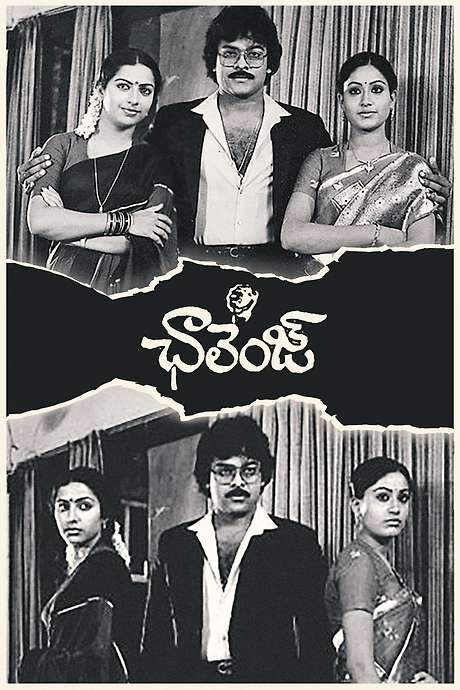
Challenge (1984) movie poster

Plot Summary

Challenge (1984) Plot Summary Explained

Release, runtime and language
1984 · 146 mins · Telugu
Directed by
A. Kodandarami Reddy
Starring
Rajendra Prasad, Suhasini Maniratnam, Gollapudi Maruti Rao, Sai Kumar, Chiranjeevi, Vijayashanti

When a wealthy tycoon issues a challenge, a determined young man decides to pursue success on his own terms. He confronts professional obstacles, fierce rivalries, and personal doubts, driven by the belief that steadfast resolve can turn any goal into reality.

On this page (5)
  1. 1 What happens: full plot
  2. 2 Plot questions answered
  3. 3 Movie threads
  4. 4 Movies like Challenge
  5. 5 Every angle

Full plot summary · contains spoilers

What Happens in Challenge: Full Plot Summary

The whole story of Challenge (1984) explained, from the opening scene to the final frame: every key event, every twist and what it all adds up to. Read it as a quick recap before the sequel, to check a scene you missed, or to finally understand what really happened.

Gandhi Chiranjeevi steals medicine for his mother, who lies on her deathbed, hoping to ease her pain. Yet by the time he reaches the hospital, his mother has already died, leaving him penniless and unable to afford a proper cremation. Wardboy Prakasam [Sai Kumar] demands money simply to keep the corpse safe in the mortuary, setting the stage for a life-changing struggle.

In the same hospital, business tycoon Ram Mohan Rao [Rao Gopal Rao] rushes to secure a cure for his ailing wife, a race against fate that intersects with Gandhi’s desperate bid for dignity. Gandhi uses a clever counter-move with Rao’s daughter Harika [Vijayashanti], and though Harika is moved by the situation, she pays ₹501 for her father’s promise to arrange Gandhi’s mother’s funeral. The wardboy, however, follows their deal and takes the money, leaving Gandhi to confront a harsher reality: he must fight for every rupee and every right he has left.

With nowhere to turn, Gandhi saves a young woman named Lakshmi [Suhasini Maniratnam] from a dangerous jump off a bridge. The act of courage leads them to Lakshmi’s home, where Gandhi discovers a newspaper advertisement for a job. He quickly recognizes the duplicitous nature of the ad and barges into Ram Mohan Rao’s house for a job interview, sparring verbally with Rao over the ethics of publicity and profit. Gandhi contends that wealth can be built legally and fairly, and Rao challenges him to prove it by achieving ₹50 lakh within five years. They seal the bet with an agreement on 19 April, a date that will mark Gandhi’s resolve.

Rao discards the agreement almost as soon as it’s signed, tossing it into the trash. Gandhi, now determined, sets out to prove that the path to wealth need not be tainted by deceit. He earns his first ₹100 through luck and skill, and explains to Lakshmi the difference between lawful profits and morally murky gains. This initial victory fuels his ambition as Rao attempts to steer Harika away from Gandhi and toward a suitable arrangement, only to see his plans sabotaged by Gandhi’s audacity and the bet they struck.

Gandhi’s ascent continues as he moves into a new home with Lakshmi, who becomes his secretary and confidante. Lakshmi hands Gandhi a letter and asks him to read it only after the five-year challenge ends, no matter the outcome. Meanwhile, Lakshmi’s brother Hanumantha Rao [Gollapudi Maruti Rao] and his wife Priyamvada [Silk Smitha] arrive posing as a homeless couple, intent on sowing discord. Despite Lakshmi’s warnings, Gandhi allows them to stay, and Hanumantha Rao launches a campaign to undermine Gandhi’s reputation and undermine his business ambitions.

Priyamvada, initially drawn to Gandhi, learns that the real source of the leaks is Hanumantha Rao, who feeds Ram Mohan Rao sensitive information about Gandhi’s plans. Gandhi counters by envisioning a new venture—a paper mill that could rival Rao’s media empire. He mentoringly recruits Vidyarthi [Rajendra Prasad], a former employee of Rao, to help translate talent into enterprise. Harika comes to believe in Gandhi’s vision, saving him from near bankruptcy and gradually warming to him as a leader.

As the enterprise grows, Gandhi faces rising resistance at the paper mill from Hanumantha Rao, while Lakshmi defends her workers and resigns in protest of Gandhi’s single-minded drive to accumulate wealth. The conflict forces Gandhi to pivot again, this time toward a bold scooter launch that promises enormous public enthusiasm and lucrative bookings. The plan draws crowds, cash, and credibility—proof that the people are ready to back Gandhi’s unorthodox path to success.

Yet on the final day of the bet, Gandhi finds himself ₹500 short of ₹50 lakh. The wardboy Prakasam, now transformed by Gandhi’s example, returns the ₹500 he had taken previously, offering a moment of moral restitution. Gandhi races to confront Rao, only to discover that Rao is preparing to flee the country with Harika. On the way to the airport, Gandhi is assaulted by Hanumantha Rao and his gang, yet he overpowers them and reaches Rao to declare his victory.

In a pivotal moment, Lakshmi’s letter—filled with good wishes for Gandhi and a quiet declaration of love—falls at Harika’s feet. Gandhi explains that his decision to enter the bet came from a belief in self-confidence and the conviction that some things money cannot buy—love, peace, and the respect of those who matter most. He condemns Rao for not honoring Harika’s voice in the arrangement and for treating his daughter as a pawn in a feud of pride. Harika reads the letter, returns it to Gandhi, and urges him not to miss her, signaling a turn in the story.

Ultimately, Gandhi abandons the pursuit of wealth as a sole measure of worth. He reconciles with Lakshmi, embraces the life he has earned through integrity, and marries Lakshmi, sealing a future built not on money alone but on mutual respect, love, and a belief that some things—like a family’s well-being and the dignity of a man who dared to dream—are priceless.
Last updated: October 09, 2025 at 14:41

Was this helpful?

Plot questions answered

Challenge Plot Explained: Your Questions Answered

The questions people ask most about Challenge (1984): what happens in the confusing scenes, why the characters do what they do, the twists, hidden details and what the ending means. Each answer contains spoilers.

Q1

Why does Gandhi steal medicine for his dying mother?

Gandhi steals medicine because his mother lies on her deathbed and he desperately wants to ease her pain. However, by the time he returns to the hospital, she has already died, leaving him penniless and unable to afford a proper cremation. This desperate act establishes the extreme poverty and helplessness that drive him to seek any opportunity for dignity and survival.

Foreshadowing: The opening scene establishes Gandhi's desperate financial situation, which makes him vulnerable enough to accept Rao's challenging bet.

  • gandhi
  • medicine
  • mother
  • death
  • poverty
  • desperation
Q2

What is the ₹50 lakh bet between Gandhi and Ram Mohan Rao?

When Gandhi barges into Rao's house demanding a job, they have a heated argument about whether wealth can be built legally and fairly. Rao challenges Gandhi to earn ₹50 lakh within five years through honest means. They sign an agreement on 19 April, though Rao immediately discards it, viewing it as a joke. Gandhi takes it seriously and uses it as his defining goal.

Foreshadowing: The agreement signed on 19 April becomes the central plot device that drives Gandhi's five-year journey.

  • bet
  • fifty lakh
  • ram mohan rao
  • agreement
  • five years
  • challenge
Q3

How does Gandhi earn his first ₹100 in the challenge?

Gandhi earns his first ₹100 through gambling, which he defends to Lakshmi as a legitimate win. He explains the difference between what is legal and what is just, arguing that his winnings are lawful even if morally ambiguous. This first victory fuels his ambition and proves to him that money can be earned through skill and luck, not just deception.

Foreshadowing: This early win establishes Gandhi's pragmatic approach to earning money while still operating within legal boundaries.

  • first money
  • gambling
  • hundred rupees
  • earning
  • law versus justice
Q4

Why does Gandhi sabotage Harika's arranged marriage?

Gandhi sabotages Harika's arranged marriage because he believes the bet he made with Rao gives him a claim to Harika's hand. When Rao tries to push Harika toward a suitable match to settle the bet, Gandhi interferes and spoils the arrangement, invoking their agreement to justify his intervention. This creates tension between him and Rao while also demonstrating his determination to win not just financially but also in the marriage context.

Foreshadowing: Gandhi's claim on Harika sets up the love triangle that develops throughout the film.

  • harika
  • marriage
  • arranged
  • sabotage
  • bet
  • rivalry
Q5

Who is Hanumantha Rao and why does he betray Gandhi?

Hanumantha Rao is Lakshmi's brother who arrives with his wife Priyamvada posing as a homeless couple. They intend to defame Gandhi and undermine his business ambitions. In reality, Hanumantha Rao is secretly leaking sensitive information about Gandhi's plans to Ram Mohan Rao, hoping to sabotage his rival's success. His betrayal represents the internal threat Gandhi faces alongside external obstacles.

Foreshadowing: Lakshmi warns Gandhi about her brother's true intentions, but he allows them to stay anyway.

  • hanumantha rao
  • betrayal
  • leak
  • spy
  • ram mohan rao
  • conspiracy
Q6

What is in Lakshmi's letter that Gandhi reads after five years?

Lakshmi gives Gandhi a letter before the five-year challenge ends, asking him to read it only after the deadline passes regardless of the outcome. The letter contains her good wishes for Gandhi and a quiet declaration of her love for him. It also hints that there are things money cannot buy, love, peace, and happiness, foreshadowing the story's ultimate message about values over wealth.

Foreshadowing: Lakshmi insists Gandhi read the letter only after five years, creating anticipation for its contents.

  • letter
  • lakashmi
  • love
  • declaration
  • hidden message
  • five years
Q7

How does Gandhi finally reach ₹50 lakh on the last day?

On the final day of the five-year bet, Gandhi discovers he is ₹500 short of ₹50 lakh. The wardboy Prakasam, who had earlier demanded money to keep his mother's corpse in the mortuary, is transformed by Gandhi's example and returns the ₹500 he had taken. This exact amount bridges the gap, allowing Gandhi to reach his goal and confront Rao at the airport.

Foreshadowing: The wardboy's earlier demand for money sets up his later moral restitution.

  • fifty lakh
  • final day
  • five hundred
  • wardboy
  • prakasam
  • victory
Q8

Why does Gandhi choose Lakshmi over Harika at the end?

Gandhi chooses Lakshmi because he realizes that money cannot buy love, peace, or the respect of those who truly matter. While Harika represents success and wealth, Lakshmi represents genuine love, loyalty, and emotional support throughout his struggle. After reading her letter and understanding her quiet devotion, Gandhi recognizes that his real victory lies in the relationships he built, not just the money he earned.

Foreshadowing: Lakshmi's letter contains the revelation of her love, which tips Gandhi's heart toward her.

  • lakshmi
  • harika
  • choice
  • love
  • marriage
  • values
Q9

What is the significance of the wardboy returning the ₹500?

The wardboy Prakasam's return of the ₹500 represents moral restitution and the transformative power of Gandhi's integrity. Earlier, Prakasam had callously demanded money to preserve Gandhi's mother's corpse. Witnessing Gandhi's honest struggle and eventual success inspires him to return what he took. This moment completes the circle of karma, the exact amount Gandhi needed arrives from the person who once exploited his poverty.

Foreshadowing: The wardboy's initial cruelty establishes the context for his later redemption.

  • wardboy
  • prakasam
  • five hundred
  • karma
  • redemption
  • moral
Q10

Why does Gandhi abandon the pursuit of wealth at the end?

Gandhi abandons the pursuit of wealth as the sole measure of worth after proving his point that money can be earned honestly. He realizes that his real achievements are the relationships he built, the respect he earned, and the love he found with Lakshmi. The story's message is that some things, love, peace, family, and dignity, cannot be purchased, and true success lies in living with integrity and meaningful connections.

Foreshadowing: Lakshmi's letter hints that there are things money cannot buy, setting up this thematic resolution.

  • wealth
  • success
  • values
  • integrity
  • love
  • happiness
  • moral message
Q11

Why does Harika pay for Gandhi's mother's funeral?

Harika pays ₹501 for Gandhi's mother's funeral after Gandhi uses a clever numerical trick involving her. Moved by his desperate situation and the fact that he had no money to afford a proper cremation, Harika persuades her father to arrange the funeral. However, the wardboy follows through with their arrangement and takes the money anyway, leaving Gandhi to face an even harsher reality.

Foreshadowing: This act of compassion from Harika establishes her sympathetic nature toward Gandhi.

  • harika
  • funeral
  • money
  • charity
  • sympathy
  • wardboy
Q12

Why does Lakshmi resign from the paper mill?

Lakshmi resigns from Gandhi's paper mill because she disagrees with his single-minded focus on accumulating wealth at the expense of worker welfare. As Hanumantha Rao escalates problems in the mill, Lakshmi defends the workers and protests Gandhi's relentless profit-driven approach. This creates a rift between them and highlights the tension between Gandhi's ambition and his relationship with Lakshmi.

Foreshadowing: This resignation marks a low point in Gandhi and Lakshmi's relationship, foreshadowing their reconciliation at the end.

  • lakshmi
  • resignation
  • paper mill
  • workers
  • conflict
  • values
Q13

How does the scooter launch help Gandhi earn money?

Facing mounting trouble at the paper mill, Gandhi pivots to launching a new scooter venture. The launch generates enormous public enthusiasm and brings in large advance bookings, injecting substantial cash into his operation. This bold move demonstrates Gandhi's ability to adapt and find opportunities even in difficult circumstances, helping him get closer to his ₹50 lakh goal.

Foreshadowing: The scooter launch represents Gandhi's final major business venture before the deadline.

  • scooter
  • launch
  • business
  • profit
  • crowd
  • bookings

Movie threads

More Movies Like Challenge, by Mood & Story

Curated lists built around what makes Challenge tick: the same mood, the same kind of story or the same emotional payoff. Each list explains why these movies belong together.

Underdog Success Stories Like Challenge

Where principled protagonists overcome challenges to achieve success on their own terms. Explore movies like Challenge where a protagonist with unwavering integrity climbs their way to the top against all odds. If you enjoyed the satisfying victory of hard work and principle over wealth and power, you'll appreciate these similar hopeful dramas.

  • determined
  • hopeful
  • satisfying
  • earnest
  • struggle
  • uplifting
  • Tone: hopeful, earnest
  • Pacing: steady, methodical
Why these movies?

The story pattern: This thread centers on linear, character-driven narratives that follow a clear rise-from-nothing trajectory. The conflict typically involves a moral or ethical challenge against a more established, often less scrupulous, rival, culminating in a victory that validates the protagonist's values.

Why they belong together: These films are grouped by their shared focus on a hopeful, earnest tone, a steady methodical pace, and a core theme of ethical success. They deliver a medium emotional weight, balancing struggle with a fundamentally optimistic and satisfying outcome.

Business Rivalry Dramas Similar to Challenge

Methodical stories of professional ambition, competition, and personal growth. Find more movies similar to Challenge that focus on professional ambition and competition. These stories feature a steady build-up of business ventures and personal conflicts, appealing to viewers who liked the methodical rise and rivalry elements of the film.

  • dramatic
  • competitive
  • strategic
  • ambitious
  • professional
  • methodical
  • Tone: dramatic, hopeful
  • Pacing: steady, character-driven
Why these movies?

The story pattern: Narratives in this thread often unfold over an extended period, tracking the growth of a venture or career. They balance external professional obstacles with internal personal conflicts, such as romantic entanglements or questions of integrity, creating a multi-layered but straightforward dramatic arc.

Why they belong together: The shared experience is one of a grounded, methodical journey through professional landscapes. The similarity comes from the combination of a business-focused plot, a central rivalry, a steady pacing that allows for character development, and a tone that is dramatic yet ultimately hopeful.

If you liked this

Movies Like Challenge

Similar movies to Challenge: the same genre, themes or kind of story. Each one comes with its own plot summary, timeline and ending explained.

Browse all movie summaries

Every angle

Challenge (1984) Explained: Plot, Timeline & Characters

Everything about Challenge in one place: what happens in the plot summary, the timeline in chronological order, the characters and meaning and a spoiler-free summary. What's After the Movie adds the cast, box office and post-credit scenes.

Coming soon on iOS and Android

The Plot Explained Movie Summary App

Plot summaries, endings explained and timelines on your phone. Catch up on any movie in minutes, save your favorites and never miss a twist again.

Be the first to know when we launch. Your email stays private, always.

Learn more about the app