







Plot Explained Spoilers guaranteed!
Plot Explained

Browse by genre

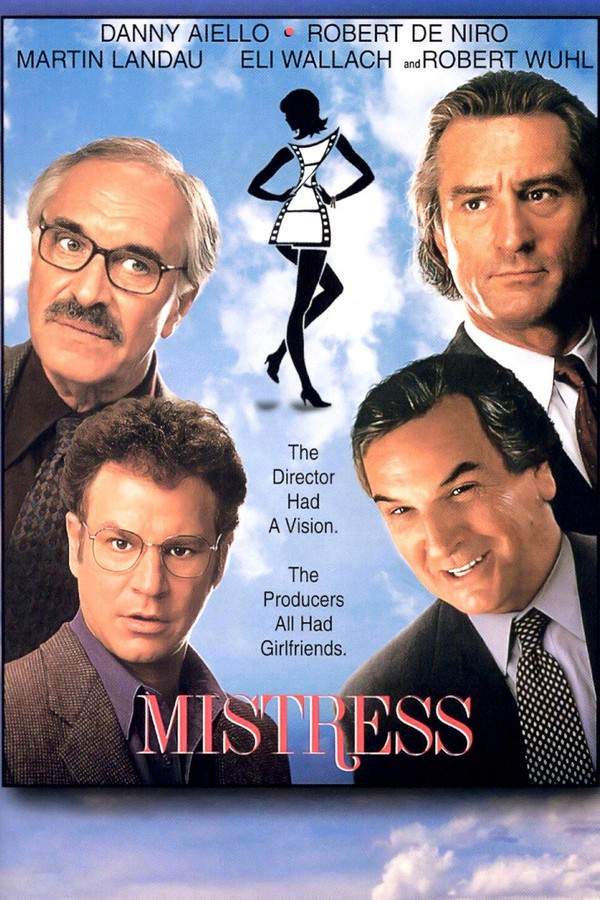
Mistress (1992) movie poster

Plot Summary

Mistress (1992) Plot Summary Explained

Release, runtime and language
1992 · 110 min · English
JustWatch #20,182 7
Starring
Eli Wallach, Danny Aiello, Robert Wuhl, Jace Alexander, Jean Smart, Vasek Simek

A struggling screenwriter finds his creative vision challenged when a group of eccentric financiers takes control of his project. Each backer brings their own agendas and mistresses into the mix, creating a chaotic environment as the writer attempts to appease them. He must navigate the ruthless world of Hollywood deal-making and compromise his artistic integrity to keep the film afloat, ultimately sacrificing his original story in the process.

On this page (7)
  1. 1 Where to watch
  2. 2 What happens: full plot
  3. 3 Plot questions answered
  4. 4 Movie threads
  5. 5 Movies like Mistress
  6. 6 Categories
  7. 7 Every angle

Where to watch

Where to Watch Mistress (1992)

Where can you watch Mistress? Stream, rent or buy it in the US, including on Tubi TV, Amazon Video and Apple TV Store: current JustWatch availability with up-to-date prices.

Streaming availability powered by JustWatch

Full plot summary · contains spoilers

What Happens in Mistress: Full Plot Summary

The whole story of Mistress (1992) explained, from the opening scene to the final frame: every key event, every twist and what it all adds up to. Read it as a quick recap before the sequel, to check a scene you missed, or to finally understand what really happened.

Late one evening, Marvin Landisman, a once-celebrated filmmaker portrayed by Robert Wuhl, finds himself immersed in his past while screening a personal 16mm version of Jean Renoir's timeless classic, Grand Illusions. This nostalgic moment is abruptly interrupted by a phone call from film producer Jack Roth, played by the esteemed Martin Landau. Jack, a former executive at Universal, believes he can secure funding for a long-cherished script of Marvin’s, titled The Darkness and the Light, which had been sent to him years ago. Although Marvin is currently busy producing instructional videos, he is hesitant to step back into the world of filmmaking due to haunting memories of a tragedy that once derailed his career: the heartbreaking on-camera suicide of his lead actor, Warren Zell.

Despite his reservations, Marvin agrees to meet with Roth, who introduces him to a spirited young writer named Stuart Stratland, played by Jace Alexander. As the trio embarks on a journey to pitch their film to potential investors, they quickly uncover that each backer has personal visions for the project, and many come with requests to cast their significant others in key roles. Marvin is determined to remain faithful to his original narrative, which centers on a despondent painter who chooses death over compromise. However, much like his own protagonist, Marvin soon realizes that to bring his vision to life, he might have to accept some level of concession.

As their meetings progress, tensions and creative conflicts rise, pushing Marvin to confront his own artistic integrity. He finds himself at a crossroads, torn between his yearning for authenticity and the harsh realities of the film industry. Can he navigate this complex landscape while staying true to his art? Ultimately, the once-passionate filmmaker will need to decide how much he is willing to sacrifice in the name of creativity, as he teeters on the brink of a revival or further despair. In this gripping narrative, Marvin's struggle resonates deeply, reminding audiences that in the creative journey, embracing change can often lead to unexpected opportunities.

Last updated: January 14, 2025 at 19:26

Was this helpful?

Plot questions answered

Mistress Plot Explained: Your Questions Answered

The questions people ask most about Mistress (1992): what happens in the confusing scenes, why the characters do what they do, the twists, hidden details and what the ending means. Each answer contains spoilers.

Q1

Why is Marvin hesitant to return to filmmaking?

Marvin is haunted by the traumatic on-camera suicide of actor Warren Zell during a previous film production. This tragic incident derailed his career and left lasting psychological wounds, making him reluctant to step back into the industry despite the opportunity to direct his cherished script.

Foreshadowing: Earlier, Marvin watches Jean Renoir's 'Grand Illusions,' hinting at his deep connection to filmmaking and the nostalgic pull he feels toward the industry.

  • marvin landisman
  • warren Zell
  • trauma
  • film industry
  • suicide
Q2

What is the plot of Marvin's script The Darkness and The Light?

The script centers on a despondent painter who ultimately chooses death over compromising his artistic vision. This narrative mirrors Marvin's own dilemma between staying true to his creative integrity and making the practical compromises necessary to actually get a film produced.

  • the darkness and the light
  • script
  • painter
  • artistic integrity
  • compromise
Q3

Why do the investors want to cast their own actresses?

Each potential backer comes with their own actress in mind for key roles, using their financial investment as leverage to get their significant others cast. This reflects the transactional nature of Hollywood deal-making where creative decisions become bargaining chips.

  • investors
  • casting
  • hollywood
  • backers
  • actresses
Q4

How does Marvin妥协 his original vision to get the film made?

Marvin must accept casting choices imposed by backers and make script adjustments to satisfy their demands while trying to preserve the essence of his story. This forces him to relinquish some creative control, much like the protagonist in his own film who faces a similar dilemma.

  • compromise
  • creative control
  • script changes
  • hollywood
  • integrity
Q5

What convinces Marvin to accept Jack Roth's offer?

Jack Roth offers Marvin the chance to direct the project himself, reigniting his passion for filmmaking after years producing instructional videos. Despite his fears about facing old wounds, the opportunity to finally bring his long-cherished script to life proves irresistible.

  • jack roth
  • offer
  • director
  • opportunity
  • passion
Q6

How does Warren Zell's suicide affect Marvin throughout the story?

Warren Zell's death serves as a constant psychological backdrop, fueling Marvin's hesitation and fear of returning to filmmaking. Memories of the tragedy haunt him during meetings and negotiations, making every decision about the project emotionally charged.

  • warren zell
  • suicide
  • memory
  • trauma
  • haunting
Q7

Why does the painter in Marvin's script choose death over compromise?

The painter sees compromise as a complete betrayal of his artistic identity, viewing death as the only acceptable alternative to surrendering his vision. This extreme choice reflects Marvin's own fear that any compromise would destroy what makes his art meaningful.

  • painter
  • death
  • sacrifice
  • art
  • vision
Q8

What does Marvin sacrifice to get his film produced?

Marvin sacrifices his complete artistic control and original vision, accepting compromises that water down his story's core message. The bittersweet ending suggests he achieves a revival of his career but only at the cost of the pristine integrity he fought to maintain.

  • sacrifice
  • ending
  • revival
  • loss
  • film production
Q9

What role does Stuart Stratland play in the production?

Stuart Stratland is a young screenwriter brought in to help with script doctoring, bringing fresh perspective but also adding another voice to the creative negotiations. His involvement represents the collaborative nature of filmmaking and the additional complexity of balancing multiple visions.

  • stuart stratland
  • writer
  • script doctoring
  • collaboration
Q10

Why is the film titled Mistress?

The title 'Mistress' refers to the various 'mistresses', the investors' romantic partners and actresses they want cast, who compete for attention and influence over the project. These external agendas become the driving chaotic force that complicates Marvin's journey to get his film made.

  • mistress
  • title meaning
  • investors
  • actresses
  • chaos

Movie threads

More Movies Like Mistress, by Mood & Story

Curated lists built around what makes Mistress tick: the same mood, the same kind of story or the same emotional payoff. Each list explains why these movies belong together.

Movies about creative compromise like Mistress

Stories of passionate creators forced to sacrifice their vision for success. Explore movies like Mistress that delve into the difficult choices artists face. If you enjoyed the story of a screenwriter battling financiers, you'll find similar films about filmmakers, writers, and musicians wrestling with industry politics and selling out their vision.

  • frustrated
  • compromised
  • satirical
  • reflective
  • cynical
  • nostalgic
  • Tone: bittersweet, cynical
  • Pacing: steady, deliberate
Why these movies?

The story pattern: Narratives in this thread typically follow a protagonist with a strong artistic vision who enters a system (like Hollywood, the music industry, or the art world) that corrupts or dilutes their work. The conflict arises from the push and pull between integrity and external pressures, often culminating in a pyrrhic victory where success is achieved but the original dream is lost.

Why they belong together: Movies are grouped here based on their shared thematic focus on artistic integrity versus pragmatic survival. They share a reflective, often frustrated mood, a steady pacing that builds the weight of compromise, and a bittersweet tone that acknowledges the cost of ambition.
Satirical movies about corrupt systems like Mistress

Darkly humorous critiques of corrupt institutions and the people trapped within them. Discover satirical films similar to Mistress that critique powerful institutions. If you liked the chaotic Hollywood financiers and the anxious deal-making, you'll enjoy these cynical stories about individuals navigating broken, self-serving systems.

  • satirical
  • anxious
  • cynical
  • chaotic
  • frustrated
  • dysfunctional
  • Tone: satirical, anxious
  • Pacing: steady, building chaos
Why these movies?

The story pattern: The narrative pattern involves a relatively normal protagonist entering a dysfunctional, rule-bound system. They must navigate a cast of eccentric, self-interested characters, leading to a series of escalating compromises and chaotic situations. The story unfolds to reveal that the system itself is the antagonist, rewarding cynicism and punishing idealism.

Why they belong together: These movies are united by their satirical lens and anxious, cynical mood. They share a steady pacing that allows the absurdity to build, a medium intensity derived from psychological and professional stakes, and a focus on how institutions corrupt individuals.

If you liked this

Movies Like Mistress

Similar movies to Mistress: the same genre, themes or kind of story. Each one comes with its own plot summary, timeline and ending explained.

Browse all movie summaries

Categories

Movie Lists Featuring Mistress

Mistress appears in these hand-built movie categories. Each one groups movies by a specific mood, theme or story type, with their plot summaries and endings explained.

View all movie categories

Every angle

Mistress (1992) Explained: Plot, Timeline & Characters

Everything about Mistress in one place: what happens in the plot summary, the timeline in chronological order, the characters and meaning and a spoiler-free summary. What's After the Movie adds the cast, box office and post-credit scenes.

Coming soon on iOS and Android

The Plot Explained Movie Summary App

Plot summaries, endings explained and timelines on your phone. Catch up on any movie in minutes, save your favorites and never miss a twist again.

Be the first to know when we launch. Your email stays private, always.

Learn more about the app