Plot Explained Spoilers guaranteed!
Plot Explained

Browse by genre

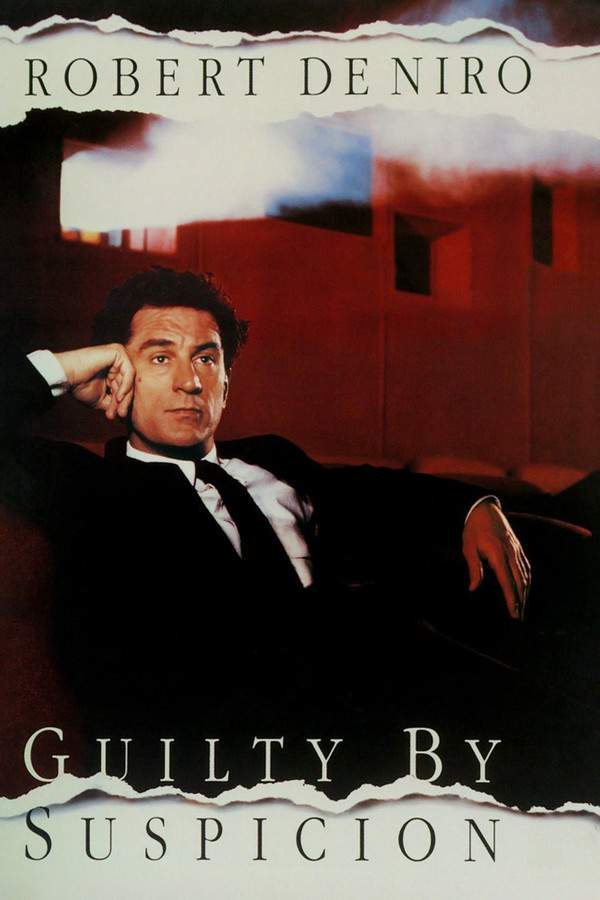
Guilty by Suspicion (1991) movie poster

Plot Summary

Guilty by Suspicion (1991) Plot Summary Explained

Release, runtime and language
1991 · 105 min · English
Directed by
Irwin Winkler
Starring
Robert De Niro, Chris Cooper, Annette Bening, Barry Primus, George Wendt, Sam Wanamaker

During the McCarthy era, acclaimed Hollywood director David Merrill finds himself under intense scrutiny from the House Committee on Un-American Activities. Refusing to cooperate with the committee initially leads to professional setbacks and increasing pressure from the FBI. As Merrill grapples with the consequences for his career and family, he eventually chooses to testify, believing it’s the right thing to do. His actions inspire those around him to stand up for their beliefs and confront injustice.

On this page (6)
  1. 1 Where to watch
  2. 2 What happens: full plot
  3. 3 Plot questions answered
  4. 4 Movie threads
  5. 5 Movies like Guilty by Suspicion
  6. 6 Every angle

Where to watch

Where to Watch Guilty by Suspicion (1991)

Where can you watch Guilty by Suspicion? Stream, rent or buy it in the US, including on Plex, Tubi TV and YouTube Free: current JustWatch availability with up-to-date prices.

Streaming availability powered by JustWatch

Full plot summary · contains spoilers

What Happens in Guilty by Suspicion: Full Plot Summary

The whole story of Guilty by Suspicion (1991) explained, from the opening scene to the final frame: every key event, every twist and what it all adds up to. Read it as a quick recap before the sequel, to check a scene you missed, or to finally understand what really happened.

David Merrill, a prominent director in the 1950s Hollywood scene, finds himself in a tumultuous environment upon returning from a film scout abroad. The escalating McCarthyism and the Red Scare have instigated significant chaos among his peers in the film industry. As the treachery unfolds, his friend Larry Nolan is compelled to name names. Under the pressure of the FBI and the Congressional Oversight Committee, Nolan identifies various individuals, including Merrill, as potential supporters of communism. Despite their minimal connections to the actual Communist Party, they face overwhelming coercion to distance themselves from leftist ideologies.

Hollywood executives, such as mogul Darryl Zanuck, urge directors and staff to renounce any affiliations with communism and to participate in dubious congressional hearings, often requiring them to name colleagues as communist agents. Amidst this darkened climate, Merrill is confronted by Felix Graff, a legal consultant in Hollywood. He is coerced into cooperating with the FBI by naming four individuals, including his childhood friend and screenwriter Bunny Baxter, as alleged communists. The ultimatum is stark: comply or face ostracism from the industry.

Choosing integrity, Merrill finds himself blacklisted and stripped of his assets, leading him to struggle financially and emotionally. He faces challenges in providing for his ex-wife Ruth and their child as he seeks to make his way in New York City. While he initially receives a warm welcome from former colleagues, an eerie realization dawns—his ties to Hollywood are too frail, and he is gradually abandoned by the very individuals he once trusted.

With nowhere left to turn, Merrill returns to Los Angeles, hoping to revive his relationship with Ruth. Despite her having moved on and sold her home to restart her teaching career, their bond strengthens as he becomes more involved in his son's life. Meanwhile, Dorothy Nolan, Larry’s troubled estranged wife, suffers a severe mental breakdown after losing custody of her child due to refusing to cooperate with the FBI. Her despair culminates in a tragic decision that ends her life.

In a twist of fate, Merrill receives an unexpected call from a B-movie director seeking his expertise to salvage a failing Western project. Just as success seems attainable, the director decides to exclude him, once again stalling Merrill's hopes. Additionally, Bunny strives to navigate his own perilous situation, having previously attended leftist rallies without disclosing this to authorities. Threatened with imprisonment for perjury, Bunny turns to Merrill, pleading to take the fall to save himself, only to face rejection from Ruth.

Amidst the rising tensions, Merrill decides to reach out to Zanuck's attorney, Graff, who persuades him that redemption hinges upon compliance during an upcoming congressional hearing. Ultimately, however, during the proceedings, under intense scrutiny from the committee, he upholds his refusal to implicate others, leading to a heated confrontation. Consequently, he is cited for contempt of Congress, resulting in severe repercussions for his peers. As he exits, Bunny steps forward to face the committee, mirroring Merrill’s stance by likewise refusing to betray his colleagues.

Last updated: May 13, 2025 at 20:31

Was this helpful?

Plot questions answered

Guilty by Suspicion Plot Explained: Your Questions Answered

The questions people ask most about Guilty by Suspicion (1991): what happens in the confusing scenes, why the characters do what they do, the twists, hidden details and what the ending means. Each answer contains spoilers.

Q1

Why was David Merrill targeted by the House Committee on Un-American Activities?

David Merrill was targeted because his friend Larry Nolan, under intense pressure from the FBI, named him as a potential communist supporter. Although Merrill had minimal actual connections to the Communist Party, the committee used any association as justification for investigation and coercion.

Foreshadowing: Earlier scenes show Hollywood abuzz with fear as McCarthyism spreads, setting the tone for the targeting of even loosely associated individuals.

  • david merrill
  • huac
  • house committee
  • un-american activities
  • blacklist
  • mcarthyism
Q2

Why did Larry Nolan name David as a communist?

Larry Nolan was pressured by the FBI and the Congressional Oversight Committee to identify colleagues with suspected communist affiliations. Under duress and desperate to protect himself, Nolan named several people including David Merrill, even though their connections to the actual Communist Party were minimal.

Foreshadowing: The film establishes early on that the Red Scare has created a climate of betrayal where survival often means implicating others.

  • larry nolan
  • naming names
  • communism
  • pressure
  • fbi coercion
Q3

What happened to David Merrill after he refused to name names?

After refusing to name four individuals to Felix Graff (Zanuck's attorney), David was immediately blacklisted from Hollywood and stripped of his assets. He lost his career, struggled financially, and found himself abandoned by former colleagues who succumbed to the same pressure.

Foreshadowing: Hollywood executives had already been shown urging staff to cooperate or face career destruction, foreshadowing Merrill's fate.

  • blacklist
  • refusal to cooperate
  • felix graff
  • ostracism
  • financial ruin
Q4

Why did Dorothy Nolan commit suicide?

Dorothy Nolan suffered a severe mental breakdown after losing custody of her child because she refused to cooperate with the FBI. Her refusal to betray her principles, combined with the loss of her son and the overwhelming pressure of the era, led her to tragically drive off a cliff.

Foreshadowing: Dorothy's earlier distress is shown as the FBI pressure on her husband Larry intensifies, with her steadfast refusal to cooperate setting the stage for her breakdown.

  • dorothy nolan
  • suicide
  • mental breakdown
  • fbi
  • custody
  • refusal to cooperate
Q5

Why was David removed from the B-movie Western project?

David was initially hired by a B-movie director to salvage a failing Western film and was making creative improvements. However, once the studio discovered his blacklisted status, they found an excuse to have him removed from the project, ending his brief hope of returning to filmmaking.

Foreshadowing: David's move to New York and subsequent abandonment by colleagues had already established that his blacklisted status made him radioactive to anyone who might hire him.

  • b-movie
  • western
  • blacklisted
  • studio
  • removed from project
Q6

What happened during David Merrill's congressional hearing?

At the hearing, David shocked the committee by refusing to name anyone other than himself despite intense pressure. He maintained his integrity and refused to implicate his colleagues, which led to him being cited for contempt of Congress and facing severe legal repercussions.

Foreshadowing: Earlier meetings with Graff and the tension building toward the hearing establish that this moment would be the climax of David's moral stand.

  • congressional hearing
  • contempt of congress
  • refusal to name names
  • huac
  • david merrill testimony
Q7

Why did Bunny Baxter ask David to take the fall for him?

Bunny Baxter, a screenwriter and David's childhood friend, faced imprisonment for perjury after his past attendance at leftist rallies was revealed. Desperate to avoid jail, he pleaded with David to accept responsibility in his place, though Ruth ultimately rejected this request.

Foreshadowing: Bunny's earlier involvement with leftist rallies is hinted at throughout the narrative, and his precarious situation becomes clearer as the pressure mounts.

  • bunny baxter
  • perjury
  • leftist rallies
  • jail
  • childhood friend
Q8

Why did David Merrill decide to testify before Congress?

David decided to testify after meeting with Zanuck's attorney Graff, who convinced him that redemption and career revival depended on cooperating with the committee. However, at the hearing itself, David defied expectations by refusing to implicate others, choosing integrity over personal salvation.

Foreshadowing: The meeting with Graff appears to show David conceding to pressure, making his ultimate refusal at the hearing a powerful surprise.

  • testify
  • congressional hearing
  • integrity
  • career revival
  • felix graff
Q9

Why did Ruth reject Bunny Baxter's request?

Ruth rejected Bunny's plea for David to take the fall because she recognized it would require David to lie and sacrifice his integrity. Her rejection reflects her understanding that accepting such a deal would destroy everything David had stood for throughout the film.

Foreshadowing: Ruth's character has been shown supporting David's moral stance throughout, making her rejection consistent with her values.

  • ruth
  • bunny baxter
  • rejection
  • integrity
  • principles
Q10

Why did Felix Graff persuade David to cooperate with the committee?

Felix Graff, acting on Zanuck's behalf, convinced David that the only path to redemption and reviving his career was to comply with the committee and name names. This was part of a broader Hollywood strategy to appear cooperative while protecting the industry.

Foreshadowing: Earlier scenes show Hollywood executives pressuring staff to publicly disavow communism, establishing the systemic pressure Graff represented.

  • felix graff
  • darryl zanuck
  • cooperate
  • redemption
  • persuasion
Q11

What ultimatum was given to David Merrill by Felix Graff?

Felix Graff gave David an ultimatum: either name four individuals alleged to be communists (including his childhood friend Bunny Baxter) or face complete ostracism from the Hollywood industry. The choice was stark, betray friends or lose everything.

Foreshadowing: The earlier pressure on other directors and staff establishes that naming names was the price of continued employment in Hollywood.

  • ultimatum
  • felix graff
  • name names
  • bunny baxter
  • ostracism

Movie threads

More Movies Like Guilty by Suspicion, by Mood & Story

Curated lists built around what makes Guilty by Suspicion tick: the same mood, the same kind of story or the same emotional payoff. Each list explains why these movies belong together.

Movies about moral integrity tests like Guilty by Suspicion

Characters face immense pressure to betray their principles for survival. If you liked Guilty by Suspicion, explore more movies where characters face immense pressure to betray their principles. These similar drama stories feature high-stakes moral dilemmas, tense confrontations with authority, and the heavy personal cost of taking a stand.

  • tense
  • defiant
  • oppressive
  • somber
  • claustrophobic
  • anxious
  • Tone: tense, defiant, somber
  • Pacing: steady, methodical
Why these movies?

The story pattern: The narrative follows a character of principle who is systematically pressured by a powerful institution to conform or betray others. The plot charts their increasing isolation, the crumbling of their professional and personal life, and culminates in a climactic moment of choice where they must weigh personal ruin against their ethical code.

Why they belong together: Movies are grouped here by their shared focus on a singular, high-stakes moral dilemma under duress. They create a tense, claustrophobic mood where the central conflict is between the individual and an unjust system, resulting in stories with heavy emotional weight and often bittersweet resolutions.

Dramas about systemic persecution like Guilty by Suspicion

Stories of individuals being crushed by the weight of paranoid political machinery. Find movies similar to Guilty by Suspicion that depict the grim reality of political persecution. These films share a tense, oppressive tone and explore themes like blacklisting, government overreach, and the destruction of careers and lives by paranoid systems.

  • oppressive
  • anxious
  • paranoid
  • melancholic
  • somber
  • claustrophobic
  • Tone: oppressive, anxious, melancholic
  • Pacing: steady, relentless
Why these movies?

The story pattern: The narrative pattern involves an ordinary life upended by a faceless, paranoid system. The protagonist is targeted, investigated, and ostracized, with the plot meticulously detailing the domino effect of ruin: lost work, financial strain, social alienation, and the psychological toll of constant surveillance and fear.

Why they belong together: These movies are connected by their shared setting within a period of political paranoia and their unflinching look at the mechanics of persecution. They generate an anxious, oppressive vibe through a steady pacing that mirrors the inexorable pressure of the system, resulting in a profoundly melancholic and heavy viewing experience.

If you liked this

Movies Like Guilty by Suspicion

Similar movies to Guilty by Suspicion: the same genre, themes or kind of story. Each one comes with its own plot summary, timeline and ending explained.

Browse all movie summaries

Every angle

Guilty by Suspicion (1991) Explained: Plot, Timeline & Characters

Everything about Guilty by Suspicion in one place: what happens in the plot summary, the timeline in chronological order, the characters and meaning and a spoiler-free summary. What's After the Movie adds the cast, box office and post-credit scenes.

Coming soon on iOS and Android

The Plot Explained Movie Summary App

Plot summaries, endings explained and timelines on your phone. Catch up on any movie in minutes, save your favorites and never miss a twist again.

Be the first to know when we launch. Your email stays private, always.

Learn more about the app