Plot Explained Spoilers guaranteed!
Plot Explained

Browse by genre

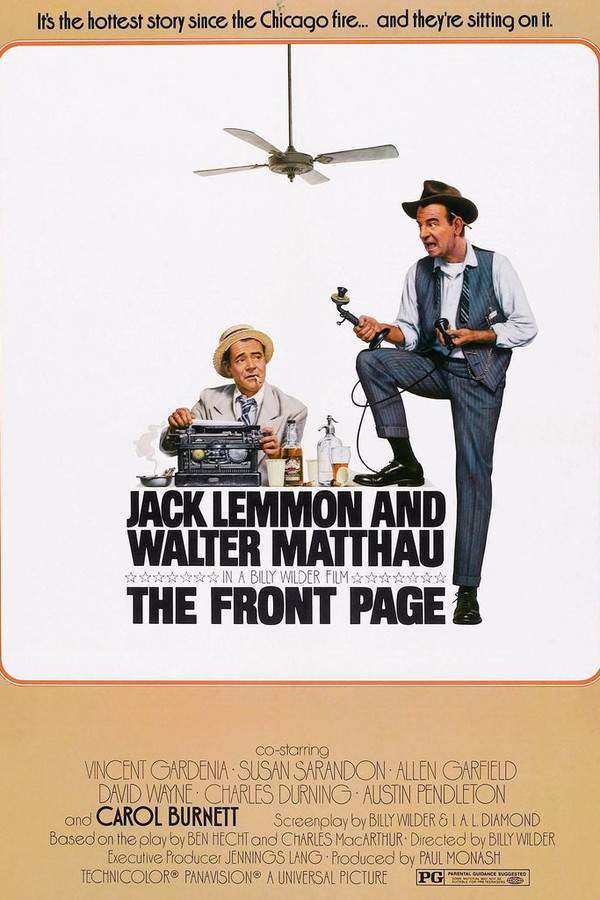
The Front (1976) movie poster

Plot Summary

The Front (1976) Plot Summary Explained

Release, runtime and language
1976 · 95 mins · English
Loading streaming availability…
Directed by
Martin Ritt
Starring
Woody Allen, Murray Moston, Zero Mostel, Danny Aiello, MacIntyre Dixon, Rudolph Willrich

America’s most unlikely hero. A cashier poses as a writer for blacklisted talents to submit their work through, but the injustice around him pushes him to take a stand.

On this page (6)
  1. 1 Where to watch
  2. 2 What happens: full plot
  3. 3 Plot questions answered
  4. 4 Movie threads
  5. 5 Movies like The Front
  6. 6 Every angle
Loading streaming availability…

Full plot summary · contains spoilers

What Happens in The Front: Full Plot Summary

The whole story of The Front (1976) explained, from the opening scene to the final frame: every key event, every twist and what it all adds up to. Read it as a quick recap before the sequel, to check a scene you missed, or to finally understand what really happened.

In New York City, 1953, at the height of the anti-Communist investigations of the House Un-American Activities Committee (HUAC), television screenwriter Alfred Miller [Michael Murphy] is blacklisted and cannot get work. He asks his friend Howard Prince [Woody Allen], a restaurant cashier and small-time bookie, to sign his name to Miller's television scripts in exchange for ten percent of the money Miller makes from them, i.e. to serve as a "front" for Miller. Howard agrees out of friendship and because he needs the money. The scripts are submitted to network producer Phil Sussman [Herschel Bernardi], who is pleased to have a writer not on the television blacklist. Howard's script also offers a plum role for Hecky Brown [Zero Mostel], one of Sussman's top actors.

Howard becomes such a success that Miller's two fellow screenwriter friends hire him to be their front as well. The quality of the scripts and Howard's ability to write so many impresses Florence Barrett [Andrea Marcovicci], Sussman's idealistic script editor, who mistakes him for a principled artist. Howard begins dating her but changes the subject whenever she wants to discuss his work.

As investigators expose and blacklist Communists in the entertainment industry, Hecky Brown is fired from the show because six years earlier he marched in a May Day parade and subscribed to The Daily Worker, although he tells the investigators he did it merely to impress a woman he wanted to have sex with. In order to clear his name from the blacklist, Hecky is instructed to find out more about Howard Prince's involvement with the Communist Party, so he invites him to the Catskills, where Hecky is booked to perform on stage. The club owner short-changes Hecky on his promised salary, and when Hecky confronts him, the club owner fires him, denouncing him as a "communist son of a bitch". The professional humiliation and the inability to provide for his wife and children take their toll on Hecky and he kills himself by jumping out of a hotel window.

Howard witnesses other harsh results of the investigative actions of the communist-hunting "Freedom Information Services" on the network's programming. Suspicion is cast his way, and he is called to testify before the House Un-American Activities Committee. He privately tells Florence that he is not a writer, just a humble cashier.

Howard decides that he will respond to the Committee's questions evasively, enabling him to neither admit nor deny anything. After briefly enduring the HUAC questioning — including being asked to speak ill of the dead Hecky Brown, and being threatened with legal consequences for his admission of having placed bets in his capacity as a bookie (which is illegal), Howard takes a stand, telling the Committee that he does not recognize their authority to ask him such questions, and telling them to

> go fuck yourselves

before leaving the interrogation room. The film ends as Howard is taken away in handcuffs, with Florence kissing him good-bye and many protesters cheering him on.

Last updated: October 09, 2025 at 14:05

Was this helpful?

Plot questions answered

The Front Plot Explained: Your Questions Answered

The questions people ask most about The Front (1976): what happens in the confusing scenes, why the characters do what they do, the twists, hidden details and what the ending means. Each answer contains spoilers.

Q1

Why does Howard agree to be a front for blacklisted screenwriters?

Howard Prince agrees to sign his name to Alfred Miller's scripts primarily because Miller, his friend, is desperate and cannot find work due to being blacklisted. Howard needs the money and agrees to take ten percent of the earnings in exchange for using his name as the credited writer. His initial motivation is simple friendship and financial need, not political courage.

  • Howard Prince
  • Alfred Miller
  • front
  • blacklist
  • friendship
  • money
Q2

Why does Hecky Brown kill himself?

Hecky Brown commits suicide after being blacklisted and fired from his television show when investigators discover he marched in a May Day parade six years earlier and subscribed to The Daily Worker. To clear his name, he is pressured to inform on Howard's supposed Communist Party ties. When the Catskills club owner also fires him, calling him a "communist son of a bitch," Hecky faces complete professional humiliation and the inability to provide for his family, leading him to jump from a hotel window.

Foreshadowing: The film earlier shows Hecky's past catching up with him when he is fired from the show, establishing the escalating consequences of the blacklist.

  • Hecky Brown
  • suicide
  • blacklist
  • Catskills
  • humiliation
  • HUAC
Q3

Why does Howard Prince finally defy the HUAC committee?

Howard decides to defy HUAC after being called to testify and enduring the committee's questioning, which includes demands that he speak ill of the dead Hecky Brown and threats about his illegal bookmaking. He also realizes the broader damage the blacklist is causing to writers and the entertainment industry. His defiance represents a moral turning point where he refuses to recognize the committee's authority to demand these answers.

Foreshadowing: Howard privately tells Florence that he is not a writer but a humble cashier, showing his growing discomfort with the deception and the pressure mounting around him.

  • Howard Prince
  • HUAC
  • defiance
  • committee
  • stand
  • arrest
Q4

What happens to Howard Prince at the end of the film?

After telling the HUAC committee to "go fuck themselves" and refusing to recognize their authority, Howard is led away in handcuffs. Florence kisses him goodbye while supporters cheer him on. His act of defiance results in arrest, but he is celebrated by protesters, creating a bittersweet moment where he loses his freedom but gains moral victory.

  • Howard Prince
  • arrest
  • ending
  • handcuffs
  • protest
  • Florence
Q5

What does it mean to be a "front" in the Hollywood blacklist context?

A "front" is a person who allows their name to be used as the credited author or writer on work actually created by someone blacklisted for suspected communism. The blacklisted writer submits their work through the front, who receives a percentage of the earnings. This allows blacklisted talent to continue working indirectly while the front appears clean to network executives and investigators.

  • front
  • blacklist
  • screenwriter
  • HUAC
  • credit
  • deception
Q6

Why does Florence Barrett become romantically involved with Howard?

Florence Barrett, the script editor at the network, becomes attracted to Howard because she mistakenly believes he is a talented, principled writer whose work shows genuine artistic honesty. She is intrigued by what she sees as his integrity and artistic voice. Howard deflects her questions about his writing process whenever she tries to discuss his work, keeping his role as a front secret.

  • Florence Barrett
  • romance
  • Howard Prince
  • attraction
  • deception
  • script editor
Q7

Why does Hecky Brown try to get information about Howard's Communist ties?

Hecky Brown is instructed by investigators to find out more about Howard Prince's supposed involvement with the Communist Party as a way to clear his own name from the blacklist. This is why Hecky invites Howard to the Catskills - to probe him about political connections. Hecky hopes that exposing someone else's Communist ties would help restore his own reputation.

  • Hecky Brown
  • Communist Party
  • Catskills
  • inform
  • blacklist
  • investigation
Q8

Why does the Catskills club owner fire Hecky Brown?

The club owner fires Hecky Brown after short-changing him on his promised salary. When Hecky confronts him about the pay, the owner denounces him as a "communist son of a bitch" and terminates his booking. This incident adds to Hecky's professional humiliation and personal despair, contributing to his eventual suicide.

  • Hecky Brown
  • Catskills
  • club owner
  • fired
  • salary
  • humiliation
Q9

Why does Howard confess to Florence that he isn't a real writer?

Howard confesses to Florence that he is not a writer but just a humble cashier before facing the HUAC committee. This confession comes from the pressure of the impending testimony and the weight of his deception. He reveals only what is necessary to survive the hearing, and the confession strains his relationship with Florence as she grapples with the truth.

  • Howard Prince
  • Florence
  • confession
  • cashier
  • truth
  • testimony
Q10

How does Howard Prince answer the HUAC committee's questions?

Howard initially responds to HUAC's questions evasively, neither admitting nor denying his involvement with Communist writers. He refuses to provide specific information that would implicate others. The committee threatens him with legal consequences for his illegal bookmaking activity and pressures him to speak negatively about the deceased Hecky Brown, which leads to his ultimate defiance.

  • HUAC
  • evasive
  • testimony
  • bookmaking
  • Hecky Brown
  • committee
Q11

What is HUAC and why is it investigating the entertainment industry?

HUAC (House Un-American Activities Committee) was a U.S. government committee investigating suspected communist activity. During the late 1940s and 1950s, it subpoenaed entertainment industry professionals to testify about Communist affiliations. Many writers, actors, and directors were blacklisted - essentially banned from working - for refusing to testify or for alleged past Communist ties, destroying careers and lives.

  • HUAC
  • committee
  • investigation
  • communism
  • blacklist
  • entertainment industry
Q12

How does Howard Prince's front work expand beyond Alfred Miller?

Howard's front operation expands after his initial success impresses network producer Phil Sussman. When Miller's two fellow screenwriters also find themselves blacklisted, they hire Howard to front for them as well. Howard's ability to produce high-quality scripts quickly and handle multiple clients significantly increases his income and reputation, even as the ethical complications grow.

  • Howard Prince
  • expansion
  • screenwriters
  • blacklist
  • income
  • Sussman

Movie threads

More Movies Like The Front, by Mood & Story

Curated lists built around what makes The Front tick: the same mood, the same kind of story or the same emotional payoff. Each list explains why these movies belong together.

Movies about defiant stands like in The Front

Ordinary individuals find the courage to confront powerful, corrupt systems. If you liked the moral courage in The Front, explore more movies about ordinary people confronting injustice. These similar political dramas and historical stories feature characters who take a stand against corrupt systems, often with bittersweet but inspiring outcomes.

  • defiant
  • principled
  • tense
  • somber
  • righteous
  • uneasy
  • Tone: tense, principled, somber
  • Pacing: steady, character-driven
Why these movies?

The story pattern: Narratives in this thread typically follow an initially reluctant or apathetic protagonist who becomes increasingly aware of a grave injustice. Their personal journey leads to a climactic confrontation with a powerful, oppressive system, resulting in a personal cost but a significant moral or symbolic victory.

Why they belong together: These movies are grouped by their central theme of moral awakening and defiance. They share a tense, principled tone and focus on the emotional weight of standing up for what is right, often against overwhelming odds, creating a cohesive experience of righteous struggle.

Satirical political dramas with a tense mood like The Front

Serious political persecution stories lightened by sharp, satirical commentary. Discover more movies like The Front that mix political drama with satirical humor. These films capture the tense atmosphere of historical persecution while using sharp comedy to critique the system, creating a uniquely engaging and thought-provoking viewing experience.

  • satirical
  • tense
  • anxious
  • uneasy
  • atmospheric
  • defiant
  • Tone: tense, satirical, uneasy
  • Pacing: steady
Why these movies?

The story pattern: The narrative pattern involves characters navigating a repressive political climate, where the inherent hypocrisy and absurdity of the system provide a source of dark comedy. The plot is straightforward, driven by the conflict between individual integrity and ideological conformity, often ending on a note that acknowledges both tragedy and farce.

Why they belong together: These movies are connected by their specific tonal blend: they maintain a tense, anxious mood rooted in serious themes like blacklists and corruption, but are punctuated by satirical humor that critiques the powerful. This mix of dread and wit creates a distinct, reusable vibe.

If you liked this

Movies Like The Front

Similar movies to The Front: the same genre, themes or kind of story. Each one comes with its own plot summary, timeline and ending explained.

Browse all movie summaries

Every angle

The Front (1976) Explained: Plot, Timeline & Characters

Everything about The Front in one place: what happens in the plot summary, the timeline in chronological order, the characters and meaning and a spoiler-free summary. What's After the Movie adds the cast, box office and post-credit scenes.

Coming soon on iOS and Android

The Plot Explained Movie Summary App

Plot summaries, endings explained and timelines on your phone. Catch up on any movie in minutes, save your favorites and never miss a twist again.

Be the first to know when we launch. Your email stays private, always.

Learn more about the app