Plot Explained Spoilers guaranteed!
Plot Explained

Browse by genre

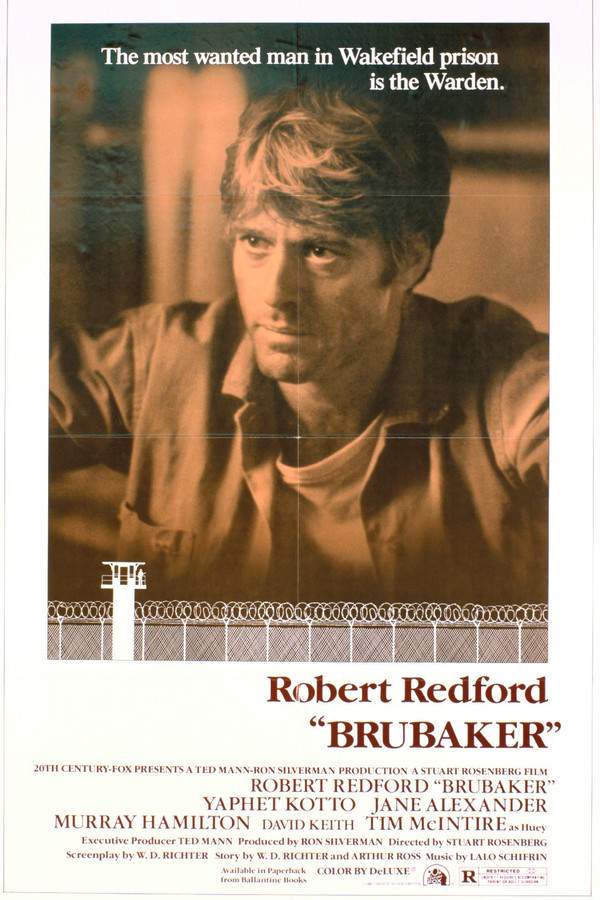
Brubaker (1980) movie poster

Plot Summary

Brubaker (1980) Plot Summary Explained

Release, runtime and language
1980 · 131 min · English
Loading streaming availability…
Directed by
Stuart Rosenberg
Starring
Robert Redford, Morgan Freeman, Murray Hamilton, Jane Alexander, Yaphet Kotto, David Keith

Undercover, a state investigator named Henry Brubaker assumes the identity of a prisoner to expose corruption within an Arkansas penitentiary. Robert Redford portrays Brubaker as he navigates the harsh realities of prison life and uncovers a system rife with brutality and abuse. With the help of loyal allies like Dickie Coombes and Lillian Gray, he strives to implement much-needed reforms, confronting powerful adversaries who benefit from the existing conditions.

On this page (6)
  1. 1 Where to watch
  2. 2 What happens: full plot
  3. 3 Plot questions answered
  4. 4 Movie threads
  5. 5 Movies like Brubaker
  6. 6 Every angle
Loading streaming availability…

Full plot summary · contains spoilers

What Happens in Brubaker: Full Plot Summary

The whole story of Brubaker (1980) explained, from the opening scene to the final frame: every key event, every twist and what it all adds up to. Read it as a quick recap before the sequel, to check a scene you missed, or to finally understand what really happened.

Newly appointed Arkansas State Wakefield Prison warden Henry Brubaker arrives at the penitentiary disguised as a prisoner, joining a bus full of new inmates. He quickly finds himself navigating the grim realities of prison life: insufficient beds, appalling food quality, malfunctioning showers, rampant sexual violence in the barracks, and cruel punishment methods. The scene becomes particularly riveting when Brubaker discovers a maggot in his meal. Later, he learns of inmate Larry Lee Bullen being taken away under the guise of a phone call only to be brutally beaten.

On sanitation detail, Brubaker and the injured Bullen wrestle with the putrid conditions outside Death Row, where things escalate when inmate Walter takes Bullen hostage, demanding to speak to the warden. After calming Walter down, Brubaker reveals his true identity, surprising Walter, who reluctantly lists his demands for better living conditions, including yellow-painted walls and a television like those reserved for the corrupt convict guards. Once their meeting ends, Brubaker ensures Walter is locked back in his cell, setting the tone for his leadership.

Trusty Dickie Coombes later guides Brubaker to the office of Warden Renfro, played by Lee Richardson, where Brubaker announces Renfro's termination from his position. Following this, he faces the prison crowd, introducing his new rules amid the scrutinizing gaze of governors' assistant Lillian Gray and Prison Board Chairman John Deach. While Deach insists on staying informed, Lillian cautions Brubaker to tread carefully.

As Brubaker transforms the prison's environment, he compels Death Row prisoners to enjoy sunlight for brief moments, yet soon learns about unfortunate events, such as the roof collapse in the barracks during a rainstorm. His determination leads him to save injured inmates despite facing challenges in getting ambulances to respond. In the infirmary, he discovers that the medical staff exploits inmates by charging for services. Taking swift action, he replaces the doctor who had long taken advantage of the system.

Brubaker investigates the kitchens, realizing there's blatant mismanagement as food meant for inmates is being misappropriated. When C. P. 'Woody' Woodward visits, he requests the rebuilding of the barracks’s roof for free, but Brubaker stands firm, stopping the practice of free labor that benefits the local contractors. Woody's warning that there will be consequences for Brubaker's resistance becomes apparent as he struggles with deeper issues involving corrupt prison labor and stolen food supplies.

When Brubaker uncovers a hidden cabin occupied by trusty Huey Rauch and his girlfriend, who were hoarding stolen supplies, he takes decisive actions against the bureaucratic negligence surrounding such theft. Building an inmate council comprising trusted inmates, Brubaker aims to regain order and transparency. However, his reforms fizzle as trouble brews among the trusties, leading to violence against inmates like Abraham who dares to speak up about the buried secrets of the past.

His quest for justice pushes against the system, which comes to a head during a Prison Board meeting where it's evident that profit and corruption are prioritized over inmates' well-being. Brubaker becomes increasingly frustrated with Lillian and the board's reluctance to confront the ugly truths of the prison system, and the situation escalates further when he discovers Abraham's lifeless body. In a desperate move to uncover hidden truths, he orders the innocent inmates to search for buried bodies, risking their safety in the process.

Brubaker's resolve intensifies when he realizes the deep-rooted corruption reaches into the highest levels of authority. Every attempt to reform the prison leads him into conflict not just with inmates, but with the very structures meant to uphold justice. As he faces off against powerful figures like Senator Hite, Brubaker insists that accountability must come first.

Confronted with the fallout of his decisions, Brubaker learns a startling truth about current inmates and their connections to the past. The violence peaks when Rauch murders Bullen, leading to a tense showdown. By the end, as Brubaker faces repercussions for his brave stance against the system, the respect he garners from the inmates shines through; their applause marks a poignant farewell to a warden who dared to challenge the status quo, as Dickie leads the charge in honoring Brubaker's efforts.

Last updated: October 27, 2024 at 18:13

Was this helpful?

Plot questions answered

Brubaker Plot Explained: Your Questions Answered

The questions people ask most about Brubaker (1980): what happens in the confusing scenes, why the characters do what they do, the twists, hidden details and what the ending means. Each answer contains spoilers.

Q1

Why did Henry Brubaker go undercover as a prisoner at Wakefield Prison?

Brubaker was a state investigator who assumed a prisoner's identity to expose systemic corruption and brutality within the Arkansas penitentiary. His undercover approach allowed him to experience the conditions firsthand and gather evidence against those profiting from the prison's exploitation of inmates.

  • undercover investigation
  • corruption
  • prison reform
  • state investigator
Q2

How did Brubaker reveal his identity to inmate Walter?

During a hostage situation on sanitation detail, Brubaker calmed Walter down after he took Bullen hostage demanding to speak to the warden. Once the situation was defused, Brubaker revealed his true identity to Walter, surprising him, and then ensured Walter was returned to his cell.

Foreshadowing: Earlier scenes of Brubaker experiencing the harsh conditions had established his credibility among inmates.

  • Walter
  • hostage
  • true identity
  • undercover reveal
Q3

What happened to Larry Lee Bullen after his beating?

Bullen was brutally beaten after being lured away under the false pretenses of a phone call. He later became a key figure in Brubaker's reform efforts, but was ultimately murdered by trusty Huey Rauch, one of the corrupt inmates Brubaker had targeted.

Foreshadowing: Bullen's initial assault highlighted the暴力 and retaliation inmates faced for speaking up.

  • Larry Lee Bullen
  • Huey Rauch
  • murder
  • inmate violence
Q4

Why was Brubaker forced to leave Wakefield Prison?

Brubaker was pushed out because his reforms threatened powerful interests, including local contractors who benefited from free inmate labor and corrupt officials embedded in the prison system. Despite exposing corruption at the highest levels, the systemic resistance proved overwhelming, and he faced repercussions for his stance.

Foreshadowing: Contractor C.P. Woodward warned Brubaker that there would be consequences for refusing to provide free inmate labor.

  • reforms
  • forced out
  • corruption
  • consequences
Q5

What was the hidden cabin near the prison used for?

Brubaker discovered a hidden cabin occupied by trusty Huey Rauch and his girlfriend, who were hoarding stolen supplies meant for the inmates. This revealed how trusties exploited their privileged positions to embezzle food and resources meant for the prison population.

Foreshadowing: Earlier investigation of the kitchens had shown food mismanagement, leading Brubaker to investigate further.

  • Huey Rauch
  • stolen supplies
  • trusty
  • hidden cabin
Q6

Who killed inmate Abraham and why?

Abraham was murdered by other inmates, specifically within the trusty system Brubaker had established. Abraham had dared to speak up about buried secrets from the prison's past, and his murder was intended to silence him and prevent further investigation into the prison's hidden crimes.

Foreshadowing: The tension among trusties had been building since Brubaker formed the inmate council, with violent pushback against those who questioned the system.

  • Abraham
  • murder
  • buried bodies
  • trusty violence
Q7

Why did the Prison Board oppose Brubaker's reforms?

The Prison Board prioritized profit and maintaining the existing corrupt system over inmate welfare. Members including Senator Hite were complicit in the exploitation of inmate labor and benefited financially from the status quo. Confronting the board, Brubaker demanded accountability but faced evident reluctance to change.

Foreshadowing: Board Chairman John Deach insisted on staying informed about operations while simultaneously resisting reform efforts.

  • Prison Board
  • Senator Hite
  • corruption
  • profit motive
Q8

What happened to Warden Renfro?

Brubaker terminated Warden Renfro from his position after exposing the corruption and brutality occurring under his leadership. Renfro had overseen a system rife with abuse and mismanagement, making him complicit in the prison's conditions.

Foreshadowing: Brubaker's early discoveries in the prison had revealed Renfro's failure to address basic sanitation and safety issues.

  • Warden Renfro
  • termination
  • corruption
Q9

What corrupt labor practice did Brubaker uncover?

Brubaker discovered that local contractors, particularly C.P. 'Woody' Woodward, were benefiting from free inmate labor. When Woodward requested the prison provide free labor to rebuild the barracks roof, Brubaker refused, exposing the exploitative arrangement that lined the pockets of outside businesses.

Foreshadowing: The food mismanagement investigation revealed a pattern of misappropriating resources meant for inmates.

  • free labor
  • C.P. Woodward
  • contractors
  • exploitation
Q10

What was the inmate council Brubaker created?

To restore order and transparency, Brubaker established an inmate council made up of trusted prisoners. However, the council soon became a source of violence as trusties turned on each other, with members like Huey Rauch murdering those who threatened to expose corruption, ultimately causing the council's failure.

Foreshadowing: The council's formation followed Brubaker's discovery of the hidden cabin and stolen supplies.

  • inmate council
  • trusties
  • violence
  • failed reforms
Q11

Why did Brubaker order inmates to search for buried bodies?

After discovering Abraham's lifeless body, Brubaker became determined to uncover the prison's hidden crimes. In a desperate move to expose the full extent of the corruption, he ordered innocent inmates to search for buried bodies, risking their safety to bring the truth to light.

Foreshadowing: Abraham had been killed for speaking about buried secrets, which motivated Brubaker to investigate further.

  • buried bodies
  • Abraham
  • investigation
  • discovery
Q12

How did the inmates react to Brubaker's departure?

Despite Brubaker being forced out as a personal defeat, the inmates showed their respect and gratitude for his efforts. As he left, they applauded him, with Dickie Coombes leading the charge in honoring the warden who had dared to challenge the corrupt system.

Foreshadowing: Throughout his tenure, Brubaker had earned the trust and admiration of inmates by exposing corruption and improving conditions.

  • inmates
  • respect
  • farewell
  • applause
  • Dickie Coombes

Movie threads

More Movies Like Brubaker, by Mood & Story

Curated lists built around what makes Brubaker tick: the same mood, the same kind of story or the same emotional payoff. Each list explains why these movies belong together.

Movies about undercover reformers like in Brubaker

One person goes undercover to expose and challenge a deeply corrupt institution. If you admired the tense undercover investigation in Brubaker, this collection is for you. These films feature similar stories of individuals risking everything to expose corruption from within powerful, flawed institutions, offering a mix of gritty realism and moral drama.

  • tense
  • gritty
  • determined
  • frustrating
  • investigative
  • claustrophobic
  • Tone: dark, tense, determined
  • Pacing: steady, investigative
Why these movies?

The story pattern: The narrative typically follows a protagonist who assumes a false identity to investigate a corrupt organization. As they gather evidence, they confront the moral compromises of their deception and the personal danger of their mission, often leading to a confrontation where systemic power proves difficult to topple.

Why they belong together: These films are grouped together for their shared focus on the undercover investigator archetype, the theme of challenging systemic injustice, and a tense, gritty atmosphere. They deliver a specific brand of procedural drama centered on moral courage against overwhelming odds.

Bleak institution dramas with bittersweet endings like Brubaker

Grim stories of fighting for change within oppressive systems, with imperfect victories. For viewers who appreciated the harsh prison setting and morally complex ending of Brubaker. These movies explore similar themes of fighting for justice within oppressive systems, often resulting in emotionally heavy, bittersweet conclusions that feel authentic and thought-provoking.

  • oppressive
  • claustrophobic
  • gritty
  • harsh
  • frustrating
  • determined
  • Tone: dark, oppressive, bittersweet
  • Pacing: steady, deliberate
Why these movies?

The story pattern: These stories unfold within the walls of a dysfunctional institution, following a reformer who challenges the status quo. The narrative builds tension through exposure of brutality and abuse, leading to a climax where the protagonist's efforts are partially thwarted by the system's inertia, resulting in an ending that is personally costly yet symbolically significant.

Why they belong together: Movies in this thread share a specific mood and setting: a claustrophobic, oppressive institution as a microcosm of societal failure. They are united by a dark tone, heavy emotional weight, a steady pace of uncovering injustice, and a particularly bittersweet or bleak emotional resolution.

If you liked this

Movies Like Brubaker

Similar movies to Brubaker: the same genre, themes or kind of story. Each one comes with its own plot summary, timeline and ending explained.

Browse all movie summaries

Every angle

Brubaker (1980) Explained: Plot, Timeline & Characters

Everything about Brubaker in one place: what happens in the plot summary, the timeline in chronological order, the characters and meaning and a spoiler-free summary. What's After the Movie adds the cast, box office and post-credit scenes.

Coming soon on iOS and Android

The Plot Explained Movie Summary App

Plot summaries, endings explained and timelines on your phone. Catch up on any movie in minutes, save your favorites and never miss a twist again.

Be the first to know when we launch. Your email stays private, always.

Learn more about the app