Plot Explained Spoilers guaranteed!
Plot Explained

Browse by genre

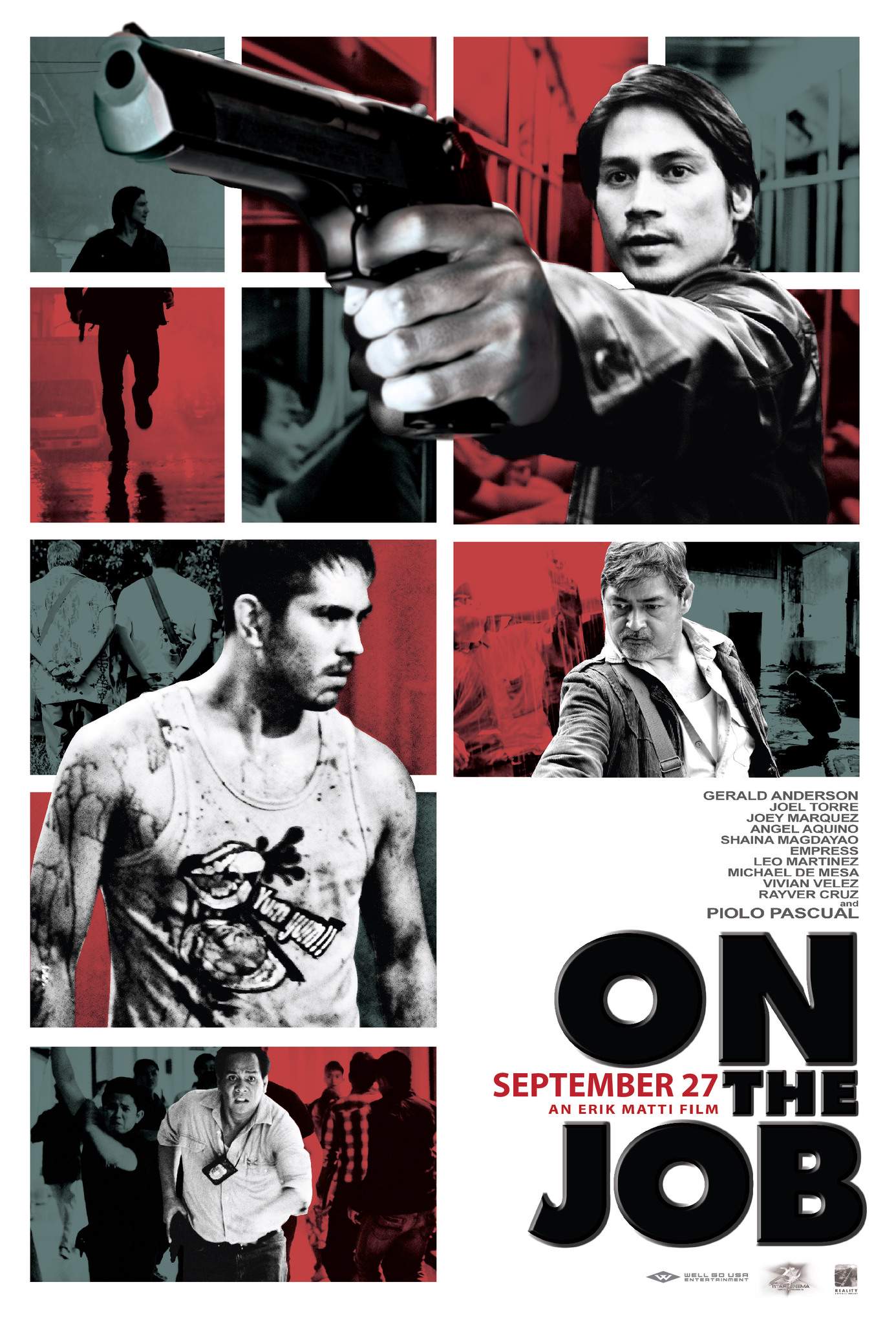
On the Job (2013) movie poster

Plot Summary

On the Job (2013) Plot Summary Explained

Release, runtime and language
2013 · 121 min · Tagalog
JustWatch #6,403 86
Directed by
Erik Matti

A relentless crime saga follows individuals temporarily released from prison to carry out dangerous assignments for shadowy employers. When a mission goes wrong, a former convict and a rookie police officer find themselves entangled in a deadly conspiracy, uncovering a network of corruption that reaches the highest levels of power. Their pursuit of justice puts them at odds with ruthless forces, forcing them to confront difficult choices and navigate a world where survival depends on loyalty and deception.

On this page (6)
  1. 1 Where to watch
  2. 2 What happens: full plot
  3. 3 Plot questions answered
  4. 4 Movie threads
  5. 5 Movies like On the Job
  6. 6 Every angle

Where to watch

Where to Watch On the Job (2013)

Where can you watch On the Job? Stream, rent or buy it in the US, including on Hi-YAH, Tubi TV and Google Play Movies: current JustWatch availability with up-to-date prices.

Streaming availability powered by JustWatch

Full plot summary · contains spoilers

What Happens in On the Job: Full Plot Summary

The whole story of On the Job (2013) explained, from the opening scene to the final frame: every key event, every twist and what it all adds up to. Read it as a quick recap before the sequel, to check a scene you missed, or to finally understand what really happened.

In the heart of the Philippines, two men, Mario and Daniel, are not your typical prisoners; they often find themselves released from incarceration, only to be paid to carry out contract killings. Mario uses his earnings to provide for his daughter, Tina, and to support his estranged wife, Lulette, while Daniel sends money back to his family and indulges in the privileges offered within the prison walls. Surprisingly, Daniel views Mario as a father figure, learning from him during their violent undertakings. Their lives take a dark turn after they kill the notorious drug lord Tiu. The case surrounding Tiu’s murder falls into the hands of NBI Agent Francis Coronel, thanks to a political maneuver by Congressman Manrique. When Coronel and his partner Bernabe arrive at the local precinct, a contentious rivalry emerges with PNP Sergeant Joaquin Acosta, who is adamant that the case was unjustly stripped from him for political gain.

Further complications arise when Mario and Daniel are tasked with executing a hit on Linda. Her husband, Pol, who was once a colleague of Acosta, begs for assistance. During this time, Pol uncovers that Tiu's murder is merely one piece of a larger puzzle involving multiple assassinations orchestrated by Manrique’s ally, Pacheco, a military officer vying for a Senate seat. Although Acosta steps in to shield Pol, the plan spirals out of control when Daniel takes a shot at Pol, only to find his weapon jammed. In the chaos that ensues, they evade capture but ultimately find and eliminate Pol in a hospital setting.

As they navigate their perilous existence, Bernabe suffers a critical injury, and Acosta is left troubled after catching a glimpse of Mario’s face. Tensions spike when Coronel confronts Manrique, threatening to arrest Pacheco, who the Congressman deems essential to their wealth and power. Meanwhile, Acosta broadcasts a composite sketch of Mario, now on the run. A troubling twist arises when Coronel learns of Mario’s home life and his relationship with Lulette, which Acosta exploits during his interrogation of Mario. Despite Acosta's efforts, Mario reveals feelings of betrayal to Daniel, lamenting his disconnect from Tina, who brings shocking news of her intent to live independently.

The stakes continue to rise when Tiu's father claims to have valuable evidence for Acosta and Coronel. A visit to Pacheco leads Coronel to a chilling confession about the murder of his own father to align with his twisted sense of duty to the nation. As undercover recordings surface, the tension escalates dramatically—the moment Daniel brutally kills Coronel ignites a violent response from Acosta, who confronts Pacheco and Manrique's security at great personal risk.

Meanwhile, a despondent Mario feels utterly abandoned by his family, leading to a tragic decision where he kills Daniel, choosing to remain imprisoned rather than face a life devoid of purpose. The aftermath of Coronel's death leads to an investigation of Acosta, while Pacheco hypocritically asserts his readiness for scrutiny in public. After witnessing Daniel's funeral in a distant manner, Mario exacts vengeance on Boy, before returning yet again to the confinement of prison.

In the wake of all this chaos, Bernabe begins to sift through Coronel’s materials, eventually laying hands on the incriminating evidence against Pacheco, setting the stage for an anticipated confrontation that looms over them all.
Last updated: November 08, 2024 at 06:14

Was this helpful?

Plot questions answered

On the Job Plot Explained: Your Questions Answered

The questions people ask most about On the Job (2013): what happens in the confusing scenes, why the characters do what they do, the twists, hidden details and what the ending means. Each answer contains spoilers.

Q1

Why are Mario and Daniel released from prison to carry out assassinations?

Mario and Daniel are part of a corrupt system where prisoners are temporarily released to execute contract killings for powerful figures. They receive payment for each job, with Mario using his earnings to support his daughter Tina and estranged wife Lulette, while Daniel enjoys privileges inside prison. This arrangement benefits shadowy employers who need deniable operatives and allows the prison system to profit from the arrangement.

Foreshadowing: Early scenes establish that both men have been used for multiple hits before, showing this is a recurring operation.

  • prison contract killers
  • temporarily released prisoners
  • Philippines crime system
  • Mario Daniel assassins
Q2

Why does Congressman Manrique manipulate who investigates Tiu's murder?

Congressman Manrique orchestrates the transfer of Tiu's murder case to NBI Agent Francis Coronel because the hit was part of a larger political conspiracy. Manrique needs to control the investigation to protect his ally Pacheco, a military officer orchestrating multiple assassinations for political gain. By placing Coronel on the case, Manrique believes he can influence the outcome and prevent the truth from surfacing.

Foreshadowing: The summary reveals early that Tiu's murder connects to a larger network of political assassinations.

  • Congressman Manrique
  • Tiu murder investigation
  • political conspiracy
  • NBI agent Coronel
Q3

Why does Daniel kill NBI Agent Coronel?

Daniel kills Coronel in response to the escalating conflict between law enforcement and the criminal network. When Coronel obtains recordings that could expose Pacheco's crimes and threaten the entire operation, Daniel is sent to eliminate him. This brutal act represents the point of no return for the criminal conspiracy, directly triggering Acosta's violent confrontation with Pacheco and Manrique's security.

Foreshadowing: Earlier tension builds when Coronel threatens to arrest Pacheco, making him a target.

  • Daniel kills Coronel
  • NBI agent death
  • Pacheco conspiracy
  • undercover recordings
Q4

Why does Mario kill Daniel at the end of the movie?

Mario kills Daniel because he feels completely abandoned by his family and sees no purpose in living a free life. His daughter Tina announces plans to live independently, his wife Lulette remains estranged, and Daniel was the only person giving his life meaning. Rather than face a hollow existence outside prison, Mario chooses to return to incarceration by killing his surrogate son, sacrificing their bond to escape his emotional despair.

Foreshadowing: Earlier scenes show Mario expressing feelings of betrayal and disconnection from Tina, foreshadowing his mental breakdown.

  • Mario kills Daniel
  • tragic ending
  • Mario Daniel relationship
  • prison return
Q5

What is Pacheco's role in the assassination conspiracy?

Pacheco is a military officer working with Congressman Manrique who orchestrates multiple political assassinations to clear the path for his Senate campaign. He orders the hits on Tiu and others, using the prisoner release system as his assassination pipeline. During his confrontation with Coronel, Pacheco reveals he even murdered his own father to prove his twisted loyalty to the nation, demonstrating his ruthless ambition.

Foreshadowing: Pol discovers that Tiu's murder is part of multiple assassinations orchestrated by someone with political ambitions.

  • Pacheco military officer
  • political assassinations
  • Senate campaign
  • Manrique ally
Q6

Why does Sergeant Acosta help Pol when he's a police officer?

Acosta helps Pol because they were former colleagues, giving him a personal connection that overrides his duty. When Pol's wife Linda becomes a target, Acosta attempts to shield them despite the political pressure surrounding the case. However, his intervention ultimately fails when Daniel attempts the hit and Pol is killed in the hospital chaos, leaving Acosta morally conflicted throughout the investigation.

Foreshadowing: The summary notes Pol was once a colleague of Acosta, establishing their prior relationship.

  • Sergeant Acosta
  • Pol Linda protection
  • former colleague
  • police corruption
Q7

What evidence does Tiu's father provide to the investigators?

Tiu's father claims to possess crucial evidence implicating multiple parties in the assassination conspiracy. His evidence connects the dots between the various murders and the political conspiracy involving Pacheco and Manrique. This revelation adds significant pressure on the investigation and provides Coronel and Acosta with a path toward exposing the full scope of the corruption.

Foreshadowing: Tiu's murder was the first visible crime in a chain of politically motivated assassinations.

  • Tiu father evidence
  • assassination conspiracy proof
  • corruption investigation
Q8

Why does Mario choose to go back to prison instead of staying free?

Mario chooses prison because his life outside has become meaningless to him. His daughter Tina tells him she wants to live independently, his wife Lulette remains distant, and Daniel was his only emotional connection. Facing a life without purpose or family, Mario finds the structured existence of prison more tolerable than freedom, making the tragic decision to kill Daniel and return to confinement.

Foreshadowing: Mario's earlier lament about his disconnection from Tina foreshadows his complete emotional breakdown.

  • Mario prison return
  • freedom vs imprisonment
  • family abandonment
  • no purpose
Q9

How does Bernabe obtain the evidence against Pacheco?

After Coronel is killed, Bernabe begins sorting through Coronel's materials and belongings. Through this investigation, he discovers the incriminating evidence that Coronel had gathered against Pacheco. This evidence becomes the key to exposing the military officer's crimes and the political conspiracy, setting up the anticipated final confrontation.

Foreshadowing: Coronel's earlier confrontation with Manrique shows he was actively building a case against Pacheco.

  • Bernabe finds evidence
  • Pacheco incriminating proof
  • Coronel's files
Q10

Why does Daniel's weapon jam during the hospital hit on Pol?

Daniel's weapon jams at a critical moment during the hospital assassination attempt, causing chaos and forcing Mario and Daniel to improvise. While the jam initially seems like a mechanical failure, it contributes to the unfolding violence as they ultimately succeed in killing Pol during the hospital confrontation. This moment adds another layer of unpredictability to their already dangerous operation.

Foreshadowing: The timeline shows this is a pivotal moment where their plan unravels yet they adapt.

  • weapon jams
  • hospital hit Pol
  • assassination attempt failure
Q11

Why is there a rivalry between Sergeant Acosta and NBI Agent Coronel?

Acosta resents Coronel because the Tiu murder case was stripped from him and given to the NBI for political reasons controlled by Congressman Manrique. Acosta believes the case was unfairly taken and feels his efforts were dismissed. This rivalry intensifies as both law enforcement factions pursue the same criminals, creating tension that complicates the investigation and allows the conspiracy to thrive.

Foreshadowing: The political maneuver by Manrique is designed to keep local police away from the truth.

  • Acosta Coronel rivalry
  • police vs NBI
  • case jurisdiction conflict

Movie threads

More Movies Like On the Job, by Mood & Story

Curated lists built around what makes On the Job tick: the same mood, the same kind of story or the same emotional payoff. Each list explains why these movies belong together.

Movies about systemic corruption like On the Job

Stories where individual morality collides with an all-consuming corrupt system. If you liked the deep-seated political and criminal corruption in On the Job, explore these similar movies. These gritty crime stories uncover conspiracies where the powerful are untouchable, forcing protagonists to navigate a world where justice is elusive and survival means getting your hands dirty.

  • cynical
  • gritty
  • paranoid
  • desperate
  • anxious
  • brutal
  • Tone: dark, cynical, tense
  • Pacing: fast, driven by conspiracy reveals
Why these movies?

The story pattern: These narratives typically follow characters—often law enforcement or disillusioned insiders—uncovering a conspiracy that goes far beyond a single crime. The journey reveals how deeply corruption is woven into the fabric of society, leading to a climax where true justice is often sacrificed for a pyrrhic victory or mere survival.

Why they belong together: They are grouped by their shared focus on a corrupt world order, a consistently dark and cynical tone, and the heavy emotional weight of fighting a losing battle against powerful, shadowy forces. The pacing is often fast, driven by revelations and escalating danger.

Anxious moral decay thrillers like On the Job

Character-driven sagas where violence and desperation erode personal integrity. For viewers who appreciated the heavy emotional weight and moral compromises in On the Job, this list features similar movies. These character-driven thrillers explore desperate individuals navigating violent, unforgiving worlds, leading to bleak outcomes and a palpable sense of anxiety and melancholy.

  • anxious
  • desperate
  • melancholic
  • brutal
  • gritty
  • tragic
  • Tone: dark, melancholic, desperate
  • Pacing: fast, tense, character-driven
Why these movies?

The story pattern: The narrative pattern follows a protagonist—often with sympathetic motivations—who becomes entangled in a dangerous situation. As they are forced to commit acts of violence or deception to survive or protect others, their sense of self erodes, culminating in a tragic or bittersweet ending that highlights the cost of their choices.

Why they belong together: They share a dominant mood of anxiety and melancholy, a heavy emotional weight, and a dark tone. The pacing is often fast or steady, maintaining tension as the protagonist's situation deteriorates. The central theme is the corrosion of morality under extreme pressure.

If you liked this

Movies Like On the Job

Similar movies to On the Job: the same genre, themes or kind of story. Each one comes with its own plot summary, timeline and ending explained.

Browse all movie summaries

Every angle

On the Job (2013) Explained: Plot, Timeline & Characters

Everything about On the Job in one place: what happens in the plot summary, the timeline in chronological order, the characters and meaning and a spoiler-free summary. What's After the Movie adds the cast, box office and post-credit scenes.

Coming soon on iOS and Android

The Plot Explained Movie Summary App

Plot summaries, endings explained and timelines on your phone. Catch up on any movie in minutes, save your favorites and never miss a twist again.

Be the first to know when we launch. Your email stays private, always.

Learn more about the app