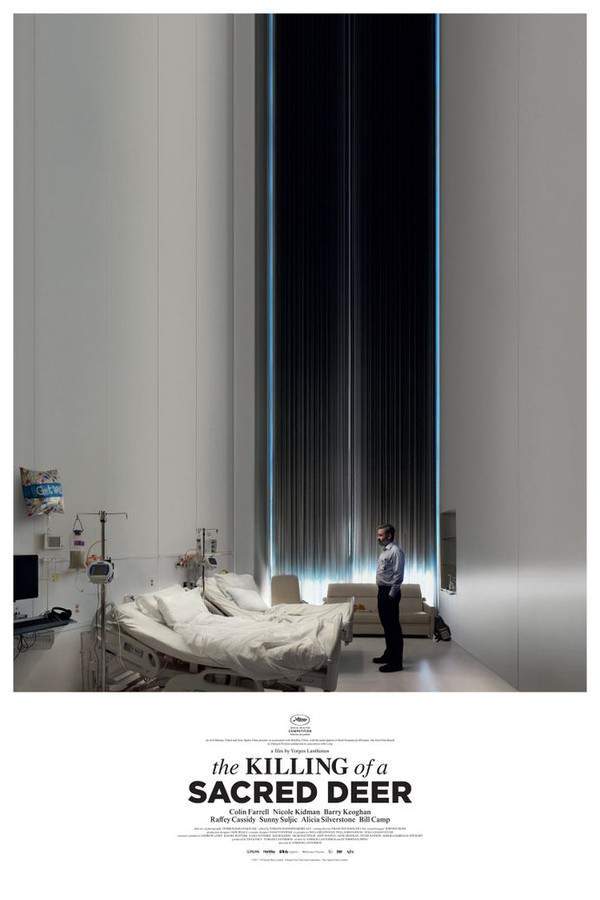
The Killing of a Sacred Deer

The Killing of a Sacred Deer

Year: 2017

Runtime: 121 min

Language: English

Director: Giorgos Lanthimos

Echo Score: 70
DramaMysteryThrillerHorror

A brilliant surgeon's carefully constructed life is thrown into turmoil when a strange young man named Martin inserts himself into his family. As Martin’s presence intensifies, unsettling events begin to occur, and the doctor is confronted with a disturbing request that forces him to confront a dark secret from his past. The consequences threaten to unravel his family and expose a profound sense of dread.

Warning: spoilers below!

Haven’t seen The Killing of a Sacred Deer yet? This summary contains major spoilers. Bookmark the page, watch the movie, and come back for the full breakdown. If you're ready, scroll on and relive the story!

The Killing of a Sacred Deer (2017) – Full Plot Summary & Ending Explained

Read the complete plot breakdown of The Killing of a Sacred Deer (2017), including all key story events, major twists, and the ending explained in detail. Discover what really happened—and what it all means.

The film opens with Steven (Colin Farrell) conducting an open-heart surgery. Once the procedure concludes, he shares a light conversation with his anesthesiologist about watches, hinting at a deeper connection. Later, he encounters Martin (Barry Keoghan) at a diner, where he takes on a mentor role, surprising Martin with a watch he had been interested in. Steven’s evening continues with a family dinner, where his son Bob (Sunny Suljic) expresses a desire to attend a party with his sister Kim (Raffey Cassidy). However, Steven insists Bob must first cut his long hair, to which his wife Anna (Nicole Kidman) argues against the restriction. This married couple’s dynamic takes a peculiar turn that night, culminating in a strange intimacy that showcases their troubled relationship.

The narrative takes a darker twist at a gala where Steven delivers a speech and reveals his sobriety when offered a cocktail. As Martin becomes a frequent guest at their home, an unsettling aura surrounds him. During a lighthearted dinner, Martin corners Steven with revelations about the tragic death of his father in an accident related to Steven’s surgery. The emotional tension escalates when Martin hints at Steven being responsible for this loss, as he suggestively claims that Steven must pay a price: to sacrifice a member of his family to restore balance.

Strange occurrences ensue, with Bob suddenly becoming paralyzed and unable to feel his legs. The tension mounts as Martin visits Bob in the hospital, and the narrative eerily intertwines the children’s health crises. During a choir rehearsal, Kim falls ill, aligning her misfortune with Bob’s. The couple grapples with fears while questioning if their fates are linked to Martin’s ominous threats.

As Anna confronts the anesthesiologist regarding Steven’s previous drinking, a troubling connection emerges between the events and the family’s increasing distress. In private meetings, Martin manipulates the emotions of Kim and Bob, leaving the family in a state of unease.

The gravity of the situation intensifies when Steven resorts to desperate measures, resorting to violence against Martin, who claims responsibility for the family’s plights. In a chilling turn of events, a decision must be made regarding who within the family must face the ultimate consequence of Steven’s past actions. The film crescendos in a heart-wrenching climax where Steven confronts his family with a rifle, leaving speculations of whom he will sacrifice looming in the air.

In a haunting closure, as they dine in a diner reminiscent of earlier meetings, Martin’s presence brings a lingering tension as the family attempts to move past the trauma that has bound them. The conclusion leaves viewers grappling with the moral complexities surrounding guilt, family ties, and the tragic price of past decisions.
Last Updated: November 04, 2024 at 01:36

Ending Explained – What Happens at the End of The Killing of a Sacred Deer?

Still wondering what the ending of The Killing of a Sacred Deer (2017) really means? Here’s a spoiler-heavy breakdown of the final scene, major twists, and the deeper themes that shape the film’s conclusion.

At the climax of The Killing of a Sacred Deer, Steven faces a harrowing dilemma when Martin presents him with a impossible choice: he must decide whether to sacrifice one of his own family members or watch them all suffer through a mysterious and painful decline that has no clear remedy. As Steven’s children, Bob and Kim, begin to show the terrifying symptoms — bleeding from the eyes and paralysis — the horror intensifies. Desperate and overwhelmed by the supernatural-like punishment, Steven eventually ties up his family to prevent them from harming themselves, then blindly spins around with a rifle, shooting randomly to avoid making a decision. Tragically, Bob is the victim of this act, dying from the random gunfire.

In the final scenes, after the tragedy, the family gathers for dinner, a quiet and somber scene haunted by what has transpired. Martin re-enters the room and stares at them from a distance, while the family, in turn, looks back at him with a mix of suspicion and unresolved tension. The ending leaves viewers with a sense of unresolved guilt and helplessness, emphasizing the persistent ambiguity of the story. Martin’s role remains mysterious, and the family’s refusal or inability to confront their guilt fully underscores the film’s themes of justice, sacrifice, and moral culpability.

The title, referencing Greek mythology, hints at the story’s deeper layers: the myth of Iphigenia, who was sacrificed to appease the goddess Artemis and restore balance. Just as King Agamemnon was compelled to sacrifice his daughter, the film explores how guilt and revenge intertwine, often leading characters into impossible moral dilemmas. Director Yorgos Lanthimos has explained that the film reflects the idea of an inexplicable, almost supernatural punishment for past actions—particularly relating to Steven’s negligence and responsibility during his medical career. The ending’s ambiguity, coupled with its unsettling tone and symbolic references, ultimately leaves the meaning open to interpretation, emphasizing that sometimes, justice and guilt are tangled in ways that can’t be neatly resolved.

Overall, the ending of The Killing of a Sacred Deer is a haunting meditation on guilt, sacrifice, and the inescapable consequences of moral failure. It invites viewers to reflect on the nature of justice and whether suffering can ever truly be redeemed or justified. The film’s open-ended conclusion, with its unsettling imagery and ambiguous moral message, serves to challenge audiences and linger in their minds long after the credits roll. It’s a stark reminder that in the face of guilt, sometimes the only answer is an act of irrational desperation, leaving the moral costs—and the story itself—clouded in unsettling mystery.

Last Updated: June 25, 2025 at 08:59

Mobile App Preview

Coming soon on iOS and Android

The Plot Explained Mobile App

From blockbusters to hidden gems — dive into movie stories anytime, anywhere. Save your favorites, discover plots faster, and never miss a twist again.

Sign up to be the first to know when we launch. Your email stays private — always.

Explore Movie Threads

Discover curated groups of movies connected by mood, themes, and story style. Browse collections built around emotion, atmosphere, and narrative focus to easily find films that match what you feel like watching right now.

Movies with clinical dread like The Killing of a Sacred Deer

Stories where sterile environments hide encroaching, inexplicable horror.If you liked the cold, unsettling horror of The Killing of a Sacred Deer, this list features similar movies where sterile settings and clinical aesthetics are disrupted by supernatural forces or psychological torment. Discover films that master a tone of slow-burning, intellectual dread.

clinicalunsettlingdreadfulcoldoppressivepsychologicalfatalisticsterile

Narrative Summary

Narratives in this thread often follow characters with a false sense of control—doctors, scientists, professionals—whose rational worlds are systematically invaded by an unnatural force or consequence. The story unfolds like a moral or scientific experiment, with the characters becoming subjects in a cruel, impersonal process.

Why These Movies?

These films are grouped by their shared aesthetic of clinical sterility paired with deep psychological unease. They favor a detached, observant camera style and a soundscape that amplifies silence and mundane noises into sources of tension, creating a uniquely cold and intellectual form of horror.

Modern Greek tragedy movies like The Killing of a Sacred Deer

Contemporary stories bound by the cruel, inescapable logic of fate.Fans of The Killing of a Sacred Deer will appreciate these films that follow the structure of a Greek tragedy. Explore stories of moral consequence, where a character's past mistake triggers a chain of inevitable, devastating events in a contemporary world.

fatalisticmoral consequenceguiltpunishmentrevengeinescapableheavytragic

Narrative Summary

The narrative pattern is one of cause and effect set in motion by a hidden sin. A seemingly upright protagonist is confronted by an agent of fate, who demands a terrible price or imposes an impossible choice. The story moves with an inexorable rhythm towards a bleak or ambiguous conclusion, emphasizing the futility of resisting one's fate.

Why These Movies?

These movies are united by their fatalistic worldview and narrative structure. They share a high emotional weight, focusing on themes of guilt, punishment, and sacrifice. The tone is consistently heavy and tense, with a pacing that feels deliberate and inevitable, much like the tragedies they mirror.

Unlock the Full Story of The Killing of a Sacred Deer

Don't stop at just watching — explore The Killing of a Sacred Deer in full detail. From the complete plot summary and scene-by-scene timeline to character breakdowns, thematic analysis, and a deep dive into the ending — every page helps you truly understand what The Killing of a Sacred Deer is all about. Plus, discover what's next after the movie.

The Killing of a Sacred Deer Timeline

Track the full timeline of The Killing of a Sacred Deer with every major event arranged chronologically. Perfect for decoding non-linear storytelling, flashbacks, or parallel narratives with a clear scene-by-scene breakdown.

The Killing of a Sacred Deer Timeline

Characters, Settings & Themes in The Killing of a Sacred Deer

Discover the characters, locations, and core themes that shape The Killing of a Sacred Deer. Get insights into symbolic elements, setting significance, and deeper narrative meaning — ideal for thematic analysis and movie breakdowns.

Characters, Settings & Themes in The Killing of a Sacred Deer

The Killing of a Sacred Deer Ending Explained

What really happened at the end of The Killing of a Sacred Deer? This detailed ending explained page breaks down final scenes, hidden clues, and alternate interpretations with expert analysis and viewer theories.

The Killing of a Sacred Deer Ending Explained

The Killing of a Sacred Deer Spoiler-Free Summary

Get a quick, spoiler-free overview of The Killing of a Sacred Deer that covers the main plot points and key details without revealing any major twists or spoilers. Perfect for those who want to know what to expect before diving in.

The Killing of a Sacred Deer Spoiler-Free Summary

More About The Killing of a Sacred Deer

Visit What's After the Movie to explore more about The Killing of a Sacred Deer: box office results, cast and crew info, production details, post-credit scenes, and external links — all in one place for movie fans and researchers.

More About The Killing of a Sacred Deer

Similar Movies to The Killing of a Sacred Deer

Discover movies like The Killing of a Sacred Deer that share similar genres, themes, and storytelling elements. Whether you’re drawn to the atmosphere, character arcs, or plot structure, these curated recommendations will help you explore more films you’ll love.