Plot Explained Spoilers guaranteed!
Plot Explained

Browse by genre

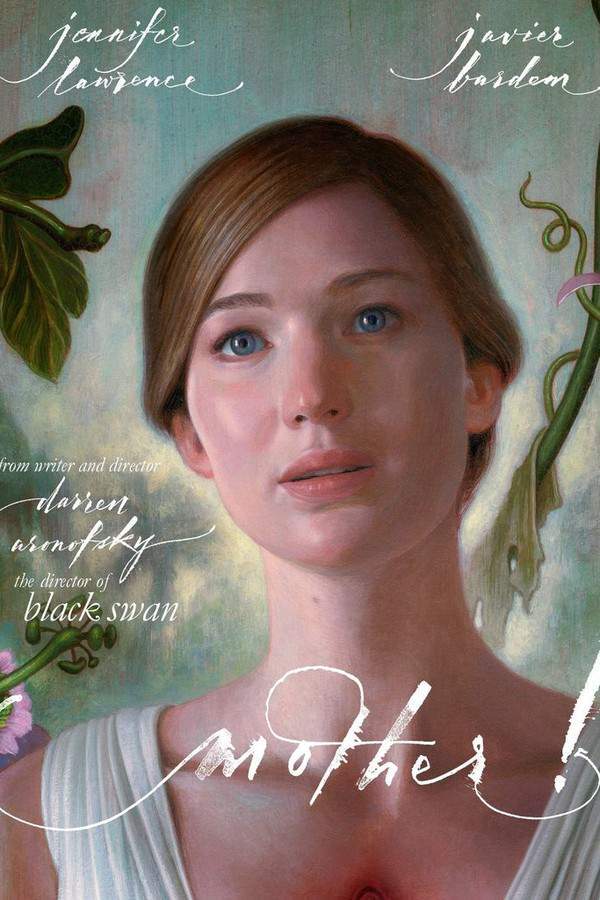
mother! (2017) movie poster

Plot Summary

mother! (2017) Plot Summary & Ending Explained

Release, runtime and language
2017 · 121 min · Czech
Echo score 63
JustWatch #3,691 17
Directed by
Darren Aronofsky
Starring
Javier Bardem, Kristen Wiig, Domhnall Gleeson, Jennifer Lawrence, Michelle Pfeiffer, Ed Harris
Budget
$30M

A writer and her husband live a secluded life in a remote house, enjoying peace and quiet until unexpected guests arrive. As the visitors’ presence disrupts their sanctuary, unsettling events unfold, revealing the fragility of their relationship and exposing disturbing truths about humanity and the world beyond their home. The couple must then grapple with the increasingly chaotic situation and confront the consequences of the visitors' intrusion.

On this page (7)
  1. 1 Where to watch
  2. 2 What happens: full plot
  3. 3 Plot questions answered
  4. 4 How it ends
  5. 5 Movie threads
  6. 6 Movies like mother!
  7. 7 Every angle

Where to watch

Where to Watch mother! (2017)

Where can you watch mother!? Stream, rent or buy it in the US, including on fuboTV, MGM Plus and Philo: current JustWatch availability with up-to-date prices.

Streaming availability powered by JustWatch

Full plot summary · contains spoilers

What Happens in mother!: Full Plot Summary

The whole story of mother! (2017) explained, from the opening scene to the final frame: every key event, every twist and what it all adds up to. Read it as a quick recap before the sequel, to check a scene you missed, or to finally understand what really happened.

Note: This film's characters remain unnamed and are referred to solely by their descriptors.

The story opens dramatically with a woman amid crackling flames, her flesh rapidly charred, while screams echo hauntingly in the backdrop. Shortly after, we meet a man known as "Him," portrayed by Javier Bardem, who places a mysterious crystal object in his bedroom. Immediately, a transformation occurs as their home evolves from a desolate wreck into a beautifully renovated space. In this new environment, a young woman, referred to as "Mother" and played by Jennifer Lawrence, appears in his bed. Seeking comfort in his presence, she calls out for Him with a gentle, "Baby?" Yet, her call goes unanswered.

Curiosity leads Mother to explore their seemingly deserted house. As she steps onto the porch to seek out Him, he suddenly appears from behind and embraces her, surprising her momentarily. Him, a gifted poet struggling with writer's block due to the tragic loss of his first wife, reflects a sense of longing and introspection as they navigate their life together. Mother busies herself with her artistic endeavors, attempting to paint a room with vibrant colors. However, upon reaching the wall, she is confronted with a vision—a beating heart pulsating within the very structure of their home.

Their tranquility is soon disrupted by a knock at the door. Him invites a stranger, referred to as "Man" and played by Ed Harris, into their abode. Politeness reigns as Him engages with Man, but Mother feels an unsettling discomfort at his presence. Man mistakenly believes they operate a sort of bed-and-breakfast, and he expresses admiration for Him's literary work. Throughout this encounter, Mother feels overshadowed, voicing her own appreciation but sensing that her husband enjoys this newfound company more than hers. Amidst polite conversation, violent coughing fits frequently break Man's speech, prompting Him to express concern and care for him. Mother later bears witness to Man's struggle in the bathroom, where she discovers a shocking wound, a chunk of flesh missing from his ribs, hastily covered by Him.

As the sun rises on a new day, Mother inquires about Man's health. To her surprise, Man announces he feels wonderful before another knock disrupts the air. This time, it's Man's wife, referred to as "Woman" and portrayed by Michelle Pfeiffer. Him, ever accommodating, welcomes her into their home. While Him and Man embark on a hike, Mother finds herself alone with Woman, who probes her with uncomfortable questions about the possibility of motherhood and shows an unsettling interest in Him's office, which, she states, is off-limits without his permission. Upon their return, Man succumbs once more to his violent cough, leading to a revelation from Him: Man is dying, and he along with his wife have always admired Him's work, prompting their visit.

However, a fateful accident occurs when Man and Woman inadvertently shatter the crystal object, leading to devastation for Him, who frantically orders them out of his office. Grief-stricken and bloodied from gripping the shards, He acts as a protective husband as Mother, disturbed by their presence, demands they leave. Yet, Man and Woman disregard her request, retreating instead to another room, where they become intimate.

In a shocking twist, Man and Woman's sons, played by Domhnall Gleeson and Brian Gleeson, arrive, embroiled in a heated argument over their father's will. This feud escalates into violence, and chaos ensues when Oldest Son bludgeons Youngest Brother, leading Him to rush him to the hospital, accompanied by Man and Woman.

With the aftermath of this violence looming, Mother is left alone to confront a stubborn bloodstain that seeps from the floor, leading her to a disturbing discovery in the basement. As tensions rise inside the house, Him breaks the news to Mother that Youngest Brother has died, sparking a wake that gathers a host of unfamiliar faces. As these strangers flood into their once-peaceful home, Mother becomes increasingly distressed by their reckless behavior, fueling an argument with Him that ultimately culminates in a passionate reunion of their own.

Soon after, Mother joyously announces to Him that she suspects she is pregnant, igniting a spark of inspiration in Him to resume his writing. His work finally gains recognition, catching the attention of a prominent publication, "The Herald," represented by Kristen Wiig. As time passes, Mother reaches the final stages of her pregnancy, and the chaos amplifies as worshippers and fans swarm their home, breaking decorum and property amidst their fervent excitement.

The turmoil escalates as fans turn increasingly unruly, breaking possessions and tending to violent squabbles. Some guests are even bound and hooded while "The Herald" coldly executes brutal acts. It becomes tragically evident that these individuals are part of a cult, driven by fevered devotion.

As Mother's labor begins, Him leads her into the sanctuary of his office, where she gives birth to a baby boy. Triumphant yet protective, Mother refuses to let Him hold their child, imploring Him to expel the volatile fans. Exhaustion overtakes her, and she eventually dozes off while cradling her newborn. When she awakens, her heart sinks to discover her child is missing. In a horrifying act, Him showcases their son to the frenzied crowd, who handle the baby with gruesome care. Shortly after, tragedy strikes as the crowd matures into a vicious mob. Mother experiences the torturous moment when she realizes the ward had been shattered, fueling her desperate attempt to reach Him as they have taken their child from her.

Infuriatingly overwhelmed, she retaliates against the mob with fury and violence until she finds herself captured. Amidst the brutality, Him pleads for her safety. The pain crescendos to a tragic climax where Mother, seeking retribution, makes a damning choice—she sets their home ablaze. The reality of their chaotic life culminates in a violent explosion, consuming everything, while Him remains unharmed as he carries the scorched body of Mother from the inferno.

As she asks Him who he is, he replies with cryptic words, "I am I and you are home." When she presses further about his intentions, he desires nothing more than her love, promising that she can grant him this. In a horrifying twist, he reaches into her chest, extracting her heart, causing her body to disintegrate into ash—an echo of the desolation they endured.

Him, now clutching the heart, crushes it in his grasp, revealing yet another crystal object—a mirror of a prior fate. As he places this piece in the remnants of their now-totally destroyed home, a laugh escapes his lips, and in an eerily cyclical twist, the house begins to transform once again into something new. A young woman, a direct parallel to Mother, materializes in the bed and calls out for her husband, marking the start of a chillingly familiar cycle, leading her to call out, "Baby?"
Last updated: December 24, 2024 at 10:01

Was this helpful?

Plot questions answered

mother! Plot Explained: Your Questions Answered

The questions people ask most about mother! (2017): what happens in the confusing scenes, why the characters do what they do, the twists, hidden details and what the ending means. Each answer contains spoilers.

Q1

Why does Him keep inviting more people into the house even though Mother clearly wants them to leave?

Him is depicted as a creator figure who thrives on adoration and attention from others. His writer's block stems from losing his previous muse (the first wife), and he views each new visitor as potential inspiration. Despite Mother's warnings, he prioritizes his creative needs over her discomfort, seeing the visitors as necessary for his artistic revival. His welcoming nature isn't generosity, it's a dependency that ultimately destroys their relationship.

Foreshadowing: Earlier, Him mentions his writer's block and the loss of his first wife, hinting at his pattern of seeking new muses.

  • Him
  • mother
  • visitors
  • writer
  • invitation
  • conflict
Q2

What is the crystal object and how does it transform the ruined house into a beautiful home?

The crystal appears to be a mystical artifact that functions as a creative force, essentially materializing Him's vision into reality. When he places it in the bedroom, the house instantly transforms from a decrepit wreck into a pristine living space. This reflects Him's role as a creator who can manifest his desires, but also suggests the artificial, unsustainable nature of his world. The crystal serves as the literal and symbolic foundation of his domain.

Foreshadowing: The opening scene shows a woman burning, likely the result of a previous cycle when the crystal's power was exhausted.

  • crystal
  • house
  • transformation
  • magic
  • object
Q3

What does Mother discover in the basement of the house?

Mother discovers a dark, blood-soaked basement that represents the foundation of Him's previous creations, the accumulated toll of his cycles. She finds blood seeping through the floor, indicating that the house's structure is literally built on violence and sacrifice. This hidden space reveals that every previous iteration of their world has ended in bloodshed, foreshadowing the ultimate sacrifice that will occur.

Foreshadowing: The violent death of the younger son and the persistent bloodstain on the floor lead Mother to investigate below.

  • basement
  • blood
  • discovery
  • secret
  • house
Q4

Why does Him allow the fans to take the baby after Mother gives birth?

Him's obsession with his audience and creative validation overrides his protective instincts as a father. When the crowd demands to see the child, he relents because their adoration mirrors his need for worship, he cannot refuse those who praise him. This moment exposes his fundamental flaw: he values the love and attention of strangers over the safety of his own child. The baby becomes another offering to his followers.

Foreshadowing: Throughout the film, Him consistently prioritizes his relationship with visitors over Mother's feelings, foreshadowing this ultimate betrayal.

  • baby
  • crowd
  • Him
  • Mother
  • kidnapping
  • worshippers
Q5

What do the unnamed characters represent in the film?

The characters function as biblical allegories: Him represents God/the Creator, Mother represents Earth/Nature/the Muse, Man is Adam, Woman is Eve, and the two sons are Cain and Abel. The arriving fans symbolize humanity's worship, devotion, and ultimately their destructive capacity. The film reimagines the creation story, the fall of man, and fratricide as a循环 of exploitation where the creator constantly seeks new muses while destroying the current one.

Foreshadowing: The naming convention itself signals allegory, characters are identified by their roles rather than individual identities.

  • allegory
  • biblical
  • symbolism
  • characters
  • meaning
  • Adam
  • Eve
Q6

What does the opening scene with the burning woman mean?

The opening scene depicts the end of a previous cycle, the previous 'Mother' figure being consumed by fire, just as the current Mother will be. This is the film's way of establishing its cyclical structure from the very beginning. The woman who burns is essentially the same entity as Mother, representing that this exact scenario has happened countless times before and will continue to repeat.

Foreshadowing: This is the opening image, establishing the循环 nature before the story proper begins.

  • opening
  • fire
  • woman
  • burning
  • cycle
  • beginning
Q7

What happens to Mother at the end of the film?

Mother is burned alive when she sets the house on fire in her grief and rage over losing her child. However, after her body turns to ash, Him reaches into her chest and removes her heart, the source of her life force. He then crushes it, killing her completely. This represents the ultimate exploitation: even her death becomes material for his next cycle. She is destroyed utterly, while he survives unchanged to begin again.

Foreshadowing: The opening fire and the basement blood both foreshadow Mother's fiery demise.

  • Mother
  • death
  • fire
  • heart
  • ending
  • destruction
Q8

Why does the cycle restart at the end of the film?

The cycle restarts because Him, the eternal creator figure, cannot exist without a muse to inspire him. After destroying Mother, he simply finds another woman (another Earth/nature/muse) to begin the process anew. The final scene shows the new Mother appearing in bed, calling for 'Baby,' just as the previous Mother did. This represents the endless, exploitative pattern of creation where the creator uses up and destroys his greatest gifts repeatedly.

Foreshadowing: The repeated line 'Baby?' and Him's statement 'I am I and you are home' establish his unchanging nature across cycles.

  • cycle
  • restart
  • repeat
  • ending
  • new
  • beginning
Q9

Why is Him the only one who survives the fire at the end?

Him survives because he exists outside the natural order, he is the creator figure who cannot be destroyed by his own creation. The fire is an act of destruction that he permits, but he is immune to it. This reflects his role as an eternal, self-perpetuating entity. Mother, as the created being (representing Earth/nature), is subject to destruction, while Him persists across cycles, unchanging and undamaged.

Foreshadowing: Throughout the film, Him is shown as having power over life and death but never being personally harmed.

  • Him
  • fire
  • survive
  • injury
  • immune
  • creator
Q10

What is the wound on Man's side and why does he cough violently throughout the film?

Man's wound on his ribs represents the 'rib' from which Eve (Woman) was created, his injury literally echoes the biblical creation story. His violent coughing fits symbolize the labored breathing of a dying world, reflecting the declining state of the environment. The wound never heals because the couple represents humanity's fundamental brokenness and their inability to exist peacefully within the created world.

Foreshadowing: This injury appears shortly after they arrive, establishing their doomed nature from the start.

  • Man
  • coughing
  • wound
  • ribs
  • biblical
  • illness
Q11

Why does Him's writing suddenly improve after Mother becomes pregnant?

Mother's pregnancy represents the birth of new creation, the ultimate muse and source of inspiration for a creator. Her carrying a child awakens Him's creative power because she becomes the literal embodiment of new life. This inspiration attracts his fans, who arrive seeking to witness and worship his genius. The pregnancy is the catalyst that brings both his creative revival and the chaos that follows.

Foreshadowing: Mother's earlier artistic attempts to 'paint the house with color' represent her own creative essence, which Him ignores until she can create something for him.

  • pregnancy
  • writing
  • inspiration
  • Mother
  • Him
  • fans
Q12

Why does the older son kill his younger brother in the film?

The older son murders his younger brother over inheritance, the same Cain and Abel story from the Bible. This fratricide represents the inherent violence and competition within humanity, sparked by greed and jealousy. The argument over their father's will mirrors how humanity fights over territory and resources. This violent act marks the turning point where chaos definitively enters the once-peaceful home.

Foreshadowing: The two sons arrive already arguing, showing their contentious relationship from the moment they appear.

  • son
  • killing
  • brother
  • murder
  • inheritance
  • fight
Q13

What does it mean when Him reaches into Mother's chest and removes her heart?

Him removing Mother's heart represents the complete extraction of her life force, creativity, and purpose, the very essence that made her 'home.' In allegory, this is the creator taking from nature everything she has to give until nothing remains. The heart is also symbolic of love; by crushing it, Him demonstrates that his need for adoration supersedes any genuine connection. This act ensures she cannot return or resist, the ultimate exploitation.

Foreshadowing: Mother's earlier line 'I am home' establishes that her identity is tied to being his space of creation.

  • heart
  • chest
  • extraction
  • symbolism
  • love
  • creator
Q14

Why do Him's fans turn from adoring worshippers into a violent mob?

The fans represent humanity's relationship with God/creation, initially reverent and appreciative, but quickly becoming destructive when competing for attention and resources. Their violence escalates as more people arrive, showing how crowds devolve into chaos when unchecked. They are not evil by nature but become destructive when given unchecked access to the creator. The mob destroys the home (the world) because they consume everything without respect or restraint.

Foreshadowing: The breaking of the crystal and the violent argument between sons establish early that disruption leads to destruction.

  • fans
  • mob
  • violence
  • worshippers
  • crowd
  • destruction

Ending explained

What Happens at the End of mother!?

How mother! (2017) ends, in short: the final scene, the last twist and what it means for the characters. The full ending explained, with every spoiler, lives on its own page.

Read the full ending explained

The ending of mother! is highly symbolic and open to interpretation, emphasizing the film's allegorical themes rather than literal events. Throughout the movie, Jennifer Lawrence’s character, Mother, embodies Mother Earth—nurturing and life-giving, yet increasingly exploited and damaged. Javier Bardem’s character, "Him," represents a godlike figure—possibly an embodiment of the divine, obsessed with creation and worship, even at the expense of Mother and their home. As chaos erupts in the house, it becomes a metaphor for the destruction of the Earth and humanity's cycle of violence and self-destruction.

In the climax, the house is overrun by followers of Him, who kill their child in a horrifying act of violence, symbolizing mankind’s destructive obsession with ownership, worship, and the devaluation of life itself. Mother, overwhelmed by the chaos and despair, finally sacrifices herself by setting fire to the house, incinerating everything—including herself and the intruders—representing the destruction of the cycle and the end of her suffering. Yet, in a surreal twist, after her death, Him collects her shriveled heart—symbolizing her enduring spirit—and uses it to resurrect the house, bringing new life to the cycle.

Continue reading the ending (1 more paragraphs)

The film suggests this cycle of creation and destruction is eternal; the house is reborn with a new woman in place of Mother, hinting at a never-ending loop of humanity’s self-destructive tendencies. While the story can be read as a critique of religious myth, specifically Christian themes of creation, sin, and rebirth, it also warns of humanity’s ecological and spiritual degradation. Ultimately, the ending challenges viewers to reflect on the destructive cycles we perpetuate and to consider whether we can break free from them. It’s a haunting, powerful visual of the fragility of life and the endless pattern of creation, destruction, and rebirth that defines both the film and the real world.

mother! ending explained in full

Movie threads

More Movies Like mother!, by Mood & Story

Curated lists built around what makes mother! tick: the same mood, the same kind of story or the same emotional payoff. Each list explains why these movies belong together.

Surreal home invasion horror like in mother!

Stories where a home becomes a stage for surreal and invasive horrors. If you liked the surreal and allegorical home invasion in mother!, explore more movies where domestic spaces turn into nightmarish landscapes. These films share a similar vibe of claustrophobic dread, oppressive atmosphere, and the unsettling breakdown of a safe haven, perfect for fans of psychological and symbolic horror.

  • surreal
  • claustrophobic
  • unsettling
  • feverish
  • oppressive
  • chaotic
  • Tone: dark, unsettling, oppressive
  • Pacing: variable, starting slow and building to chaotic
Why these movies?

The story pattern: Narratives in this thread typically begin with an idyllic or peaceful domestic setting that is gradually invaded, either by literal intruders or by abstract, allegorical forces. The protagonist's sense of control and safety erodes, leading to a feverish and often non-linear descent into chaos that comments on broader societal or existential fears.

Why they belong together: Movies are grouped here based on their shared core premise: the home as a besieged fortress against surreal or symbolic threats. They connect through a potent mix of claustrophobic setting, high psychological tension, and a narrative structure that prioritizes allegorical meaning over literal plot, creating a uniquely unsettling viewing experience.

Complex allegorical thrillers like mother!

Complex allegories depicting the violent unraveling of a controlled system. For viewers who appreciated the dense biblical and artistic allegory in mother!, this collection features similar movies with very complex narratives and bleak endings. These films challenge interpretation, using symbolic stories to explore heavy themes like creation, sacrifice, and humanity's destructive nature, offering a profound and intense experience.

  • symbolic
  • complex
  • bleak
  • philosophical
  • disturbing
  • thought-provoking
  • Tone: dark, bleak, intellectual
  • Pacing: variable, often building to a climax
Why these movies?

The story pattern: The narrative pattern involves a central metaphor (e.g., artistic creation, biblical story, societal model) that dictates the plot's events. Characters often represent abstract concepts, and the story follows the violent or chaotic failure of the system they inhabit. The journey is one of increasing confusion and devastation for the protagonist, who is usually a sacrificial figure within the allegory.

Why they belong together: These films are grouped by their commitment to complex, non-literal storytelling that serves a grand allegorical purpose. They share a very high narrative complexity, a dark tone, a heavy emotional weight, and a bleak ending feel, united by their ambition to use cinema as a vehicle for exploring profound, often disturbing, philosophical ideas.

If you liked this

Movies Like mother!

Similar movies to mother!: the same genre, themes or kind of story. Each one comes with its own plot summary, timeline and ending explained.

Browse all movie summaries

Every angle

mother! (2017) Explained: Plot, Ending, Timeline & Characters

Everything about mother! in one place: what happens in the plot summary, the timeline in chronological order, the characters and meaning, the ending explained and a spoiler-free summary. What's After the Movie adds the cast, box office and post-credit scenes.

Coming soon on iOS and Android

The Plot Explained Movie Summary App

Plot summaries, endings explained and timelines on your phone. Catch up on any movie in minutes, save your favorites and never miss a twist again.

Be the first to know when we launch. Your email stays private, always.

Learn more about the app