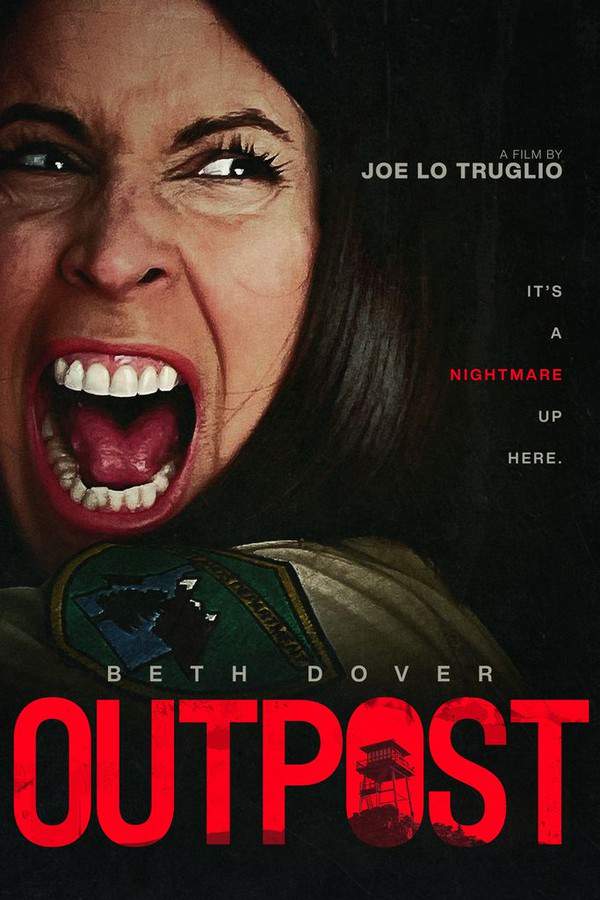
Kate, a woman scarred by years of domestic abuse, seeks to bury her memories in the quiet of an Idaho fire lookout tower. Isolated among pines and wind, she hopes distance will dull the vivid, unsettling visions that plague her nights. The job is supposed to be simple: keep to a routine, report to Earl twice daily, and stay safe high above the valley. Yet the stillness of the mountains feels thick with possibility and danger, and Kate finds the rhythm of the lookout hard to keep.
Early on, her struggle to conform to the routine unsettles her new world. She slips in reporting and misses a scheduled check-in with Earl, a pragmatic park ranger who is preparing to replace her after years on the job. On a routine market trip below the tower, her eyes linger on the life she left behind, and she meets Dan, a fellow ranger with a steady manner, and Reggie, a mountain man who keeps himself distant yet curious about the woman above the trees. Reggie’s situation is touched by sorrow—his wife Bertha has died of cancer—and this fragile bond between the living and the dead is felt in several softly spoken exchanges that hint at what the mountains have kept hidden.
Kate’s stubborn streak grows as she defies protocol to stamp out a small fire near her tower. She believes she’s acting with necessity, not recklessness, and her actions pull others into her orbit—Dan explains the peril of past mistakes, including a fire Earl once failed to report when he chose to meet his wife instead of staying inside his tower; that decision, he says, helped a blaze grow before a pilot could intervene. The revelation casts a shadow over Earl’s authority and deepens the tension between the need for safety and the pull of personal history. The more Kate fights to preserve control, the more her visions intensify, blurring lines between memory, warning, and possibly something real in the smoke-lit distance.
The hours grow stranger. One evening Kate’s most intimate moment with her perceptions leads her to an accident of symbol and fear: she tosses her keys into a nearby outhouse in a frenzied moment, an oddly tactile act that marks the boundary between the tower’s rules and the world outside. In a rare moment of kindness, Reggie shows her how to handle an axe to chop wood, a basic skill that gives her a temporary sense of competence and security in the harsh environment. This small mercy is punctuated by another encounter with the elderly woman traveling the mountains—the two share a quiet, tense connection as the woman teaches Kate how to shoot, a skill Kate believes she might need to sustain herself if food becomes scarce.
The woman’s unearthly revelation shifts the story’s center of gravity. The traveler’s skin begins to rot in a frightening, almost mythic way, and she reveals herself to be Bertha, Reggie’s deceased wife. The moment shadows Kate with the chilling certainty that the mountains conceal more than weather and wildlife. Bertha’s words cut through Kate’s defenses, accusing Reggie of murder and forcing Kate to confront a truth she never wanted to face: the man she’s come to rely on may be capable of terrible harm. The encounter seeds anger and fear, intensifying Kate’s sense of betrayal and isolation.
As the tension climbs, Earl and Dan press toward the tower, and a grim discovery interrupts their approach—a decaying body found along the mountain path, a stark reminder that danger lurks beyond the lookouts. Nickie, Nickie, heads up the mountain to check on Kate, while Reggie returns home and encounters danger of his own—an animal trap that leaves him wounded and vulnerable. When Kate finally reaches the peak, the escalating nightmare erupts into a violent confrontation.
In a brutal turn, Kate confronts the two men who have come after her, and she uses an axe in a moment of desperate protection. The sequence is brutal in its clarity: she eliminates both Earl and Dan on the tower’s slippery stairs, driven by the visions that have haunted her and the fury mounted by Bertha’s accusation. The mountain air carries the echo of gunfire as Nickie arrives, spotting another decaying body hidden in the outhouse, a grim omen that underscores the danger Kate faces from a world that refuses to stay within her control.
Nickie intervenes in the climax with a gun, but she chooses not to kill Kate. Instead, the two women stand on the edge of the tower as dawn begins to break over the ridgeline, and the credits begin to roll. Kate remains inside the lookout, caught between the need to survive and the lure of the visions that have defined her stay in the mountains. The ending lingers with an uneasy, unresolved air, inviting viewers to consider the thin line between protection and peril, reality and illusion, and the moral costs of choosing isolation over connection.