Plot Explained Spoilers guaranteed!
Plot Explained

Browse by genre

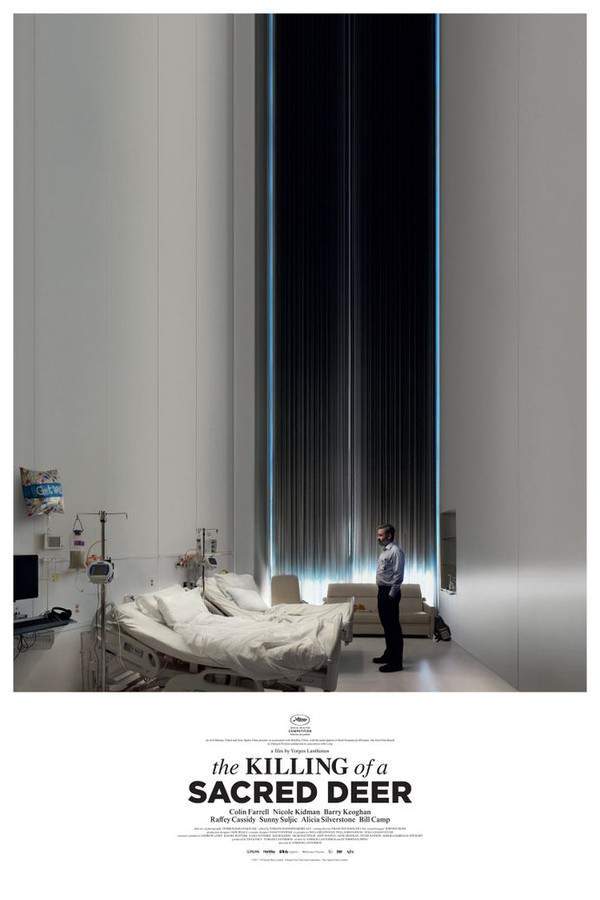
The Killing of a Sacred Deer (2017) movie poster

Ending Explained

The Killing of a Sacred Deer (2017) Ending Explained – Final Scene & Meaning

Release, runtime and language
2017 · 121 min · English
Echo score 70
JustWatch #742 98
Directed by
Giorgos Lanthimos
Starring
Barry Keoghan, Colin Farrell, Nicole Kidman, Bill Camp, Raffey Cassidy, Alicia Silverstone
Budget
$3M

A brilliant surgeon's carefully constructed life is thrown into turmoil when a strange young man named Martin inserts himself into his family. As Martin’s presence intensifies, unsettling events begin to occur, and the doctor is confronted with a disturbing request that forces him to confront a dark secret from his past. The consequences threaten to unravel his family and expose a profound sense of dread.

On this page (7)
  1. 1 Where to watch
  2. 2 What happens at the end
  3. 3 Final events in order
  4. 4 Ending questions answered
  5. 5 Movie threads
  6. 6 Movies like The Killing of a Sacred Deer
  7. 7 Every angle

Where to watch

Where to Watch The Killing of a Sacred Deer (2017)

Where can you watch The Killing of a Sacred Deer? Stream, rent or buy it in the US, including on HBO Max, Amazon Video and Apple TV Store: current JustWatch availability with up-to-date prices.

Streaming availability powered by JustWatch

Ending explained · contains spoilers

What Happens at the End of The Killing of a Sacred Deer?

How The Killing of a Sacred Deer (2017) ends, what the final scene means, which earlier moments set it up and how to read the ending if the film leaves it open. The full ending explained, with every spoiler.

At the climax of The Killing of a Sacred Deer, Steven faces a harrowing dilemma when Martin presents him with a impossible choice: he must decide whether to sacrifice one of his own family members or watch them all suffer through a mysterious and painful decline that has no clear remedy. As Steven's children, Bob and Kim, begin to show the terrifying symptoms — bleeding from the eyes and paralysis — the horror intensifies. Desperate and overwhelmed by the supernatural-like punishment, Steven eventually ties up his family to prevent them from harming themselves, then blindly spins around with a rifle, shooting randomly to avoid making a decision. Tragically, Bob is the victim of this act, dying from the random gunfire.

In the final scenes, after the tragedy, the family gathers for dinner, a quiet and somber scene haunted by what has transpired. Martin re-enters the room and stares at them from a distance, while the family, in turn, looks back at him with a mix of suspicion and unresolved tension. The ending leaves viewers with a sense of unresolved guilt and helplessness, emphasizing the persistent ambiguity of the story. Martin's role remains mysterious, and the family's refusal or inability to confront their guilt fully underscores the film's themes of justice, sacrifice, and moral culpability.

The title, referencing Greek mythology, hints at the story's deeper layers: the myth of Iphigenia, who was sacrificed to appease the goddess Artemis and restore balance. Just as King Agamemnon was compelled to sacrifice his daughter, the film explores how guilt and revenge intertwine, often leading characters into impossible moral dilemmas. Director Yorgos Lanthimos has explained that the film reflects the idea of an inexplicable, almost supernatural punishment for past actions—particularly relating to Steven's negligence and responsibility during his medical career. The ending’s ambiguity, coupled with its unsettling tone and symbolic references, ultimately leaves the meaning open to interpretation, emphasizing that sometimes, justice and guilt are tangled in ways that can't be neatly resolved.

Overall, the ending of The Killing of a Sacred Deer is a haunting meditation on guilt, sacrifice, and the inescapable consequences of moral failure. It invites viewers to reflect on the nature of justice and whether suffering can ever truly be redeemed or justified. The film's open-ended conclusion, with its unsettling imagery and ambiguous moral message, serves to challenge audiences and linger in their minds long after the credits roll. It’s a stark reminder that in the face of guilt, sometimes the only answer is an act of irrational desperation, leaving the moral costs—and the story itself—clouded in unsettling mystery.
Last updated: June 25, 2025 at 08:59

Was this helpful?

The last 4 events

How The Killing of a Sacred Deer Ends: The Final Events in Order

The last events of The Killing of a Sacred Deer (2017) in chronological order, the run-up to the ending explained above. The complete timeline has all 14 events, scene by scene.

Open the full timeline
  1. Desperate Measures

    As the family's situation worsens, Steven resorts to violence against Martin, driven by desperation. This pivotal moment showcases the culmination of the mounting pressures they face from Martin's threats.

  2. The Ultimate Decision

    In a chilling climax, Steven confronts his family with a rifle, symbolizing the heavy burden of his past actions. The haunting atmosphere leaves viewers questioning who Steven is willing to sacrifice as an act of atonement.

    Where
    Home
  3. Diner Closure

    In a haunting closure, the family dines in a diner that feels reminiscent of earlier encounters. Martin’s presence adds a lingering tension, suggesting that the trauma may not be easily left behind.

    Where
    Diner
  4. Moral Complexities

    The film concludes, leaving the audience grappling with the moral intricacies surrounding guilt and family bonds. It challenges viewers to contemplate the tragic price of past decisions in shaping their present.

Ending questions answered

The Killing of a Sacred Deer Ending: Your Questions Answered

The questions people ask most about the ending of The Killing of a Sacred Deer (2017): what the final scene means, how the twist works, what happens to each character and how to read the ending. Each answer contains spoilers.

Q1

Why does Steven resort to shooting randomly at his family?

Steven spins blindfolded with a rifle and fires randomly because he cannot bring himself to deliberately choose which family member to sacrifice. Overwhelmed by the impossible dilemma and the mounting suffering of his children, he chooses to let fate decide rather than become directly responsible for killing one of them. Tragically, this random act claims Bob's life, making it a tragic moment of moral cowardice rather than a deliberate choice.

  • steven murphy
  • random shooting
  • blindfold
  • sacrifice choice
  • family death
Q2

Does Bob die in the ending?

Yes, Bob is killed by Steven's random gunfire. After Bob and Kim begin showing the terrifying symptoms of Martin's supernatural curse, bleeding from the eyes and paralysis, Steven ties his family to chairs to prevent them from harming themselves. He then spins around blindfolded with a rifle and fires blindly. One of the bullets strikes Bob, killing him instantly.

  • bob death
  • shot
  • steven kills son
  • fatal shooting
Q3

Why does Martin force Steven to sacrifice a family member?

Martin demands Steven sacrifice one of his family members as retribution for a dark secret from Steven's past, specifically, his negligence that caused the death of a patient during surgery. Martin presents this as a form of supernatural justice, forcing Steven to experience the same pain and loss he caused another family. The sacrifice is meant to restore some cosmic balance that Steven's actions disrupted.
  • martin demand
  • sacrifice choice
  • patient death
  • cosmic justice
Q4

What does the final dinner scene represent?

The dinner scene after Bob's death shows the fractured family attempting to maintain normalcy despite unimaginable trauma. They sit together in silence, haunted by guilt and unresolved tension. When Martin re-enters and stares at them from across the room, the family looks back, neither confronting him nor accepting him. This closing image emphasizes that the family cannot escape their guilt or find closure, leaving them permanently trapped in psychological limbo.

  • final dinner
  • martin watching
  • family guilt
  • unresolved tension
Q5

Is Martin supernatural or just a disturbed young man?

The film deliberately keeps Martin's nature ambiguous. His precise knowledge of events, his ability to inflict supernatural punishment, and his seemingly omipotent presence suggest something beyond human. However, the film never confirms whether Martin is a supernatural entity, a manifestation of guilt, or simply a psychologically disturbed young man exploiting Steven's vulnerability. This ambiguity is central to the film's unsettling tone.

  • martin identity
  • supernatural
  • ambiguous character
  • curse
Q6

What is the significance of the title "The Killing of a Sacred Deer"?

The title references the Greek myth of Iphigenia, where King Agamemnon sacrificed his daughter to appease Artemis and secure favorable winds for war. Like that myth, the film explores how guilt and past sins compel characters into impossible moral dilemmas where sacrifice seems necessary to restore balance. Steven faces a similarly impossible choice, sacrifice a family member or lose them all, mirroring the tragic logic of Greek tragedy.

  • greek mythology
  • iphigenia
  • sacrifice
  • title meaning
  • myth reference
Q7

What was Steven's dark secret that triggered Martin's revenge?

Steven previously caused the death of a young patient during a medical procedure due to negligence. This patient was Martin's father. When Martin discovers this connection, he becomes obsessed with making Steven experience the same devastating loss he endured. Martin's campaign is designed to force Steven to confront the consequences of his careless action, not through legal justice, but through personal devastation.

  • steven guilt
  • patient death
  • martin's father
  • medical negligence
Q8

Why doesn't the family confront or stop Martin after the tragedy?

The family remains passive toward Martin because they are paralyzed by their own guilt. They know Steven caused Martin's father's death and that their family is deserving of punishment in some cosmic sense. This guilt prevents them from seeking revenge or closure. The film's ambiguous framing suggests they may even accept Martin's presence as a form of ongoing penance, unable to break free from the moral weight of their actions.

  • family guilt
  • martin remains
  • no confrontation
  • moral culpability
Q9

What does the ambiguous ending mean thematically?

The unresolved ending reflects the film's central themes: guilt, sacrifice, and the impossibility of true redemption. There is no catharsis, no punishment of Martin, no forgiveness, no healing. The family sits with their trauma indefinitely, and Martin remains a permanent presence. This mirrors real life, where some wrongs cannot be righted and some guilt cannot be expunged. The ambiguity forces viewers to sit with the same discomfort the characters feel.

  • ending ambiguity
  • thematic meaning
  • no resolution
  • guilt and sacrifice
Q10

Why do Kim's symptoms disappear after Bob dies?

Once Bob is killed, essentially fulfilling the sacrificial demand in a random, unintended way, the supernatural punishment stops. Kim's symptoms of bleeding and paralysis cease, and she appears to recover. This suggests that the curse or punishment was satisfied by the death, though not through a deliberate, moral choice. The randomness of the sacrifice makes it feel hollow and meaningless, adding to the film's exploration of arbitrary justice.

  • kim recovery
  • cure after death
  • sacrifice satisfied
  • supernatural ends
Q11

Did Steven make the right choice by not deliberately sacrificing someone?

The film presents Steven's refusal to deliberately choose a sacrifice as both morally understandable and ultimately futile. By refusing to choose, he technically avoids direct moral culpability, yet his act of random violence still kills his son. The film doesn't offer clear moral judgment, instead suggesting that in impossible situations, attempting to escape choice can be just as destructive as making the wrong choice. The result is tragedy either way.

  • moral choice
  • steven decision
  • no right answer
  • tragic dilemma

Movie threads

More Movies Like The Killing of a Sacred Deer, by Mood & Story

Curated lists built around what makes The Killing of a Sacred Deer tick: the same mood, the same kind of story or the same emotional payoff. Each list explains why these movies belong together.

Movies with clinical dread like The Killing of a Sacred Deer

Stories where sterile environments hide encroaching, inexplicable horror. If you liked the cold, unsettling horror of The Killing of a Sacred Deer, this list features similar movies where sterile settings and clinical aesthetics are disrupted by supernatural forces or psychological torment. Discover films that master a tone of slow-burning, intellectual dread.

  • clinical
  • unsettling
  • dreadful
  • cold
  • oppressive
  • psychological
  • Tone: tense, cold, unsettling
  • Pacing: slow, deliberate
Why these movies?

The story pattern: Narratives in this thread often follow characters with a false sense of control—doctors, scientists, professionals—whose rational worlds are systematically invaded by an unnatural force or consequence. The story unfolds like a moral or scientific experiment, with the characters becoming subjects in a cruel, impersonal process.

Why they belong together: These films are grouped by their shared aesthetic of clinical sterility paired with deep psychological unease. They favor a detached, observant camera style and a soundscape that amplifies silence and mundane noises into sources of tension, creating a uniquely cold and intellectual form of horror.

Modern Greek tragedy movies like The Killing of a Sacred Deer

Contemporary stories bound by the cruel, inescapable logic of fate. Fans of The Killing of a Sacred Deer will appreciate these films that follow the structure of a Greek tragedy. Explore stories of moral consequence, where a character's past mistake triggers a chain of inevitable, devastating events in a contemporary world.

  • fatalistic
  • moral consequence
  • guilt
  • punishment
  • revenge
  • inescapable
  • Tone: dark, fatalistic, heavy
  • Pacing: slow, inevitable
Why these movies?

The story pattern: The narrative pattern is one of cause and effect set in motion by a hidden sin. A seemingly upright protagonist is confronted by an agent of fate, who demands a terrible price or imposes an impossible choice. The story moves with an inexorable rhythm towards a bleak or ambiguous conclusion, emphasizing the futility of resisting one's fate.

Why they belong together: These movies are united by their fatalistic worldview and narrative structure. They share a high emotional weight, focusing on themes of guilt, punishment, and sacrifice. The tone is consistently heavy and tense, with a pacing that feels deliberate and inevitable, much like the tragedies they mirror.

If you liked this

Movies Like The Killing of a Sacred Deer

Similar movies to The Killing of a Sacred Deer: the same genre, themes or kind of story. Each one comes with its own plot summary, timeline and ending explained.
Browse all movie summaries

Every angle

The Killing of a Sacred Deer (2017) Explained: Plot, Ending, Timeline & Characters

Everything about The Killing of a Sacred Deer in one place: what happens in the plot summary, the timeline in chronological order, the characters and meaning, the ending explained and a spoiler-free summary. What's After the Movie adds the cast, box office and post-credit scenes.
Coming soon on iOS and Android

The Plot Explained Movie Summary App

Plot summaries, endings explained and timelines on your phone. Catch up on any movie in minutes, save your favorites and never miss a twist again.

Be the first to know when we launch. Your email stays private, always.

Learn more about the app