Plot Explained Spoilers guaranteed!
Plot Explained

Browse by genre

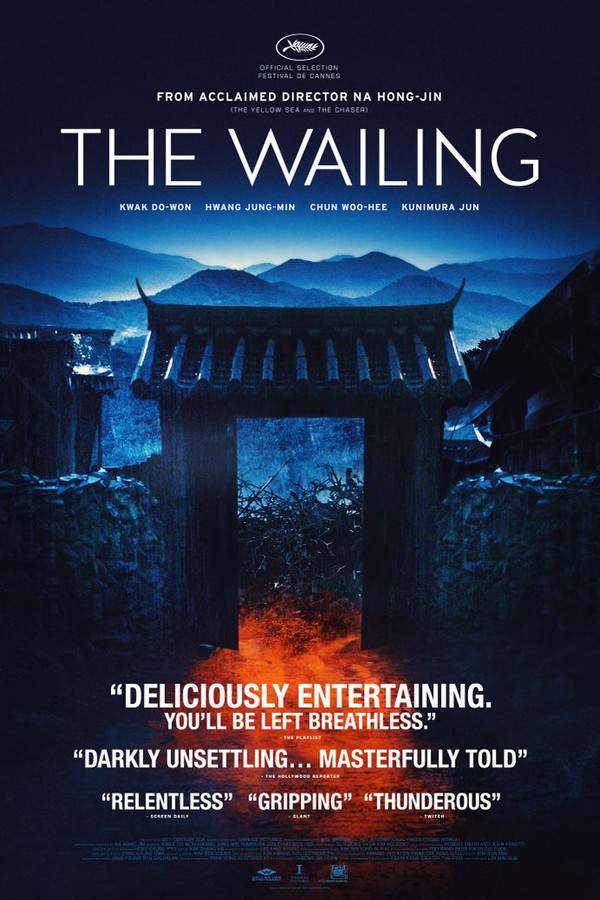
The Wailing (2016) movie poster

Plot Summary

The Wailing (2016) Plot Summary Explained

Release, runtime and language
2016 · 156 min · Korean
JustWatch #245 3
Directed by
Hong-jin Na
Starring
Jeong-min Hwang, Jun Kunimura

A mysterious stranger's arrival in a quiet rural village brings an unsettling atmosphere and growing suspicion. As unexplained illnesses and disturbing events plague the community, fear and violence erupt among the residents. A local police officer investigates the escalating crisis while his daughter falls ill, leading him to seek help from a shaman. His search for answers unleashes an ancient and terrifying power, endangering the entire village.

On this page (6)
  1. 1 Where to watch
  2. 2 What happens: full plot
  3. 3 Plot questions answered
  4. 4 Movie threads
  5. 5 Movies like The Wailing
  6. 6 Every angle

Where to watch

Where to Watch The Wailing (2016)

Where can you watch The Wailing? Stream, rent or buy it in the US, including on fuboTV, Hi-YAH and Philo: current JustWatch availability with up-to-date prices.

Streaming availability powered by JustWatch

Full plot summary · contains spoilers

What Happens in The Wailing: Full Plot Summary

The whole story of The Wailing (2016) explained, from the opening scene to the final frame: every key event, every twist and what it all adds up to. Read it as a quick recap before the sequel, to check a scene you missed, or to finally understand what really happened.

A Japanese man has recently settled in a quaint village nestled within the South Korean mountains, residing in an isolated house. As a mysterious illness begins to sweep through the community, villagers experience a concerning rash that escalates into violent, murderous episodes followed by stupor and ultimately, death.

Amidst this chaos, police officer Jong-goo dives into the investigation, crossing paths with an enigmatic young woman named Moo-myeong, whose name translates to "no name" in Korean. She provides Jong-goo with unsettling insights about the Japanese stranger before vanishing without a trace. A local hunter shares a chilling account of sighting this nearly naked stranger consuming a deer, his eyes glowing ominously red. Jong-goo finds himself deeply disturbed, having had dreams of this individual as detailed by the hunter.

Determined to uncover the truth, Jong-goo recruits another police officer and a Japanese-speaking deacon to assist in their search for answers regarding the stranger. Together, they explore the stranger's home, only to stumble upon harrowing images of the infected villagers and their belongings. Overcome with shock, the other officer is unable to articulate what he saw. The situation escalates when the stranger’s guard dog violently attacks both the deacon and Jong-goo. Upon the stranger's arrival, the dog is calmed, prompting the trio to leave.

The plot thickens as Jong-goo discovers that a shoe belongs to his daughter, Hyo-jin, who soon succumbs to the same illness plaguing the villagers. In a fit of rage, he confronts the stranger but finds that all incriminating evidence has been destroyed. Consumed by anguish over Hyo-jin's deteriorating health, Jong-goo's mother-in-law seeks help from a shaman named Il-gwang. During the exorcism ritual, the stranger simultaneously conducts a ceremony of his own.

When Jong-goo finds Hyo-jin suffering, he interrupts the shaman’s efforts, opting to rush her to the hospital instead. The following day, he and his friends set out to hunt the stranger, believing he is the source of the affliction. However, during their pursuit, they are attacked by an infected villager. In a series of events that sees them hitting the stranger with their vehicle, they ultimately dispose of his body, all while Moo-myeong observes from a distance.

Despite having believed they had slain the threat, Jong-goo returns to find Hyo-jin’s condition seemingly improved. However, Il-gwang soon suspects that they might have inadvertently killed the wrong person. The shaman encounters Moo-myeong and starts to exhibit symptoms of illness himself, calling Jong-goo to warn him that she may be the true demon behind all the horror.

The tension heightens when Jong-goo finds Moo-myeong outside his home, who implores him to trust her intentions. She claims to have laid a trap for the demon but warns that it won't work if he returns home. Meanwhile, Il-gwang advises Jong-goo to be wary of Moo-myeong, insinuating her untrustworthiness. Torn between conflicting narratives, he ultimately departs to protect his family, but Moo-myeong’s appearance shifts, revealing ghostly skin as he notices she possesses items from the previous victims. As he breaks free from her grasp and steps over his home's threshold, the floral trap she set begins to die.

In a chilling turn, the deacon encounters the Japanese stranger alive and well in a cave, where he witnesses the stranger transform into a demon after he is photographed. Back home, Jong-goo discovers that Hyo-jin has committed murder within their family. When he calls out to her, she attacks him with a knife, plunging into a stupor afterward. Il-gwang arrives at their home and, while collecting evidence, accidentally drops a box containing photographs of other victims.

As Jong-goo lies on the brink of death, he is flooded with memories of happier moments with Hyo-jin, assuring her that he will always protect her, highlighting the tragic depths of their ordeal.
Last updated: November 15, 2024 at 17:58

Was this helpful?

Plot questions answered

The Wailing Plot Explained: Your Questions Answered

The questions people ask most about The Wailing (2016): what happens in the confusing scenes, why the characters do what they do, the twists, hidden details and what the ending means. Each answer contains spoilers.

Q1

Why did Jong-goo kill the Japanese man instead of the real demon?

Jong-goo and his friends believed the Japanese stranger was causing the illness afflicting the village. They hunted him down, struck him with their vehicle, and disposed of what they thought was his body. However, the shaman Il-gwang later suspected they killed the wrong person, and the deacon discovered the stranger alive in a cave, revealing he was indeed the true demon. Jong-goo's desperation to save his daughter Hyo-jin blinded his judgment, leading him to act on suspicion rather than certainty.

Foreshadowing: Earlier, Moo-myeong warned Jong-goo that the trap wouldn't work if he returned home, hinting at his tragic misidentification.

  • japanese stranger
  • demon
  • jong-goo
  • killed wrong person
  • shaman
Q2

Is Moo-myeong a demon or trying to help Jong-goo?

The film deliberately leaves this ambiguous. Moo-myeong initially provides Jong-goo with insights about the Japanese stranger and later warns him not to return home, claiming to have laid a trap for the demon. However, she also possesses items from previous victims and exhibits ghostly features when Jong-goo finally notices. The shaman Il-gwang insists she is the true demon, while the deacon witnesses the Japanese stranger transform into a demon in the cave. This conflicting evidence creates genuine uncertainty about Moo-myeong's true nature.

Foreshadowing: Her name "Moo-myeong" translates to "no name" in Korean, suggesting she may be an entity without true identity.

  • moo-myeong
  • demon
  • ally
  • shaman warning
  • ambiguous
Q3

What caused the villagers to become violent and die?

The mysterious illness began spreading through the village after the Japanese stranger arrived. Villagers developed alarming rashes that escalated into violent, murderous episodes, followed by stupor and ultimately death. The deacon discovered the stranger alive in a cave and witnessed him transform into a demon after being photographed, confirming he was the supernatural source of the affliction.

Foreshadowing: The hunter sightings of the stranger with glowing red eyes consuming a deer hinted at his inhuman nature.

  • illness
  • villagers
  • violence
  • rash
  • demon
  • japanese stranger
Q4

Why did Hyo-jin attack her father with a knife?

Hyo-jin had fallen victim to the same mysterious illness affecting the village. During the shaman's exorcism attempt, her condition deteriorated, leading her into a violent stupor. When Jong-goo called out to her, she attacked him with a knife before plunging back into a stupor. This violent episode was a manifestation of the illness controlling her actions, not her own will.

Foreshadowing: Earlier, Jong-goo discovered his daughter's shoe at the stranger's home, foreshadowing her contraction of the illness.

  • hyo-jin
  • knife attack
  • illness
  • father
  • violent episode
Q5

What did the deacon see in the cave?

The deacon encountered the Japanese stranger alive and well inside a cave, far from where Jong-goo and his friends had disposed of his body. When the deacon took a photograph of him, the stranger horrifyingly transformed into a demon right before his eyes. This confirmed that the stranger was indeed a supernatural entity and that Jong-goo had killed the wrong person.

Foreshadowing: This revelation came after Il-gwang warned that they may have killed the wrong person, casting doubt on their earlier actions.

  • deacon
  • cave
  • japanese stranger
  • transformation
  • demon
  • photograph
Q6

Why did the shaman think Moo-myeong was the true demon?

The shaman Il-gwang began exhibiting symptoms of the same illness affecting villagers after encountering Moo-myeong. He called Jong-goo to warn him that Moo-myeong may be the true demon behind all the horror. This warning conflicted with Moo-myeong's own claims that she was setting a trap for the demon, leaving Jong-goo torn between two opposing narratives.

Foreshadowing: The shaman's own illness developed after his confrontation with Moo-myeong, suggesting she possessed some supernatural connection to the affliction.

  • shaman
  • il-gwang
  • moo-myeong
  • demon warning
  • illness
Q7

What was Moo-myeong's floral trap and why did it fail?

Moo-myeong claimed to have laid a trap for the demon using flowers or plant material at Jong-goo's home. She specifically warned him that the trap wouldn't work if he returned home. When Jong-goo broke free from her grasp and stepped over his home's threshold, the floral trap she had set began to die, indicating the trap had been activated but was somehow compromised or insufficient to stop the demon.

Foreshadowing: Moo-myeong's warning that the trap would fail if Jong-goo went home directly foreshadowed this failure.

  • floral trap
  • moo-myeong
  • failed trap
  • flowers
  • demon trap
Q8

Why did the stranger's guard dog attack Jong-goo?

During Jong-goo's investigation at the stranger's home, the guard dog suddenly became aggressive and attacked both the deacon and Jong-goo. The dog only calmed down when the Japanese stranger himself appeared. This incident suggested the dog was protective of its master and possibly under supernatural influence, acting aggressively toward anyone who threatened or invaded the stranger's territory.

Foreshadowing: This aggressive behavior aligned with the hunter's earlier report of the stranger exhibiting inhuman, demonic qualities.

  • dog attack
  • guard dog
  • japanese stranger
  • investigation
  • aggression
Q9

Is the Japanese stranger actually a demon?

Yes, the deacon witnessed the Japanese stranger transform into a demon after being photographed in the cave, confirming his true supernatural nature. However, the film presents conflicting interpretations throughout, some evidence points to Moo-myeong as the true evil, while the stranger appears guilty of causing the illness. The ambiguity is intentional, forcing viewers to question whether the stranger is the sole culprit or if there are multiple demonic forces at play.

Foreshadowing: The hunter's sighting of the stranger with glowing red eyes eating a deer established his demonic nature early in the film.

  • japanese stranger
  • demon
  • transformation
  • supernatural
  • true nature
Q10

Why did Jong-goo interrupt the shaman's exorcism to rush Hyo-jin to the hospital?

When Hyo-jin's condition deteriorated during the shaman Il-gwang's exorcism ritual, Jong-goo faced an impossible choice between traditional spiritual methods and modern medicine. Overcome with panic and desperation to save his daughter, he abandoned the exorcism and rushed her to the hospital. This decision reflected his loss of faith in the shaman's abilities and his reliance on conventional hope, ultimately proving futile as the illness was supernatural in origin.
Foreshadowing: This choice set Jong-goo on the path of hunting the stranger, leading to his fatal mistake of killing the wrong person.

  • shaman
  • exorcism
  • hospital
  • jong-goo
  • hyo-jin
  • interrupted ritual
Q11

Why did Jong-goo have dreams about the Japanese stranger before meeting him?

Jong-goo was deeply disturbed after learning about the hunter's chilling account of sighting the almost naked stranger consuming a deer with glowing red eyes. He subsequently had dreams of this individual, suggesting a psychic connection or foreshadowing of the supernatural events to come. These dreams established the stranger as an ominous presence in Jong-goo's mind even before direct contact.

Foreshadowing: These prophetic dreams hinted at Jong-goo's deeper connection to the supernatural evil haunting the village.

  • dreams
  • japanese stranger
  • visions
  • j Ong-goo
  • premonition
Q12

What is the meaning of the tragic ending where Hyo-jin kills her family?

The ending represents the complete triumph of evil and the futility of human resistance against supernatural forces. Despite Jong-goo's desperate attempts to save his daughter and protect his family, evil ultimately corrupted Hyo-jin, leading her to commit murder within their home. As Jong-goo lies dying, he is flooded with memories of happier moments with Hyo-jin, promising to protect her, highlighting the devastating tragedy of a father's inability to save his child from a horrific fate.

Foreshadowing: The shaman warned that the floral trap would fail if Jong-goo returned home, setting up the tragic family destruction.

  • tragic ending
  • family murder
  • hyo-jin
  • evil triumphs
  • father's failure

Movie threads

More Movies Like The Wailing, by Mood & Story

Curated lists built around what makes The Wailing tick: the same mood, the same kind of story or the same emotional payoff. Each list explains why these movies belong together.

Paranoid slow burn horror movies like The Wailing

Stories where peaceful communities unravel under the weight of suspicion and unseen forces. If you liked the slow-building dread and community-wide paranoia of The Wailing, you'll find similar chills here. This list features movies where an isolated setting becomes a pressure cooker of suspicion, and the line between good and evil is terrifyingly blurred.

  • slow burn
  • paranoid
  • unsettling
  • oppressive
  • dreadful
  • claustrophobic
  • Tone: tense, unsettling, bleak
  • Pacing: slow burn, variable
Why these movies?

The story pattern: Narratives in this thread often begin with a small, inexplicable incident that gradually escalates, poisoning the social fabric of a tight-knit community. The protagonist's investigation is hindered by misinformation and fear, creating a labyrinth of doubt where every answer breeds more questions, culminating in a confrontation with a power that may be beyond comprehension.

Why they belong together: Movies are grouped here for their shared focus on a deliberate, atmospheric build of tension, a pervasive sense of paranoia, and the central theme of an ancient or supernatural evil whose motives and nature are intentionally ambiguous, leaving a lasting sense of unease.

Supernatural investigation thrillers with high stakes like The Wailing

When a personal crisis plunges an ordinary person into a terrifying supernatural inquiry. Fans of The Wailing's intense story of a father investigating a demonic threat to save his family will appreciate these films. They feature high-stakes personal quests into the supernatural, where the investigator's own family is in peril and the emotional weight is immense.

  • gripping
  • dreadful
  • anxious
  • melancholic
  • violent
  • supernatural
  • Tone: tense, dreadful, bleak
  • Pacing: variable, building to frenzy
Why these movies?

The story pattern: The narrative follows a protagonist whose initial professional or personal curiosity about strange events quickly becomes a desperate, personal battle for survival. They seek out unconventional experts, like shamans or occultists, but often find that their efforts are futile or even counterproductive, leading to a tragic conclusion where evil triumphs.

Why they belong together: These movies share a core structure of a personal, high-stakes investigation into supernatural phenomena. They are defined by their high intensity, heavy emotional weight centered on family peril, and a consistently tense, dreadful tone that results in a bleak outcome.

If you liked this

Movies Like The Wailing

Similar movies to The Wailing: the same genre, themes or kind of story. Each one comes with its own plot summary, timeline and ending explained.

Browse all movie summaries

Every angle

The Wailing (2016) Explained: Plot, Timeline & Characters

Everything about The Wailing in one place: what happens in the plot summary, the timeline in chronological order, the characters and meaning and a spoiler-free summary. What's After the Movie adds the cast, box office and post-credit scenes.

Coming soon on iOS and Android

The Plot Explained Movie Summary App

Plot summaries, endings explained and timelines on your phone. Catch up on any movie in minutes, save your favorites and never miss a twist again.

Be the first to know when we launch. Your email stays private, always.

Learn more about the app