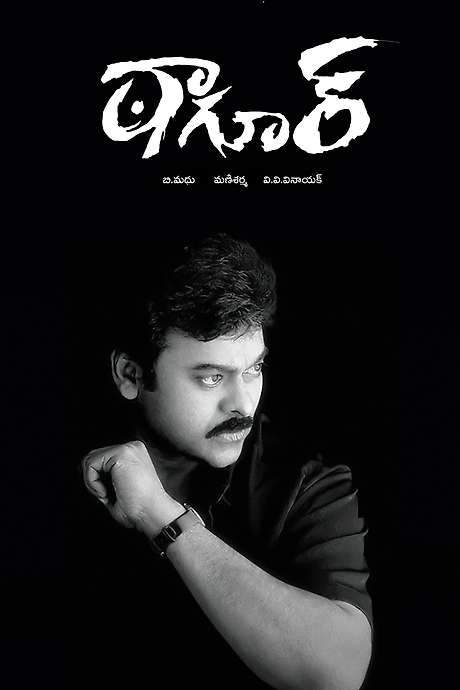
Tagore Chiranjeevi leads a quiet, almost pastoral life, raising adopted children from diverse backgrounds. By day he appears as a mild-mannered professor, but by night he quietly steers a vigilante group known as the Anti-Corruption Force (ACF) that targets the most corrupt officials. The story opens with the puzzling disappearance of fifteen Mandal Revenue Officers; fourteen are eventually released, while one is found murdered. A tape and a cache of incriminating files point to a concerted effort against corruption, and the ACF publicly claims responsibility, vowing to uproot malpractices by abducting corrupt officials and executing the worst offenders. Tagore’s dual life remains a well-guarded secret, even as the ACF’s reach expands.
Tagore Chiranjeevi quietly expands the ACF’s operations into other government spheres, including the Public Works Department (PWD) and the police. Their aggressive tactics sow fear among bureaucrats and temporarily curb illegal activities. In one sting at a hospital, Tagore exposes fraudulent medical practices, presents damning evidence, and helps seal the hospital while the dean is arrested. The dean happens to be the son of the powerful businessman Badrinarayana Sayaji Shinde and, under pressure, commits suicide. Badrinarayana soon suspects Tagore’s presence and, learning that Tagore is alive, begins a desperate pursuit to uncover the man behind the mask.
Across the city, Suryam Prakash Raj—an IPS-qualified constable who failed to land an officer post because he could not pay the required bribe—kicks off the case using his medical leave to investigate. He hypothesizes that a non-corrupt official in each government office has been feeding insider information to the ACF and, tracing their links, discovers that these officials are all alumni from National College led by their former professor, Tagore. Yet Suryam does not yet know Tagore’s true identity, which remains one of the larger enigmas driving the film’s tension.
As pressure mounts, it becomes clear that corruption is not easily crushed. The ACF targets Badrinarayana as the root of systemic corruption and intensifies its operations against him. Devaki Shriya Saran learns Tagore’s real identity, prompting him to reveal the full truth about his transformation into a vigilante, a decision born of personal tragedy rather than merely a desire for justice.
The film often travels into the past to reveal Tagore’s profound loss on a Deepavali night. A highway project backed by Badrinarayana’s company triggers substandard construction, causing the collapse of Tagore’s apartment building and the deaths of his wife, his son, and his uncle. The incident stirs a fierce demand for accountability in a system rife with neglect and corruption. Fueled by grief and a sense of betrayal, Tagore forms the ACF with a singular purpose: to root out corrupt elements like Badrinarayana and to prevent such tragedies from repeating.
As the net tightens, Suryam and the ACF members are captured and tortured by elements within the police. To protect his students and colleagues, Tagore makes the difficult choice to surrender. Badrinarayana seizes the moment to slip away, killing several ACF members in the ensuing chaos. Public sympathy for Tagore surges, culminating in a high-stakes meeting with the Chief Minister where Tagore refuses clemency and demands accountability for the crimes committed in the name of reform.
In a meticulously planned twist, a jailer who is bribed to eliminate Tagore is revealed to be part of Tagore’s broader strategy. The final battle sees Tagore confront Badrinarayana and his henchmen, ultimately bringing them to justice in a decisive showdown. In court, Tagore delivers a moving, persuasive speech about the devastating impact of corruption on the nation and its youth, underscoring how moral rot in the system reverberates through every layer of society. He confesses to killing Badrinarayana and his accomplices and accepts a five-year prison sentence, signaling that the fight against corruption is ongoing and that the country’s future depends on continuous vigilance and reform.
Tagore’s family life remains a quiet anchor amid the upheaval. His adopted children—Teja Sajja as the adopted son and Kavya Kalyanram as the adopted daughter—stand as symbols of a future built on integrity and resilience. The narrative closes on a note of cautious hope: the eradication of corruption is essential to safeguard the nation’s tomorrow, and individuals who choose to stand against systemic wrongdoing must be prepared to bear the cost, even when the odds are stacked against them.