Plot Explained Spoilers guaranteed!
Plot Explained

Browse by genre

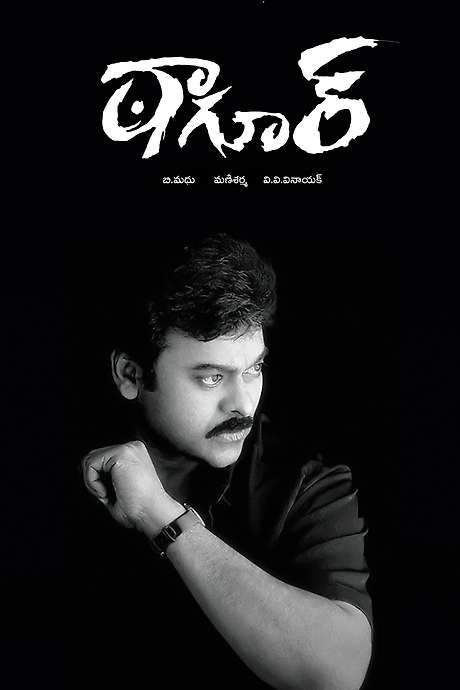
Tagore (2003) movie poster

Timeline

Tagore (2003) Timeline Explained – Every Event in Order

Release, runtime and language
2003 · 175 mins · Telugu
Loading streaming availability…
Starring
Prakash Raj, M. S. Narayana, Sayaji Shinde, Rama Prabha, Raja Ravindra, V. V. Vinayak

Tagore creates the Anti‑Corruption Force (ACF), a vigilante network that eliminates the most corrupt individuals. Under pressure to identify the mastermind, police assign Balbir Singh to lead the investigation, aided by constable Suryam. Their probe reveals Tagore’s true identity, while the villain Badrinaryana realises his fatal mistake.

On this page (6)
  1. 1 Where to watch
  2. 2 Events in order (14)
  3. 3 Timeline questions answered
  4. 4 Movie threads
  5. 5 Movies like Tagore
  6. 6 Every angle
Loading streaming availability…

14 events in order · contains spoilers

Tagore Timeline: Events in Chronological Order

Every key event of Tagore (2003) in order, scene by scene, with when and where it takes place. Use it to untangle flashbacks, time jumps and parallel storylines, to refresh your memory before the sequel or to find the exact scene you are thinking of.

  1. Disappearance of 15 Mandal Revenue Officers

    Fifteen Mandal Revenue Officers disappear under mysterious circumstances. Fourteen are later released, but one is found murdered, prompting a high-profile investigation. Police recover incriminating files and a tape beside the victim, showing the officers were targeted for corruption. The Anti-Corruption Force (ACF) soon claims responsibility, signaling a vigilante push to purge corrupt officials.

    Where
    City
  2. ACF declares its mission to eradicate corruption

    ACF declares its mission to eradicate corruption, announcing a campaign to expose malpractices and abduct corrupt officials. It vows to eliminate the worst offenders to reset the balance of power. The declaration unsettles bureaucrats and signals a new era of vigilante accountability.

    Where
    City
  3. Tagore’s double life and leadership

    Tagore lives a quiet life as a mild-mannered professor by day, while secretly orchestrating ACF operations. He has adopted children from diverse cultural backgrounds, giving him a personal stake in the country’s future. From behind the scenes, he coordinates the investigations and plans that drive the ACF's actions.

    Where
    Tagore's home and National College
  4. ACF expands to PWD and police

    ACF expands its reach to the Public Works Department and the police, widening its campaign against corruption. The group stages sting operations and publicized arrests, creating fear among officials who seek to evade detection. The crackdown demonstrates the ACF’s growing influence across government offices.

    Where
    City Government Offices
  5. Hospital sting and arrest of the dean

    Tagore orchestrates a sting operation at a city hospital, presenting evidence of fraudulent medical practices. The hospital is sealed and the dean is arrested as part of the crackdown. The dean, revealed to be Badrinarayana's son, then commits suicide.

    Where
    City Hospital
  6. Badrinarayana probes Tagore

    Badrinarayana, enraged, begins to investigate Tagore and is shocked to learn Tagore is alive. He resolves to uncover the mastermind behind the ACF and the hospital sting.

    Where
    City
  7. Suryam begins an independent probe

    Suryam, a police constable who failed to obtain an officer post because he could not pay a bribe, uses his medical leave to reopen the case. He hypothesizes that a non-corrupt official in every office may be feeding insider information to the ACF. He starts tracing the leak and the network behind the ACF’s moves.

    Where
    City
  8. National College alumni network exposed

    Suryam discovers that the implicated officials are alumni of National College and are led by their former professor, Tagore, who commands the ACF from the shadows. The revelation thickens the mystery as Tagore’s true identity remains hidden from him. The depth of the conspiracy becomes clearer as loyalties and past relationships are revealed.

    Where
    National College
  9. Deepavali disaster and Tagore’s resolve

    In a flashback, Deepavali day, Tagore's apartment building collapses due to substandard construction connected to a highway project run by Badrinarayana's company. Tagore's wife, son, and uncle are killed in the disaster, pushing him to seek justice. He forms the ACF to eradicate the corrupt system that allowed the tragedy.

    When
    Deepavali day
    Where
    Tagore's apartment block
  10. Confrontation and Tagore’s surrender

    As the net tightens, ACF members are captured and tortured by the police while Suryam closes in. To protect his students, Tagore surrenders, while Badrinarayana escapes and kills several ACF members.

    Where
    City
  11. Public support and a meeting with the Chief Minister

    Tagore's surrender sparks widespread public support and prompts a meeting with the Chief Minister. There is talk of clemency, but Tagore insists on accountability and refuses to be pardoned.

    Where
    State Capital
  12. Jailer betrayal and final elimination

    Badrinarayana bribes a jailer, who is revealed to be somehow involved in Tagore’s plan. Tagore then eliminates Badrinarayana and his henchmen in a decisive confrontation.

    Where
    Prison
  13. Court scene and confession

    In court, Tagore delivers a compelling speech about how corruption devastates the nation and its youth. He then confesses to killing Badrinarayana and his accomplices and accepts a five-year prison sentence.

    Where
    Court
  14. Final message: eradicating corruption for the future

    The film ends with Tagore stressing the necessity of eradicating corruption to safeguard the country’s future. He urges ongoing vigilance, reform, and civic responsibility to prevent a relapse into graft.

    Where
    Court/City

Last updated: October 09, 2025 at 15:09

Was this helpful?

Timeline questions answered

Tagore Timeline Explained: Your Questions Answered

When does it happen, and why in that order? The questions people ask about the chronology of Tagore (2003): time jumps, flashbacks, cause and effect between scenes and the correct order of events, each answered with spoilers.

Q1

Why does Tagore become a vigilante leader?

Tagore transforms into a vigilante after losing his wife, son, and uncle when his apartment building collapses due to substandard construction linked to Badrinarayana's highway project. The tragedy, occurring on Deepavali, fuels his determination to eradicate the corrupt system that allowed such negligence to happen, leading him to form the Anti-Corruption Force.

Foreshadowing: The opening disappearance of corrupt officials foreshadows Tagore's personal vendetta against systemic corruption.

  • tagore motivation
  • vigilante
  • anti-corruption force
  • deepavali tragedy
  • building collapse
Q2

How does Suryam discover Tagore runs the ACF?

Suryam theorizes that non-corrupt officials in each government office are secretly feeding information to the ACF. By tracing these officials, he discovers they are all alumni of National College and were taught by the same professor, Tagore, who coordinates the vigilante group from behind the scenes.

Foreshadowing: The timeline shows Suryam connecting the network of leaks before identifying the mastermind.

  • suryam
  • tagore identity
  • acf network
  • national college
  • ipso constable
Q3

Why does the hospital dean commit suicide?

The dean, who is Badrinarayana's son, is exposed during Tagore's hospital sting operation for fraudulent medical practices. After being arrested and facing his father's pressure, the dean commits suicide rather than face the consequences of his crimes.

Foreshadowing: Badrinarayana's subsequent pursuit of Tagore is directly triggered by this personal loss.

  • hospital dean
  • suicide
  • badrinarayana son
  • sting operation
  • arrested
Q4

Why does Tagore surrender to the police?

Tagore surrenders to protect his students and colleagues who have been captured and tortured by corrupt police elements. He chooses to give himself up rather than watch his network be dismantled and his people suffer further brutality.

Foreshadowing: This sacrifice demonstrates Tagore's prioritization of his students over his own freedom.

  • tagore surrender
  • torture
  • protect students
  • police corruption
  • acf members
Q5

How does Tagore eliminate Badrinarayana in prison?

When Badrinarayana bribes a jailer to kill Tagore, the jailer is revealed to be part of Tagore's broader strategy. Tagore uses this to his advantage, turning the betrayal into an opportunity to confront and kill Badrinarayana and his henchmen in a decisive final battle.

Foreshadowing: The earlier mention of a bribed jailer sets up this reversal in the finale.

  • prison
  • jailer
  • badrinarayana
  • betrayal
  • final battle
Q6

Why does Tagore confess and accept prison sentence?

Tagore deliberately confesses to killing Badrinarayana and his accomplices because he wants to make a statement about accountability. He refuses clemency and accepts a five-year sentence to demonstrate that even those fighting corruption must answer for their actions, underscoring that the fight against corruption requires personal sacrifice.

Foreshadowing: His earlier refusal of clemency from the Chief Minister establishes this principled stance.

  • confession
  • prison sentence
  • court
  • accountability
  • corruption fight
Q7

How does the Anti-Corruption Force target corrupt officials?

The ACF operates as a vigilante network coordinated by Tagore from behind the scenes. Tagore identifies corrupt officials through insider information provided by non-corrupt officials who are his former students. The group then abducts, exposes, and executes the worst offenders, expanding from Mandal Revenue Officers to target the PWD, police, and eventually Badrinarayana himself.

Foreshadowing: The initial disappearance of fifteen Mandal Revenue Officers demonstrates the ACF's methodology.

  • anti-corruption force
  • acf operations
  • corrupt officials
  • vigilante
  • expose
Q8

What happened on Deepavali that drove Tagore to action?

On Deepavali night, Tagore's apartment building collapsed due to substandard construction connected to a highway project run by Badrinarayana's company. The disaster killed Tagore's wife, son, and uncle, creating the personal tragedy that transformed him from a peaceful professor into a vengeful vigilante leader.

Foreshadowing: This flashback is revealed partway through the film to explain Tagore's motivations.

  • deepavali
  • building collapse
  • family death
  • badrinarayana company
  • tragedy
Q9

Why does Suryam take on the ACF case?

Suryam, an IPS-qualified constable, was denied an officer position because he could not pay the required bribe. This personal experience with systemic corruption motivates him to investigate the ACF case during his medical leave, determined to understand how someone is able to openly challenge the corrupt system he himself could not defeat.

Foreshadowing: His background explains why he uniquely suspects a network of honest officials rather than random criminals.

  • suryam
  • bribe
  • ipso constable
  • police corruption
  • motivation
Q10

Why does Badrinarayana target Tagore specifically?

Badrinarayana pursues Tagore after the hospital sting operation results in his son's suicide. Learning that Tagore orchestrated the operation and is still alive despite his previous assumed death, Badrinarayana becomes obsessed with uncovering Tagore's identity and destroying the man responsible for his personal and professional losses.

Foreshadowing: The hospital incident marks the point where the conflict becomes deeply personal for both characters.

  • badrinarayana
  • tagore
  • pursuit
  • son death
  • revenge

Movie threads

More Movies Like Tagore, by Mood & Story

Curated lists built around what makes Tagore tick: the same mood, the same kind of story or the same emotional payoff. Each list explains why these movies belong together.

Vigilante justice movies fueled by grief like Tagore

Stories where profound personal loss ignites a one-man war against corruption. For viewers who liked the emotional drive of Tagore, this collection features movies where a devastating personal loss propels a hero into a vigilante crusade. These similar action dramas explore themes of revenge, social justice, and the heavy cost of fighting corruption outside the law.

  • angry
  • grieving
  • righteous
  • tense
  • somber
  • urgent
  • Tone: dark, righteous, somber
  • Pacing: variable, alternating action and drama
Why these movies?

The story pattern: The narrative pattern typically begins with a devastating personal tragedy that shatters the protagonist's world. This event transforms them from an ordinary citizen into a determined vigilante, often operating outside a broken system. The story follows their methodical or explosive campaign against a powerful corrupt force, culminating in a victory that is often bittersweet, as peace remains elusive.

Why they belong together: Movies in this thread share a core emotional engine: a grief so profound it becomes a weapon. They balance high-intensity action with heavy emotional weight, creating a dark tone where moments of hope are hard-won. The blend of personal anguish and public justice creates a uniquely powerful and somber viewing experience.


Movies about fighting corruption with a cost like Tagore

Narratives where fighting a vast corruption comes at a great personal price. If you liked Tagore's theme of a costly battle against a corrupt system, this list features similar films. These stories show heroes taking on powerful villains in political or crime dramas, where achieving justice comes with a bittersweet or heavy personal price, making the victory profound but painful.

  • tense
  • urgent
  • hopeful
  • righteous
  • somber
  • grim
  • Tone: tense, dark, hopeful
  • Pacing: variable, building tension
Why these movies?

The story pattern: These narratives center on a seemingly insurmountable opponent—a corrupt institution, political machine, or criminal empire. The protagonist, often an unlikely hero, mounts a dangerous challenge. The plot unfolds with high stakes and tense confrontations, building towards a conclusion where the system is dealt a blow, but the hero must pay a steep personal cost, such as freedom, relationships, or peace of mind.

Why they belong together: These films are grouped by their shared exploration of justice that is never clean or free. They deliver a satisfying confrontation with evil but balance it with a sobering acknowledgment of the sacrifices involved. The mix of high stakes, tense pacing, and a ultimately bittersweet resolution creates a thought-provoking and memorable vibe.

If you liked this

Movies Like Tagore

Similar movies to Tagore: the same genre, themes or kind of story. Each one comes with its own plot summary, timeline and ending explained.

Browse all movie summaries

Every angle

Tagore (2003) Explained: Plot, Timeline & Characters

Everything about Tagore in one place: what happens in the plot summary, the timeline in chronological order, the characters and meaning and a spoiler-free summary. What's After the Movie adds the cast, box office and post-credit scenes.

Coming soon on iOS and Android

The Plot Explained Movie Summary App

Plot summaries, endings explained and timelines on your phone. Catch up on any movie in minutes, save your favorites and never miss a twist again.

Be the first to know when we launch. Your email stays private, always.

Learn more about the app