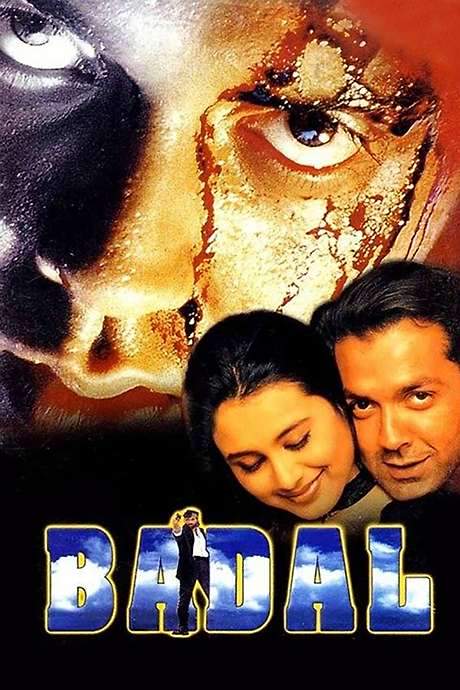
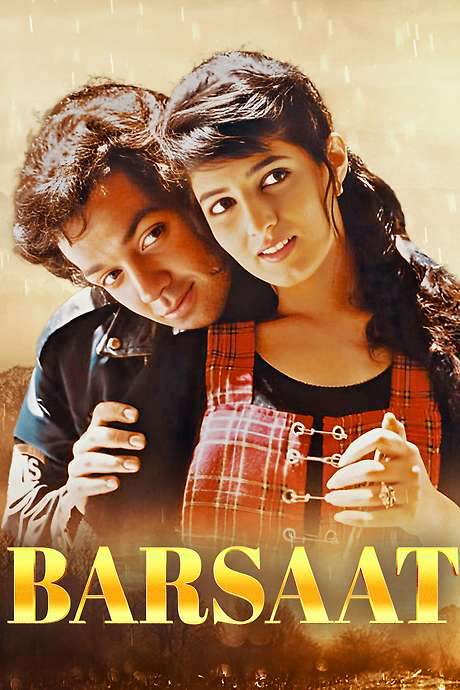
In the role of Badal, Bobby Deol portrays a young man scarred by a traumatic childhood: as a child, he witnesses his loving father, mother, and baby sister murdered in a village massacre by the ruthless police officer Jaisingh Rana, portrayed by Ashutosh Rana. The brutality of that night leaves a lasting scar that shapes every later choice, and the memory of that tragedy haunts him as he grows.
Years later, Badal has become a feared terrorist under the alias Rajveer, driven by vengeance against Jaisingh Rana. His path leads him to a quiet town where a principled police officer, ACP Ranjeet Singh, offers him a chance to rebuild his life. The role of Ranjeet Singh is brought to life by Amrish Puri. There, Rani Mukerji plays Rani, a bubbly, free-spirited girl who falls deeply in love with him, bringing a beacon of warmth to a life shadowed by violence.
Ranjeet Singh and his wife Simran begin to treat Badal as their son, and their daughters look up to him as an elder brother. Through the care and acceptance he finds in this new family, Badal starts to relearn the valuable lessons of life: loyalty, trust, and the importance of relationships he had previously believed were beyond reach. The town’s quiet rhythm contrasts with the undercurrent of danger that still follows him, creating a tense balance between safety and the pull of his old vendetta.
Meanwhile, Rana—now promoted to DIG Jai Singh Rana—keeps his cruel habits intact, using power and fear to keep his enemies in check and his own past unchallenged. He has Jeetram captured and tortured to reveal the whereabouts of his remaining accomplices, a brutal reminder of the violence that set Badal on his path. Badal, driven by a sense of debt to the man who once saved him in name only through a shared danger, frees Jeetram and triggers a manhunt led by ACP Ranjeet Singh. The pursuit tests the fragile trust Badal has begun to build with the Ranjeet family and with Rani, forcing him to confront the consequences of his choices.
Jeetram’s sacrifice becomes a pivotal, heartrending moment: to protect Badal’s true identity from exposure, Jeetram takes his own life, leaving Badal shocked and grieving, but also more determined to redefine his path. That act crystallizes the film’s core tension—whether a man shaped by loss can choose a future built on empathy, responsibility, and love, or whether revenge will forever drive him.
As the story unfolds, Badal must navigate the razor’s edge between vengeance and redemption. The bonds he forms with the Ranjeet household and with Rani offer him a second chance to belong, while the looming threat of Rana’s unchecked cruelty serves as a constant reminder of what he’s fighting against. The film invites viewers to witness not just the blaze of action, but the slow, careful rebuilding of a life once burned by hatred. In the end, Badal’s journey becomes a testament to the slow, painful process of healing, where forgiveness and accountability take center stage, and where the possibility of a peaceful future is earned through courage, loyalty, and a willingness to choose humanity over revenge.