Plot Explained Spoilers guaranteed!
Plot Explained

Browse by genre

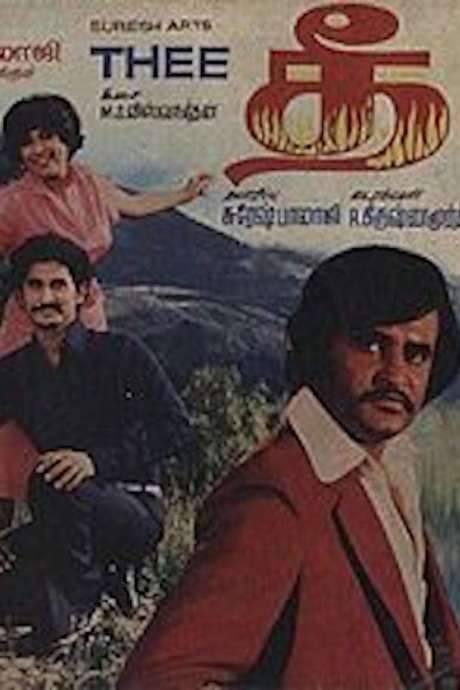
Thee (1981) movie poster

Plot Summary

Thee (1981) Plot Summary Explained

Release, runtime and language
1981 · More mins · Tamil
Directed by
R Krishnamurthy
Starring
Suman Talwar, Manorama, Rajinikanth, Sripriya, Sowcar Janaki

Raja and Suman, two sons of a labour leader, choose different professions in their life after facing numerous difficulties from childhood to adulthood.

On this page (5)
  1. 1 What happens: full plot
  2. 2 Plot questions answered
  3. 3 Movie threads
  4. 4 Movies like Thee
  5. 5 Every angle

Full plot summary · contains spoilers

What Happens in Thee: Full Plot Summary

The whole story of Thee (1981) explained, from the opening scene to the final frame: every key event, every twist and what it all adds up to. Read it as a quick recap before the sequel, to check a scene you missed, or to finally understand what really happened.

The film opens with the story of a strong-willed trade unionist who dedicates himself to improving the lives of struggling laborers. He lives in a modest home with his wife, Seetha Manorama, and their two young sons, Raja Rajinikanth and Ravi Suman Talwar. A corrupt businessman relentlessly blackmails him, threatening to kill his family unless he stops his union activities. Cornered and coerced, the unionist capitulates, and the very workers who once supported him turn against him, attacking him and undermining his authority. The fear and violence spill over onto Seetha and the children, and a brutal moment brands young Raja with the words, “My Father Is A Thief.” The frightened father is forced to flee, leaving Seetha and the boys to face a life of precarious poverty. With little choice, Seetha takes them to Madras, where she scrapes by as a day laborer to feed and shelter her now-homeless children.

Raja grows up with a hard-edged awareness of his father’s fall from grace and the stigma that accompanies it. He begins life on the bottom rung, polishing boots and later working in the docks, before slipping into the underworld as a smuggler and rising to become a formidable figure. Throughout this ascent, he makes a pointed sacrifice: his own education, so that his younger brother Ravi can pursue studies and a better future. Ravi, by contrast, becomes an upright student and is drawn to the law—he falls for Radha Sowcar Janaki, the daughter of the Commissioner of Police. On the Commissioner’s suggestion, Ravi sets his sights on a police career and is eventually accepted into training, rising to the rank of Sub-Inspector.

Meanwhile, Raja’s life takes a dramatic turn as he amasses wealth and status, transitioning from crime to a glossy, powerful business persona and moving into a palatial home. The gap between the brothers widens when Ravi is tasked with rounding up Madras’ hardcore criminals, a list that unfortunately includes Raja himself. The revelation shocks Ravi, who never imagined his own brother as one of the city’s most dangerous figures. Tensions escalate as Ravi struggles with a choice: arrest his brother or let him continue down a life of crime.

When tragedy strikes—the brutal murder of Anita Sripriya, whom Raja has taken as his partner and who bears his child—the balance of power shifts irreversibly. Enraged and grief-stricken, Raja retaliates by wiping out his rivals in a torrent of violence, a spree that brands him forever as a criminal in the eyes of the law and society. Their mother, who had stood by Ravi and rejected Raja’s path, is tormented by the widening rift between the brothers and the moral consequences of Raja’s choices.

The film builds to a climactic confrontation between the siblings. In a tense final showdown, Ravi shoots and kills Raja, bringing the feud to a gruesome close. Raja dies in the comforting embrace of their mother, seeking forgiveness even as the law and duty prevail. The ending crowns Ravi for his steadfast pursuit of justice, leaving Seetha and their family to reckon with the costs of ambition, loyalty, and forgiveness. The narrative offers a nuanced portrait of family, duty, and the blurred line between right and wrong, as two brothers walk starkly different paths in a city that tests every moral boundary.
Last updated: October 09, 2025 at 14:43

Was this helpful?

Plot questions answered

Thee Plot Explained: Your Questions Answered

The questions people ask most about Thee (1981): what happens in the confusing scenes, why the characters do what they do, the twists, hidden details and what the ending means. Each answer contains spoilers.

Q1

Why did the unionist father abandon his family?

The unionist was blackmailed by a corrupt businessman who threatened to kill his family if he continued his union activities. Faced with this impossible choice, he capitulated to the blackmailer. When the workers he once led turned against him and attacked him, he was forced to flee in fear for his life, leaving his wife Seetha and their two young sons, Raja and Ravi, to face the backlash alone.

Foreshadowing: Earlier scenes establish the unionist's dedication to workers, making his sudden cowardice more shocking.

  • unionist father
  • blackmail
  • family abandoned
  • Raja childhood
Q2

Why did Raja turn to a life of crime?

Raja grew up with the stigma of his father's perceived failure and the traumatic branding incident where his arm was marked with 'My Father Is A Thief'. This childhood humiliation, combined with poverty and bullying in Madras, hardened him and drove him to rise through any means necessary. Starting as a boot polisher and dock worker, he gradually slipped into smuggling and rose to become a powerful underworld figure.

Foreshadowing: The branding scene and his difficult childhood establish the trauma that shapes his worldview.

  • Raja criminal
  • underworld
  • boot polisher
  • childhood trauma
Q3

Why did Raja give up his education for Ravi?

Despite their poverty, Raja sacrificed his own schooling so that his younger brother Ravi could pursue an education and a better future. This act demonstrates Raja's deep love for his brother and his willingness to bear the burden of their family's hardships himself, even as he chose a darker path to provide for them.

Foreshadowing: The brothers' bond is shown through Raja's early sacrifice.

  • Raja sacrifice
  • education
  • Ravi
  • brother bond
Q4

Why was Ravi assigned to arrest his own brother Raja?

Ravi, now a Sub-Inspector in the police force, was assigned to crack down on Madras' hardcore criminals. The list included Raja, who had become one of the city's most dangerous underworld figures. This placed Ravi in an impossible position between family loyalty and his duty as a police officer.

Foreshadowing: Ravi's career choice sets up the inevitable conflict with his brother's criminal life.

  • Ravi arrest Raja
  • police duty
  • brother conflict
  • moral dilemma
Q5

Who killed Anita and what triggered Raja's revenge?

Anita, Raja's partner who was pregnant with his child, was brutally murdered by rival underworld members. This tragedy pushed Raja over the edge, triggering a brutal revenge spree in which he wiped out his rivals. This act solidified his status as a wanted criminal and sealed his fate.

Foreshadowing: Anita's pregnancy and Raja's desire to leave the underworld hint at his vulnerability.

  • Anita murder
  • Raja revenge
  • underworld
  • pregnant
Q6

Why did Seetha reject Raja's path?

Seetha, the mother, had sided with Ravi and his path of law and justice. As Raja descended deeper into crime and violence, particularly after the brutal revenge killing spree, she became tormented by his choices and ultimately rejected him. This rejection highlights the moral divide that had formed between the brothers.

Foreshadowing: Throughout the film, the mother struggles with her conflicting loyalties.

  • Seetha reject Raja
  • mother
  • family rift
  • moral conflict
Q7

How did Raja become wealthy and powerful?

Raja transitioned from his underworld activities as a smuggler to a legitimate but corrupt business empire, moving into a palatial home and accumulating significant wealth and influence in Madras. This dramatic transformation from street-level criminal to powerful businessman marks his rise in the criminal world.

Foreshadowing: Earlier scenes show his progression from boot polisher to dock worker to smuggler.

  • Raja wealth
  • businessman
  • underworld
  • palatial home
Q8

Why did Ravi kill Raja in the final confrontation?

In the climactic showdown, Ravi was forced to choose between his brother and his duty to the law. Despite their bond and Raja's pleas for forgiveness, Ravi ultimately shot and killed Raja. The law and duty prevailed, with Ravi being rewarded for restoring order, while Raja died seeking forgiveness in their mother's arms.

Foreshadowing: The brothers' diverging paths and the constant tension between family and duty build toward this inevitable confrontation.

  • Ravi kills Raja
  • final confrontation
  • brother death
  • justice
Q9

What happened to Raja's child?

Anita, Raja's partner, was pregnant with his child before she was murdered by rival underworld figures. The fate of the unborn child is not explicitly detailed in the summary, but Anita's murder serves as the catalyst for Raja's violent revenge.

Foreshadowing: Raja's desire to leave the underworld and marry Anita hints at his hope for a new life.

  • Anita pregnancy
  • Raja child
  • unborn baby
Q10

Why was Raja branded with 'My Father Is A Thief'?

When the unionist father capitulated to blackmail and fled, the workers who once supported him turned hostile. In a brutal moment of persecution, young Raja was branded on the arm with the words 'My Father Is A Thief' as a taunt against the family. This traumatic event left a permanent scar and fueled Raja's determination to never be powerless again.

Foreshadowing: The opening scenes establish this formative trauma that shapes Raja's entire character.

  • branding
  • Raja scar
  • father disgrace
  • childhood trauma
Q11

Why did Raja and Ravi choose such different paths in life?

Both brothers faced the same childhood trauma and poverty, but responded differently. Raja, being older and more directly affected by the humiliation, chose to rise through crime to escape powerlessness. Ravi, protected by Raja's sacrifice, was able to pursue education and gravitated toward law as a path to justice. Their divergent choices ultimately led them to opposite sides of the law.

Foreshadowing: The brothers' contrasting reactions to hardship are hinted at from their early years.

  • brothers different paths
  • Raja Ravi
  • crime vs law
  • destiny

Movie threads

More Movies Like Thee, by Mood & Story

Curated lists built around what makes Thee tick: the same mood, the same kind of story or the same emotional payoff. Each list explains why these movies belong together.

Brother vs Brother crime dramas like Thee

Stories where familial bonds are shattered by destiny and opposing paths. If you liked the tragic conflict between Raja and Suman in Thee, explore more movies about sibling rivalry and betrayal. These films feature brothers torn apart by crime, duty, or a dark past, leading to tense, emotionally heavy stories with often heartbreaking conclusions.

  • familial conflict
  • tragic
  • tense
  • oppressive
  • revenge driven
  • moral conflict
  • Tone: dark, tragic, tense
  • Pacing: steady, chronicle-like
Why these movies?

The story pattern: These narratives typically follow a life-long arc, starting from a shared, often difficult childhood that sets the stage for a future fracture. The story meticulously charts the divergent paths of the siblings, building towards an unavoidable and violent climax that sacrifices family for a greater, tragic cause.

Why they belong together: Movies are grouped here based on their core conflict between siblings, the heavy emotional weight of familial love corrupted by external forces, and the dark, steady pacing that leads to a tragic, morally complex ending.

Gritty family crime epics similar to Thee

Epic tales of family legacies intertwined with crime, power, and downfall. For viewers who appreciated the generational story and moral collapse in Thee, this section features movies about crime families. These dramas explore political corruption, social stigma, and the sacrifice required to maintain power, often with a dark tone and a steady, fatalistic pace.

  • gritty
  • familial
  • oppressive
  • crime saga
  • political corruption
  • sacrifice
  • Tone: dark, oppressive, gritty
  • Pacing: steady, epic
Why these movies?

The story pattern: The narrative pattern is a generational chronicle, depicting the rise and often brutal fall of a family within a criminal underworld. It explores themes of loyalty, betrayal, and the struggle between personal desires and familial obligations, usually culminating in a bleak realization of the costs of a life of crime.

Why they belong together: These films share a gritty, oppressive mood, a steady pacing that builds a full life story, and a central theme of family duty clashing with the violent realities of organized crime and political corruption.

If you liked this

Movies Like Thee

Similar movies to Thee: the same genre, themes or kind of story. Each one comes with its own plot summary, timeline and ending explained.

Browse all movie summaries

Every angle

Thee (1981) Explained: Plot, Timeline & Characters

Everything about Thee in one place: what happens in the plot summary, the timeline in chronological order, the characters and meaning and a spoiler-free summary. What's After the Movie adds the cast, box office and post-credit scenes.

Coming soon on iOS and Android

The Plot Explained Movie Summary App

Plot summaries, endings explained and timelines on your phone. Catch up on any movie in minutes, save your favorites and never miss a twist again.

Be the first to know when we launch. Your email stays private, always.

Learn more about the app