Plot Explained Spoilers guaranteed!
Plot Explained

Browse by genre

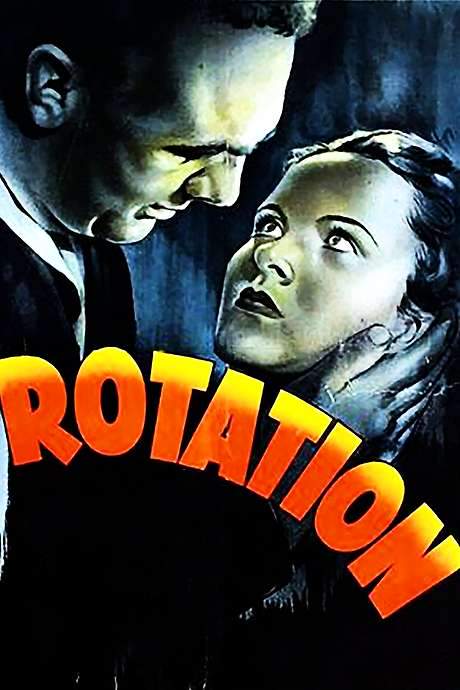
Rotation (1949) movie poster

Plot Summary

Rotation (1949) Plot Summary Explained

Release, runtime and language
1949 · 79 mins · German
Loading streaming availability…
Directed by
Wolfgang Staudte
Starring
Werner Peters, Reinhard Kolldehoff, Brigitte Krause, Wolfgang Kühne, Albert Venohr, Friedrich Teitge

Mechanic Behnke initially seeks Nazi Party membership, hoping it will provide a stable livelihood. When his Jewish neighbours are deported, he is forced to confront the reality of his ambitions. Claiming to be “a non‑political man,” he retreats from reality and ultimately becomes a laborer for the regime, illustrating his moral collapse.

On this page (6)
  1. 1 Where to watch
  2. 2 What happens: full plot
  3. 3 Plot questions answered
  4. 4 Movie threads
  5. 5 Movies like Rotation
  6. 6 Every angle
Loading streaming availability…

Full plot summary · contains spoilers

What Happens in Rotation: Full Plot Summary

The whole story of Rotation (1949) explained, from the opening scene to the final frame: every key event, every twist and what it all adds up to. Read it as a quick recap before the sequel, to check a scene you missed, or to finally understand what really happened.

The film opens with scenes of Berlin during World War II, where bombs and explosions punctuate the city and a tense score threads through the chaos. It then jumps back twenty years to trace the life of a typical factory worker through a series of intimate vignettes that reveal how a man who opposes Nazi ideology could still be drawn into cooperating with the regime. The narrative foregrounds the brutal unemployment of 1920s Germany and, later, the pressure that threatens his job for not belonging to the Nazi party, painting a portrait of a man caught between conscience and survival.

To keep his family from slipping into poverty, Hans Behnke reluctantly joins the Nazi party, even as he continues to show signs of dissent. The story makes clear that his decision is driven by fear of losing his livelihood and the desire to provide for those he loves, not by wholehearted agreement with the regime. As the regime tightens its grip, his inner conflict deepens, and a spark of resistance still flickers beneath the surface. He eventually becomes involved with a resistance group tasked with printing anti-war propaganda, a bold act that places him on a dangerous slippery slope.

That perilous path comes to a head when he is betrayed to the authorities by his own son, Hellmuth Behnke. Arrest and imprisonment follow, and the film then cuts back to the wartime present, where the opening scenes’ tension begint to resolve in a stark reversal of fortunes. Hans is eventually freed, but the war has claimed the life of his wife, Charlotte Behnke, leaving a family scar that underscores the personal cost of political upheaval.

In the final arc, the narrative centers on reconciliation and the uneasy hope of a new beginning. Hans’s relationship with his son threads toward a tentative future, as Helmut begins a life with his girlfriend and looks toward a path that might diverge from his father’s mistakes. The closing moments deliberately mirror the opening—two people starting anew under the shadow of war—yet they carry a renewed sense of possibility: dialog and imagery suggest that Helmut will strive not to repeat his father’s errors, even as the memory of a fractured family lingers.

Last updated: February 24, 2026 at 09:54

Was this helpful?

Plot questions answered

Rotation Plot Explained: Your Questions Answered

The questions people ask most about Rotation (1949): what happens in the confusing scenes, why the characters do what they do, the twists, hidden details and what the ending means. Each answer contains spoilers.

Q1

Why does Hans join the Nazi Party?

Hans joins the Nazi Party primarily to secure his employment and provide for his family. During the 1920s and 1930s, he faces the threat of losing his job if he does not belong to the party, as membership becomes a requirement for maintaining steady work. His decision is driven by economic survival rather than ideological agreement with the regime.

Foreshadowing: The earlier scenes of 1920s unemployment foreshadow this compromise, showing the economic pressure that makes political conformity a survival strategy.

  • hans behnke
  • nazi party
  • unemployment
  • economic pressure
  • family survival
Q2

How does Hans go from being a Nazi Party member to supporting the resistance?

After joining the party out of economic necessity, Hans continues to harbor quiet disagreements with Nazi ideology throughout the 1930s. His inner conflict deepens as the regime's grip tightens, and he eventually becomes involved with a resistance group that prints anti-war propaganda. This shift represents his progression from passive compliance to active opposition, driven by remaining moral convictions.

Foreshadowing: His silent disagreements and attempts to distance himself from the regime's ideology plant the seeds for his later resistance activities.

  • resistance
  • anti-war propaganda
  • moral conflict
  • hans behnke
  • dissent
Q3

Why does Helmut betray his father to the authorities?

Helmut betrays his father Hans by turning him in to the authorities, resulting in Hans's arrest and imprisonment. The film portrays how the Nazi regime's intrusive reach penetrates family life, creating loyalty conflicts within households. This betrayal highlights the devastating personal cost of political surveillance and the impossible choices faced by families under totalitarian rule.

Foreshadowing: The regime's pressure on individuals throughout the narrative sets the stage for this family rupture.

  • helmut behnke
  • betrayal
  • arrest
  • family betrayal
  • authorities
Q4

What happens to Hans after he's arrested?

After being betrayed by his son Helmut and arrested by the authorities, Hans is imprisoned for his involvement with the resistance group and his anti-war propaganda activities. The narrative returns to the present wartime timeline, following his fate behind bars. He is eventually freed from prison, but the war has already claimed a devastating personal toll.

Foreshadowing: The opening scenes of Berlin under bombardment establish the dangerous context that leads to his arrest.

  • arrest
  • imprisonment
  • prison
  • hans behnke
  • wartime
Q5

Does Hans's wife survive the war?

No, Hans's wife Charlotte Behnke is killed during the war. When Hans is eventually freed from prison, he discovers that the war has claimed his wife's life, leaving a permanent scar on the family. This personal loss underscores the human cost of political upheaval beyond the political dimension.

Foreshadowing: The wartime chaos and danger introduced in the opening bombing scenes foreshadow this tragic outcome.

  • charlotte behnke
  • wife death
  • war casualties
  • loss
  • family
Q6

What is the purpose of the film's flashback structure?

The film opens with Berlin during World War II under bombardment, then jumps back twenty years to the 1920s to trace Hans's journey. This structure allows viewers to understand how ordinary economic hardship in the 1920s gradually pushes a dissenting man toward Nazi membership, and then toward resistance. The two timelines are connected to show cause-and-effect relationships between early compromises and later consequences.

Foreshadowing: The opening war scenes gain meaning only after the flashback reveals the chain of events that led to that moment.

  • flashback
  • timeline
  • structure
  • 1920s
  • world war ii
Q7

What does the film say about ordinary people and moral compromise under the Nazi regime?

The film portrays Hans as a man who opposes Nazi ideology but still becomes complicit by joining the party for economic reasons. His story illustrates how ordinary people can be drawn into cooperating with oppressive regimes through survival needs rather than belief. The narrative emphasizes moral ambiguity, showing that complicity often comes from fear and economic pressure rather than wholesale endorsement of tyranny.

Foreshadowing: The subtle vignettes showing 1920s unemployment establish the precarity that makes resistance seem impossible.

  • moral compromise
  • ordinary people
  • complicity
  • fascism
  • totalitarian regime
Q8

What happens to Helmut by the end of the film?

By the film's end, Helmut reconciles with his father Hans and begins a new life with his girlfriend. The closing scenes suggest that Helmut will strive to avoid repeating his father's mistakes, choosing a different path. The narrative offers a glimmer of hope that the next generation can learn from the past, though the memory of their fractured family remains.

Foreshadowing: The final scenes deliberately echo the opening, with dialogue and symbolism indicating Helmut's potential for change.

  • helmut behnke
  • reconciliation
  • new beginning
  • next generation
  • future
Q9

Why does Hans continue to show dissent even after joining the Nazi Party?

Even after becoming a party member for practical reasons, Hans demonstrates quiet disagreement with Nazi ideology and tries to distance himself from the regime's more extreme aspects. His inner conflict between economic survival and moral conviction remains present throughout his membership. This tension between his outward compliance and private doubts eventually leads him toward the resistance movement.

Foreshadowing: His silent disagreements planted early in the narrative prepare viewers for his eventual shift to active resistance.

  • dissent
  • inner conflict
  • moral conviction
  • quiet resistance
  • party membership
Q10

What is the film's message about resistance and complicity?

The film suggests that resistance can emerge even from those who initially complied, as Hans transitions from party member to resistance supporter. However, this转变 comes at a severe personal cost, imprisonment and the death of his wife. The narrative conveys that while resistance is morally righteous, ordinary people face impossible choices under totalitarian regimes, and the path of resistance is perilous and costly.

Foreshadowing: The dangerous nature of his resistance activities foreshadows the severe consequences he will face.

  • resistance
  • complicity
  • 代价
  • moral choice
  • anti-nazi

Movie threads

More Movies Like Rotation, by Mood & Story

Curated lists built around what makes Rotation tick: the same mood, the same kind of story or the same emotional payoff. Each list explains why these movies belong together.

Movies about moral compromise like Rotation

Stories of individuals forced to betray their conscience for survival. If you were captivated by the moral dilemmas in Rotation, explore these other films that depict characters grappling with their conscience under political oppression. These stories share a dark tone, heavy emotional weight, and focus on the personal cost of ideological compliance.

  • oppressive
  • somber
  • moral conflict
  • claustrophobic
  • tense
  • melancholic
  • Tone: dark, somber, tense
  • Pacing: steady, methodical
Why these movies?

The story pattern: Narratives in this thread typically follow a protagonist who initially believes they can navigate an oppressive system unscathed. Through a series of escalating events, their principles are chipped away, leading to acts of complicity or betrayal. The journey is less about external action and more about an internal collapse, often ending with a stark realization of the personal cost.

Why they belong together: These films are grouped together because they prioritize psychological realism and moral conflict over plot-driven action. They share a dark, oppressive atmosphere, a steady pacing that allows for character depth, and a focus on the devastating personal consequences of political conformity.

Slow burn psychological dramas like Rotation

Character studies where tension builds to a devastating moral reckoning. Fans of Rotation's methodical pacing and focus on internal conflict will appreciate these films. They are characterized by a high-tension, somber atmosphere and a heavy emotional impact, exploring how external pressures lead to a character's gradual undoing.

  • slow burn
  • psychological
  • tense
  • somber
  • moral conflict
  • claustrophobic
  • Tone: dark, tense, melancholic
  • Pacing: steady, slow burn
Why these movies?

The story pattern: The narrative pattern involves a central character facing a series of ethical challenges that gradually strip away their initial convictions. The plot unfolds through vignettes or sustained pressure, emphasizing the internal struggle over external events. The climax is typically a moment of profound personal failure or sobering clarity, resulting in a bittersweet or bleak resolution.

Why they belong together: These movies are united by their shared commitment to a slow-burn approach that prioritizes character depth over plot speed. They create a cohesive viewing experience through a consistently dark tone, high emotional intensity, and a focus on the grim reality of difficult choices.

If you liked this

Movies Like Rotation

Similar movies to Rotation: the same genre, themes or kind of story. Each one comes with its own plot summary, timeline and ending explained.

Browse all movie summaries

Every angle

Rotation (1949) Explained: Plot, Timeline & Characters

Everything about Rotation in one place: what happens in the plot summary, the timeline in chronological order, the characters and meaning and a spoiler-free summary. What's After the Movie adds the cast, box office and post-credit scenes.

Coming soon on iOS and Android

The Plot Explained Movie Summary App

Plot summaries, endings explained and timelines on your phone. Catch up on any movie in minutes, save your favorites and never miss a twist again.

Be the first to know when we launch. Your email stays private, always.

Learn more about the app