Plot Explained Spoilers guaranteed!
Plot Explained

Browse by genre

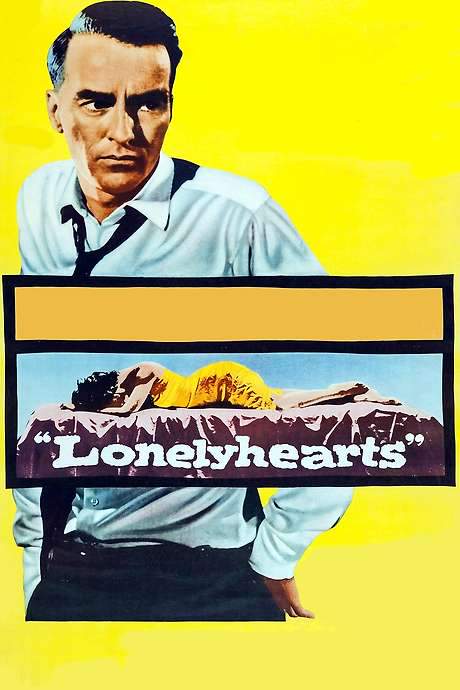
Lonelyhearts (1958) movie poster

Plot Summary

Lonelyhearts (1958) Plot Summary Explained

Release, runtime and language
1958 · 100 mins · English
Directed by
Vincent J. Donehue
Starring
Maureen Stapleton, Robert Ryan, Myrna Loy, Montgomery Clift, Jack Black, Mike Kellin

Burdened by a family secret, Adam White becomes a newspaper advice columnist, unaware that cynical editor William Shrike is using him to manipulate his staff. As he empathizes with readers, he is sent to meet Faye Doyle, a woman frustrated by her crippled husband. When Faye tries to seduce him, Adam must choose between his career and attraction.

On this page (6)
  1. 1 Where to watch
  2. 2 What happens: full plot
  3. 3 Plot questions answered
  4. 4 Movie threads
  5. 5 Movies like Lonelyhearts
  6. 6 Every angle

Where to watch

Where to Watch Lonelyhearts (1958)

Where can you watch Lonelyhearts? Stream, rent or buy it in the US, including on Fawesome, Hoopla and Tubi TV: current JustWatch availability with up-to-date prices.

Streaming availability powered by JustWatch

Full plot summary · contains spoilers

What Happens in Lonelyhearts: Full Plot Summary

The whole story of Lonelyhearts (1958) explained, from the opening scene to the final frame: every key event, every twist and what it all adds up to. Read it as a quick recap before the sequel, to check a scene you missed, or to finally understand what really happened.

The film opens on a quiet, sunlit small-town street where a Chronicle truck dumps a bundle of papers onto the curb. Adam White sits in a bar when a woman offers him a drink. He declines, noting that alcohol seems poisonous to him. After some conversation, he learns she is married to William Shrike, editor-in-chief of the Chronicle, the town’s newspaper Adam hopes to join. The editor arrives to meet his wife, only to catch her in conversation with Adam. When Shrike asks how Adam found him, Adam explains:

> I heard there was a bar where newspaper people hang out. I came here since it is the closest to the Chronicle, the only paper in town.

[William Shrike] responds with a stern, decisive energy, and the moment marks the start of a fraught relationship between ambition and authority. Then Shrike quietly gives Adam a chance to prove himself, snapping, "OK, so write!"

Adam shares the news with his girlfriend, Justy Sargeant, but keeps his father’s shadow in mind: a man named Lassiter is serving 25 years for murdering Adam’s mother and her lover. On his first day at the newspaper, Adam discovers he has been assigned to the dreaded "Miss Lonelyhearts" advice column—a job that unsettled colleagues like Ned Gates and drew some mockery from Frank Goldsmith, illustrating the newsroom’s blend of skepticism and longing.

After a few weeks, [William Shrike] refuses Adam’s request to switch assignments and insists he personally verify the column’s readers and their stories. Adam randomly selects a letter from Fay Doyle and arranges to meet her. The encounter reveals a painful distance in Fay’s life as her husband, Pat Doyle, returned from the war crippled and impotent. The two share a brief, charged moment; Adam and Fay are drawn together, though he later declines further meetings, leaving Fay furious and humiliated.

Feeling the weight of his career choice, Adam contemplates leaving the paper for good. Meanwhile, [Justy Sargeant] learns that her own future might depend on a practical plan when her father offers a trust endowment to help set their life in motion. But when [Pat Doyle] suddenly reappears with a gun, Adam must act to defuse a potentially deadly situation. He manages to talk Pat down, sparing lives and averting tragedy for the moment. In the aftermath, Shrike turns his attention to domestic matters, bringing flowers to his own neglected wife and revealing the hidden tensions that run beneath the newsroom’s relentless pursuit of truth.

Last updated: October 09, 2025 at 11:03

Was this helpful?

Plot questions answered

Lonelyhearts Plot Explained: Your Questions Answered

The questions people ask most about Lonelyhearts (1958): what happens in the confusing scenes, why the characters do what they do, the twists, hidden details and what the ending means. Each answer contains spoilers.

Q1

Why does Adam keep his father's crime hidden from Justy?

Adam conceals that his father Lassiter is serving 25 years for murdering Adam's mother and her lover. He fears this dark family secret would destroy his relationship with Justy and derail his chances at a new life with her. The secret represents the personal cost of his ambition, he builds a career while hiding the traumatic past that haunts him.

Foreshadowing: Adam's initial secrecy about his background foreshadows the moral compromises he will make at the Chronicle.

  • adam white
  • lassiter
  • family secret
  • murder
  • justy sargeant
Q2

Why does Shrike assign Adam to the Miss Lonelyhearts column?

Shrike deliberately assigns Adam to the low-prestige Lonelyhearts column, which handles desperate letters from lonely readers. This is part of Shrike's manipulative approach, he uses the column as a testing ground, pushing Adam into morally questionable territory while maintaining plausible deniability. The assignment reflects Shrike's cynical view of both his employees and the vulnerable people who write in.

  • william shrike
  • miss lonelyhearts
  • newspaper column
  • manipulation
Q3

Why does Shrike insist Adam meet the letter writers in person?

Shrike demands that Adam personally verify the letters by meeting the writers, claiming he needs to substantiate their stories. This is actually a manipulation tactic, Shrike wants Adam to cross professional boundaries and insert himself into real people's lives, creating compromising situations he can potentially exploit for the paper.

  • shrike
  • letter writers
  • faye doyle
  • manipulation
  • newsroom
Q4

Why does Fay Doyle try to seduce Adam?

Fay Doyle is trapped in a sexless marriage since her husband Pat returned from the war crippled and impotent. When Adam visits as part of his column assignment, she sees him as an escape from her loneliness and frustration. The seduction represents her desperate attempt at human connection and escape from her unfulfilled life.

Foreshadowing: Fay's earlier description of her isolated, lonely situation foreshadows her aggressive response to Adam's attention.

  • faye doyle
  • pat doyle
  • seduction
  • loneliness
  • marriage problems
Q5

What happened to Pat Doyle after the war?

Pat Doyle returned from the war physically crippled and impotent, leaving him unable to have a normal relationship with his wife Fay. This physical and emotional damage fuels the tension in their marriage and directly leads to Fay's vulnerability when Adam arrives. Pat's condition represents the unseen wounds of war that haunt the characters.

  • pat doyle
  • war veteran
  • impotence
  • crippled
  • faye doyle
Q6

Why does Adam sleep with Fay Doyle?

Adam becomes emotionally involved with Fay during his assigned visit, drawn to her loneliness and desperation. While the summary suggests a charged encounter, Adam's motivation stems from his own isolation and the moral ambiguity of his position, he is supposed to be investigating her letter professionally, not becoming personally involved.

Foreshadowing: The 'charged moment' between Adam and Fay during their first meeting foreshadows their physical encounter.

  • adam white
  • faye doyle
  • affair
  • moral compromise
Q7

Why does Adam refuse to see Fay again?

After their encounter, Adam decides to cut ties with Fay, refusing further meetings. This decision reflects his recognition that he has crossed a professional and moral line, his job was to investigate her story, not become part of it. His withdrawal also shows his awareness that the relationship threatens both his career and his relationship with Justy.

  • adam white
  • faye doyle
  • rejection
  • career vs love
Q8

Why does Pat Doyle show up with a gun?

Pat Doyle appears with a gun, likely having learned about his wife's affair with Adam. The confrontation represents the dangerous real-world consequences of Adam's professional intrusion into people's lives. Pat's violence stems from the humiliation and emotional pain caused by his wife's infidelity on top of his wartime injuries.

  • pat doyle
  • gun
  • confrontation
  • violence
  • jealousy
Q9

How does Adam talk Pat down from using the gun?

Adam manages to defuse the dangerous confrontation by speaking to Pat directly, though the exact words are not detailed in the summary. His ability to talk Pat down suggests he appeals to Pat's humanity or highlights the consequences of violence. This moment forces Adam to face the real human cost of his actions as a journalist.

  • adam white
  • pat doyle
  • gun
  • de-escalation
  • confrontation
Q10

Why does Shrike give flowers to his wife at the end?

Shrike brings flowers to his neglected wife Florence in the final scene, a small gesture that reveals his awareness of his own marital failures. This moment humanizes the normally manipulative editor, showing that the same cynical dynamics playing out at the newspaper, neglect, infidelity, emotional distance, also plague his own home. It underscores the film's theme that ambition and career pursuits destroy personal relationships.

Foreshadowing: Earlier scenes showing Florence seeking connection in bars while Shrike works foreshadow this moment of marital tension.

  • william shrike
  • florence shrike
  • flowers
  • marriage
  • redemption
Q11

Why does Adam decide to leave the Chronicle?

Adam decides to quit the newspaper after the emotional toll of his assignments, particularly his involvement with Fay Doyle and the dangerous confrontation with Pat. His departure represents a quest for integrity, he chooses to remove himself from Shrike's manipulative influence and the ethically compromised world of the advice column, even though it means leaving behind his career ambitions.

  • adam white
  • chronicle
  • quit
  • integrity
  • career
Q12

Why does Adam say alcohol seems poisonous to him?

In the opening scene, Adam declines a drink, stating that alcohol seems poisonous to him. This early detail establishes Adam as someone with self-discipline and possibly a troubled relationship with temptation. It also sets up his moral character, he tries to maintain standards even as he gets pulled into the Chronicle's ethically dubious world.

  • adam white
  • alcohol
  • self-control
  • temptation

Movie threads

More Movies Like Lonelyhearts, by Mood & Story

Curated lists built around what makes Lonelyhearts tick: the same mood, the same kind of story or the same emotional payoff. Each list explains why these movies belong together.

Movies about career moral tests like Lonelyhearts

Stories where a job becomes a battlefield for an idealist's soul. If you liked the tension between Adam's idealism and the newspaper's cynicism in Lonelyhearts, you'll find similar stories here. This list features movies where a character's job becomes a moral battleground, pitting ambition against conscience in high-stakes professional settings.

  • cynical
  • anxious
  • fraught
  • reflective
  • professional pressure
  • ethical dilemma
  • Tone: dark, cynical
  • Pacing: steady, methodical
Why these movies?

The story pattern: The narrative typically follows an idealistic or naive protagonist entering a compromised professional world. They are guided or antagonized by a cynical mentor or superior. Their integrity is systematically tested through assignments and office politics, leading to a crisis point where they must choose between personal morals and professional survival.

Why they belong together: These movies are grouped by their shared setting and central conflict: the workplace as a source of moral corruption. They share a mood of institutional cynicism and feature protagonists on a journey of disillusionment, making the career a primary driver of the plot and character development.

Fraught relationship dramas with dangerous attraction like Lonelyhearts

Intense character studies where a forbidden attraction leads to psychological ruin. For viewers who appreciated the tense, melancholic dynamic between Adam and Faye in Lonelyhearts. This collection includes movies about complicated, often destructive attractions that challenge a character's stability, set within oppressive atmospheres and involving heavy emotional consequences.

  • melancholic
  • oppressive
  • fraught
  • anxious
  • forbidden romance
  • psychological tension
  • Tone: melancholic, oppressive
  • Pacing: steady, character-driven
Why these movies?

The story pattern: The plot revolves around a protagonist drawn into a relationship that is psychologically or socially dangerous. This attraction is often intertwined with existing personal troubles or secrets. The story methodically builds tension as the affair escalates, leading to a confrontation that forces a difficult, life-altering choice, with endings that are frequently ambiguous or bleak.

Why they belong together: These films are united by their core focus on a single, destabilizing romantic liaison as the engine of the plot. They share a specific mood mix: melancholic, oppressive, and fraught with anxiety. The pacing is typically steady, allowing for deep exploration of character psychology and the heavy emotional weight of the situation.

If you liked this

Movies Like Lonelyhearts

Similar movies to Lonelyhearts: the same genre, themes or kind of story. Each one comes with its own plot summary, timeline and ending explained.

Browse all movie summaries

Every angle

Lonelyhearts (1958) Explained: Plot, Timeline & Characters

Everything about Lonelyhearts in one place: what happens in the plot summary, the timeline in chronological order, the characters and meaning and a spoiler-free summary. What's After the Movie adds the cast, box office and post-credit scenes.

Coming soon on iOS and Android

The Plot Explained Movie Summary App

Plot summaries, endings explained and timelines on your phone. Catch up on any movie in minutes, save your favorites and never miss a twist again.

Be the first to know when we launch. Your email stays private, always.

Learn more about the app