







Year: 1981
Runtime: 145 mins
Language: German
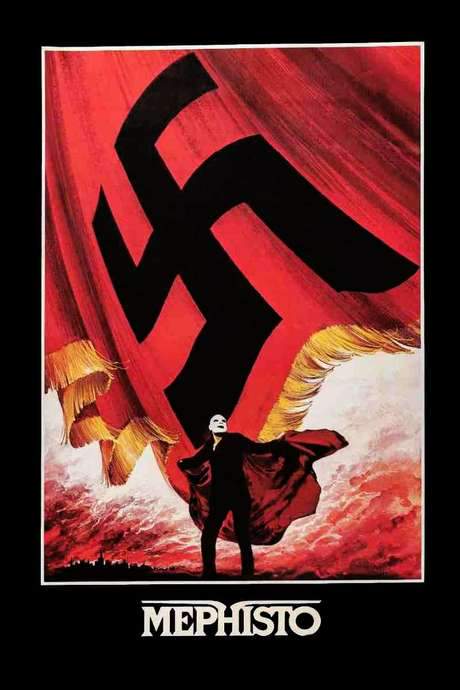
A German stage actor attains sudden fame for his role in a Faustian play as the Nazis seize power in pre‑WWII Germany. As his colleagues flee or are crushed by the regime’s terror, the acclaim for his character eclipses his own identity, and he discovers his best performance is merely keeping up appearances for his Nazi patrons.
Warning: spoilers below!
Haven’t seen Mephisto yet? This summary contains major spoilers. Bookmark the page, watch the movie, and come back for the full breakdown. If you're ready, scroll on and relive the story!
Read the complete plot breakdown of Mephisto (1981), including all key story events, major twists, and the ending explained in detail. Discover what really happened—and what it all means.
Höfgen, portrayed by Klaus Maria Brandauer, embodies a Mephistopheles-meets-Faustus dilemma: he trades conscience for a place at center stage, ingratiating himself with the Nazi Party to keep his job and climb the social ladder.
The first third follows his ascent in provincial theaters, where a restless, passionate actor toils for notice, occasionally dancing and singing and taking film parts to stay visible. He even founds a Bolshevik theater with a friend to generate work during the avant-garde surge of the early 1930s, all before the Nazis seize power. Initially, Hendrik is more successful in his social and romantic life than on the stage. Both threads collide when his new wife Barbara Bruckner, Krystyna Janda, watches him perform the ultimate role, Mephisto, just as the political climate grows dangerous.
As the Nazi threat rises, Höfgen returns to Germany drawn by the promise of forgiveness for his earlier theatrical escapades and a longing to perform in his native tongue. He does not hesitate when the regime offers him stardom, and soon the public and the regime alike applaud his talents. The national theatre becomes his arena, and he wields his Mephisto persona to navigate the brutal cultural restrictions, expanding his power while quietly excusing the moral compromises he makes to help friends who would otherwise be targeted.
Throughout, the plot circles the irony at the story’s heart: Höfgen’s lifelong dream is to become Germany’s greatest actor, capable of delivering Hamlet and Mephisto with unparalleled mastery. Yet the path to that dream requires him to sacrifice his conscience, and in the end, it is not Mephisto that dominates his fate but a Faustian bargain gone awry. The Nazi leader—an ominous figure in the film’s world—looms as the true Mephisto, a chilling reminder that power can rewrite art and ethics alike.
The film’s temperature rises as Höfgen’s ascent depends less on raw talent and more on intimate ties with those in power. His dealings reveal a man who rationalizes every concession as a necessary compromise, while the consequences ripple through the lives of those around him, including the circle of actors and friends who stand by him as the regime tightens its grip. In the end, the story leaves viewers pondering whether true artistry can survive within a system built on coercion, surveillance, and fear, and whether any individual’s ascent can ever be truly separate from the moral costs it exacts.
Last Updated: October 09, 2025 at 14:43
Discover curated groups of movies connected by mood, themes, and story style. Browse collections built around emotion, atmosphere, and narrative focus to easily find films that match what you feel like watching right now.
Stories of creators facing ethical decay to survive within an oppressive system.If you liked Mephisto, explore these similar stories about artists, intellectuals, and performers navigating oppressive political systems. These films share themes of ethical bargaining, identity crisis, and the high cost of maintaining one's craft under tyranny, offering a deep look at the moral decay that accompanies power.
The narrative typically follows a talented individual whose ambition or desire to create clashes with the demands of an authoritarian state. The central conflict is internal, charting a character's journey from principle to complicity, often through a series of rationalized compromises. The arc is one of moral descent, where professional success is paired with profound personal loss.
These films are grouped together because they share a core focus on the psychological and ethical toll of collaborating with oppressive power structures. They feature a similar mood of claustrophobic anxiety and a steady, inevitable pacing that mirrors the inescapable nature of the protagonist's moral quandary.
Character-driven dramas where tension builds steadily towards a bleak moral collapse.For viewers who appreciated the methodical pacing and psychological depth of Mephisto, this thread features movies with a similar slow burn structure. These character studies build tension steadily, leading to a bleak realization or moral collapse, and are perfect for fans of heavy, intense dramas.
The narrative pattern is one of relentless, logical progression. There are no sudden twists so much as a gradual, step-by-step unraveling of a character's psyche or moral foundation. The plot is driven by internal dilemmas rather than external action, creating a sense of claustrophobia and inescapable fate as the protagonist moves towards their downfall.
This thread groups films that share a specific pacing and emotional trajectory. The combination of a steady narrative build, high psychological intensity, and a ultimately bleak resolution creates a cohesive viewing experience for those who appreciate deeply unsettling and thought-provoking character studies.
Don't stop at just watching — explore Mephisto in full detail. From the complete plot summary and scene-by-scene timeline to character breakdowns, thematic analysis, and a deep dive into the ending — every page helps you truly understand what Mephisto is all about. Plus, discover what's next after the movie.
Track the full timeline of Mephisto with every major event arranged chronologically. Perfect for decoding non-linear storytelling, flashbacks, or parallel narratives with a clear scene-by-scene breakdown.
Discover the characters, locations, and core themes that shape Mephisto. Get insights into symbolic elements, setting significance, and deeper narrative meaning — ideal for thematic analysis and movie breakdowns.
Get a quick, spoiler-free overview of Mephisto that covers the main plot points and key details without revealing any major twists or spoilers. Perfect for those who want to know what to expect before diving in.
Visit What's After the Movie to explore more about Mephisto: box office results, cast and crew info, production details, post-credit scenes, and external links — all in one place for movie fans and researchers.
Discover movies like Mephisto that share similar genres, themes, and storytelling elements. Whether you’re drawn to the atmosphere, character arcs, or plot structure, these curated recommendations will help you explore more films you’ll love.
Mephisto (1981) Scene-by-Scene Movie Timeline
Mephisto (1981) Movie Characters, Themes & Settings
Mephisto (1981) Spoiler-Free Summary & Key Flow
Movies Like Mephisto – Similar Titles You’ll Enjoy
Faust (2013) Full Summary & Key Details
The Mephisto Waltz (1971) Full Movie Breakdown
Parsifal (1982) Story Summary & Characters
Doctor Faustus (1982) Movie Recap & Themes
Hitler: The Rise of Evil (1000) Movie Recap & Themes
Faust (1985) Story Summary & Characters
Hanussen (1988) Plot Summary & Ending Explained
The Actress (1988) Complete Plot Breakdown
Othello (1922) Film Overview & Timeline
The Damned (1969) Complete Plot Breakdown
Holocaust (1000) Plot Summary & Ending Explained
Faust (1960) Plot Summary & Ending Explained
Faustina (1957) Spoiler-Packed Plot Recap
Doctor Faustus (1967) Detailed Story Recap
Faust (1926) Story Summary & Characters