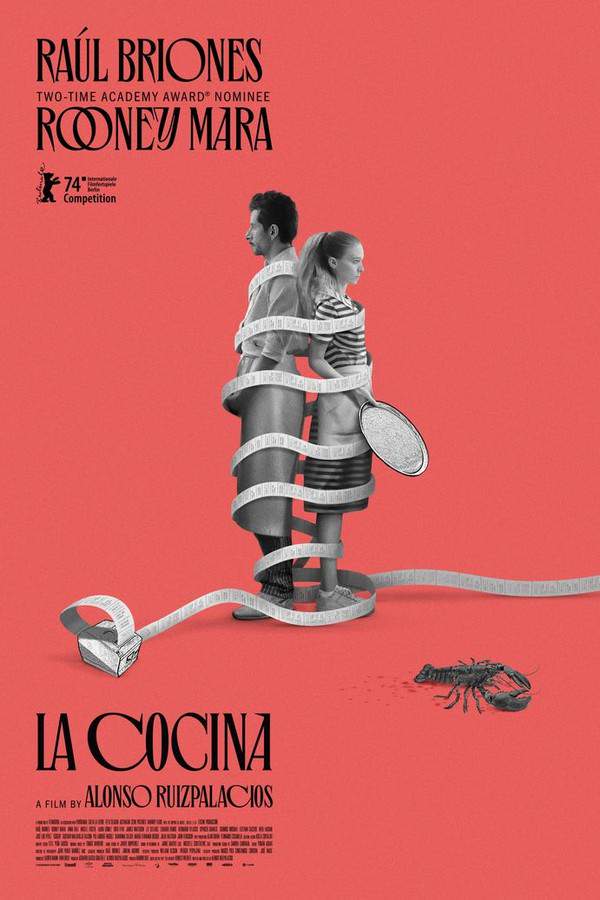
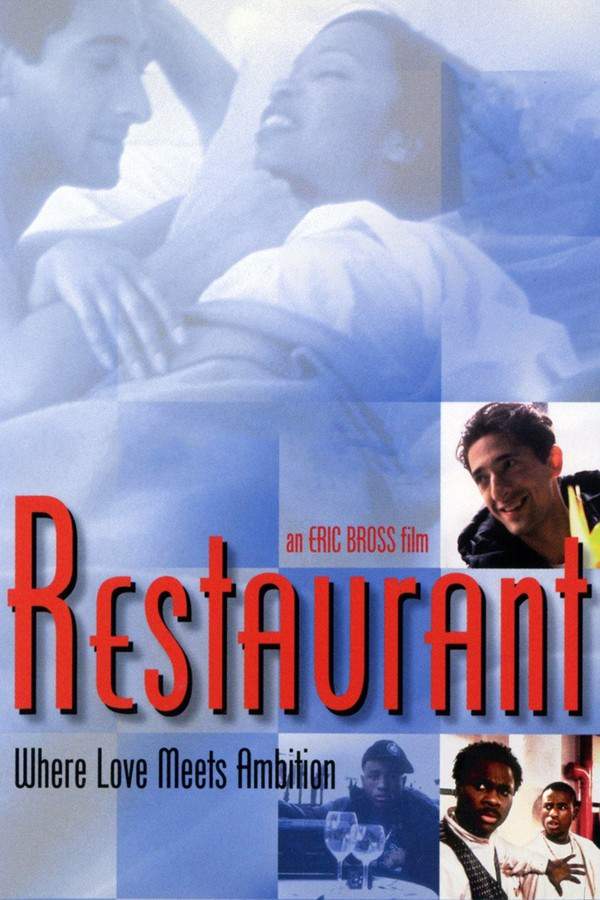
Rashid, a successful Arab American entrepreneur, runs The Grill, a large upscale Times Square tourist trap. The kitchen, tucked away underground, is staffed by undocumented immigrants—mostly Latin Americans with a handful of Arabs—who must push themselves to the limit during the rush hours to deliver orders brought by the waitresses, who are predominantly white Americans. Rashid repeatedly promises to secure legal status for the cooks but consistently fails to act on those promises, leaving the workers in a precarious, high-pressure cycle.
Estela, a newly arrived Hispanic immigrant who does not speak English, comes to work in The Grill after knowing Pedro, and she is quickly introduced to the staff and the restaurant’s rough, unspoken rules. Pedro is a charming yet combustible Mexican cook, and his relationship with his girlfriend, Julia, one of the waitresses, becomes a focal point of the kitchen’s tensions. The conversations among the staff frequently skim over the delicate lines between Hispanics and “Gringos,” and between male Latin American immigrants and female “Gringas,” revealing a daily, lived reckoning with power, desire, and belonging.
Julia is pregnant and determined to obtain an abortion, while Pedro, deeply in love with her, hopes she will keep the child and even fantasizes about them fleeing to a pristine beach in Mexico where their son could grow up free. In the end, Pedro helps gather the money for the abortion, and Julia goes through with it, carrying the burden largely by herself.
The first shift proves especially nerve-wracking: a broken soda machine floods the kitchen, and the staff must cope with the chaos while restraining their emotions. During the break, when Pedro asks the workers about their dreams, Nonzo tells a strange, almost fable-like tale about a disabled immigrant who is touched twice by a “green light”—the first time saving him from deportation, the second time leaving him speechless about what he had said. The meaning of the second touch remains elusive, hanging in the air as a recurring motif.
On another shift, trouble piles up for Pedro. He lashes out violently in response to provocation from a fellow cook, and then he makes a startling gesture of generosity by giving a hungry homeless vagrant one of the restaurant’s prized lobsters. To cap the mounting tension, $823 in cash disappears from the restaurant register, and Pedro is suspected of theft because the sum matches the cost of Julia’s abortion. The mystery is ultimately resolved when the money is found under a desk, revealing that there was no theft after all.
After the abortion, Julia faints in the kitchen, and Pedro is stunned to learn that she is already a mother, raising a ten-year-old boy named Abe on her own. Enraged and unsettled, Pedro’s emotions surge into a wild rampage that sweeps through the underground kitchen and spills into the plush dining area upstairs, overturning tables, wrecking equipment, and bringing the restaurant to a standstill. Rashid confronts Pedro, but Pedro remains silent, his body and spirit bathed in an eerie green light that also sweeps over Estela, signaling a moment of shared, uncanny consequence for everyone involved.