Plot Explained Spoilers guaranteed!
Plot Explained

Browse by genre

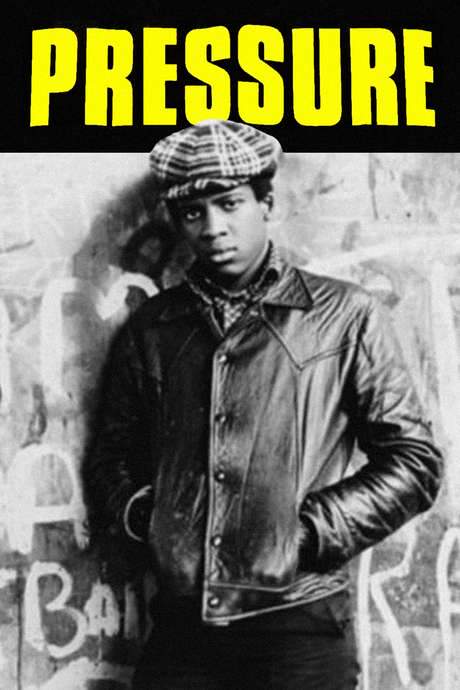
Pressure (1975) movie poster

Plot Summary

Pressure (1975) Plot Summary Explained

Release, runtime and language
1975 · 126 mins · English
Loading streaming availability…
Directed by
Horace Ové
Starring
Philip Jackson, Ray Burdis, Norman Beaton, Herbert Norville, John Blundell, Archie Pool

A British-born younger son of an immigrant family from Trinidad finds himself adrift between two cultures.

On this page (5)
  1. 1 Where to watch
  2. 2 What happens: full plot
  3. 3 Plot questions answered
  4. 4 Movie threads
  5. 5 Every angle
Loading streaming availability…

Full plot summary · contains spoilers

What Happens in Pressure: Full Plot Summary

The whole story of Pressure (1975) explained, from the opening scene to the final frame: every key event, every twist and what it all adds up to. Read it as a quick recap before the sequel, to check a scene you missed, or to finally understand what really happened.

Tony Herbert Norville is a second-generation Black British teenager, born and raised in Britain. The rest of his family—his mother, father, and older brother—were born in Trinidad in the Caribbean. This shared origin shapes how each generation views the society they live in. Tony’s mother emphasizes a message of hard work, discretion, and strict respect for White people's laws because those who hold power are white.

The film sets up a tension between generations: the older generation grows comfortable with a society ruled by white English authority, while the younger generation leans toward awareness of discrimination and the need for change. Tony’s brother, Ram John Holder, is active in the Black Power movement and argues that Black people are treated as second-class citizens, and that change requires collective action and political organization. He pushes a message of black consciousness, heritage, and empowerment, insisting that they must organize to confront the system since the government does not stand with them.

Tony strives to assimilate into the white-dominated society even as he tries to honor his family’s traditions. He faces repeated obstacles that test his resolve and sense of belonging. One night, while out dancing with a white friend, a white adult confronts them and warns that if he doesn’t leave, she will call the police, insisting the white girl should be ashamed for bringing a Black boy home. This moment underscores the everyday hostility Tony confronts while trying to fit in.

When Tony attends his brother’s meeting, he witnesses Black activists under pressure from authorities. Police forcefully enter the gathering without warrant, assault the participants, and arrest them. The assault extends into Tony’s home life as officers later tear through his family’s home in search of non-existent drugs, a stark illustration of how state power targets Black communities.

Beyond these scenes of conflict, Tony’s professional life mirrors the broader oppression. He struggles to find employment that aligns with his education, and his frustration grows as he confronts barriers that seem to block his progress in a country that promises opportunity but often delivers exclusion.

The personal struggle of Tony is compounded by the tension of identity. Born in Britain to West Indian parents, he feels caught between two worlds: he can’t fully relate to his brother, whose upbringing was not in Europe, and he can’t quite connect with white friends who do not share his daily obstacles. However, through his experiences, Tony begins to see a larger pattern of power. He concludes that while only a small group of whites may hold visible authority, many white people are unknowingly subject to the same system of inequality—power is distributed unevenly, and awareness matters.

The film thus presents a nuanced portrait of a community navigating racism, generational divides, and the search for belonging. It raises questions about how individuals respond to injustice—whether through assimilation, protest, or a critical rethinking of the social order—while staying rooted in the intimate experiences of Tony and his family.
Last updated: October 09, 2025 at 12:35

Was this helpful?

Plot questions answered

Pressure Plot Explained: Your Questions Answered

The questions people ask most about Pressure (1975): what happens in the confusing scenes, why the characters do what they do, the twists, hidden details and what the ending means. Each answer contains spoilers.

Q1

Why does Tony's mother tell him to respect white people's laws?

Tony's mother believes that as Black people in Britain, her family must work hard, stay quiet, and comply with the system because white people hold all the power. This comes from her experience as a Trinidad-born immigrant who has accepted the social order as the only way to survive. Her advice reflects the older generation's strategy of assimilation and discretion, which contrasts sharply with her other son's activism.

Foreshadowing: Earlier, the film establishes that the family came from Trinidad seeking a better life, and the mother's guidance reflects her desire to protect Tony from the dangers she perceives in challenging authority.

  • mother advice
  • respect authority
  • assimilation
  • older generation
  • trinidad immigrant
Q2

Why can't Tony find a job despite being educated?

Tony faces systemic racism in the job market where employers overlook qualified Black candidates regardless of their education. The film shows his repeated rejections as evidence that British society offers false promises of opportunity to Black youth. This mirrors the broader theme of structural barriers that keep Black people excluded from advancement.

Foreshadowing: The opening scenes establish Tony's academic promise, making his later rejections feel like a betrayal of the meritocratic ideal.

  • employment discrimination
  • systemic racism
  • job rejections
  • qualified but rejected
Q3

What happens during the police raid on Tony's home?

Police officers violently search Tony's family home for drugs and weapons that do not exist, tearing apart the living space while the family watches helplessly. This raid represents the state's targeted harassment of Black families and communities, demonstrating how Black Power groups are suppressed through intimidation. The incident directly exposes Tony to the reality of state violence against Black people.

Foreshadowing: The raid follows Tony's attendance at his brother's meeting, suggesting retaliation for his involvement with Black activism.

  • police raid
  • home invasion
  • state violence
  • harassment
  • black community
Q4

What triggers Tony's political awakening?

Tony's awakening comes from accumulated experiences: the public humiliation at his white friend's apartment, witnessing police brutality at his brother's meeting, the invasive home raid, and constant job rejections. These events collectively expose the systemic nature of racism rather than treating it as isolated incidents. By the end, Tony develops a nuanced understanding that power concentrates among a few whites while many whites remain unaware of their own subjugation.

Foreshadowing: Tony initially dismisses his brother's Black Power rhetoric, but each subsequent discriminatory encounter shifts his perspective.

  • political awakening
  • realization
  • systemic oppression
  • power structure
  • awareness
Q5

Why does Tony feel caught between two cultures?

Tony was born and raised in Britain, making him a second-generation immigrant who doesn't fully share his parents' Caribbean perspective. He cannot relate to his brother's activism because his brother grew up in Trinidad, yet he cannot fully connect with white friends who don't experience daily racism. This positions Tony as a man without a clear community, forcing him to forge his own identity.

Foreshadowing: The film opens by establishing Tony's unique position as British-born, unlike the rest of his family.

  • identity crisis
  • second generation
  • belonging
  • dual identity
  • culture clash
Q6

Why is Tony's brother involved in the Black Power movement?

Tony's brother has experienced firsthand how Black people are treated as second-class citizens in Britain and believes collective political action is necessary for change. He advocates for Black consciousness, heritage pride, and community organization to confront systemic oppression. Unlike Tony's strategy of assimilation, the brother sees direct resistance as the only viable path.

Foreshadowing: The brother's activism is introduced early through community meetings where he speaks about systemic discrimination.

  • black power
  • activism
  • political organizing
  • brother
  • collective action
Q7

What happens when Tony visits his white friend's apartment?

After dancing together, a white adult confronts Tony and orders him to leave, accusing the white girl of shame for bringing a Black boy home. This incident demonstrates the casual racism Tony faces even in private social settings. It reveals that his efforts to assimilate and build relationships with white people are met with hostility and policing of racial boundaries.

Foreshadowing: This scene occurs early in Tony's journey, establishing the personal toll of everyday racism.

  • interracial relationship
  • public harassment
  • racial prejudice
  • social rejection
Q8

What is Tony's final conclusion about power in British society?

Tony concludes that while a small group of white people hold visible authority, many white individuals are themselves subject to the same oppressive system without realizing it. His view becomes nuanced, he rejects his brother's blanket condemnation of all white people while also rejecting naive assimilation. He believes liberation requires raising awareness about how power operates rather than simply blaming individual white people.

Foreshadowing: This conclusion builds on Tony's observations throughout the film, particularly his brother's oversimplified rhetoric and the various encounters with both hostile and indifferent white people.

  • conclusion
  • power structure
  • nuanced view
  • awareness
  • liberation

Movie threads

More Movies Like Pressure, by Mood & Story

Curated lists built around what makes Pressure tick: the same mood, the same kind of story or the same emotional payoff. Each list explains why these movies belong together.

Identity Crisis Dramas like Pressure

Powerful stories of characters torn between two opposing cultures or realities. If you liked Pressure, explore more movies about characters wrestling with their place between two cultures. These films capture the tension of assimilation, family expectations, and the search for self in a hostile or indifferent society.

  • alienating
  • frustrating
  • thoughtful
  • urgent
  • oppressive
  • somber
  • Tone: tense, thoughtful, alienating
  • Pacing: steady, deliberate
Why these movies?

The story pattern: The narrative follows a protagonist, often a member of a marginalized group, as they grapple with the competing demands of heritage and assimilation. The central conflict arises from a generational or societal divide, forcing the character to confront who they are versus who they are expected to be.

Why they belong together: Movies in this thread share a focus on the emotional and psychological toll of an identity crisis. They are united by themes of cultural dissonance, systemic pressure, and the heavy personal cost of finding one's authentic self.

Tense Dramas about Systemic Injustice like Pressure

Deliberate, tense dramas exposing the crushing weight of institutional prejudice. Find movies similar to Pressure that explore themes of racial discrimination and systemic oppression. These films share a tense, heavy atmosphere and a steady pacing that immerses you in the protagonist's frustrating struggle against a biased world.

  • tense
  • oppressive
  • urgent
  • frustrating
  • heavy
  • somber
  • Tone: tense, oppressive, bleak
  • Pacing: steady, deliberate build
Why these movies?

The story pattern: Stories in this thread often follow a linear, personal journey where a character's escalating encounters with prejudice illuminate the broader mechanisms of an oppressive system. The plot builds through a series of microaggressions and larger confrontations, leading to a climactic moment of awareness or resistance rather than a neat resolution.

Why they belong together: These films are grouped by their shared commitment to portraying the slow, grinding pressure of systemic bias. They create a coherent viewing experience defined by a tense tone, steady pacing, high emotional intensity, and a focus on themes like discrimination and political awakening.

Every angle

Pressure (1975) Explained: Plot, Timeline & Characters

Everything about Pressure in one place: what happens in the plot summary, the timeline in chronological order, the characters and meaning and a spoiler-free summary. What's After the Movie adds the cast, box office and post-credit scenes.

Coming soon on iOS and Android

The Plot Explained Movie Summary App

Plot summaries, endings explained and timelines on your phone. Catch up on any movie in minutes, save your favorites and never miss a twist again.

Be the first to know when we launch. Your email stays private, always.

Learn more about the app