Plot Explained Spoilers guaranteed!
Plot Explained

Browse by genre

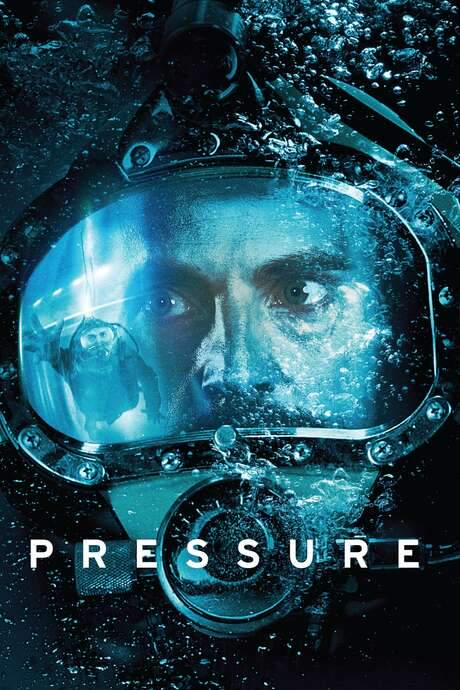
Pressure (2015) movie poster

Plot Summary

Pressure (2015) Plot Summary Explained

Release, runtime and language
2015 · 91 mins · English
Loading streaming availability…
Directed by
Ron Scalpello
Starring
Matthew Goode, Danny Huston, Joe Cole, Ian Pirie, Alan McKenna, Daisy Lowe

Hold your breath Four divers are stuck deep underwater in a vessel after a freak storm destroys their ship. Will they survive?

On this page (5)
  1. 1 Where to watch
  2. 2 What happens: full plot
  3. 3 Plot questions answered
  4. 4 Movie threads
  5. 5 Every angle
Loading streaming availability…

Full plot summary · contains spoilers

What Happens in Pressure: Full Plot Summary

The whole story of Pressure (2015) explained, from the opening scene to the final frame: every key event, every twist and what it all adds up to. Read it as a quick recap before the sequel, to check a scene you missed, or to finally understand what really happened.

A group of oil company employees from Vaxxilon find themselves trapped in a dire situation while working on a boat in the Indian Ocean, near the coast of Somalia. The night shift supervisor, Karsen, sends four divers—Engel, Mitchell, Jones, and Hurst—down in a diving bell to repair a damaged oil pipeline.

After successfully completing their task, the crew begins their ascent, but their plans are abruptly disrupted when a powerful storm strikes, leading to the catastrophic failure of the cables that support their diving bell. In a desperate attempt to communicate with the surface ship, one crew member ventures out only to discover the lifeless body of Karsen and the wreckage of the support vessel on the ocean floor. Now faced with the harrowing challenge of survival, the four divers must rely on their diving skills and knowledge to escape from a staggering depth of 670 feet (200 m) while managing their dwindling oxygen supply.

In a hasty decision spurred by panic, Hurst opts to search for the ship for extra oxygen. Unfortunately, he succumbs to hypothermia, spiraling into a state of delusion and ultimately refusing to return to the safety of the bell. Realizing that Hurst faces a slow and painful death, Jones makes the agonizing choice to end Hurst's suffering by cutting off his oxygen supply. Tragically, just moments from the very cylinder he was seeking, Hurst meets his end.

While Vaxxilon abandons hope for the men, their distress signal is eventually picked up by a Chinese fishing vessel. However, communication is soon lost due to damage sustained during the storm, leaving the divers in precarious uncertainty. Fortunately, they later make contact with the navy frigate HMS Marlborough, discovering that the fishing boat relayed their SOS. Unfortunately, without knowing their precise location, rescue efforts will be delayed for hours. As they begin to run out of air, Engel undertakes a dangerous dive to retrieve additional oxygen cylinders from the pipeline's drywall chambers. In a separate attempt to aid their navigation, Mitchell makes a dive to bring their locator beacon nearer to the surface. Although he is successful, his efforts come at a cost; he suffers multiple jellyfish stings and ultimately perishes.

The HMS Marlborough finally manages to detect the diving bell but requires at least an hour to deploy rescue divers. With time running out, Engel resolves to float the bell to the surface, but it becomes lodged 170 feet (52 m) away. Faced with a grim reality, Engel makes the heartbreaking decision to use the remaining dive helmet and swim for the surface himself, determined to save Jones. In a moment of profound selflessness, he shares a poignant story about how his past actions caused a young boy’s untimely death. Although Jones manages to reach the surface, he suffers from decompression sickness, bleeding from the mouth as he is rescued by the Marlborough's team. Sadly, as Engel makes his attempt to swim to safety, he tragically drowns, leaving behind only a small chain with a heart emblem as a reminder of his sacrifice.

Last updated: September 22, 2026 at 18:34

Was this helpful?

Plot questions answered

Pressure Plot Explained: Your Questions Answered

The questions people ask most about Pressure (2015): what happens in the confusing scenes, why the characters do what they do, the twists, hidden details and what the ending means. Each answer contains spoilers.

Q1

How did the divers get trapped underwater in Pressure?

The four divers, Engel, Mitchell, Jones, and Hurst, were lowered in a diving bell to repair an oil pipeline on the Indian Ocean floor for Vaxxilon. After completing the job and beginning their ascent, a powerful storm destroyed the support ship and snapped the cables holding the diving bell in place, stranding them at 670 feet (200 m) below the surface with no way back to the surface.

Foreshadowing: Karsen's decision to send the team down during night shift conditions in an area known for severe weather hints at the operational risk that later proves fatal.

  • diving bell
  • storm
  • cables
  • trapped
  • Vaxxilon
  • pipeline
Q2

What happened to Karsen and the support ship?

When a crew member left the diving bell to investigate the damage, he found Karsen's lifeless body and the wreckage of the support vessel on the ocean floor. The storm had destroyed the ship and killed the surface crew, leaving the divers completely cut off from any help above.

  • Karsen
  • support ship
  • wreck
  • night shift supervisor
  • storm damage
Q3

Why did Hurst leave the diving bell to search for the ship?

Hurst panicked as the group's oxygen supply dwindled and made a hasty decision to search the ocean floor for the sunken ship, hoping to find additional oxygen cylinders. Against Karsen's prior orders to stay together, he ventured out alone and quickly developed hypothermia from the cold water, which sent him into a delusional state.

Foreshadowing: Hurst's impulsive behavior is hinted at early when he shows impatience with the mission timeline.

  • Hurst
  • hypothermia
  • oxygen
  • panic
  • delusional
  • diving bell
Q4

Why did Jones cut off Hurst's oxygen supply?

Hurst had slipped into hypothermia-induced delusion and was refusing to return to the diving bell, meaning he would die a slow, agonizing death on the ocean floor. Jones made the agonizing decision to end Hurst's suffering by cutting his oxygen supply, an act of euthanasia. Tragically, Hurst died just moments away from the very cylinder he had been searching for.

  • Jones
  • Hurst
  • euthanasia
  • oxygen
  • hypothermia
  • mercy killing
Q5

How did Mitchell die during the rescue attempt?

Mitchell made a solo dive to bring the group's locator beacon closer to the surface so the navy could pinpoint their location. He successfully completed the mission, but during the dive he suffered multiple jellyfish stings and died shortly after returning, leaving Engel and Jones devastated.

  • Mitchell
  • jellyfish stings
  • locator beacon
  • sacrifice
  • death
Q6

Why did Vaxxilon give up on rescuing the divers?

After the storm destroyed the support ship and killed the surface crew, Vaxxilon's response was effectively to abandon hope for the trapped men. The corporate decision to write them off reflected a cold cost-benefit calculation, and it was only by chance that a nearby Chinese fishing vessel picked up their distress signal.

  • Vaxxilon
  • abandon
  • oil company
  • corporate
  • rescue
Q7

How did the HMS Marlborough find the diving bell?

A Chinese fishing vessel initially picked up the divers' SOS, but it lost communication after sustaining storm damage. The fishing boat relayed the distress call to the navy frigate HMS Marlborough, which eventually detected the diving bell. However, without exact coordinates, rescue was delayed for hours, forcing the men to take desperate measures.

  • HMS Marlborough
  • fishing vessel
  • distress signal
  • SOS
  • navy
  • rescue
Q8

Why did Engel decide to sacrifice himself for Jones?

With the HMS Marlborough needing at least another hour to deploy rescue divers and their oxygen nearly exhausted, Engel chose to give Jones the last remaining dive helmet so Jones could reach the surface. Before swimming free himself, Engel shared a confession about how his past selfish actions had caused a young boy's death, suggesting he saw this final act as redemption.

Foreshadowing: Engel's earlier willingness to take dangerous dives for the group, including retrieving oxygen cylinders, foreshadows his readiness to put himself last.

  • Engel
  • sacrifice
  • redemption
  • young boy
  • dive helmet
  • selflessness
Q9

What was the story Engel told Jones before drowning?

As Engel gave Jones the remaining dive helmet, he shared a poignant confession: his past selfish actions had indirectly caused a young boy's death. The story served as both a personal confession and a justification for his sacrifice, showing that Engel wanted his final act to be one of unselfishness, the opposite of who he had been before.

  • Engel
  • confession
  • young boy
  • backstory
  • redemption
  • guilt
Q10

Why did Engel drown after Jones made it to the surface?

After handing over the last dive helmet to Jones, Engel attempted to swim to the surface on his own without an oxygen supply. Knowing Jones had been rescued gave him peace of mind, but the physical toll of the dive and lack of breathing gas meant he could not make the remaining distance. He drowned just feet from salvation.

Foreshadowing: Engel's chain with a heart emblem, shown earlier in the film, becomes a symbol of the love he was trying to honor through his sacrifice.

  • Engel
  • drowning
  • surface
  • sacrifice
  • chain
  • heart emblem
Q11

What was the decompression sickness Jones suffered after being rescued?

Jones ascended from 670 feet far too quickly and without the proper staged decompression stops, causing dissolved nitrogen in his blood to form dangerous bubbles. He reached the surface bleeding from the mouth and was immediately taken in by the HMS Marlborough's team. Decompression sickness is a common and often fatal hazard of emergency deep-water ascents.

  • Jones
  • decompression sickness
  • the bends
  • rescue
  • nitrogen
  • ascent
Q12

What was the significance of Engel's heart chain at the end?

The small chain with a heart emblem was a personal keepsake Engel wore throughout the film. After his death, it became a lingering symbol of his sacrifice and the love or memory he carried with him. It is the only physical remnant of Engel left behind, marking the emotional weight of his final selfless act.

Foreshadowing: The chain is briefly visible on Engel during the early diving scenes, planting a visual motif that pays off at the end.

  • Engel
  • chain
  • heart emblem
  • keepsake
  • symbol
  • sacrifice
Q13

How long could the divers survive on their remaining oxygen?

The diving bell had only enough oxygen for the four men to breathe for a limited number of hours at 670 feet, where higher pressure dramatically increases gas consumption. This ticking clock forced every decision in the film, from Hurst's desperate search to Engel's final sacrifice, creating the constant pressure the film's title refers to.

  • oxygen supply
  • pressure
  • survival
  • diving bell
  • ticking clock
Q14

Did Vaxxilon ever attempt to rescue the trapped divers?

No. After losing the support ship and its crew, Vaxxilon effectively abandoned any rescue effort for the trapped men. The company did not send another vessel, relay their distress signal, or coordinate with naval authorities. It was only the unrelated actions of a Chinese fishing boat and the HMS Marlborough that gave the surviving divers any chance of being found.

  • Vaxxilon
  • oil company
  • abandon
  • rescue effort
  • corporate negligence

Movie threads

More Movies Like Pressure, by Mood & Story

Curated lists built around what makes Pressure tick: the same mood, the same kind of story or the same emotional payoff. Each list explains why these movies belong together.

Movies like Pressure: claustrophobic confined space survival thrillers

Stories where escape narrows while the walls close in around desperate survivors. Discover claustrophobic survival thrillers like Pressure where characters are sealed inside a hostile space with dwindling oxygen and no easy escape. These confined space movies share Pressure's oppressive tone, life-or-death stakes, and steady escalation of dread that keeps viewers holding their breath from start to finish.

  • claustrophobic
  • oppressive
  • suffocating
  • trapped
  • desperate
  • anxious
  • Tone: tense, oppressive
  • Pacing: steady, escalating pressure
Why these movies?

The story pattern: Stories typically open with a small group or lone protagonist already cut off from the outside world, then build toward a single, almost impossible goal: getting out alive. Dwindling resources turn ordinary decisions into moral crises, the geography of the trap shrinks in the viewer's mind, and escape, when it comes, is rarely clean. The narrative is linear, claustrophobic, and ruthlessly focused on the next problem.

Why they belong together: These films share Pressure's core ingredients: a sealed or partially sealed setting, a ticking clock measured in oxygen, air, or body heat, and a tone that is oppressively tense rather than action-packed. The pacing is steady and incremental, the emotional weight is heavy, and the intensity stays high because there is no room to breathe, literally or figuratively.

Movies like Pressure: bittersweet survival stories where victory comes at a devastating cost

Journeys where making it out alive costs something that cannot be undone. Find survival dramas like Pressure where escaping disaster means losing friends to sacrifice, exposure, or impossible choices. These bittersweet survival movies share Pressure's heavy emotional weight, morally complicated decisions, and endings that mix relief with lingering loss for anyone who loved the characters.

  • somber
  • sacrifice
  • grief
  • resilience
  • moral weight
  • loss
  • Tone: bittersweet, somber
  • Pacing: steady, character-driven escalation
Why these movies?

The story pattern: A small band is pushed to the edge by an overwhelming force of nature, system failure, or hostile environment. Bonds form quickly under pressure, then fracture as resources run out and someone suggests the unthinkable. The arc tends to move from hope, to grim cooperation, to sacrifice, to a quieter aftermath that lets the cost of survival land emotionally rather than triumphantly.

Why they belong together: These films cluster around a shared emotional shape: high-intensity survival situations, heavy moral weight, and endings that refuse to let victory feel clean. They trade spectacle for consequence, and they ask the viewer to sit with what was lost even when the final image is one of rescue or return.

Every angle

Pressure (2015) Explained: Plot, Timeline & Characters

Everything about Pressure in one place: what happens in the plot summary, the timeline in chronological order, the characters and meaning and a spoiler-free summary. What's After the Movie adds the cast, box office and post-credit scenes.

Coming soon on iOS and Android

The Plot Explained Movie Summary App

Plot summaries, endings explained and timelines on your phone. Catch up on any movie in minutes, save your favorites and never miss a twist again.

Be the first to know when we launch. Your email stays private, always.

Learn more about the app