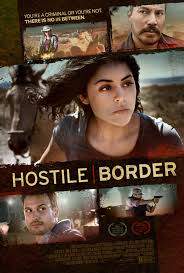
In Chicago, a young immigrant named Claudia finds herself in a precarious situation after being arrested. Having been brought across the border by her mother during her childhood, the circumstances leading to her arrest remain vague. What we do see is Claudia frequently in a restroom, using credit cards along with a mysterious device that appears to allow her to gather vital credit information as though it were part of a purchase transaction. Meanwhile, others are seen closely monitoring financial data, hinting at larger, more complex issues at play.
As the plot unfolds, it comes to light that Claudia and her mother are grappling with an overwhelming $20,000 debt, which leads them to seek a loan. However, Claudia faces a grim reality: as an undocumented immigrant, despite the fact she bears no responsibility for her status, she is informed that deportation is inevitable, regardless of the outcome of her legal woes. The film enlightens the audience about the term "pocha," referring to individuals of Mexican descent who have limited proficiency in Spanish, a detail that resonates deeply with Claudia's character, as she seldom displays any familiarity with the language.
Confronted with a tough choice, Claudia opts to fight her case rather than plead guilty, which would result in automatic deportation. This decision lands her in a detention facility close to the Mexican border. Under her mother's advice, she is guided to locate her father, Andres, in Mexico. In an unexpected turn of events, Claudia manages to escape with the help of a taxi driver. A border guard, seemingly indifferent to the situation, allows them through. Upon reaching her father's ranch, the atmosphere is complicated; while her grandmother, whose English communication skills are non-existent, is welcoming, Andres remains distant and nonchalant about her arrival.
Andres reluctantly agrees to let Claudia stay, but with strings attached—she must contribute to the ranch work. As she begins helping with tasks such as fence repairs, she meets Arturo, a kinder soul among Andres's employees. However, not long after, Rick appears on the scene, threatening Arturo and warning him against betrayal, a chilling reminder of their harsh reality. Under Rick’s influence, Claudia is forced to act as though she is more familiar with ranch life than she actually is, hoping to remain in his good graces.
Claudia's labor continues as she is tasked with fire-setting to deter trespassing cattle. Ultimately, Rick's grip on her life tightens as he takes her across the border to San Diego using a dubious ID that grants them passage without scrutiny. There, he provides her with a stark ultimatum: join him in his plans or remain an illegal alien unable to secure a better life. As temptation draws her in—with a large roll of cash offered as a bait—she finds herself back on the ranch, shackled by Rick's demands.
Tension escalates when a soldier visiting Andres comments on his newly restored truck, unaware of what transpired, and questions Claudia about Arturo’s whereabouts. She sorrowfully confirms Arturo’s demise, leading to a rift, as Andres begins to blame her for the escalating chaos around them. The narrative reaches a breaking point one night when Rick returns for luggage, resulting in a violent altercation that leaves Claudia's grandmother injured and Andres defending their home. The chaos draws military attention, leading to a frantic escape in Andres’ truck.
Realizing the device she used to set the cactus ablaze is still with her, Claudia makes a bold decision to set the truck on fire before leaping to safety. The following day, an intense scene unfolds as Andres and Claudia prepare to cross the border with a plan rooted in hope. Claudia, however, selflessly hands Andres cash with the request to locate her mother, choosing to retrace her steps back into Mexico. As she walks away, we see her navigate through a crowd of vehicles, all waiting to cross, selling food and goods, a fitting conclusion reflecting the struggle and resilience inherent in her journey.