








Plot Explained Spoilers guaranteed!
Plot Explained

Browse by genre

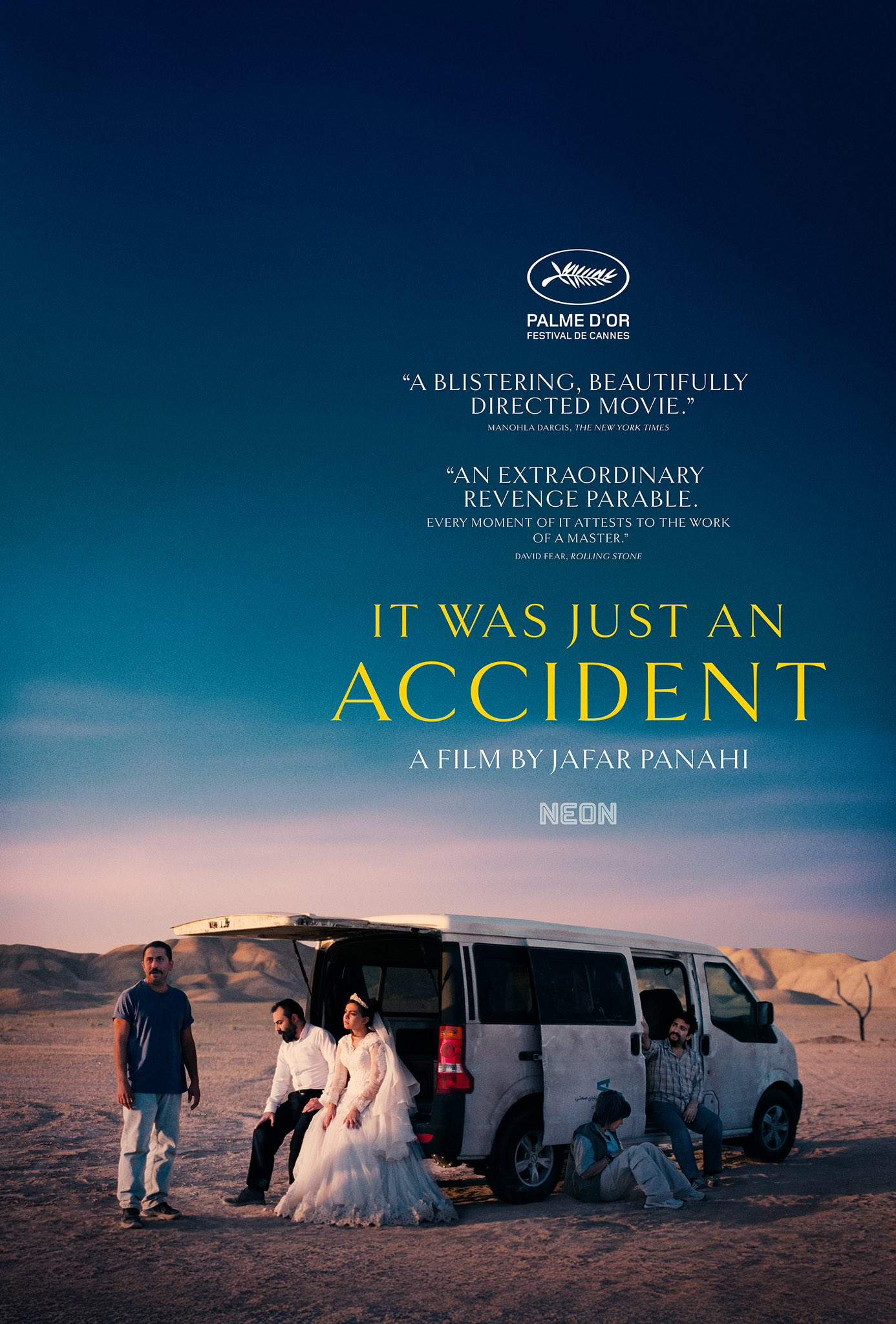
It Was Just an Accident (2025) movie poster

Ending Explained

It Was Just an Accident (2025) Ending Explained – Final Scene & Meaning

Release, runtime and language
2025 · 1 h 41 m · Persian
Echo score 88
JustWatch #672 48
Directed by
Jafar Panahi
Starring
George Hashem Zadeh, Ebrahim Azizi, Majid Panahi, Vahid Mobasseri, Maryam Afshari, Hadis Paak Baten
Budget
$6M

While working in his garage, Vahid is approached by a customer with car trouble and suddenly thinks he recognizes Eghbal, the officer who tortured him in prison. Consumed by thoughts of revenge yet plagued by doubt, Vahid and several fellow survivors launch a desperate investigation to uncover the truth. Their quest leads them into increasingly risky and absurd situations as they struggle to confirm they have the right man.

On this page (7)
  1. 1 Where to watch
  2. 2 What happens at the end
  3. 3 Final events in order
  4. 4 Ending questions answered
  5. 5 Movie threads
  6. 6 Movies like It Was Just an Accident
  7. 7 Every angle

Where to watch

Where to Watch It Was Just an Accident (2025)

Where can you watch It Was Just an Accident? Stream, rent or buy it in the US, including on Hulu, Kanopy and Amazon Video: current JustWatch availability with up-to-date prices.

Streaming availability powered by JustWatch

Ending explained · contains spoilers

What Happens at the End of It Was Just an Accident?

How It Was Just an Accident (2025) ends, what the final scene means, which earlier moments set it up and how to read the ending if the film leaves it open. The full ending explained, with every spoiler.

Vahid finally drags the trembling man into a remote clearing, ties him to a tree, and forces him to listen as the victims lay out every detail of the torture they endured. The prison‑camp rhythm of the shovel, the prosthetic‑leg click, the scarred wounds on the shins – each piece matches what the survivors remember of Eghbal, the “peg‑leg” intelligence officer who broke their bodies and spirits. When Vahid mentions that his wife has just given birth, the captive’s composure cracks; he stages a feigned innocence at first, but then, almost defiantly, admits he is indeed Eghbal, the very monster they have hunted.

Shiva, who has been quietly watching, can no longer contain herself. She strikes him with a shovel, demanding that he own his crimes instead of hiding behind ideology. Under the relentless pressure, Eghbal’s façade collapses and he bursts into a raw, broken confession – “I’m sorry.” The apology is not a clean absolution, but the first moment his self‑justifications drown in the weight of the victims’ testimony. Vahid, refusing to become a killer, slides a penknife to Eghbal so he can free himself, then he and Shiva drive away, leaving the man to decide his own fate.

The next morning, as Vahid helps his sister prepare a wedding trousseau, a white car pulls up outside his house. He hears the familiar, squeaky footstep that once signaled the terror of the secret police. The sound pauses, then recedes. Whether it is Eghbal’s car pulling away, a phantom of Vahid’s trauma, or a hint that the former torturer has chosen to walk away, the scene suggests that revenge would not have healed anyone, but a forced confession can at least begin the process of confronting the past. The film closes on the ambiguous echo of the footsteps, underscoring that the road to redemption is uncertain, and the scars left by oppression linger long after the gunfire stops.

Last updated: January 05, 2026 at 08:31

Was this helpful?

The last 4 events

How It Was Just an Accident Ends: The Final Events in Order

The last events of It Was Just an Accident (2025) in chronological order, the run-up to the ending explained above. The complete timeline has all 11 events, scene by scene.

Open the full timeline
  1. Fading alliance

    Frustrated, Hamid, Goli, and Ali decide to abandon Vahid and Shiva, leaving the two to pursue the truth with the captive. The shift in reliance places greater responsibility on Vahid and Shiva to elicit a confession. The group’s unity fractures at a critical moment.

    When
    Night
    Where
    Road/desert near captivity
  2. The quiet confrontation

    Vahid and Shiva drive the man to a secluded location, tie him to a tree, and wake him to demand a confession. At first he again claims mistaken identity, but he gradually confesses that he is Eghbal and argues that his actions served the regime’s aims. The two recount their torture to him, seeking accountability.

    When
    Night
    Where
    Quiet, secluded location
  3. Apology and release

    The captive finally apologizes after a tense exchange in which Vahid and Shiva reveal the pain they endured. Accepting the apology, Vahid frees him and drives away with Shiva, closing the confrontation on a restrained but uncertain note. The act seems to neutralize a direct threat for the moment.

    When
    Night
    Where
    Quiet location
  4. Foreshadowing at the homestead

    Later, Vahid and his mother prepare the van for his sister. A white car resembling Eghbal’s car appears nearby as Vahid goes inside the house to retrieve something. The sound of Eghbal’s squeaky prosthetic leg then nears, hinting that the cycle of threat may not be over.

    When
    Later
    Where
    Vahid’s home vicinity

Ending questions answered

It Was Just an Accident Ending: Your Questions Answered

The questions people ask most about the ending of It Was Just an Accident (2025): what the final scene means, how the twist works, what happens to each character and how to read the ending. Each answer contains spoilers.

Q1

Why does Vahid spare Eghbal instead of killing him?

Vahid chooses not to kill Eghbal because he refuses to become a murderer himself. After witnessing the victims lay out every detail of the torture and hearing Eghbal's broken confession, Vahid realizes that killing him would only perpetuate the cycle of violence. Instead, he slides a penknife to Eghbal so the former torturer can free himself, leaving the choice of what happens next to him.

  • vahid
  • eghbar
  • revenge
  • forgiveness
  • prison torture survivors
Q2

Is Eghbal dead or alive after the ending?

The film leaves Eghbal's fate deliberately ambiguous. After Vahid and Shiva drive away, the next morning brings a white car pulling up to Vahid's house. He hears the familiar squeaky footsteps that once signaled the secret police, but the sound pauses and then recedes. Whether Eghbal survived, returned, or the footsteps are a phantom of Vahid's trauma is never clarified.

  • eghbar fate
  • ending ambiguity
  • white car
  • secret police
Q3

What does the white car and footsteps scene mean at the end?

The white car and squeaky footsteps represent the lingering psychological trauma that haunts Vahid even after confronting his torturer. The fact that the sound pauses and recedes rather than approaching suggests either Eghbal choosing to walk away, Vahid's traumatized mind hearing things, or the idea that the cycle of oppression doesn't end cleanly. It's a deliberate narrative choice to keep the ending unresolved.

  • white car
  • footsteps
  • trauma
  • psychological ending
  • ambiguous ending
Q4

Why does Eghbal finally confess at the end?

Eghbal's confession crumbles under the weight of the victims' detailed testimony. When Vahid mentions his wife just gave birth, the captive's composure shatters, and he defiantly admits to being Eghbal. Later, Shiva's shovel attack and demand that he own his crimes rather than hide behind ideology breaks him completely, leading to his raw apology: "I'm sorry." The confession represents the collapse of his self-justifications.

  • eghbar confession
  • torture admit
  • prison survivors
  • confrontation
Q5

Why does Shiva attack Eghbal with the shovel?

Shiva can no longer contain her rage after witnessing the confrontation. She strikes Eghbal with the shovel because she wants him to physically feel what he inflicted on the survivors and demands he own his crimes instead of hiding behind ideological justifications. It's a moment of visceral justice that contrasts with the verbal confrontation.

  • shiva
  • eghbar attack
  • revenge
  • shovel
  • prison torture
Q6

Why does Vahid give Eghbal the knife to free himself?

By sliding the penknife to Eghbal, Vahid forces the former torturer to make his own choice, a stark contrast to how Eghbal once stripped victims of agency in prison. This act refuses to make Vahid into a killer while also forcing Eghbal to confront his own conscience. It's Vahid's way of seeking truth and accountability rather than taking vengeance.

  • penknife
  • vahid decision
  • choice
  • accountability
  • justice
Q7

What is the significance of the wedding trousseau scene at the end?

The scene of Vahid helping his sister prepare wedding trousseau the morning after confronting Eghbal represents life continuing and the possibility of moving forward. However, the intrusion of the white car and footsteps immediately shatters this fragile normalcy, reinforcing that the scars of oppression linger long after the confrontation ends. The wedding becomes a symbol of normalcy that trauma repeatedly disrupts.

  • wedding
  • trousseau
  • new life
  • trauma aftermath
  • vahid sister
Q8

What is the thematic meaning of the ambiguous ending?

The ambiguous ending reinforces that revenge cannot heal the deep scars left by state-sponsored torture. The survivors' forced confession begins a process of confronting the past, but the lingering sound of the secret police footsteps shows that true closure is uncertain. The film suggests confronting truth is necessary, but the road to redemption remains unclear and ongoing.

  • ambiguous ending
  • redemption
  • trauma
  • confronting past
  • thematic meaning
Q9

Why doesn't the ending provide catharsis or a clear resolution?

The film deliberately denies viewers catharsis because real-life trauma from political violence doesn't resolve neatly. By leaving Eghbal's fate uncertain and the footsteps ambiguous, the movie mirrors the unresolved nature of historical trauma. The lack of resolution underscores that confronting oppressors is only the beginning of a longer process, not a definitive end.

  • no catharsis
  • unresolved ending
  • political trauma
  • persecution
  • closure
Q10

What does Eghbal's "I'm sorry" mean in the ending?

Eghbal's "I'm sorry" is not meant as clean absolution for his crimes. Instead, it represents the first moment his self-justifying rationalizations drown under the weight of the victims' testimony. It's a raw, broken acknowledgment of the suffering he caused, though the film makes clear this apology does not erase his actions or guarantee forgiveness.

  • eghbar apology
  • confession meaning
  • accountability
  • forgiveness

Movie threads

More Movies Like It Was Just an Accident, by Mood & Story

Curated lists built around what makes It Was Just an Accident tick: the same mood, the same kind of story or the same emotional payoff. Each list explains why these movies belong together.

Claustrophobic moral nightmare movies like It Was Just an Accident

Stories where characters are trapped by impossible choices in oppressive situations. If the tense, oppressive atmosphere and heavy moral dilemmas of It Was Just an Accident gripped you, explore these similar movies. This list features thrillers and dramas where characters face impossible ethical choices in confined, high-stakes situations, creating a deeply unsettling and thought-provoking viewing experience.

  • claustrophobic
  • morally conflicted
  • oppressive
  • unsettling
  • tense
  • psychological
  • Tone: tense, oppressive, morally conflicted
  • Pacing: steady, methodical
Why these movies?

The story pattern: Narratives in this thread often begin with a triggering event that traps the protagonist(s) in a confined space or inescapable situation. The plot unfolds through intense dialogue and psychological pressure, forcing characters to debate morality, justice, and survival, frequently leading to ambiguous or bleak conclusions that reflect the complexity of the central dilemma.

Why they belong together: These films are grouped together for their shared ability to create a palpable sense of claustrophobia—both physical and psychological—coupled with a central, heavy moral conflict. They prioritize tension and ethical unease over action, resulting in a consistently intense and thought-provoking experience.

Mistaken identity revenge thrillers similar to It Was Just an Accident

Thrillers where a case of mistaken identity spirals into a tense quest for vengeance. For viewers who appreciated the core premise of mistaken identity driving a revenge plot in It Was Just an Accident, this list highlights similar suspenseful stories. Discover other thrillers where a wrongful accusation based on identity sparks a tense, morally grey confrontation, often exploring deep-seated trauma and the consequences of violence.
  • suspenseful
  • paranoid
  • anxious
  • unsettling
  • revenge
  • psychological
  • Tone: tense, suspenseful, unsettling
  • Pacing: steady, slow burn
Why these movies?

The story pattern: The pattern involves a protagonist being mistakenly identified as someone from another's traumatic past. This error triggers a revenge plot, but the story's momentum comes from the slow unraveling of the truth. Doubt, flashbacks, and conflicting testimonies create suspense, forcing characters—and the audience—to question guilt, innocence, and the very nature of justice.
Why they belong together: These movies share a specific narrative engine: the catalyst of mistaken identity. They are united by a steady, suspenseful pacing that allows the psychological implications of the error to unfold, a tense tone fueled by uncertainty, and a focus on the heavy themes of revenge and trauma.

Desperate Quest for Justice Movies like It Was Just an Accident

Trauma survivors confront their past in a high-stakes search for truth. If you liked the high-stakes investigation and moral weight of 'It Was Just an Accident', explore these movies about trauma survivors on a desperate quest for justice. These stories feature tense searches for truth and themes of vigilante justice, revenge, and confronting a traumatic past.

  • tense
  • desperate
  • paranoid
  • unsettling
  • somber
  • anxious
  • Tone: tense, bleak, morally complex
  • Pacing: steady, deliberate
Why these movies?

The story pattern: The narrative follows protagonists who are driven by a past wrong to launch a perilous personal investigation. Their quest is linear and focused, but is complicated by doubt, paranoia, and the ethical consequences of their actions, often leading them into increasingly dangerous situations.

Why they belong together: These films are grouped by their central theme of a morally complex, survivor-led investigation. They share a heavy emotional weight, a tense tone, and a steady pacing that builds suspense around the protagonist's desperate and risky actions.

Psychological Paranoia Thrillers Similar to It Was Just an Accident

Characters are consumed by doubt in a claustrophobic atmosphere of suspicion. Fans of the anxious, claustrophobic vibe of 'It Was Just an Accident' will appreciate these psychological paranoia thrillers. Discover movies where characters are trapped in a web of doubt and mistaken identity, leading to tense, unsettling narratives with ambiguous conclusions.

  • paranoid
  • anxious
  • claustrophobic
  • unsettling
  • psychological
  • tense
  • Tone: tense, anxious, unsettling
  • Pacing: steady, building dread
Why these movies?

The story pattern: The plot revolves around a central uncertainty—often a mistaken identity or an unverifiable suspicion—that gnaws at the protagonist. The narrative steadily tightens its grip as the character's investigation leads them deeper into risky and absurd situations, amplifying their paranoia without clear resolution.

Why they belong together: This thread connects films defined by a sustained atmosphere of anxiety and psychological unease. They feature protagonists grappling with doubt, creating a claustrophobic and oppressive mood that often culminates in an ambiguous, thought-provoking ending.

If you liked this

Movies Like It Was Just an Accident

Similar movies to It Was Just an Accident: the same genre, themes or kind of story. Each one comes with its own plot summary, timeline and ending explained.

Browse all movie summaries

Every angle

It Was Just an Accident (2025) Explained: Plot, Ending, Timeline & Characters

Everything about It Was Just an Accident in one place: what happens in the plot summary, the timeline in chronological order, the characters and meaning, the ending explained and a spoiler-free summary. What's After the Movie adds the cast, box office and post-credit scenes.

Coming soon on iOS and Android

The Plot Explained Movie Summary App

Plot summaries, endings explained and timelines on your phone. Catch up on any movie in minutes, save your favorites and never miss a twist again.

Be the first to know when we launch. Your email stays private, always.

Learn more about the app