Plot Explained Spoilers guaranteed!
Plot Explained

Browse by genre

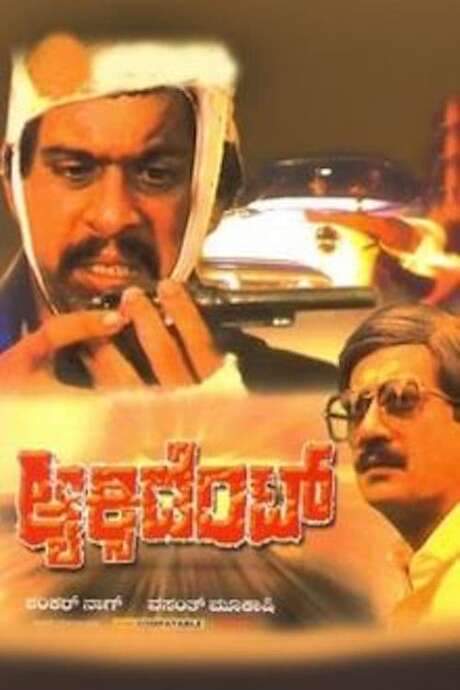
Accident (1985) movie poster

Plot Summary

Accident (1985) Plot Summary Explained

Release, runtime and language
1985 · 120 mins · Kannada
Starring
Ramesh Bhat, Anant Nag, T. S. Nagabharana, Arundathi Nag, Srinivasa Prabhu, Shankar Nag

The young man, intoxicated while driving, fatally strikes people sleeping on a footpath. His powerful father uses his influence to try to suppress the police inquiry and keep the story out of the press, creating a clash between privilege and justice.

On this page (6)
  1. 1 Where to watch
  2. 2 What happens: full plot
  3. 3 Plot questions answered
  4. 4 Movie threads
  5. 5 Movies like Accident
  6. 6 Every angle

Where to watch

Where to Watch Accident (1985)

Where can you watch Accident? Stream, rent or buy it in the US, including on Fawesome, Hoopla and Plex: current JustWatch availability with up-to-date prices.

Streaming availability powered by JustWatch

Full plot summary · contains spoilers

What Happens in Accident: Full Plot Summary

The whole story of Accident (1985) explained, from the opening scene to the final frame: every key event, every twist and what it all adds up to. Read it as a quick recap before the sequel, to check a scene you missed, or to finally understand what really happened.

Deepak, Ashok Mandanna, is the spoiled son of the powerful politician Dharmadhikari, portrayed by Anant Nag. On a night clouded by drugs and alcohol, his reckless choices behind the wheel devastate a group of pavement dwellers, the casualties almost complete. Among them, Ramanna, T. S. Nagabharana, survives the crash and becomes the key witness who identifies the driver, setting the motor of a troubling investigation in motion.

Rahul, Srinivasa Prabhu, Deepak’s friend and the son of an ad agency chief, is with him during the accident. The shock haunts him deeply, and he confides the truth to his mother, Maya Rani, Arundathi Nag. Maya, a wealthy widow, begs for a measure of accountability, pressing her husband’s political allies to act in the face of a potentially career-ending crisis. The tension between moral duty and political expediency quickly escalates as the family tries to shield the consequences of the night’s events.

The demand for silence collides with the ambitions of the by-election, and Dharmadhikari battles to protect not just his image, but the political machine that sustains him. With the help of the Chief Minister, he makes a calculated choice to hush the case and dispatch Deepak abroad, hoping distance will erase the matter from public memory. Yet the truth has a way of resurfacing, especially when a determined investigative force begins to close the net.

The case falls into the hands of Inspector Rao, Ramesh Bhat, who takes charge of the formal investigation and refuses to let the matter fade away. Joining Rao is Ravi, the bold reporter portrayed by Shankar Nag, who brings a street-smart tenacity to the pursuit of facts. The partnership between Rao and Ravi slowly reveals a web of cover-ups and political protection that challenges the idea of justice being simply a matter of truth.

As the investigation deepens and the pressure on Dharmadhikari intensifies, the film follows a chilling arc: the politician tries to reframe the incident as a private tragedy rather than a public crime. The retired driver’s testimony — coerced or coerent, the truth remains murky — becomes a pivotal moment that tests the limits of loyalty and the willingness of institutions to act against power. Rao finds himself pushed toward the edge, facing institutional resistance that threatens his career and integrity, while Ravi contemplates a drastic move to force the system to confront itself.

In a finale that underscores the high cost of corruption, the pursuit of justice collides with personal tragedy. Deepak, en route to the airport, dies in an accident, sealing the sense that the chain of consequences has a cruel mix of fate and accountability. The narrative leaves viewers with a stark portrait of how political maneuvering, media scrutiny, and individual conscience collide when the stakes involve life, power, and the possibility of true justice.

Last updated: February 18, 2026 at 23:44

Was this helpful?

Plot questions answered

Accident Plot Explained: Your Questions Answered

The questions people ask most about Accident (1985): what happens in the confusing scenes, why the characters do what they do, the twists, hidden details and what the ending means. Each answer contains spoilers.

Q1

Why did Dharmadhikari try to cover up the accident?

Dharmadhikari covered up the accident to protect his political career. A scandal involving his son would threaten his upcoming by-election and damage the political machine he had built. With the Chief Minister's help, he arranged to send Deepak abroad, hoping distance would erase the matter from public memory and prevent the case from affecting his political future.

  • political cover-up
  • by-election
  • power abuse
  • dharmadhikari
Q2

Who was the surviving witness that identified the driver?

Ramanna, played by T.S. Nagabharana, was the sole survivor of the crash. He witnessed Deepak driving the vehicle and identified him as the driver, which set the investigation in motion. His testimony was crucial in linking Deepak to the crime despite the cover-up attempts.

  • ramanna
  • witness
  • identification
  • survivor
  • crash
Q3

Why did Maya Rani help cover up the accident?

Maya Rani got involved because her son Rahul was with Deepak during the accident and was traumatized by what he witnessed. She confided the truth to her mother and begged Dharmadhikari to act, hoping to protect her son from the consequences of being an accessory to the crime. Her appeal to Dharmadhikari was driven by maternal instinct to shield her son, though this conflicted with seeking true justice.
  • maya rani
  • rahul
  • confession
  • mother
  • cover-up
Q4

What happened to Inspector Rao's investigation?

Inspector Rao took charge of the case and began gathering evidence, but his investigation was systematically blocked. He was put on leave, his leads were obstructed, and Dharmadhikari ordered his retired driver to falsely claim responsibility. Despite his persistence, Rao faced institutional resistance that threatened his career and integrity, and the case's ultimate resolution remained uncertain.

  • inspector rao
  • investigation
  • obstruction
  • police
Q5

Why did Dharmadhikari use his retired driver as a scapegoat?

Dharmadhikari ordered his retired driver to claim responsibility for the accident to protect the real driver, Deepak. This was a calculated move to redirect blame away from his son and maintain the cover-up. The truth of whether the driver was coerced or complicit remains murky, but this sacrifice allowed the political machinery to deflect accountability while protecting those in power.

  • retired driver
  • scapegoat
  • coercion
  • blame redirection
Q6

Why did Ravi attempt to assassinate Dharmadhikari?

Ravi, the investigative reporter, tried to assassinate Dharmadhikari in a drastic bid for accountability after seeing the investigation suppressed and justice blocked at every turn. However, he ultimately pulled back and chose to condemn violence, arguing that it cannot solve the problem. This moment highlights the moral crisis faced by those pursuing justice against powerful corruption.

  • ravi
  • assassination attempt
  • journalist
  • moral dilemma
  • vigilantism
Q7

How did Deepak die at the end of the film?

Deepak died in an accident while en route to the airport. He was leaving the country as part of his father's plan to distance him from the scandal. His death occurred as he traveled toward the airport, sealing the film's tragic arc with the cruel irony that the person who caused the original accident ultimately met the same fate.

  • deepak death
  • airport
  • accident
  • fate
Q8

Was Deepak's death an accident or deliberate?

The film presents Deepak's death as an accident during his journey to the airport. However, the ending leaves viewers with the interpretation of a tragic irony, a fatalistic sense that the chain of consequences has come full circle. The narrative does not explicitly confirm whether it was truly accidental or fate working through chance, leaving the interpretation open.

  • deepak death
  • intentional
  • irony
  • fate
Q9

Was justice served by the end of the film?

The film leaves the question of justice unresolved. While the truth was partially uncovered through Rao and Ravi's investigation, the main perpetrators, Dharmadhikari and Deepak, escaped formal accountability. Deepak's death came as an accident rather than legal consequence, and the narrative suggests the initial injustice remained largely unaddressed, emphasizing the bleak reality of corruption overpowering the justice system.

  • justice
  • corruption
  • accountability
  • resolution
  • ending
Q10

What role did reporter Ravi play in uncovering the truth?

Ravi, portrayed by Shankar Nag, was a bold investigative reporter who joined Inspector Rao in pursuing the case. He brought street-smart tenacity and public scrutiny to the investigation. When his editor refused to run the story and the investigation was blocked, Ravi took the drastic step of attempting to assassinate Dharmadhikari, demonstrating the lengths to which some will go when legal avenues fail.

  • ravi
  • reporter
  • investigation
  • media
  • truth
Q11

Why was Rahul not charged for his involvement?

Rahul, Deepak's friend who was present during the accident, was not charged because he was not driving the vehicle. Though he witnessed the crash and was deeply traumatized, he had no direct responsibility for the deaths. His mother Maya Rani's involvement in the cover-up helped protect him from any legal consequences, and the investigation focused on identifying the driver rather than passengers.

  • rahul
  • passenger
  • no charges
  • witness

Movie threads

More Movies Like Accident, by Mood & Story

Curated lists built around what makes Accident tick: the same mood, the same kind of story or the same emotional payoff. Each list explains why these movies belong together.

Moral cover-ups and systemic corruption like in Accident

Political power tries to bury the truth, forcing characters to confront systemic injustice. If you liked the tense cover-up and class privilege themes in Accident, explore these movies about political corruption and the desperate attempts to hide the truth. Discover similar stories of moral decay and justice under pressure.

  • tense
  • cynical
  • political corruption
  • moral decay
  • psychological toll
  • unraveling cover-up
  • Tone: dark, tense, cynical
  • Pacing: steady investigative
Why these movies?

The story pattern: These stories often begin with a specific, traumatic event—like a fatal crime—and follow the ensuing struggle between those who committed it (and their protectors) and those trying to uncover the truth. The plot follows the unraveling of the cover-up, building tension as the characters grapple with their complicity or pursuit of justice.
Why they belong together: Movies are grouped here because they share a focus on the corrupting influence of power, the morally fraught journey of characters caught in a cover-up, and a consistent tone of bleak cynicism where justice is rarely simple.

Bleak crime cycles and tragic outcomes like in Accident

Stories where a single act of violence exposes an unending cycle of societal failure. Explore more movies like Accident that depict a bleak cycle of crime and social injustice without a clean resolution. These films leave you with the heavy weight of a justice system failing the powerless.

  • bleak
  • fatalistic
  • tragic irony
  • societal critique
  • social injustice
  • heavy
  • Tone: bleak, fatalistic, tragic
  • Pacing: steady, methodical
Why these movies?

The story pattern: The narrative pattern follows a crime's aftermath not as a puzzle to be solved, but as a window into a broken system. The focus is on the emotional and societal fallout, often concluding with a sense of tragic irony or an unresolved feeling of injustice, emphasizing a cyclical nature rather than closure.

Why they belong together: These films are grouped by their shared fatalistic worldview, heavy emotional weight centered on tragedy and loss, and a consistent tone of frustration and societal critique. They prioritize theme over plot resolution.

If you liked this

Movies Like Accident

Similar movies to Accident: the same genre, themes or kind of story. Each one comes with its own plot summary, timeline and ending explained.

Browse all movie summaries

Every angle

Accident (1985) Explained: Plot, Timeline & Characters

Everything about Accident in one place: what happens in the plot summary, the timeline in chronological order, the characters and meaning and a spoiler-free summary. What's After the Movie adds the cast, box office and post-credit scenes.

Coming soon on iOS and Android

The Plot Explained Movie Summary App

Plot summaries, endings explained and timelines on your phone. Catch up on any movie in minutes, save your favorites and never miss a twist again.

Be the first to know when we launch. Your email stays private, always.

Learn more about the app