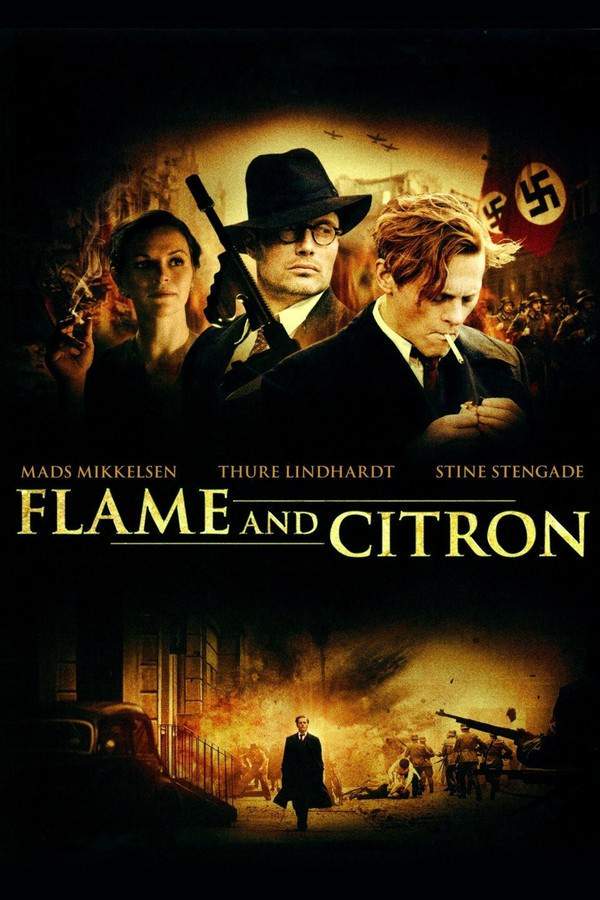
Set in the aftermath of the Nazi invasion of Denmark, the film follows two young resistance fighters, Bent Faurschou Hviid (Flammen) and Jørgen Haagen Schmith (Citronen), as they operate under immense pressure and moral doubt. In a Copenhagen bar, Bent is drawn to a woman who identifies herself as Ketty Selmer, a courier carrying messages between Stockholm and Copenhagen. This encounter pulls them into a web of danger, loyalty, and shifting alliances that define their arduous campaign.
Their handler, Aksel Winther, pushes them to take out three Abwehr officers—Elisabeth Lorentzen, Horst Gilbert, and Hermann Seibold—to weaken German intelligence. Bent and Jørgen weigh the consequences: killing fellow Danes invites harsher reprisals on their countrymen, yet the mission presses forward. Winther insists he is acting under orders from the Danish government in exile, setting up a conflict between expediency and ethics that haunts every decision they make. Bent succeeds in killing Lorentzen, but he and Jørgen fail to eliminate Gilbert and Seibold, a setback that intensifies the danger around them.
A quiet, painful strain grows at home for Jørgen and his wife, Bodil, who struggle with money and secrecy. Their daughter Ann’s birthday is celebrated in a car with little money to spare, and Bodil confesses to having an affair, adding personal risk to the already fraught resistance struggle. The situation worsens as the Gestapo expands its crackdown and more resistance members are killed. Winther begins to suspect an informant, and Ketty’s true role surfaces in the shadows.
Ketty reveals to Bent that she works for Winther and for Danish army intelligence, and that Winther’s loyalties do not align with the British. The revelation destabilizes Bent’s trust and forces the resistance to reassess who can be trusted. Bent and Jørgen uncover that Winther has fled to Stockholm, and they sense they have walked into a trap; yet they manage to escape the Gestapo’s net. Their next objective shifts toward taking down the Gestapo’s favorite leader, Karl Heinz Hoffmann, and seizing control of a restaurant favored by the occupation forces, a symbolic and strategic blow.
In a tense turn, Ketty warns Bent that army intelligence wanted her near Hoffmann, hinting at the complexity of their counterintelligence operations. Bent learns from a contact named Ravnen the possible real informer’s name, and Jørgen kills Ravnen to protect the mission’s integrity. Bent visits his father, who runs a hotel and reveals that Hoffmann, his associates, and mistresses visit from time to time, foreshadowing the clash that lies ahead. Ketty arrives at the hotel in Hoffmann’s company, confirming Bent’s worst fears about her ties to Hoffmann and the lengths to which he will go to stay informed.
On the road, Bent, Jørgen, and their allies ambush two cars bearing Nazi flags, only to discover they have killed a father and wounded a child. Bent is outraged by the unintended civilian tragedy and confronts Ketty, who has since flown to Stockholm, fearing retaliation. The plan to confront Hoffmann again remains, but the situation grows increasingly perilous. The resistance group refuses offers of formal positions in the Danish Army, choosing instead to pursue direct action and political impact.
As the net tightens, Bent and Jørgen face a brutal round-up that imprisons many of their comrades. Jørgen escapes a fence but dies in a skirmish at a safe house when German forces strike with submachine guns and grenades. Bent, back at his home, takes a cyanide pill and ends his life as the Gestapo closes in. Hoffmann later rewards Ketty for helping apprehend Bent, adding a final, bleak note to the loyalty and betrayal that shaped their world, and a letter from Bent found in Hoffmann’s room reveals his inner feelings and doubts about Ketty’s fidelity. The film closes with a reflection on the legacies of Bent and Jørgen, marking their contributions and the costs they paid in the struggle against occupation.