Plot Explained Spoilers guaranteed!
Plot Explained

Browse by genre

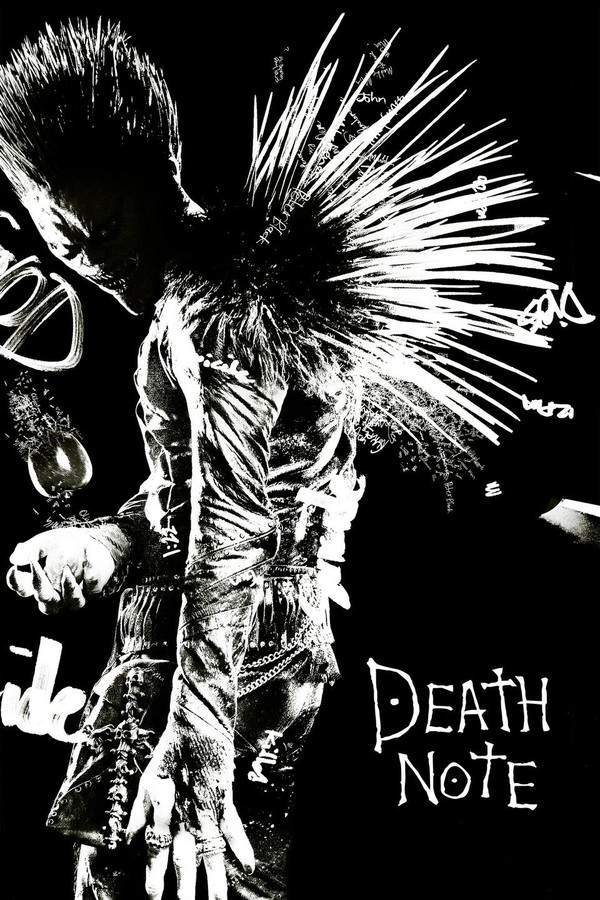
Death Note: The Last Name (2006) movie poster

Plot Summary

Death Note: The Last Name (2006) Plot Summary Explained

Release, runtime and language
2006 · 140 mins · Japanese
Directed by
Shusuke Kaneko
Starring
Hikari Mitsushima, Itsuji Itao, Masahiko Tsugawa, Ken'ichi Matsuyama, Tatsuya Fujiwara, Erika Toda

In the second Death Note film, Light Yagami confronts a new Kira while reuniting with Misa Amane and her Shinigami Rem. He allies with fellow Kira supporters Teru Mikami and Kiyomi Takada as he battles L, hoping to secure his plan. The enigmatic Shinigami Ryuk watches, ready to tip the scales toward Light’s triumph or his downfall.

On this page (5)
  1. 1 What happens: full plot
  2. 2 Plot questions answered
  3. 3 Movie threads
  4. 4 Movies like Death Note: The Last Name
  5. 5 Every angle

Full plot summary · contains spoilers

What Happens in Death Note: The Last Name: Full Plot Summary

The whole story of Death Note: The Last Name (2006) explained, from the opening scene to the final frame: every key event, every twist and what it all adds up to. Read it as a quick recap before the sequel, to check a scene you missed, or to finally understand what really happened.

Misa Amane receives a Death Note from Rem, another Shinigami, setting the stage for a tense new arc. As Light Yagami joins the task force after Shiori's funeral, Misa ascends to the role of the Second Kira and pushes a TV station to broadcast her taped messages, turning the case into a public spectacle.

With her Shinigami Eyes, Misa eyes the world through the screen and uses her power to strike at a prominent Kira critic, then targets Detective Mogi and two officers who were trying to disperse a rally in support of Kira. The violence shakes the investigation and raises the stakes for everyone involved. Light’s younger sister, Sayu Yagami, is nearly killed in the chaos, but Soichiro Yagami (Soichiro Yagami) crashes into the festival on a motorcycle helmet, masking the attacker from sight and saving Sayu’s life.

Light arrives to comfort Sayu and Soichiro, though Misa catches sight of him and pieces together that he is Kira. Misa seeks to ally with Light, hoping to join his mission to “cleanse” the world, and Light, recognizing her Shinigami Eyes, agrees to work with her. He arranges a meeting between Misa and L, hoping to uncover L’s true name and throw the investigation off balance. But Misa is soon arrested by L’s team, tied to the evidence surrounding the taped messages.

Fearing a confession, Light hatches a bold plan: he and Misa will forfeit their Death Notes, effectively erasing their memory of the events. Light buries his own Death Note, while Rem transfers the other Death Note to Kiyomi Takada, a reporter covering the Kira case, inflaming the political intrigue surrounding the mystery. The strategy is meant to buy time and sow doubt about Kira’s true identity, all while Light positions himself to be seen as innocent.

After a period of surveillance, Light and Misa are released, but kept under constant watch by L. Light stumbles upon a clue pointing to Takada and helps the police arrest her, shifting the investigation and revealing to the authorities the existence of Death Notes and Shinigami. In a gamble to restore his memories, Light uses a fragment of a Death Note hidden in his watch to kill Takada, exposing a crucial loophole that makes the public believe he is innocent after all.

Earlier, Light had embedded a supposed rule into the Death Note: once a name is written, the name must be written again every thirteen days or the person will perish. The police, convinced the rule is genuine, accept that Light and Misa were unjustly detained and exonerated. With renewed confidence, Light convinces Misa to locate the buried Death Note to target L. Misa, however, had forgotten L’s name, and she resumes Kira’s killings in the meantime.

L adapts his strategy by sending the main task force, leaving only himself and Light in place, to test the authenticity of the thirteen-day rule by staying in one location. Suspicion soon falls on Misa, and Rem is forced to take drastic action: she kills Watari and L to protect Misa from another arrest. The Shinigami rule forbidding protection of humans means Rem’s death is a heavy price for stepping into the fray.

To end the investigation, Light writes his own father’s name in the Death Note, hoping to demonstrate his innocence; however, his father survives, leaving Light cornered by the police. L then reveals a staggering twist: he had written his own name in the Death Note, scheduling his death in advance and thereby becoming immune to further writings. He also discloses that the Death Note Light used was a decoy and that the task force never left for America; they had been surveilling Light from a hidden vantage, watching him reveal his true identity as Kira.

Desperation peaks as Light pleads with Ryuk, the Shinigami, to kill the surrounding officers, but Ryuk chooses to take Light’s life instead. Ryuk explains the cosmic consequence for owning a Death Note: a human will be denied Heaven and Hell and spend eternity as nothingness. Light dies in his father’s arms, begging his father to believe that his actions were an attempt at justice.

In the wake of Light’s death, the police decide to cover up the truth and declare that Kira killed Light and then killed himself. Twenty days later, Soichiro meets L one last time before L dies peacefully, leaving the world with a chilling sense of unfinished justice. A year passes, and on Light’s birthday, Soichiro maintains the false narrative for his wife and Sayu, who remain unaware of the Death Note’s true power. Misa also marks Light’s birthday with a quiet affection, but she has no memory of the Death Note or the events that connected them.

The film closes with Ryuk circling Tokyo Tower, laughing at the human drama that unfolded, a reminder of the price of wielding a weapon that can rewrite life and death.

Last updated: October 09, 2025 at 16:27

Was this helpful?

Plot questions answered

Death Note: The Last Name Plot Explained: Your Questions Answered

The questions people ask most about Death Note: The Last Name (2006): what happens in the confusing scenes, why the characters do what they do, the twists, hidden details and what the ending means. Each answer contains spoilers.

Q1

Why does Rem give Misa a Death Note?

Rem gives Misa a Death Note because she has fallen in love with Misa. Shinigami can develop feelings for humans, and Rem wants to help Misa achieve her goal of supporting Kira. This act sets Misa on her path as the Second Kira and creates the central conflict of the film.

Foreshadowing: Rem's attachment to Misa is hinted at early when she watches Misa intently and agrees to help her.

  • rem
  • shinigami
  • misa amane
  • death note
  • love
Q2

How does Misa realize Light is Kira?

Misa sees Light comforting his family after the festival incident where Sayu was almost killed. She recognizes something in his behavior or appearance that confirms her suspicion. Given her Shinigami Eyes, she can sense the aura of Death Note ownership, which helps her identify Kira.

Foreshadowing: Misa had been watching Light from afar and was drawn to Kira's mission, making her observant of his actions.

  • misa
  • light yagami
  • kira
  • identity
  • shinigami eyes
Q3

Why do Light and Misa give up their Death Notes and lose their memories?

Light orchestrates the forfeiture to prevent Misa from confessing under interrogation and to clear themselves of suspicion. By surrendering the Death Notes and losing their memories, they appear innocent to L. Light also hides his Death Note underground to preserve it for later use, while Rem transfers the other note to Kiyomi Takada.

Foreshadowing: Light's strategic mind is evident throughout the film, and this plan shows his willingness to sacrifice his own memories for his goals.

  • memory loss
  • forfeiture
  • light yagami
  • misa amane
  • strategy
Q4

What is the 13-day rule in Death Note and is it real?

The 13-day rule is a fake rule that Light secretly embedded in the Death Note. It states that once a name is written, it must be written again within 13 days or the person will die. Light uses this fabricated rule to convince the police that he and Misa were wrongly imprisoned, since L's 13-day deadline passed while they were in custody. The rule is not real, it was a clever deception.

Foreshadowing: Light's habit of reading and studying the Death Note rules foreshadows his ability to manipulate them.

  • 13-day rule
  • fake rule
  • light yagami
  • deception
  • investigation
Q5

Why does Rem kill L and Watari to protect Misa?

Rem kills Watari and L because L is about to arrest Misa again, which would expose her as Kira and likely lead to her execution. As a Shinigami, Rem is forbidden from protecting humans, but she chooses to break this rule out of love for Misa. This act costs Rem her life, as using the Death Note to kill for human protection results in the Shinigami's death.

Foreshadowing: Rem's emotional attachment to Misa is established early, making her eventual sacrifice feel inevitable.

  • rem
  • l
  • watari
  • shinigami
  • sacrifice
  • misa
Q6

Why does Light write his father's name in the Death Note?

Light writes his father's name, Soichiro Yagami, to prove his innocence. He believes that if his father dies after Light is caught with a Death Note, it will appear that Kira killed Light's father in retaliation, making Light seem like a victim rather than Kira. However, the plan fails because Soichiro survives, L had already swapped the Death Note with a decoy.

Foreshadowing: Light's desperation grows as L closes in, and his willingness to sacrifice family shows his moral decay.

  • soichiro yagami
  • light yagami
  • patricide
  • innocence
  • frame
Q7

How does L survive being written in the Death Note?

L writes his own name in the Death Note before anyone else can, scheduling his death for a future date. By doing this, he becomes immune to any other names being written in the Death Note, once one's name is in the notebook, they cannot be killed by it. This masterstroke allows L to safely continue investigating while being technically "dead" to the Death Note's power.

Foreshadowing: L's chess-like thinking is evident throughout, and his willingness to sacrifice himself foreshadows this twist.

  • l
  • immunity
  • death note
  • survival
  • kenichi matsuyama
Q8

Why does Ryuk kill Light instead of the officers?

When Light is cornered by the police and pleads with Ryuk to kill the officers, Ryuk chooses to kill Light instead. Ryuk explains that humans who use the Death Note are denied both Heaven and Hell and will become nothingness after death. Ryuk is amused by Light's desperation and sees the dramatic irony of the situation. Light dies in his father's arms, begging for forgiveness.

Foreshadowing: Ryuk's detached, playful nature is established early, he only cares about entertainment and apples, not human morality.

  • ryuk
  • light yagami
  • death
  • shinigami
  • nothingness
  • ending
Q9

Why does the police cover up Light being Kira?

The police decide to cover up the truth to prevent public chaos. If it became known that Kira was a high school student who used a supernatural notebook to kill thousands, and that the investigation was manipulated by that same person, it would undermine public trust in the justice system. They declare that Kira killed Light and then himself, maintaining a simpler narrative.

Foreshadowing: The theme of maintaining order despite truth runs throughout the film.

  • cover-up
  • police
  • soichiro yagami
  • truth
  • justice
Q10

Why does Misa lose her memories of the Death Note at the end?

Misa loses her memories because she voluntarily surrendered her Death Note earlier in the film as part of Light's plan to appear innocent. When a Death Note is given up, the human loses all memory of it. At the film's end, she lives peacefully without knowing she was Kira or that Light was Kira, maintaining her pure image of him.

Foreshadowing: The memory loss was a deliberate choice made during the forfeiture plan earlier in the story.

  • misa amane
  • memory loss
  • death note
  • forgetting
  • ending
Q11

How did L know to use a decoy Death Note?

L suspected Light from the beginning and never fully trusted him. Even when Light seemed exonerated by the 13-day rule, L kept a decoy Death Note and had the task force secretly stay in Japan to continue surveilling Light. This allowed L to swap the real Death Note with a fake one, exposing Light's final attempt to kill his father.

Foreshadowing: L's perpetual suspicion of Light is his defining characteristic throughout both films.

  • decoy
  • l
  • swap
  • death note
  • surveillance
  • plan
Q12

What is Light's ultimate motivation for becoming Kira?

Light believes he is destined to create a perfect world by eliminating criminals. His sense of justice and god complex drive him to "cleanse" the world of evil. However, his motivation corrupts over time, and he becomes increasingly willing to kill anyone who threatens his plan, including his own family, ultimately revealing his descent into tyranny.

Foreshadowing: Light's belief in his own righteousness is shown from the very first film.

  • light yagami
  • motivation
  • justice
  • god complex
  • Kira

Movie threads

More Movies Like Death Note: The Last Name, by Mood & Story

Curated lists built around what makes Death Note: The Last Name tick: the same mood, the same kind of story or the same emotional payoff. Each list explains why these movies belong together.

Mind Game Thrillers like Death Note: The Last Name

High-stakes stories where geniuses duel using intellect as their ultimate weapon. If you enjoyed the high-stakes intellectual warfare in Death Note: The Last Name, this section gathers movies like it. Find similar complex thrillers and suspenseful mysteries where brilliant adversaries engage in a tense cat-and-mouse game of strategy and psychological manipulation.

  • cerebral
  • tense
  • strategic
  • psychological
  • mind-bending
  • high-stakes
  • Tone: tense, cerebral, dark
  • Pacing: fast, strategic
Why these movies?

The story pattern: These narratives focus on a conflict between two or more hyper-intelligent characters, where the primary battlefield is the mind. The plot unfolds through a series of complex strategies, counter-strategies, and shocking reversals, keeping the audience constantly guessing about who is truly in control. The journey is less about physical action and more about outthinking the opponent.

Why they belong together: Movies are grouped here based on their shared focus on intellectual conflict, complex plotting, and a tense, cerebral tone. They appeal to viewers who enjoy unraveling intricate plans and experiencing the thrill of a high-IQ duel, where every move is calculated and the stakes are immense.

Bleak Downfall Stories like Death Note: The Last Name

Stories where a character's pursuit of power leads to their tragic undoing. For viewers who appreciated the tragic arc of Light Yagami in Death Note: The Last Name, this section features similar movies about a protagonist's moral decay. Discover stories with heavy emotional weight, bleak endings, and complex themes of corruption, justice, and fate following characters who are destroyed by their own ambition.

  • tragic
  • morally ambiguous
  • heavy
  • bleak
  • dark
  • corruption
  • Tone: dark, tragic, morally ambiguous
  • Pacing: steady, escalating
Why these movies?

The story pattern: The narrative pattern is a downward spiral, tracking a protagonist who gains significant power or influence only to be consumed by it. The story explores themes of corruption, the burden of power, and the loss of humanity. The arc is defined by escalating moral compromises, leading to an inevitable and catastrophic conclusion where the protagonist loses everything, often including their life or soul.

Why they belong together: These films are united by their focus on a specific, tragic character arc: the protagonist's downfall through moral decay. They share a heavy emotional weight, a dark or tense tone, and a bleak ending that reinforces the thematic consequences of the character's choices, creating a powerful and somber viewing experience.

If you liked this

Movies Like Death Note: The Last Name

Similar movies to Death Note: The Last Name: the same genre, themes or kind of story. Each one comes with its own plot summary, timeline and ending explained.

Browse all movie summaries

Every angle

Death Note: The Last Name (2006) Explained: Plot, Timeline & Characters

Everything about Death Note: The Last Name in one place: what happens in the plot summary, the timeline in chronological order, the characters and meaning and a spoiler-free summary. What's After the Movie adds the cast, box office and post-credit scenes.

Coming soon on iOS and Android

The Plot Explained Movie Summary App

Plot summaries, endings explained and timelines on your phone. Catch up on any movie in minutes, save your favorites and never miss a twist again.

Be the first to know when we launch. Your email stays private, always.

Learn more about the app