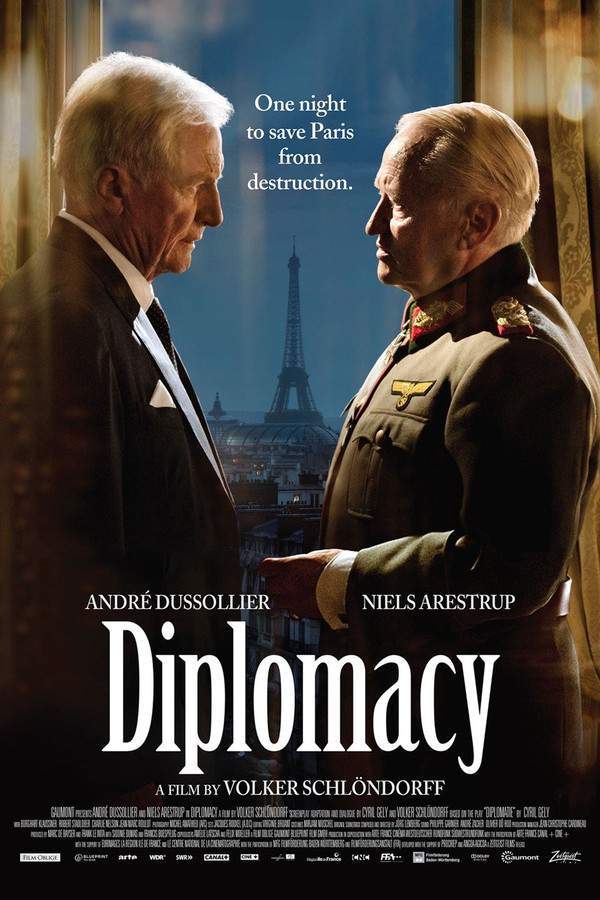
As Allied forces push toward Paris, Adolf Hitler orders General Dietrich von Choltitz to destroy the city, turning a potential last stand into a calculated act of demolition. Choltitz responds by dispatching engineering teams to obliterate Paris’s most iconic sites and flood the Seine, a plan aimed at erasing the city’s memory even as it fights for its fate. The operation is led by Lieutenant Hegger and advised by a captured Parisian engineer, M. Lanvin. The list of targets reads like a catalog of Paris’s soul: the Eiffel Tower, the Louvre, the Place de la Concorde, Notre Dame Cathedral, and Les Invalides. The scale of destruction is framed not just in terms of concrete and stone, but in what it would mean for millions of lives caught in the crossfire of war.
Into this tense mix enters the Swedish consul, Raoul Nordling, who slips into the general’s office at the Hotel Meurice via a secret staircase once built for a famous courtesan. He speaks in practical terms about the human cost of devastation and pleads with Choltitz to spare Paris. Yet the general remains unmoved, asserting that his duty obligates him to follow orders, regardless of the personal toll it would take on the city and its people.
As Parisian streets erupt in revolt, gunfire and smoke become a daily rhythm for the people defending their home. Choltitz lays bare a chilling aspect of Nazi governance: the policy of Sippenhaft, which punishes the families of officers who disobey orders. Nordling attempts to downplay its significance, but Choltitz notes that the policy was issued at a moment when Hitler’s attention was squarely fixed on him as a promoted officer, a reminder that the dictator’s eyes—and expectations—were always watching.
In a turn that tests loyalties and calculus of courage, Nordling proposes a daring possibility: the French Resistance could try to evacuate Choltitz’s own family. He confesses a personal dilemma, admitting that he could not say with certainty whether he would choose to save his family or Paris if faced with the same choice. He argues, however, that choosing Paris would secure a longer-lasting legacy for him in history. Moved by this moral exchange, Choltitz relents and orders the halt to the demolition. An attempted ignition by Lt Hegger is prevented when Lanvin shoots him, sealing the decision to spare the city.
In the aftermath of the war, Choltitz serves a two-year prison sentence for his actions earlier in the Siege of Sevastopol. Nordling receives a medal for persuading Choltitz, but in a gesture of magnanimity, he passes the honor to the general, recognizing him—rather than the onlooker—as the true hero of the moment. The story closes on the quiet acknowledgment that the saving of Paris was not the work of a single act, but a complex web of choices, courage, and the fragile line between duty and humanity.