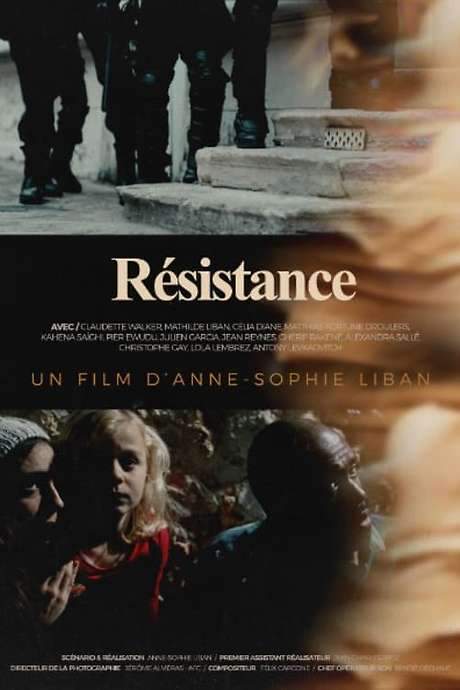
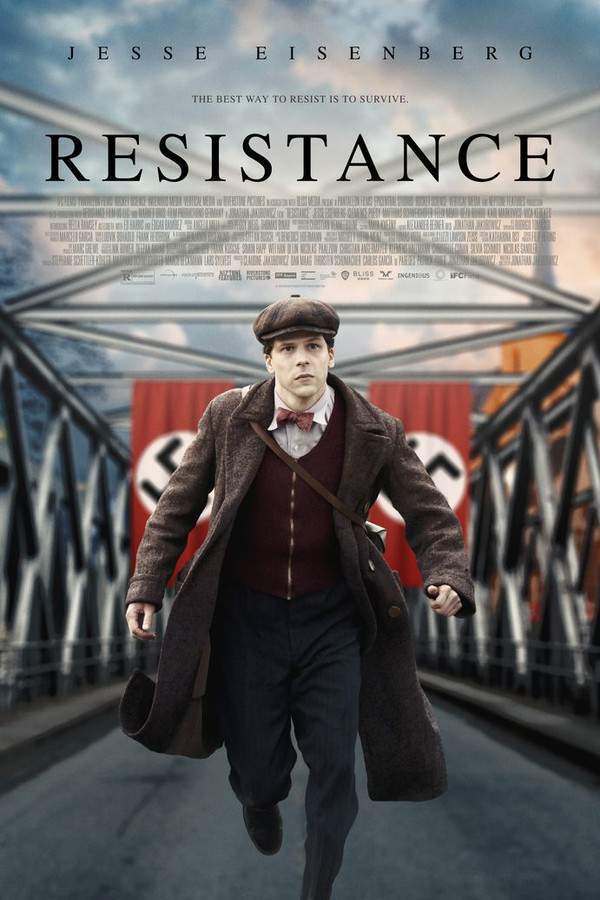
Starring: Celia Diane, Pier Ewudu, Julien Garcia, Matthias Fortune-Droulers, Christophe Gay
In the shadow of a looming war, the film opens in 1938 Berlin, where a young Jewish girl named Elsbeth faces a brutal intrusion by the Nazi Brown Shirts that ends with the loss of her parents. The story then shifts to Strasbourg, 1939, where a restless young man named Marcel Marceau works in his father’s butcher shop, dreaming of art rather than peril. He catches glimpses of Charlie Chaplin’s genius in his mime and painting, performing playful imitations at a local cabaret that infuriate his father while winning a quiet, secret admiration from Emma, a local girl he longs to marry.
A compassionate cousin named Georges steps into the frame, rallying Jews who are preparing for the worst. He and Emma bring a Scout troop of 123 Jewish orphans to Strasbourg and set up residence in a castle. The initial fear among the children gradually softens under the cushion of Marceau’s humor and gentle leadership, and a tender romance blossoms between Marcel and Emma, binding their fates together as the world tilts toward war.
With Germany’s invasion of Poland in 1939 and the subsequent occupation of France, Marcel and Emma become deeply entwined with the Jewish Resistance. The children are dispersed to reduce their visibility—some placed in churches, others with Jewish families—yet Marcel and Emma maintain a lifeline to Elsbeth and the others. The narrative thickens as danger intensifies: Klaus Barbie arrives in Lyon in 1942, bringing a ruthless mission to crush the Resistance, aided by bribery, betrayal, and brutal executions in an empty swimming pool at Gestapo Headquarters, earning his grim epithet, “The Butcher of Lyon.”
As the war intensifies, Marcel and Emma relocate to Lyon to continue their clandestine work, joined by Marcel’s brother Alain and Emma’s sister Mila. A narrow escape follows when Alain evades capture during a Nazi sweep of Lyon’s train station, with Marcel risking himself to cover the escape by fending off a German soldier. Tragedy follows in the teeth of the crackdown: Mila is captured and tortured to death by Barbie, who simultaneously extracts information from Emma about the Resistance. Emma survives but is driven to despair, even attempting suicide, before Marcel’s life-saving intervention helps her endure again. Together, they vow to shield Jewish children, guiding them toward a safer future.
The couple’s plan to smuggle children to Switzerland takes shape as they disguise their mission under the pretense of a hiking trip with the Scout troop. Marcel, Emma, and Alain escort a dozen children—including Elsbeth—on a painstaking SNCF train journey toward the French Alps. Barbie and his SS unit hammer down at the last station before the Franco-Swiss border, forcing Emma into hiding as the search intensifies. Barbie’s relentless interrogation of Marcel nearly unravels the mission, but he remains steadfast, and the group presses on toward the border.
The chase spills into the icy forests along the Swiss border, where Barbie closes in and delivers a fatal wound to Emma with his pistol. Yet the group’s resolve never breaks; they slip through to safety in Switzerland, leaving behind a landscape of loss and a future filled with fragile hope. Marcel’s grief over Emma’s death punctuates the climax of the escape, but the journey endures, and the children survive.
The film returns to a wartime present in 1945, in Nuremberg, Germany, where Marceau has become a Liaison Officer with the United States Army. He continues to perform, lifting spirits for the soldiers who occupy postwar Germany. Introduced by General George S. Patton, the narrative reveals the deeper truth of his life: Marcel crossed the Alps countless times to rescue hundreds of children, many of them orphans, a feat that in aggregate saved thousands more through the ripple effects of survival. The final image lingers on Marceau’s mime, a white-faced, blue-and-white-clad emblem of resilience and memory, a quiet testament to the children who found safety because one man chose to act.
Throughout, the film blends history with intimate human moments, balancing grim brutality with the redemptive power of art, courage, and unwavering compassion. It remains a meditation on how art can sustain hope amid catastrophe, and how acts of mercy—even when born of peril—can outlive the terrors of the era.