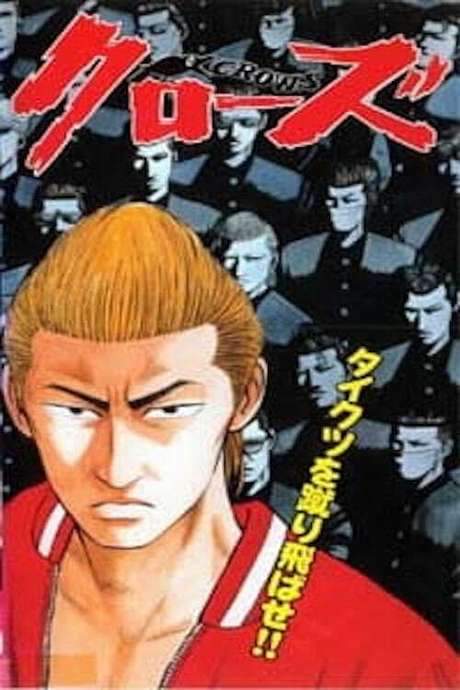
Eight months after Genji Takaya tasted a hard-fought victory and Tamao Serizawa fell, Genji finds himself fighting not just for pride but for a place at the top of Suzuran All-Boys High School. The battles that followed his earlier triumph have left the school’s violent pecking order unsettled, and Genji’s hunger to rule is growing more desperate with every failed confrontation against the legendary Rindaman. The cycles of challenge and defeat wear on him, even as the clock ticks toward graduation and a chance to prove he’s more than just a relentless aggressor. The mood around Suzuran thickens with tension, and the weight of his ambition begins to shape the choices he makes in the heat of street-style warfare.
The trouble intensifies when Genji, in a moment of impulsive bravery, saves Kawanishi Noboru during a tense clash with the rival Housen Academy. This act breaches a fragile peace—an established non-aggression pact that has held between Suzuran and Housen for years. The pact’s roots go back two years, born from a grim episode in which Noboru’s actions triggered a brutal response from the rival school, and Suzuran’s leadership swore not to interfere with Housen’s retribution. The breach—caused by Genji’s stubborn resolve—pulls Suzuran back into a hot, volatile border war, and Serizawa’s allies urge caution while preparing for the consequences of a renewed clash between the schools.
As the conflict escalates, the newly ignited war line up behind Narumi Taiga’s leadership. The current leader of Housen, Narumi Taiga, declares war on Suzuran, and the two camps collide in a series of ruthless confrontations. Genji and his friends find themselves locked in brutal scrimmages with Housen’s Army of Killers, each skirmish pushing Suzuran closer to the edge. The clashes reverberate through the corridors and streets alike, testing not only strength but loyalty, strategy, and nerve. The violence isn’t limited to the front lines; it spills into the heart of Suzuran as well, threatening to erase the school’s sense of identity and community.
Amid the escalation, a critical misstep by Gota Washio—once a Suzuran affiliate—compounds the chaos. Washio’s recklessness culminates in a catastrophic act that devastates the Suzuran campus, an act born from a desire for revenge and a misguided sense of belonging. Washio’s decision to burn Suzuran fuels the resolve of the remaining leaders to unite against Housen, and the growing coalition—often referred to by those involved as the GPS, a united front of their own kind—prepares for a final, decisive confrontation. The destruction acts as a brutal reminder that in Suzuran, every choice matters, and the line between victory and ruin is razor-thin.
The stage is set for a climactic confrontation: the gang chiefs convene atop Housen Academy to settle the score once and for all. Genji faces Narumi Taiga and his Army of Killers in a high-stakes showdown that tests every limit of endurance and cunning. In a display that leaves onlookers stunned, Genji finally defeats Narumi’s formidable force and asserts his place, at least briefly, in the volatile pecking order that rules Suzuran. The sense of relief and astonishment among the onlookers underscores how precarious power can be in this microcosm of adolescence, where the price of leadership is measured in ruptured friendships and the toll of constant conflict.
On Genji’s last day at school, the narrative crescendos with a long-anticipated rematch against the iconic Rindaman. In a moment that feels almost mythic to those who have followed their rivalry, Genji lands a decisive blow that brings the former king to the ground. The crowd erupts with a mix of astonishment and happiness, recognizing the significance of Genji’s achievement. Yet even as Genji reaches a pinnacle moment, the fates of Suzuran and its rulers remain unsettled: the battle ends not with a clean victory, but with a nuanced, tempered outcome in which Genji’s personal triumph sits beside the undeniable reality that he still loses in his grand quest to dominate Suzuran once and for all.
The drama of Suzuran—its code, its loyalties, and its brutal, almost ritual violence—unfolds with careful, restrained intensity. The characters we’ve followed—the determined Genji Takaya, the indomitable Tamao Serizawa, the fearsome Rindaman, and the volatile Narumi Taiga—are drawn in sharp relief as their choices ripple through the school’s battered landscape. The story emphasizes how a single decision can unravel years of fragile peace and push rival factions into open war, while also exploring the moment of clarity that comes with a hard-won, if incomplete, victory. The emotional core centers on ambition versus camaraderie, power versus consequence, and the idea that leadership in such a world comes with a cost that extends far beyond the moment of triumph.