Plot Explained Spoilers guaranteed!
Plot Explained

Browse by genre

The Housemaid (2018) movie poster

Plot Summary

The Housemaid (2018) Plot Summary & Ending Explained

Release, runtime and language
2018 · 105 min · English
Loading streaming availability…
Directed by
Derek Nguyen
Starring
Rosie Fellner, Cory Jackson, Jean-Michel Richaud, Kate Nhung, Kien An, Kim Xuan

In 1953 Vietnam, Linh, a young orphan, becomes a housemaid for a declining rubber plantation managed by the emotionally vulnerable French officer Sebastien Laurent. A passionate and forbidden love affair develops between them, but it inadvertently awakens the vengeful spirit of Laurent's deceased wife. This supernatural force seeks retribution, unleashing a series of violent events and threatening to consume them all.

On this page (6)
  1. 1 Where to watch
  2. 2 What happens: full plot
  3. 3 Plot questions answered
  4. 4 How it ends
  5. 5 Movie threads
  6. 6 Every angle
Loading streaming availability…

Full plot summary · contains spoilers

What Happens in The Housemaid: Full Plot Summary

The whole story of The Housemaid (2018) explained, from the opening scene to the final frame: every key event, every twist and what it all adds up to. Read it as a quick recap before the sequel, to check a scene you missed, or to finally understand what really happened.

A tense, twisting portrait of dependency and control unfolds on Long Island as Millie Calloway, a woman with a haunted past and a resume built from lies, lands a live-in housemaid job at the sprawling Winchester estate. The wealth and polish of the Winchester family are clear from the start, but the atmosphere quickly tilts toward something far more menacing. Nina, the housewife who runs the show with a polished smile and a volatile temper, becomes the gatekeeper of Millie’s new life. What begins as a chance to rebuild a life outside prison walls soon reveals itself as a delicate, dangerous game where every gesture and rumor can reshape destinies. Millie’s first days are a blend of civility and fear, as she is shown around the house, introduced to the quiet, watchful groundskeeper Enzo, and sorted into a bedroom that sits behind a locked attic door—an ominous symbol of the control Nina exerts.

As Millie settles into her duties, the house’s carefully curated calm begins to crack. Nina erupts one morning, furious over missing notes for a PTA speech, and the fight spills into the kitchen in a way that unsettles Millie but also signals the volatile routine she’s entering. Andrew Winchester, Nina’s husband, tries to smooth things over, and his mother Evelyn adds a layer of cold gentility by presenting fine china to be kept safe. Millie’s parole status stays carefully hidden as she navigates the complex social web of the Winchesters, including the revelation that Nina’s past is anything but straightforward. Rumors at a ballet class, whispered conversations at the grocery store, and the sense that Nina’s life is stitched together from half-truths and danger begin to weigh on Millie, who worries about the answers she’s been given and those she’s been kept from.

A forbidden spark slowly grows between Millie and Andrew, complicating the power dynamics in the house. Nina’s surveillance — including tracking Millie’s movements and monitoring the car that carries Millie’s fragile freedom — intensifies as the couple’s private life leaks into the public sphere. The couple’s evasions multiply: secret Broadway tickets, a supposed pregnancy, and a luxury life that demands perfect appearances while masking a troubling reality. What starts as a covert affair soon collides with a troubling, increasingly unhinged domestic theater. Andrew reveals that Cece isn’t biologically his, a revelation that rocks Millie’s sense of trust and complicates the moral line she’s trying to walk. The tension escalates until Millie’s world fractures under the pressure of Nina’s manipulation and Andrew’s volatile reaction to the threat to his control.

The cracks widen into a brutal, gas-lit underside of the Winchester home. Nina’s insistence on loyalty, the strange, almost ritualized taunting of Millie, and the mounting sense that every intrusion into the attic is a reminder of how little Millie truly has control over her own life lead to a devastating sequence in which Andrew drugs Millie and locks her away. Millie’s discovery that she’s been set up as a pawn in a larger scheme pushes her toward a desperate, violent response. The film then rewinds briefly, revealing Nina’s full backstory: a life shaped by a house fire, foster care, and a toxic union that culminates in a cruel pattern of confinement. The attic becomes a crucible where pain, fear, and survival fuse, and the contrast between Nina’s fragile shell and the ruthless, controlling ambitions of Andrew becomes starkly clear.

When the truth finally erupts, Millie fights back with a cold, decisive resolve. She overpowers Andrew in a confrontation that leads to a brutal end: a stabbing, a brutal struggle, and a final act of defiance that leaves the house and its hidden corridors awash in secrets. Nina’s carefully maintained balance shatters as Andrew collapses, and the police arrive to find a scene complicated by family ties and loyalties that blur the lines between justice and complicity. The aftermath shifts into a fragile equilibrium: Nina attends Andrew’s funeral with Cece and attempts to shield herself by denying knowledge of the darker details, even as Millie’s presence lingers as a reminder of the price paid for survival. A generous, if morally ambiguous, gesture follows—a check for $100,000 to start a new life—signaling both an end and a new beginning for Millie.

Yet the ending leaves a haunting echo of the life Millie is stepping into. She goes to a job interview with a new household, where the prospective employer hints at a cycle of abuse within a relationship, a reality that Millie recognizes all too well. The check and the careful boundaries Nina tries to maintain can’t erase the sense that danger still lives just beneath the surface of these appearances. The film closes on a note of uneasy possibility: Millie accepts the interview, her gaze steady, aware that the world she’s stepping into is filled with echoes of the Winchester house, brushes with violence, and the precarious, lasting grip of the past that won’t easily be left behind. The story remains a taut, unsettling examination of power, control, and the fragile line between victim and survivor in a world where wealth and secrets mask the darkest impulses.

Last updated: February 17, 2026 at 19:58

Was this helpful?

Plot questions answered

The Housemaid Plot Explained: Your Questions Answered

The questions people ask most about The Housemaid (2018): what happens in the confusing scenes, why the characters do what they do, the twists, hidden details and what the ending means. Each answer contains spoilers.

Q1

Why does Nina lock Millie in the attic?

Nina locks Millie in the attic as punishment for breaking Evelyn's fine China, but the deeper reason is that Andrew orchestrated the lockup to control Millie after their affair. The attic represents the same confinement Nina herself experienced under Andrew's abuse, a cycle of imprisonment he uses to maintain power over the women in his life.

Foreshadowing: The attic bedroom with its deadbolt is shown to Millie on her first day, establishing it as a tool of control from the start.

  • attic
  • confinement
  • Nina
  • Andrew
  • control
  • abuse
Q2

Why does Andrew drug and lock Millie in the attic?

Andrew drugs and locks Millie in the attic because she broke his mother's China, but this is really about punishing her for the affair and asserting control. Andrew reveals himself to be a manipulative abuser who uses confinement as a weapon, having done the same to Nina throughout their marriage.

Foreshadowing: Enzo warns Millie early on to stay away from Andrew, hinting at his dangerous nature.

  • Andrew
  • drugs
  • attic
  • imprisonment
  • control
  • abuse
Q3

Why does Millie stab Andrew?

Millie stabs Andrew in the neck as a desperate act of self-defense after discovering she's been drugged and locked away. Having experienced the same imprisonment Nina suffered, Millie decides she won't be a victim anymore and fights back violently to escape his control.

Foreshadowing: Millie's initial fear of the locked attic bedroom and Nina's warnings about Andrew's temper foreshadow this violent confrontation.

  • Millie
  • Andrew
  • stabbing
  • self-defense
  • escape
  • violence
Q4

Why is Nina so controlling of Cece?

Nina's control over Cece stems from her traumatic past, her parents died in a house fire when she was young, she spent years in foster care, and she endured Andrew's abuse. Her need to protect Cece manifests as extreme control over the child's social life and environment, though her methods are unhealthy.

Foreshadowing: Rumors at ballet class mention Nina once tried to drown Cece, though this is later revealed as part of Andrew's false narrative to paint Nina as unstable.

  • Nina
  • Cece
  • control
  • abuse
  • trauma
  • foster care
Q5

Why does Andrew tell Millie that Cece isn't his biological daughter?

Andrew reveals Cece isn't his biological child to manipulate Millie emotionally and deepen her dependence on him. By sharing this secret, he creates a bond of trust with Millie while also positioning himself as vulnerable, making her more willing to engage in the affair.

Foreshadowing: This revelation comes during their Broadway trip, establishing Andrew as someone who uses personal secrets as manipulation tools.

  • Andrew
  • Cece
  • paternity
  • manipulation
  • affair
Q6

Why does Nina help cover up Andrew's death?

Nina helps clean up Andrew's death because he was her abuser, and his elimination finally gives her the freedom she's been seeking. Despite her complicated history with Millie, Nina recognizes that Andrew was the true threat to both women. The police officer's family connection to Nina also ensures some protection.

Foreshadowing: The film reveals Nina's backstory of abuse, showing why Andrew's death is liberating rather than devastating for her.

  • Nina
  • Andrew
  • cover up
  • police
  • abuse
  • freedom
Q7

Why does Nina give Millie $100,000 after Andrew's death?

Nina gives Millie $100,000 as a gesture of solidarity and gratitude for eliminating her abuser. Both women were victims of Andrew's control, and the payment represents Nina's acknowledgment of what Millie did while also providing Millie a way out, a new beginning far from the Winchester house.

Foreshadowing: The ending shows both women achieved hard-won freedom through their unlikely alliance against a common oppressor.

  • Nina
  • Millie
  • money
  • $100
  • 000
  • freedom
  • new life
Q8

Why does Millie take another housemaid job after everything she been through?

Millie accepts a new housemaid position because she has limited options, her criminal record and lack of stable employment make it difficult to start over otherwise. The prospective employer's bruised wrist suggests Millie is walking into another dangerous situation, but she needs the work, showing the cycle of vulnerability that traps abuse survivors.

Foreshadowing: Millie has been living out of her car and needs employment; the check from Nina helps but isn't enough for lasting security.

  • Millie
  • new job
  • housemaid
  • cycle
  • abuse
  • opportunity
Q9

Why is Nina so volatile and prone to outbursts?

Nina's volatile behavior stems from years of psychological and physical abuse at Andrew's hands. Her explosive moments, like trashing the kitchen over missing notes, are symptoms of her traumatized state. Andrew deliberately painted her as unstable to others, including Millie, to maintain control and isolation.

Foreshadowing: Evelyn hints at Nina's troubled history early on, and whispers at ballet class suggest Nina's reputation has been carefully managed by Andrew.

  • Nina
  • volatility
  • abuse
  • trauma
  • outbursts
  • Andrew
Q10

Why does Enzo warn Millie to stay away from Andrew?

Enzo, as the groundskeeper who has worked at the estate longer, understands Andrew's true nature. His warning to Millie reflects his awareness of Andrew's pattern of manipulating and abusing the women in the household, though he cannot openly intervene.

Foreshadowing: Enzo remains a quiet, watchful presence throughout the film, eventually helping Nina clean up the aftermath.

  • Enzo
  • Andrew
  • warning
  • Millie
  • knowledge
  • secrets
Q11

How do Nina and Millie become allies after being enemies?

Nina and Millie become allies because they both suffered under Andrew's abuse. Once Millie learns Nina's traumatic backstory, fire, foster care, years of control, she understands they are both victims. Andrew's attempt to have Millie imprisoned as a pawn cements their shared enemy.

Foreshadowing: The film shifts to Nina's perspective midway, revealing her suffering and making her sympathetic rather than simply villainous.

  • Nina
  • Millie
  • alliance
  • Andrew
  • abuse
  • solidarity
Q12

Why does Millie destroy the rest of the China?

Millie destroys the remaining China as a symbolic act of rebellion against the wealthy control system that imprisoned her. The China represents the Winchesters' pretentious power and Millie's status as a servant. By smashing it, she rejects the hierarchy that Andrew weaponized against her.

Foreshadowing: Evelyn specifically asks Millie to keep the China safe early on, making its destruction more significant.

  • Millie
  • China
  • destruction
  • rebellion
  • symbol
  • control

Ending explained

What Happens at the End of The Housemaid?

How The Housemaid (2018) ends, in short: the final scene, the last twist and what it means for the characters. The full ending explained, with every spoiler, lives on its own page.

Read the full ending explained

The film’s conclusion hinges on a dramatic reversal of expectations, shifting the focus from the seemingly unstable Nina to her husband, Andrew. While the story initially frames Nina as the antagonist, the finale reveals that her erratic behavior was a calculated performance designed to protect herself and her daughter. Andrew is unmasked as the true villain, a controlling sadist who uses his wealth and societal standing to hide his abusive nature. His cruelty is rooted in a privileged upbringing defined by impossible standards, making him a symbol of the "toxic privilege" that allows powerful men to evade consequences. This revelation recontextualizes Nina’s cruelty toward Millie; she was not lashing out randomly, but rather engineering a situation where Andrew would target a new victim, giving Nina a chance to escape with her daughter.

The ending underscores the film’s thematic focus on solidarity among women in the face of systemic abuse. Millie is revealed to be the perfect pawn for Nina’s plan not because of her cleaning skills, but because of her history of fighting back against aggressors. When the two women finally unite, they succeed in destroying Andrew, with Millie delivering the fatal blow that ends his reign of terror. This victory is facilitated by a female police officer who recognizes Andrew's true nature, reinforcing the idea that the only way to overcome a system rigged by patriarchal power is for women to support one another. Andrew’s death is not just a plot twist, but a thematic statement about breaking the cycle of control.

Continue reading the ending (1 more paragraphs)

Following Andrew’s demise, the aftermath provides a dark form of closure. Nina secures her freedom and financial independence, rewarding Millie for her pivotal role in the scheme. The story doesn't end with a simple "happily ever after," however; it pivots into a sequel setup that suggests Millie has found a new vocation. In the final moments, she interviews for a new housekeeping position where she learns the prospective employer is trapped with an abusive husband. Far from being deterred, Millie appears ready to step into the role of protector, signaling a future where she actively seeks out and eliminates abusive men. This transforms the character from a desperate victim into a vigilante figure, turning the concept of the "housemaid" into a cover for dismantling domestic predators.

The Housemaid ending explained in full

Movie threads

More Movies Like The Housemaid, by Mood & Story

Curated lists built around what makes The Housemaid tick: the same mood, the same kind of story or the same emotional payoff. Each list explains why these movies belong together.

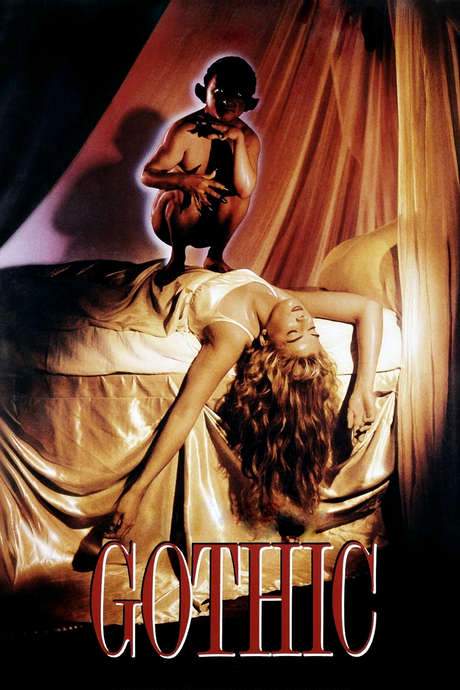
Gothic Romance with a Supernatural Twist like The Housemaid

Forbidden passions awaken vengeful spirits in decaying, atmospheric settings. If you enjoyed the forbidden love and vengeful spirit in The Housemaid, you'll like these movies. They feature passionate affairs in atmospheric settings haunted by a tragic past, blending romance with supernatural dread.

  • gothic
  • romantic
  • supernatural
  • vengeful
  • atmospheric
  • forbidden love
  • Tone: dark, romantic, vengeful
  • Pacing: steady, atmospheric
Why these movies?

The story pattern: The narrative typically follows a new, often vulnerable, character who enters a secluded world governed by a brooding figure. Their passionate connection inadvertently disturbs a supernatural entity—usually a wronged woman from the past—leading to a climactic confrontation where love and survival are intertwined.

Why they belong together: These films are grouped by their core formula: a central romance set against a gothic backdrop is complicated by a malevolent supernatural presence, creating a unique blend of passionate emotion and chilling horror.

Psychological Domination Thrillers like The Housemaid

Women trapped by manipulation find strength in solidarity against their oppressor. Fans of The Housemaid's themes of gaslighting and female solidarity will appreciate these movies. They depict intense stories of women surviving psychological abuse and fighting back against their captors in a confined setting.

  • psychological thriller
  • gaslighting
  • imprisonment
  • female solidarity
  • revenge
  • claustrophobic
  • Tone: dark, tense, oppressive
  • Pacing: steady, methodical build
Why these movies?

The story pattern: The story revolves around a power imbalance where a woman is isolated and psychologically broken down by a dominant figure. Through subtle clues or the help of an ally, she recognizes the manipulation, leading to a methodical planning and execution of a violent escape or revenge, resulting in a bittersweet freedom.

Why they belong together: This thread connects films through the specific arc of female characters overcoming severe psychological abuse. The shared elements are the claustrophobic setting, the slow reveal of the manipulator's true nature, and the climactic, often brutal, fight for liberation.

Every angle

The Housemaid (2018) Explained: Plot, Ending, Timeline & Characters

Everything about The Housemaid in one place: what happens in the plot summary, the timeline in chronological order, the characters and meaning, the ending explained and a spoiler-free summary. What's After the Movie adds the cast, box office and post-credit scenes.

Coming soon on iOS and Android

The Plot Explained Movie Summary App

Plot summaries, endings explained and timelines on your phone. Catch up on any movie in minutes, save your favorites and never miss a twist again.

Be the first to know when we launch. Your email stays private, always.

Learn more about the app