Plot Explained Spoilers guaranteed!
Plot Explained

Browse by genre

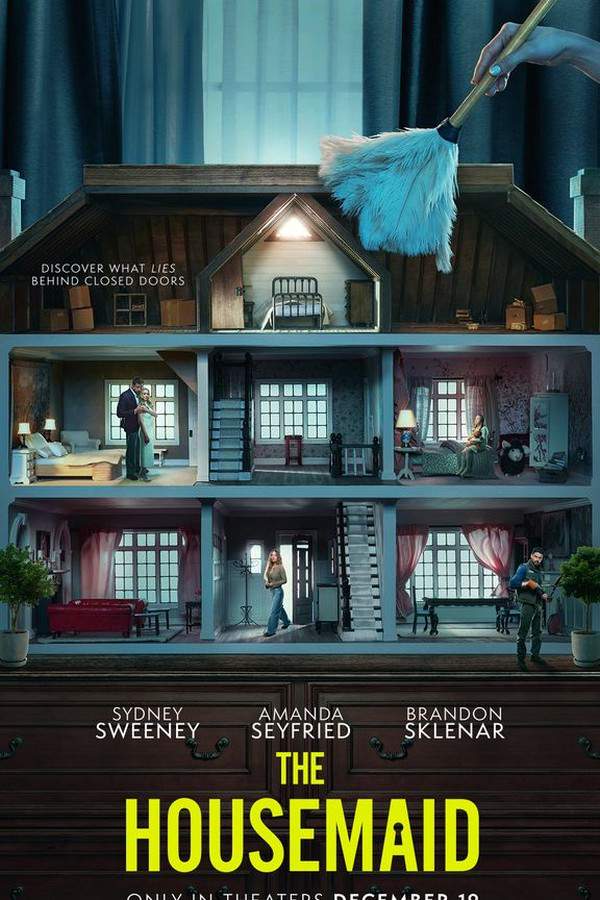
The Housemaid (2025) movie poster

Plot Summary

The Housemaid (2025) Plot Summary & Ending Explained

Release, runtime and language
2025 · 2 h 11 m · English
Echo score 68
Loading streaming availability…
Directed by
Paul Feig
Starring
Michele Morrone, Amanda Seyfried, Sydney Sweeney, Iván Amaro Bullón, Elizabeth Perkins, Amanda Joy Erickson
Budget
$35M

Trying to escape her troubled past, Millie (Sydney Sweeney) takes a live‑in position as housemaid for the affluent couple Nina (Amanda Seyfried) and Andrew Winchester (Brandon Sklenar). What begins as an ideal job quickly becomes a perilous, seductive battle of secrets, scandal and power, as hidden intrigues surface behind the Winchesters’ closed doors.

On this page (8)
  1. 1 Where to watch
  2. 2 What happens: full plot
  3. 3 Plot questions answered
  4. 4 How it ends
  5. 5 The book behind the movie
  6. 6 Movie threads
  7. 7 Movies like The Housemaid
  8. 8 Every angle
Loading streaming availability…

Full plot summary · contains spoilers

What Happens in The Housemaid: Full Plot Summary

The whole story of The Housemaid (2025) explained, from the opening scene to the final frame: every key event, every twist and what it all adds up to. Read it as a quick recap before the sequel, to check a scene you missed, or to finally understand what really happened.

Millie Calloway, Sydney Sweeney, becomes the live-in maid for the wealthy Winchester family in Great Neck, Long Island, while on parole. Her room sits in the attic behind a sealed window, and a door that locks from the outside, a constant reminder that her movements are watched and controlled. The household revolves around Nina, Amanda Seyfried, the mother and wife who carries an unsettling blend of charm and fragility, hinting at deeper troubles that ripple through every room.

Nina’s past haunts the present in disturbing ways. Years earlier, she attempted to drown her daughter Cecelia, nicknamed Cece, and then tried to overdose, acts that left a dark stain on the family and on Nina’s mind. The memory resurfaces in whispered conversations with neighbors and in the uneasy dynamic that develops between Nina and Millie, as Nina’s moods swing from affectionate to accusatory with alarming speed. The attic becomes a symbolic and literal fortress around Millie, a place where she is kept in a state of limbo, while Nina’s outward warmth masks a volatile undercurrent that many in the house prefer to overlook.

A weekend plan changes the course of Millie’s life. Nina asks Millie to arrange a trip to the city for herself and her husband, Andrew, played by Brandon Sklenar, to see a Broadway musical titled Showdown and to stay overnight in a hotel. When ticket refunds fall through, Nina denies having asked for the arrangement, and Millie is told the cost will come out of her paycheck. With Nina distracted, Millie and Andrew quietly decide to attend the show themselves, hoping for a chance to escape from the uneasy, ever-present tension at home. They enjoy the performance, dine out, and check into a hotel, a brief moment of freedom that quickly collides with the house’s oppressive routines upon their return.

Back home, Millie discovers several angry texts from Nina and, in a moment of panic, Misses messages that culminate in a firing. The betrayal cuts deep, and Millie finds solace with Andrew as they navigate a new, illicit closeness. The couple’s secret becomes a fragile anchor as Millie tries to repair a chipped heirloom china plate—an artifact tied to Andrew’s family. He consoles her, insisting the break can be fixed, but the incident triggers a deeper reckoning about the power dynamics at play. Millie, ever practical, collects the shards in a plastic bag, a silent archive of the growing danger. When Andrew returns, he and Millie retreat to her old attic room, where he locks her inside, reasserting control.

The past resurfaces in a chilling letter-like revelation: the attic’s hidden history includes Andrew’s earlier control over Nina. In a terrifying memory, he forced Nina to pull out hair by the handful, then deprived her of water, and kept her in the attic until she was broken and compliant. The truth explains the present’s fragile balances, the room’s oppressive feel, and the way Nina’s surface kindness can abruptly fold into something colder and more calculating. Grounded in fear and manipulation, the household’s power plays become clearer as Enzo, the groundskeeper, Michele Morrone, begins to realize what happened and strives to protect Nina from the moral wreckage he sees around them.

In a brutal sense of punishment that echoes the past, Andrew confronts Millie with a cruel demand: she must cut her stomach 21 times—the number of broken china shards—before he will release her. The act is a mediated, horrifying moment where Millie asserts herself through violence, stabbing Andrew in the neck with a cheese knife Nina had stashed for her. A chaotic struggle ends with Millie locking Andrew inside the attic and breaking more of the china in a visceral claim to agency.

Nina, pressed by Cece’s urging to rescue Millie, returns to the house. She finds the attic’s light still on and unlocks the door just as Andrew closes in again. Yet Millie manages to slip away during the confrontation, and Nina refuses to resume her life with Andrew. In a final, fatal confrontation, Millie reappears to push Andrew over a spiral staircase, and Nina produces a staged accident by dropping a light bulb next to the body, aided by Enzo to make the incident look like a tragic but ordinary mishap.

Officer Jessica Connors, Alexandra Seal, begins an inquiry into the case and notices inconsistencies in Nina’s account. Her investigation is tempered by historical knowledge of Andrew’s previous fiancée, who remains a shadowy figure in Nina’s past, and Connors chooses not to press further. After Andrew’s funeral, Nina offers Millie a check for one hundred thousand dollars, a gesture framed as a payoff for starting anew. Millie, now tied to a hollow sense of victory, heads to a new life with the option of continuing her work in the service of others.

The story closes on Millie’s horizon, where the shadow of the Winchester house lingers, and the possibility of a fresh start glimmers on the edge of the next opportunity. In a quiet, unsettling way, the film suggests that survival can come at a price, and that the line between victim and survivor is often blurred by power, vulnerability, and the quiet insistence of those who refuse to be erased. Millie’s path forward becomes a careful balance between independence and dependence, between trust and caution, as she steps toward a future that may finally belong to her own terms.
Last updated: January 20, 2026 at 17:12

Was this helpful?

Plot questions answered

The Housemaid Plot Explained: Your Questions Answered

The questions people ask most about The Housemaid (2025): what happens in the confusing scenes, why the characters do what they do, the twists, hidden details and what the ending means. Each answer contains spoilers.

Q1

Why did Nina try to drown her daughter Cece?

Nina's attempt to drown Cece was not a natural act of violence, it was staged by Andrew to frame her as mentally unstable. In the flashback, Andrew trapped Nina in the attic, forced her to pull out her own hair, deprived her of water, and then staged the drowning and overdose to have her committed to a psychiatric facility. This gave him complete control over the family.

Foreshadowing: Earlier scenes show Nina's erratic behavior and the neighbors' whispered conversations about family secrets.

  • nina winchester
  • cecelia
  • attempted drowning
  • andrew winchester
  • psychological abuse
Q2

Why did Andrew lock Millie in the attic?

Andrew locked Millie in the attic as a form of punishment and control, repeating the same pattern he used to trap Nina. After Millie broke an heirloom china plate and kept the shards, Andrew confined her to the room where he had previously imprisoned Nina. The locked attic represents his need to dominate and contain the women in his life.

Foreshadowing: The attic room was introduced early as a sealed space with a lock on the outside, hinting at its dark purpose.

  • attic room
  • millie calloway
  • andrew winchester
  • imprisonment
  • control
Q3

What was the meaning behind Andrew demanding 21 cuts?

Andrew ordered Millie to cut herself 21 times because she had saved 21 shards from the broken china plate. The number was deliberate, a cruel equation where her self-harm matched the damage to his family heirloom. This twisted logic reflected his warped sense of proportionality and punishment.

Foreshadowing: Millie carefully collected the broken china pieces in a plastic bag, foreshadowing their later significance.

  • 21 cuts
  • china plate
  • self-harm
  • punishment
  • andrew winchester
Q4

Why did Nina help kill Andrew?

Nina helped kill Andrew because she was his victim long before Millie arrived. Andrew had imprisoned and tortured her in the attic, forced her to harm herself, and staged her mental breakdown to have her institutionalized. When Cece urged her to rescue Millie, Nina seized the opportunity to finally free herself from Andrew's control.

Foreshadowing: Nina's sudden mood swings and the tension between her and Andrew hint at a deeper, darker history.

  • nina winchester
  • andrew winchester
  • murder
  • domestic abuse
  • freedom
Q5

Why did the police stop investigating Andrew's death?

Officer Jessica Connors noticed inconsistencies in Nina's account but chose not to pursue the case because of a family connection, Nina's sister was related to Andrew's first fiancée, creating a complicated web of relationships that made pressing charges uncomfortable. Connors opted to let the case fade rather than dig deeper into the wealthy family's secrets.

Foreshadowing: The film establishes early on that the Winchester family has powerful connections and dark secrets.

  • police investigation
  • jessica connors
  • andrew winchester
  • unsolved death
Q6

Why did Millie stab Andrew with the cheese knife?

Millie stabbed Andrew after he forced her to cut herself 21 times as punishment. When he entered the attic to release her, she attacked him with the cheese knife Nina had hidden for her, a moment of desperate resistance against his escalating abuse. The attack marked her refusal to remain his victim any longer.

Foreshadowing: Nina secretly gave Millie the cheese knife earlier, hinting at a potential alliance against Andrew.

  • millie calloway
  • andrew winchester
  • cheese knife
  • self-defense
  • attic confrontation
Q7

Why did Millie accept Nina's $100,000 payment?

Millie accepted the money because she had no financial resources and was on parole, limiting her employment options. The payment represented both compensation for her suffering and a clean break from the Winchester house. However, the ending suggests this money may simply enable her to enter another dangerous domestic situation, highlighting the cyclical nature of her vulnerability.

Foreshadowing: The final scene shows Millie heading to another housemaid interview, where the new employer hints at her own abusive marriage.

  • millie calloway
  • one hundred thousand dollars
  • payoff
  • new life
  • cycle of abuse
Q8

What did Andrew do to his previous fiancée?

Andrew's previous fiancée remains a shadowy figure mentioned in connection with Nina's sister's past, but the film suggests she disappeared or came to harm under similar circumstances. This pattern of targeting vulnerable women, first his fiancée, then Nina, then Millie, demonstrates Andrew's predatory nature and confirms his history of preying on women with limited options.

Foreshadowing: Officer Connors references this connection when she decides not to investigate further, suggesting the pattern was known to authorities.

  • first fiancée
  • andrew winchester
  • pattern of abuse
  • missing woman
Q9

Why was Nina's behavior so erratic with Millie?

Nina's erratic behavior stemmed from the psychological trauma Andrew inflicted on her. She had been imprisoned, starved, and manipulated into believing she was mentally ill. This abuse left her capable of sudden warmth followed by accusations and instability, a manifestation of her broken mental state rather than natural temperament.

Foreshadowing: Neighbours reveal Nina's past drowning attempt and overdose, hinting at the abuse behind her current behavior.

  • nina winchester
  • mental illness
  • gaslighting
  • psychological trauma
  • mood swings
Q10

What was Enzo's role in the household?

Enzo the groundskeeper was aware of Andrew's abuse toward Nina from the beginning but was thwarted by Andrew's power and control. Later, Enzo helped stage Andrew's death as an accidental fall by assisting with the light bulb staging. His role represents a silent protector who couldn't stop the abuse but ultimately helped bring it to an end.

Foreshadowing: Enzo watches the household with concern from early in the film, suggesting his awareness of the dark dynamics.

  • enzo
  • groundskeeper
  • andrew winchester
  • staging death
  • helper
Q11

Why did Andrew force Nina to pull out her own hair?

Andrew forced Nina to pull out her hair as a form of psychological torture designed to break her will and assert dominance. This brutal act was part of his systematic campaign to control her, conducted in the attic storage room where he kept her isolated. The hair-pulling represented his need to physically and mentally destroy her resistance.

Foreshadowing: Nina's sudden bald patches or thin hair are not visually shown, but the flashback reveals the origin of her psychological breaks.

  • nina winchester
  • hair pulling
  • torture
  • psychological abuse
  • attic storage
Q12

Why was the Showdown trip a turning point?

The Showdown trip triggered the affair between Millie and Andrew because it forced them to spend time together without Nina's supervision. When Nina denied arranging the trip and threatened to dock Millie's pay, Andrew sympathized with Millie, leading to their secret attendance of the show and eventual intimacy. This betrayal of Nina shifted the household power dynamics permanently.

Foreshadowing: Nina's denial of the trip arrangement plants the seed of discord between Millie and Nina.

  • showdown
  • broadway
  • affair
  • millie andrew
  • trip to city
Q13

Why does the ending suggest Millie is in danger again?

The ending feels uneasy because Millie accepts another housemaid position with Lisa Killefer, who hints that her husband is abusive. This mirrors Millie's original situation with the Winchesters, a vulnerable woman entering a wealthy household with hidden dangers. The cyclical ending implies that Millie's survival may lead her directly into another predatory situation.

Foreshadowing: The film establishes Millie's pattern of seeking safety through service, making her return to similar circumstances feel inevitable.

  • ending
  • lisa killefer
  • abusive husband
  • cycle of abuse
  • new job

Ending explained

What Happens at the End of The Housemaid?

How The Housemaid (2025) ends, in short: the final scene, the last twist and what it means for the characters. The full ending explained, with every spoiler, lives on its own page.

Read the full ending explained

The final confrontation erupts when Millie finally sees through Andrew’s charming façade. After a tense showdown in the stairwell, she shoves him over the railing, sending him plummeting to his death. Andrew’s tyranny ends with that single, decisive push, and the house that once echoed with his control falls silent.

In the aftermath, Nina secures the family’s fortune and departs for California with her daughter Cece. Before she leaves, she slips Millie a modest but life‑changing sum of money as a thank‑you for delivering the fatal blow. The credit for the deed remains hidden, but the two women share a quiet, victorious glance, acknowledging that they have finally escaped Andrew’s grip.

Continue reading the ending (1 more paragraphs)

The film closes with Millie sitting across from a prospective employer, a woman who mentions that Nina recommended her. The new client hints that she, too, is trapped in an abusive marriage, implying that Millie’s “housemaid” role will become a covert means of delivering justice to other men like Andrew. This final scene plants the seed for future stories in which Millie, armed with both skill and experience, continues to dismantle the patriarchal power structures that once enslaved her and Nina.

The Housemaid ending explained in full

Movie threads

More Movies Like The Housemaid, by Mood & Story

Curated lists built around what makes The Housemaid tick: the same mood, the same kind of story or the same emotional payoff. Each list explains why these movies belong together.

Gilded Trap thrillers like The Housemaid

Luxury settings become prisons in battles of psychological manipulation. Discover movies similar to The Housemaid, where characters find themselves trapped in luxurious yet dangerous environments. If you liked the psychological tension and wealth-driven power struggles, you'll find more suspenseful stories about the dark side of opulence here.

  • claustrophobic
  • suspenseful
  • oppressive
  • psychological
  • dark
  • slow burn
  • Tone: dark, oppressive, psychologically intense
  • Pacing: steady, slow burn
Why these movies?

The story pattern: A protagonist, often from a different social class, enters a wealthy household or institution, initially seduced by its promise of comfort or escape. They soon discover a corrupt core, becoming entangled in a suffocating battle of wits against manipulative residents. The narrative follows their struggle to expose the truth or simply survive the psychological torment within a gilded cage.

Why they belong together: These films are grouped by their shared setting as a character—the luxurious prison—and their focus on slow-burning psychological suspense rooted in class disparity and manipulation. They create a palpable sense of claustrophobia and danger amidst wealth.

Survival gaslighting thrillers like The Housemaid

Protagonists must outsmart manipulative tormentors to survive psychological warfare. If you liked the psychological torment and gaslighting in The Housemaid, explore these movies about characters fighting to maintain their sanity against manipulative foes. Find similar thrillers focused on survival, mind games, and the heavy emotional toll of psychological abuse.

  • psychological torment
  • gaslighting
  • suspenseful
  • survival
  • dark
  • manipulation
  • Tone: dark, tense, psychologically brutal
  • Pacing: steady, building tension
Why these movies?

The story pattern: An insidious antagonist, often in a position of power or trust, begins a campaign of psychological manipulation against the protagonist, making them doubt their own perceptions and sanity. The plot follows the victim's gradual awakening to the abuse and their perilous struggle to gather evidence, turn the tables, or simply escape the torment, culminating in a tense and often violent confrontation.

Why they belong together: This thread unites films by their intense focus on the specific dynamic of gaslighting as the primary threat. The shared experience is one of claustrophobic suspense and a heavy emotional journey as the victim fights to reclaim their reality against overwhelming odds.

If you liked this

Movies Like The Housemaid

Similar movies to The Housemaid: the same genre, themes or kind of story. Each one comes with its own plot summary, timeline and ending explained.

Browse all movie summaries

Every angle

The Housemaid (2025) Explained: Plot, Ending, Timeline & Characters

Everything about The Housemaid in one place: what happens in the plot summary, the timeline in chronological order, the characters and meaning, the ending explained and a spoiler-free summary. What's After the Movie adds the cast, box office and post-credit scenes.

Coming soon on iOS and Android

The Plot Explained Movie Summary App

Plot summaries, endings explained and timelines on your phone. Catch up on any movie in minutes, save your favorites and never miss a twist again.

Be the first to know when we launch. Your email stays private, always.

Learn more about the app