Plot Explained Spoilers guaranteed!
Plot Explained

Browse by genre

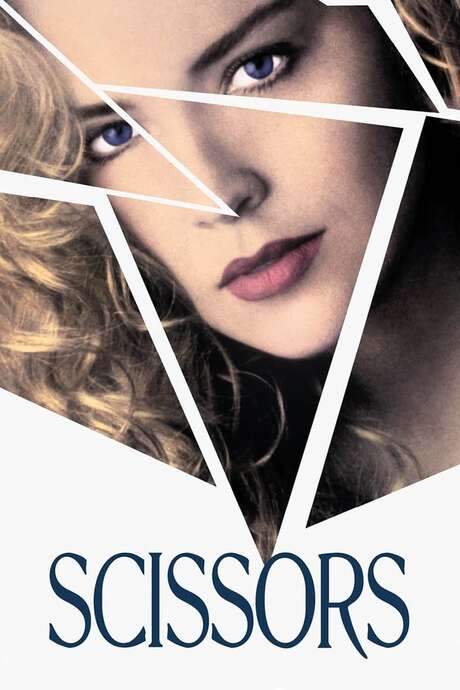
Scissors (1991) movie poster

Plot Summary

Scissors (1991) Plot Summary Explained

Release, runtime and language
1991 · 105 mins · English
JustWatch #12,194 4
Directed by
Frank De Felitta
Starring
Ronny Cox, Jesse Garcia, Sharon Stone, Albert Popwell, Steve Railsback, Michelle Phillips

Angie teeters on the brink of collapse, needing only a small push toward sanity. After surviving a sexual assault, she finds herself confined in a luxurious apartment with the dead body of the very man she has been dreaming would kill her. As she clings to reality, everyday objects begin to seem alive, intensifying her psychological torment.

On this page (6)
  1. 1 Where to watch
  2. 2 What happens: full plot
  3. 3 Plot questions answered
  4. 4 Movie threads
  5. 5 Movies like Scissors
  6. 6 Every angle

Where to watch

Where to Watch Scissors (1991)

Where can you watch Scissors? Stream, rent or buy it in the US, including on ScreenPix Amazon Channel and Amazon Video: current JustWatch availability with up-to-date prices.

Streaming availability powered by JustWatch

Full plot summary · contains spoilers

What Happens in Scissors: Full Plot Summary

The whole story of Scissors (1991) explained, from the opening scene to the final frame: every key event, every twist and what it all adds up to. Read it as a quick recap before the sequel, to check a scene you missed, or to finally understand what really happened.

Angela Anderson [Sharon Stone] buys a pair of large scissors from a hardware shop, and on her way home she is attacked in the elevator of her apartment block by a red-bearded man. She defends herself with the scissors and escapes the assault, but is soon found by the twin neighbors who live next door: Alex Morgan [Steve Railsback] and Cole Morgan [Steve Railsback]. Alex is a charismatic soap-opera star, while Cole is an artist who uses a wheelchair. An awkward spark forms between Angela and Alex, set against Angela’s deep-seated sexual repression that keeps her feelings tightly restrained. Dr. Stephan Carter [Ronny Cox], Angela’s psychiatrist, treats her with hypnotherapy, and through these sessions a red-bearded figure named Billy from Angela’s past emerges—a chilling coincidence to the attack she just survived.

As Angela’s life begins to fracture under the tension of Alex’s growing attention and Cole’s unsettling presence, she is drawn deeper into a dark labyrinth. After another unsettling encounter with the red-bearded attacker and mounting harassment from Cole, Angela is lured with the offer of a job to a large, mysterious apartment, where she quickly finds herself trapped. In the master bedroom, she discovers the body of her attacker, killed by the same pair of scissors she bought earlier. A lone raven, kept in a cage, is the only other living thing in the room and it croaks a grim message—Angela killed him.

Exploring the apartment, Angela encounters rooms full of exhibits about her own psychology, as if someone has designed the space to push her toward insanity. Meanwhile, Alex is determined to locate Angela, and Cole suddenly rises from his wheelchair, attacks Alex, and then disappears. After numerous failed escape attempts, Angela frees the raven, ties a message to its leg, and uses the blood-stained scissors to open a vent, sending the bird into the building’s air system. The next morning she wakes to a macabre tableau: the attacker’s body has been moved to the dining room, and the raven’s mutilated corpse sits atop a plate beside it. This jarring image triggers a childhood flashback in Angela: her red-bearded stepfather Billy was killed by her mother with scissors, a traumatic moment that lies at the root of her repression.

The following day, Dr. Carter’s wife Ann [Michelle Phillips] arrives at the apartment; she is having an affair with the owner and discovers her husband waiting there, disguised in a red beard. He reveals that he was Angela’s attacker all along, admitting he murdered her lover with the same scissors and manipulated Angela into taking the blame, exploiting what his hypnotherapy sessions had revealed about her past. Carter and Ann scheme to locate the scissors that could serve as damning evidence. Trapped in a trance-like state, Angela wanders toward the apartment’s exit as the front door is left ajar, and she closes it behind her, sealing Carter and Ann inside. Carter tries to lure Angela back by posing as Billy, but his ruse fails.

Outside, Alex tracks Angela to the address and comes to her rescue. Carter pounds the scissors against the glass of a window in a frenzy, while a liberated Angela faces him with a quiet, vindicated smile.
Last updated: October 09, 2025 at 14:30

Was this helpful?

Plot questions answered

Scissors Plot Explained: Your Questions Answered

The questions people ask most about Scissors (1991): what happens in the confusing scenes, why the characters do what they do, the twists, hidden details and what the ending means. Each answer contains spoilers.

Q1

Who was the red-bearded man who attacked Angela in the elevator?

Dr. Stephan Carter, Angela's own psychiatrist, was the attacker. He disguised himself with a red beard to resemble Billy, the stepfather from Angela's traumatic past. He used his knowledge from hypnotherapy sessions to manipulate her, framing her for a murder he committed.

Foreshadowing: Earlier hypnotherapy sessions reveal a red-bearded figure named Billy from Angela's past, foreshadowing the attacker's identity.

  • dr carter
  • attacker
  • red beard
  • billy
  • disguise
  • psychiatrist
Q2

Why did Cole attack Alex?

Cole revealed he could walk when he attacked Alex, surprising everyone who believed he was permanently confined to a wheelchair. This sudden ability and violent outburst suggested his disability was either feigned or selective, adding to the psychological manipulation surrounding Angela.

Foreshadowing: Cole's unsettling presence and hostility toward Angela throughout the film hinted at hidden capabilities.

  • cole
  • morgan
  • attack
  • alex
  • wheelchair
  • ability to walk
Q3

What childhood trauma does Angela repress?

Angela's mother murdered her red-bearded stepfather Billy with scissors when Angela was a child. This traumatic event, witnessed by Angela, caused her deep-seated sexual repression and psychological scars that Dr. Carter exploited through hypnotherapy.

Foreshadowing: The recurring image of scissors throughout the film hints at this buried memory.

  • billy
  • stepfather
  • childhood
  • trauma
  • mother
  • scissors
  • murder
Q4

Why was the mysterious apartment filled with psychological exhibits about Angela?

Dr. Carter designed the apartment as an elaborate trap to drive Angela toward insanity. The exhibits about her own psychology, the caged raven, and the setup of her attacker's body were all精心 constructed to make her doubt her reality and confess to crimes she did not commit.

Foreshadowing: Dr. Carter's detailed knowledge of Angela's psyche from therapy sessions made this manipulation possible.

  • apartment
  • exhibits
  • psychology
  • trap
  • carter
  • setup
Q5

What is the significance of the raven in the apartment?

The raven serves as a psychological weapon, croaking "you killed him" to implicate Angela in the murder. Its presence intensifies her gaslighting, making her question whether she committed the crime while in a trance. When she releases it, it becomes her tool for escape and sending a message for help.

Foreshadowing: The raven's ominous caw in the bedroom immediately after discovering the body sets up the psychological torment.

  • raven
  • cage
  • message
  • escape
  • you killed him
Q6

Why did Dr. Carter orchestrate the attack and frame Angela?

Carter used his position as Angela's psychiatrist to gain intimate knowledge of her trauma. He attacked her to create a scenario where he could manipulate her into confessing to murdering her lover, using the same scissors she bought. His goal was to destroy her mentally and legally, leveraging what hypnotherapy revealed about her past.

Foreshadowing: The hypnotherapy sessions that "helped" Angela were actually gathering evidence for his trap.

  • carter
  • frame
  • attack
  • hypnotherapy
  • manipulation
  • scissors
Q7

Why did Angela trap Carter and Ann inside the apartment?

While in a trance-like state, Angela unknowingly closed the main door behind her as she wandered toward the exit, sealing Carter and Ann inside. This act symbolically reversed her victimization, trapping her tormentors in the space they designed to imprison her.

Foreshadowing: Carter's failed attempt to lure her back by posing as Billy showed his desperation as control slipped away.

  • trap
  • door
  • ann
  • carter
  • apartment
  • trance
Q8

What happened to the scissors Angela bought?

Angela used the scissors to defend herself against the initial attack, then later used them to pry open an air vent for her escape. Carter killed her attacker with the same scissors and planted them to frame her. The scissors ultimately became the evidence that could expose Carter's crimes when he frantically tried to break the window with them.

Foreshadowing: The scissors' first appearance as a practical purchase foreshadows their central role in violence and escape.

  • scissors
  • vent
  • escape
  • evidence
  • weapon
Q9

Why was Alex determined to find Angela?

Alex, the charismatic twin, was genuinely drawn to Angela despite or because of her vulnerability. His determination to locate her at the mysterious address led to her rescue in the final confrontation, providing the film's resolution and hinting at a possible romantic outcome.

Foreshadowing: The awkward spark between Angela and Alex established early in the film.

  • alex
  • rescue
  • search
  • romance
  • twins
Q10

What was Ann's role in Carter's scheme?

Ann, Carter's wife, was having an affair with the apartment's owner and discovered her husband waiting there in disguise. Rather than exposing him immediately, she collaborated with Carter to locate the scissors, the murder weapon that could damning evidence against Angela. Their mutual complicity revealed a toxic partnership in the conspiracy.

Foreshadowing: Ann's arrival at the apartment seemed helpful but quickly revealed her allegiance.

  • ann
  • carter
  • wife
  • affair
  • scissors
  • conspiracy

Movie threads

More Movies Like Scissors, by Mood & Story

Curated lists built around what makes Scissors tick: the same mood, the same kind of story or the same emotional payoff. Each list explains why these movies belong together.

Claustrophobic thrillers like Scissors

Characters are imprisoned in a sinister place designed to break their sanity. If you liked the feeling of being trapped and manipulated in Scissors, explore these movies where the setting is a character in itself. This list features psychological thrillers and horror films with a strong sense of claustrophobia, paranoia, and characters fighting to maintain their sanity within a confined, sinister space.

  • claustrophobic
  • paranoid
  • unsettling
  • oppressive
  • psychological torment
  • gaslighting
  • Tone: dark, paranoid, unsettling
  • Pacing: steady, methodical
Why these movies?

The story pattern: Narratives in this thread often involve a vulnerable individual, frequently grappling with past trauma, who is lured or confined to a specific location. The plot revolves around a systematic breakdown of their psyche by an unseen or disguised antagonist, using the environment to create terrifying illusions and reinforce their isolation and doubt.

Why they belong together: These films are grouped by their shared oppressive atmosphere and the central theme of environmental manipulation. They deliver a specific kind of dread that comes from being physically and psychologically trapped, making the viewer feel the protagonist's escalating paranoia and claustrophobia.

Psychological breakdown movies like Scissors

Protagonists on the brink of a breakdown struggle to separate memory from hallucination. For viewers who appreciated the exploration of trauma and mental unravelling in Scissors, this list collects films about fragile psyches and distorted realities. These movies often feature heavy emotional themes, unreliable narrators, and a descent into psychological torment that challenges what is real.

  • psychological
  • unsettling
  • anxious
  • twisted
  • traumatic
  • mental breakdown
  • Tone: dark, heavy, distressing
  • Pacing: steady, dread-building
Why these movies?

The story pattern: The journey typically follows a character haunted by a specific traumatic event—such as an assault or loss—whose recovery is hijacked by new threats or manipulations. The plot structure is built on twists that force the protagonist to confront buried memories, while the viewer is kept guessing about what is actually happening versus what is a symptom of their psychological distress.

Why they belong together: These films are united by their intense focus on a character's internal psychological state. They share a heavy emotional weight, a dark tone, and a narrative that prioritizes the subjective, often terrifying, experience of someone whose sanity is under siege.

If you liked this

Movies Like Scissors

Similar movies to Scissors: the same genre, themes or kind of story. Each one comes with its own plot summary, timeline and ending explained.

Browse all movie summaries

Every angle

Scissors (1991) Explained: Plot, Timeline & Characters

Everything about Scissors in one place: what happens in the plot summary, the timeline in chronological order, the characters and meaning and a spoiler-free summary. What's After the Movie adds the cast, box office and post-credit scenes.

Coming soon on iOS and Android

The Plot Explained Movie Summary App

Plot summaries, endings explained and timelines on your phone. Catch up on any movie in minutes, save your favorites and never miss a twist again.

Be the first to know when we launch. Your email stays private, always.

Learn more about the app